
Switched on – Douglas Greed: Angst (3000° Grad)

What’s the story?

The story behind Angst is one made for these times. Douglas Greed returns to long-playing action five years after his previous outing for the BPitch Control label. The press release behind the album talks extensively about fear, a state of mind we have all experienced over the last few months – but it explores how Greed has used it in a positive sense.

He is not alone either, enlisting the services of vocalist Joy Wellboy for the resilient album bookends Roll With The Punches and Not Afraid. Meanwhile Odd Beholder takes over vocal duties for two further songs, The Few and Numbers.

What’s the music like?

Very easy on the ear. Greed writes intimate music that is ultimately comforting, especially in the unison vocal achieved with Wellboy for Roll With The Punches, which is complemented by long, serene melodies. Odd Beholder’s tracks are also cool, offering a good contrast to the instrumentals around, and on The Few there is a nice, full bass.

Of the instrumentals, The Taste Of Dust is effective with the extra atmosphere of its muted trumpet, while the harmonic shades of Wie man unsterbliche Tiere züchtet complement the spoken word sample. The Future Will Repeat Itself has quite an ominous warning but opens out nicely into broader textures, while the sharper tones of Everybody Wants To Live In A Mansion hint at busier dancefloors.

Greed saves the most uplifting and resourceful track until last, Wellboy’s contribution to Not Afraid packing a strong emotional message and depth.

Does it all work?

Yes, and Angst works well as a single unit, its structure paced just right. On occasion I wondered if Greed might flex his muscles a bit more in the percussion department, but subtlety and intimacy are his watchwords here. The vocals complement his thoughtful approach, and the slightly brooding instrumentals really complement the moods we find ourselves in currently.

Is it recommended?

It is – for those who like their electronic music on the mindful side. Greed’s music does have strength in depth, and can act both as a home listening comfort and a quiet but lasting inspiration.

Listen and Buy

On record – Gustavo Díaz-Jerez: Maghek – Seven Symphonic Poems About The Canary Islands (Signum Classics)

Cristo Barrios (clarinet), Ricardo Descalzo (piano), Royal Scottish National Orchestra / Eduardo Portal

Gustavo Díaz-Jerez
Maghek: Ymarxa, Ayssuragan, Guanapay, Chigaday, Azaenegue, Erbane & Aranfaybo

Signum ClassicsSIGCD 612 [two discs, 137’50”]

Producer Matt Dilley
Engineers Mike Hatch, Tony Lewington

Recorded 17-20 November 2019 at Royal Concert Hall, Glasgow

Written by Richard Whitehouse

What’s the story?

Signum Classics issues of its most ambitious releases in Seven Symphonic Poems about the Canary Islands by the Tenerifan-born Gustavo Díaz-Jerez (b1970), a substantial undertaking such as ought to secure this acclaimed composer and pianist greater international prominence.

What’s the music like?

Although Smetana blazed the trail with Ma vlast, his cycle inspired by Bohemian legend and places, few recent composers have attempted such a sequence of interrelated movements – a notable exception being Pascal Dusapin with his Seven Solos for orchestra (1992-2009). This precedent may be significant as, though its subtitle implies something of a ‘suite touristique’, Maghek is the work of one respected for his research into the spectral and physical properties of sound. Not that Díaz-Jerez’s music is rarefied or academic; running parallel to its technical ingenuity is an involvement with Canarian history and topography as evident from the titles of each piece. This does not make for something naively illustrative or pictorial, but it does ensure an evocative dimension is manifest at every stage of a long and absorbing traversal.

It is not clear from Díaz-Jerez’s detailed and insightful booklet notes that the order in which these pieces are heard is the only intended sequence, and whether other permutations may be possible or even desirable. That they were premiered (and presumably can still be performed) individually rather suggests the latter, which itself adds a further layer of fascination to music already awash with mystery and intrigue. A reminder, too, that the image of the Canaries as a choice destination for holidaymakers seeking sun, sea and sand is far from the whole picture.

As presented, the cycle begins in Tenerife with its myriad gradations of light and shade, then to La Palma which unfolds as a concertante piece for clarinet and orchestra in which the latter gradually and ominously assumes dominance. By contrast, Lanzarote is represented by a full-blown piano concerto, a sometimes equable and at other times confrontational means through which to evoke interplay of natural and human elements. The forbidding terrain of La Gomera engenders music of textural intricacy and timbral finesse, then Gran Canaria brings something of a culmination with its cumulative interplay between relative stasis and dynamism toward a visceral climax. Fuerteventura imaginatively explores cultural contrasts and conflicts wrought across time, then El Hierro makes for an understated and even teasingly inconclusive ending.

Does it all work?

Yes, whatever the order in which these pieces are heard. Díaz-Jerez is clearly an orchestrator of ingenuity and resourcefulness, who understands how to realize the potential of his sizable forces, yet this would count for little were his sense of formal evolution not so sure-footed. The playing of the Royal Scottish National Orchestra leaves nothing to be desired under the expert guidance of Eduardo Portal, while both clarinetist Cristo Barrios and pianist Ricardo Decalzo seem fully attuned to music whose technical demands are confidently surmounted.

Is it recommended?

Indeed. The sound has a clarity and lustre which presents this music in the best possible light, while the composer’s annotations shed valuable light on the semantic derivations behind each piece. Do investigate this release, then try Díaz-Jerez’s piano cycle Mataludios (IBS182018).

Listen

Buy

You can listen to clips from the recording and purchase, either in physical or digital form, at the Presto website

Read

You can discover more about this release at the Signum Classics website, and at a special dedicated website for the project here

Playlist – DELANILA

It gives us great pleasure to welcome composer and instrumentalist Danielle Schwob – aka DELANILA – to Arcana’s playlist section:
Danielle’s selection is a fascinating Transatlantic exchange, mixing the best of America, Estonia, Iceland and the UK amongst others.

The heady violin of Canadian Angèle Dubeau is the first instrument we hear, leading La Pietà in the first movement of Arvo Pärt‘s Tabula Rasa. This leads to a fascinating exploration of American work from Bryce Dessner, Harry Partch and John Corigliano. Partch’s Two Studies on Ancient Greek Scales, for harp and guitar, are especially fascinating – short but perfectly formed and shimmering attractively.

Later we have a spacious excerpt from Adam Schoenberg‘s Finding Rothko, and a track from Thom Yorke‘s music for Suspiria, led by mottled piano. The music of Justin Dello Joio creates fascinating colours, reinventing the piano trio, while violin pieces by David Lang, Anna Clyne, Giya Kancheli and Jakub Ciupinski are inspiring for their open and ethereal air.

Ben Frost‘s Super Dark Times and a movement from John Adams‘ The Dharma at Big Sur explore expansive viewpoints, while PUBLIQuartet‘s reinterpretation of Hildegard von Bingen‘s O ignee Spiritus is a thoughtful and moving response.

Elsewhere we have two encounters with the music of Jóhann Jóhannsson, with whom Danielle worked – his Krókódíll and then the crowning glory of the mix, the fifth and final part from IBM 1401 A User’s Manual – The Sun’s Gone Dim And The Sky’s Turned Black, which sums up how we still miss the composer and also the current lockdown situation.

That’s not to say this selection is maudlin though – far from it. You will I’m sure discover something new as well as enjoy the chance to revel in some beautiful and powerful music, shifting shapes and perspectives. Take the next 90 minutes out and enjoy it.

DELANILA’s album Overloaded is out now via Zyg Zyg.

Sound of Mind 10 – May Blossoms

As we move halfway through the eighth week of lockdown here in the UK, I thought it a good time to round up some of the best sounds I’ve been enjoying in the last week or two.

The arrival of spring is hopefully in full swing, and there are good signs of creativity throughout the electronic music community.

This playlist begins with the first track of the Conference Of Trees album from Pantha du Prince, before enjoying some rather wonderful pictures brought to us by Peter Broderick, Erland Cooper, Kaitlyn Aurelia Smith and brothers Brian and Roger Eno.

There is brand new music from Bibio, one of the standout tracks from Nathan Fake‘s Blizzards album and to wrap things up a remix of Philip Glass‘s Two Pages by none other than Max Cooper.

Enjoy an hour of escapism!

Ben Hogwood

Routes to Beethoven – 1770: Music in the year of Beethoven’s birth

by Ben Hogwood

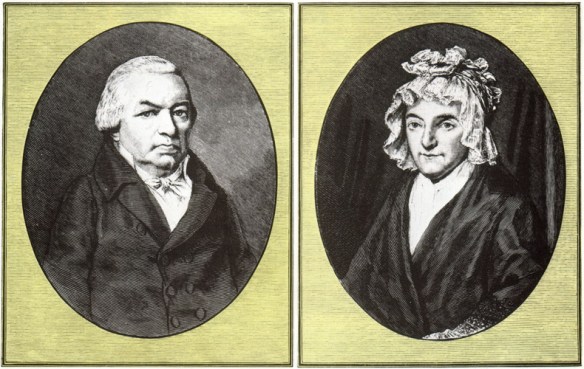
Picture: Beethoven’s parents, Johann van Beethoven and Maria Magdalena Keverich

The last listening exercise before diving into the music of Beethoven is to explore the music being made in the year of his birth, to try and get an idea of the temperature in Western classical music.

For Mozart, opera was key – even at the age of 14. His year began with a trip to Italy, organised by father Leopold with the aim of securing a big stage commission. That was duly achieved in Milan, at the flagship Teatro Regio Ducal (below). In December this prestigious venue became the setting for the premiere of Mozart’s first opera, Mitridate, re di Ponto. An ambitious three-act work, it has some eyecatching arias for the leading cast, virtuoso writing that established Mozart as a composer of real intent and secured a number of standing ovations at the premiere.

With the commission for Mitridate secured in January the Mozarts toured Italy for much of 1770, where Wolfgang found the time to take his symphonic canon into double figures. Don’t forget, he was still barely a teenager!

Haydn, meanwhile, an established composer in his late thirties, was beginning to flex his symphonic muscles. His Sturm und Drang period was just under way, and the innovations he would make in nearly every musical genre were beginning to take shape. 1770 was a relatively quiet year for his output, however. The symphony he completed, no.43 in E flat major, is known as the Mercure for no obvious reason. It is perhaps a more ‘polite’ piece than the minor key examples around it, but that should not be seen as a derogatory observation – it has the typical Haydn poise, guile and wit.

In London, Johann Christian Bach (Bach’s eleventh and youngest son) was impressing with his symphonies and piano concertos, and Hummel published a set of six as Op.6 in 1770. Daniel Heartz writes of how no.5 was a favourite with the public, to judge by the number of reprinting, but that the sixth in the series is impressive, with a ‘fiery middle movement’.

Meanwhile the fifth Bach son, Carl Philipp Emanuel, was adding to his enormous output too. Exact dates are harder to find for his works, though the first version of the Passion According to St Mark can definitely be said to have been completed in 1770.

Meanwhile Gluck, one of the most prominent operatic composers of the day, was occupied with the Viennese premiere of Paride ed Elena. When compared with his stage successes Orfeo ed Euridice or Iphigenie en Tauride, it has not performed well historically. Little is written about its premiere or reception, save for the relative lack of a convincing plot in the opera itself, but listening to it reveals some beautiful writing for soprano and castrato, and a Chaconne that becomes increasingly daring as it proceeds. It has been cited in a number of articles such as this one that Paride ed Elena marks a change in opera from singing to storytelling.

Elsewhere Boccherini was making a name as a prolific composer of works for strings, the most since Vivaldi – and secured for himself a prestigious role as cellist and composer to the royal court in Madrid. He would write more than 15 cello concertos and much chamber music besides.

What of the music of Bonn, where Beethoven was born in 1770? Well not much is known – or at least, not within easy reach in books or on the internet! It would be intriguing to know what was played at his baptism in St. Remigius on 17 December. Listen to the playlist below though and you will get an idea of the music circulating in what appears to have been a transitional year in European music. In many ways it was the calm before the storm.

Listen

The music of 1770 is collected in a Spotify playlist below: