Sibelius’ suite begins at 57:45; Walton’s interpretation at 1:18:36.
The Biblical tale of Belshazzar’s Feast, where the downfall of Babylon is predicted by a human hand writing on the wall during a lavish party, inspired three very different responses. The first, from Handel in 1744, took the form of a large scale sacred piece, but the second half of this Prom threw together two very different responses by twentieth century composers.
Sibelius wrote a score of ten scenes, condensing it into a suite of four for concert performance. It finds the composer in typically economic form, though it is a surprise to note the exotic Oriental Procession, colourfully rendered by Sakari Oramo and the BBC Symphony Orchestra. The Finnish conductor is an expert in this music, and found the emotional depths of the stark Solitude and the emotive Nocturne, where flautist Michael Cox spun a delectable web of notes. The finale, Khadra’s Dance, signed off in typical style.
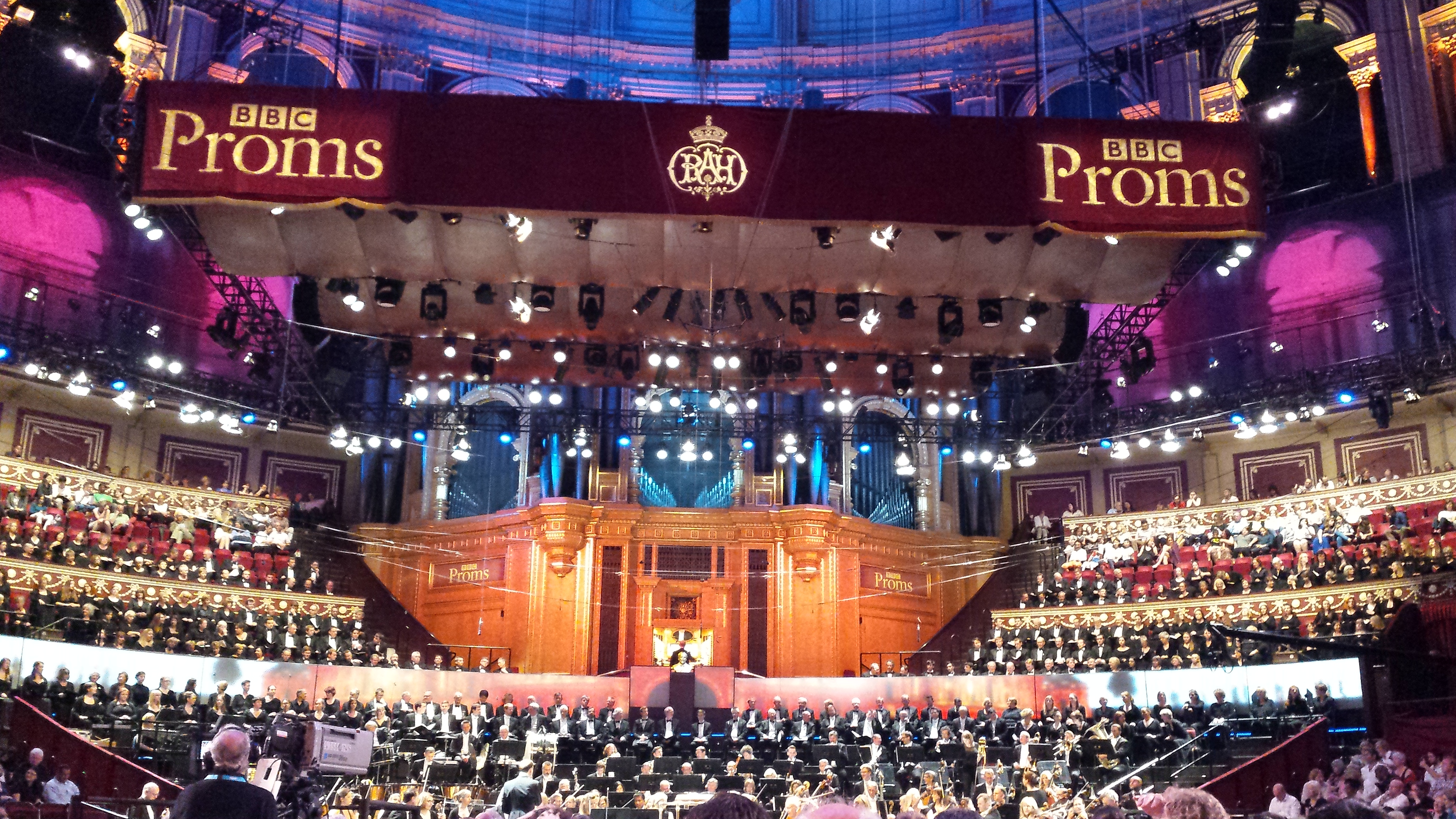
The massive forces assembled for Walton’s Belshazzar’s Feast. Photo (c) Ben Hogwood
Walton, on the other hand, throws everything at his 35-minute tale, including the whole story in a choral dramatisation that at times threatened to take the roof off the Royal Albert Hall. With 256 singers (give or take one or two on the naked eye count from the Arena!) this was a massive scale on which to play out the story, and Christopher Maltman did a sterling job in the baritone solo role.
The chorus were the stars, though, and the combined forces of the BBC Singers, the BBC Symphony Chorus and the BBC National Chorus of Wales were absolutely superb; hair-raising, even. Their shout of “SLAIN!” when Belshazzar finally perished was terrifying. No less chilling was the macabre percussion used when the hand appears.
Yet the epic climax of the piece, with Babylon’s redemption trumping the empty jubilation of the feast, was the crowning glory. Brilliantly marshalled by Oramo and superbly sung by the assembled BBC National Chorus of Wales, BBC Singers and BBC Symphony Chorus, this was a piece to fire the starting gun on the 2015 Proms with maximum power. Here’s to the next 75!
Further listening
If this is your first encounter with the music of Walton, a strong recommendation goes to the composer’s Symphony no.1, his finest orchestral composition:
Sibelius‘ incidental music is curiously elusive – so here is some more in the form of his score for the play Pelléas et Mélisande. You will doubtless recognise the first movement, At the Castle Gate, as the music used for the BBC’s The Sky at Night:
If your curiousity is aroused for the third of the Belshazzar interpretations, this Spotify link gives you Handel‘s oratorio in its entirety:
This BBC Prom also included Nielsen’s ebullient overture to Maskarade and Mozart’s masterly Piano Concerto no.20, with soloist Lars Vogt. They are also on the iPlayer link above
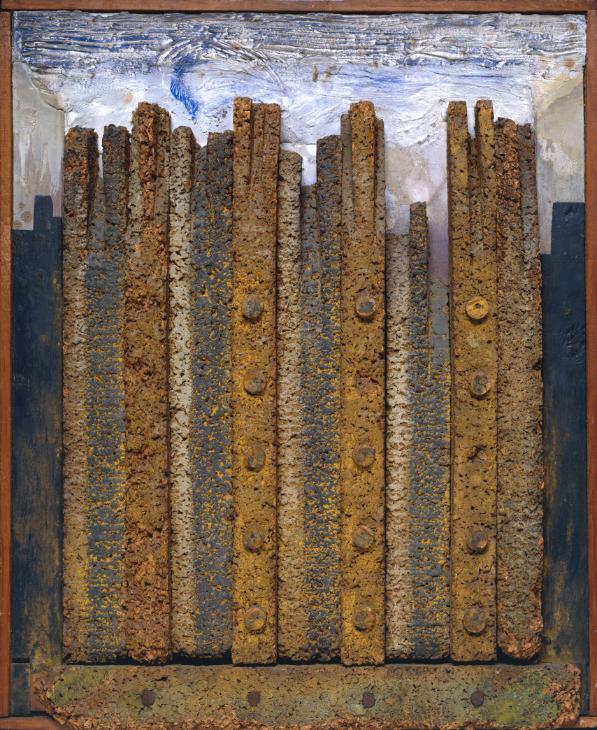
Dadaville is a musical response to the painted relief by Max Ernst shown above. What appears to be an iron wall in the imposing structure is actually made of cork, flimsy enough to be kept behind glass.
Carpenter bases his piece on the notes D – A – as in the first two letters of the painting’s name – and uses the nine letters of the word as the basis for the structure of the piece.
The tuba takes a starring role, allocated a nine bar bass line in the middle that the orchestra build on comprehensively, while towards the end of its 180 bars (20×9!) there is a reference to Beethoven’s Symphony no.9.
Did you know?
Gary was the Associate Musical Director on the film The Wicker Man. Among the many instruments he played during the recording of the film are piano, recorders, ocarina, fife and the Nordic lyre. You can read his recollections of recording here
Initial verdict
A piece obviously composed with the First Night in mind, especially if the surprise pyrotechnics at the end were anything to go by! Yet Carpenter largely succeeded in his musical sketch of Max Ernst’s Dadaville, with a piece that was both fragile and robust – just like the painted relief itself.
It was particularly good to see the tuba and bass clarinet given starring roles, making use of a swinging bass line of jazzy syncopations, while some of the string lines recalled Debussy and, at the opening, Britten.
Second hearing
There is an air of tension at the beginning of this piece in the cold string lines, but soon the energy begins to be released. The orchestral textures are crisp and clear.
The piece really acquires its direction once the tuba and bass clarinet are called into action from 6:55, and this low bass line generates the energy for the rest of the piece, which really starts to swing, all the while leading towards the fireworks at the finish. It completes a score with an impressive array of sounds and an appealing, uplifting mood.
Where can I hear more?
From Gary’s Soundcloud page, here is his Saxophone Quartet The North:
It is not an exaggeration to say that Colin Currie is one of the most exciting classical musicians at work today. The percussionist has been instrumental in securing a number of vital commissions from leading composers – Steve Reich, Elliott Carter and Rautavaara among them. Now he returns to HK Gruber for a second percussion concerto, into the open…, which he will give at Prom 5 with the BBC Philharmonic Orchestra and John Storgårds.
The piece is dedicated to the memory of David Drew, who in 1976 was appointed director of publications at the leading music publisher Boosey & Hawkes. In a chat with Arcana Colin took us through the piece itself, the instruments he uses and how Gruber’s music responds to bereavement.
Do you remember your first encounter with the Proms?
Yes – I think I played before I attended! It was in 1993, with the National Youth Orchestra of Scotland. I was playing timpani, and we played Holst’s The Planets, and a new violin concerto by Thomas Wilson. It was a typical Proms programme.
What was your first Prom as a soloist?
I gave the premiere of Ruby by Joe Duddell in 2003. By then I had attended many Proms as a student. I would stay down in London over the summer and Prom ‘binge’, and from around 1995 I went to dozens of Proms, usually as a Prommer. I think it’s the best way to experience the festival, and the best way for me is to stand towards the back of the arena. The gallery also gives a really nice perspective.
It is amazing to play in the Royal Albert Hall for the first time, it is a huge hall and a wonderful audience. There were people packed around the orchestra in this concert, and it was wonderful.
You’ve worked with HK Gruber for nearly 15 years now. How do you think his music has changed and / or developed in that time?
He is always going through different stages of density in his music. At certain points his writing has become incredibly dense, and at other times he has the confidence to let things thin out, to use his charm and charisma. His qualities become transparent that way. He is developing often in a most challenging way, always looking for new angles and takes. His is an extremely creative and inquisitive mind, and he does things with a childlike wonder. An interesting comparison to showcase is the first percussion concerto, Rough Music, but I think this one is a better one. Rough Music is a wonderful piece, but this shows how things have moved on. It is more challenging for the soloist and for the orchestra, and it is highly intensified, more extreme, more daring and audacious!
The impression HK Gruber gives is that he has a keen sense of humour.
He does have a wicked sense of humour, that’s all true, but he is also extremely serious about his music, and it is done with lightness and enjoyment. It’s all about music and high art, nothing else matters, and he is incredibly passionate about it. If you don’t want to listen it is beyond him, and that’s why music is so strong for him.
You must have built up quite a set of memories of collaborations with composers.
Definitely. These composers I have got to know and I treasure those experiences, they are fascinating to me. I have come to relate strongly to their endeavours and the challenges they face. They are extremely strong characters, and not always easy, but it is an amazing sweep of personalities that I have been lucky enough to work with. I try to be a facilitator, and I will put them way ahead of anything that might be bugging me. I will put their music over and above their egos, and I try to put mine last!
into the open… is scored for a variety of percussion instruments. Can I get you to explain these ones?
Cencerros: “they are tuned cow bells”
Plate bells (or bell plates) “They sound like large church bells. There are three of them in this piece, and they are deep and resonant. None of the instruments are especially unusual, but the combinations Gruber uses are unusual. The plate bells are used with the marimba, gongs and temple blocks. It is a monstrous percussive machine! There are also six timpani with tom toms, snare and bongos – a grand total of 22 drums!”
Cajón (pronounced ca-hon) – “A box you sit on and play with your hands. It is used in Latin music.”
African balafon – “essentially a xylophone”
Did you know David Drew at all?
I did meet him briefly, but only meeting him once I was completely inspired by him. He was eccentric, and without being disrespectful it is fair to say he was crazy about music. I met him not long before he died, when I gave a concert in 2009. It was a concerto by Kurt Schwertsik, a Boosey & Hawkes composer, who is Austrian and a good friend of Gruber. Drew signed them in the 1980s I believe, and he was so passionate, jumping up and down like a child as he was energised by Mozart, Stravinsky and Schwertsik. I’ll be doing my best to do him proud in the performance.
(click here to watch an introduction to Schwertsik’s Marimba Concerto from the Scottish Ensemble
How does into the open… remember David Drew?
The piece itself is about thwarted feelings of desperation and loss. It confronts bereavement in an angry and passionate way. It is a violent piece, and an unhappy one too – but it is also extremely lyrical and tender. The person, the subject, is clearly missed – but it is not easy to put into words.
You have worked with John Storgårds on new percussion works previously. Do you find him particularly understanding to your requirements?
He is the best! He has a wonderful way of working with soloists, and he has been a vast presence in maintaining concerto-level performances. Nothing is ever too complicated, and nothing gets between him and the music. He always get the simplest approach, and gives us soloists confidence while also keeping us calm. He and the BBC Philharmonic Orchestra are fantastic, I could not be happier with them.
What are your plans for the rest of the year?
I am going to Vienna, which is a big deal as I am playing at Wien Modern, a festival I have revered from afar. I am playing the Gruber with the Vienna Symphony Orchestra, and it will be wonderful as it is my debut there.
I have some concerts further away but I am giving the premiere of a Percussion Concerto by Andrew Norman called Switch next season. That will be with the Utah Symphony Orchestra, they are celebrating their 75th anniversary in Cadogan Hall.
Are you continuing to work with Steve Reich?
Absolutely, the group is very busy touring away. Next season we will play the Music for 18 Musicians at the Royal Festival Hall, and will play the Quartet that he wrote for us. We are also very busy with upcoming projects and playing in Japan, and all around music. There is a great spirit for collective music, we have a lot of fun playing it. The Southbank performance will be part of my role as Artist in Association there, and after the Metal Wood Skin festival we have some wonderful plans in the pipeline!
Colin Currie performs into the open… with the BBC Philharmonic Orchestra conducted by John Storgårds at the BBC Proms on Monday 20 July, in a concert that includes Haydn’s Symphony no.85 and Stravinsky’s Petrushka.
You can get more information about his disc of Gruber’s first Percussion concerto, Rough Music, by clicking here.
Finally an obituary and appreciation of David Drew from the composer Alexander Goehr can be read on the Guardian website
In case you cannot hear the broadcast, here is a Spotify playlist of the music in this concert. Steven Kovacevich has recorded the Schubert but it does not appear to be available on Spotify, so is included here in a leading recording by Maurizio Pollini. The Berg, which he has not recorded, is performed by Mitsuko Uchida:
What’s the music?
Berg: Piano Sonata, Op.1 (1908) (10 minutes)
Schubert: Piano Sonata in A major, published as D959 (1828) (37 minutes)
What about the music?
Steven Kovacevich describes the BergPiano Sonata as music ‘drawn toward the distant future but still tied to the immediate past’. When he finished the first movement of what he thought would be a larger work in 1908, his teacher and mentor Schoenberg encouraged him that if he had said all he needed to say musically, there was no need to carry on. It is a landmark piece as music begins to break with conventional tonality.
While the 22-year old Berg was starting out, the 30-year old Schubert was signing off. Aware that he had not long to live, the gravely ill composer completed a trio of three massive piano sonatas, some of the biggest works ever written for the instrument and still to this day some of the most remarkable music you can hear on the piano. The second of the three in A major is a remarkable piece, contrasting passages of serenity and acceptance with sudden outbursts of temper – as in the second movement, initially slow but unable to contain itself fully. These are pieces that keep on giving in their remarkable construction and memorable melodies.
Performance verdict
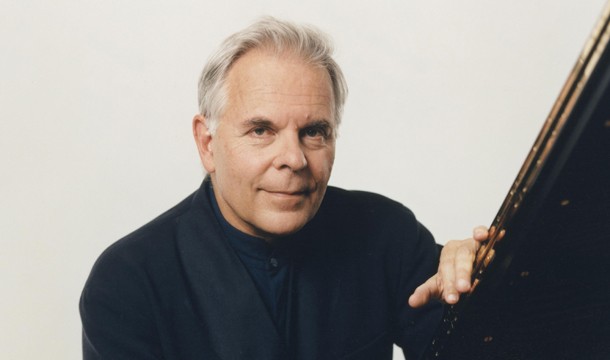
The insights Steven Kovacevich has given into piano music over the last 50 years cannot be underestimated, and the sheer weight of experience he brings with him is the result of a lifetime spent performing at the very highest level.
It is this experience that shines through, especially in a reading of the Schubert sonata that is not without its problems. I would have to digress for a moment and ask if there are many 75-year olds who could play such a piece without a score, and think there are very few. Small wonder, then, that Kovacevich has what seems to be a memory lapse in the final movement, and there are a number of minor slips elsewhere. These are still very much worth persevering with because his portrayal of the unfolding drama in the Schubert is special indeed – and in the second movement in any case it is as though Schubert writes in a lot of ‘wrong’ notes.
What should I listen out for?
Berg
2:00 – one of the most intriguing beginnings to a composer’s published output is surely the quizzical opening notes of the Berg sonata, which end up in its supposed ‘home key’ of B minor, but only by asking far more questions than they answer. There is an immediate impression of a new world forming, and the harmonic outlook is constantly changing in music of great density.
The opening theme, however – the first three notes, at least – is distinctive enough to be felt in the development it receives afterwards. The music builds to a weighty climax at 7:51, then scales the heights at 10:42. Berg writes in a single paragraph, the music subsiding to the quiet, thoughtful finish.
Schubert
14:30 – the opening of the sonata is thoroughly positive, a call to arms – though Stephen Kovacevich is slightly understated in this performance. There is a serenity and intimacy that sets the tone for much of the piece.
15:57 – Schubert’s second theme, a lovely moment of introspection but also restfulness. Barely a minute later however there is a lot more audible strife, and things become fraught – until the return of this second theme at 17:41. A crunching chord at 18:07 prepares us for…
18:15 – Kovacevich repeats the movement so far (18:11) as instructed by Schubert. This helps balance the structure of the whole first movement.
23:53 – a return to the material that dominated the opening exchanges – and then, after a protracted and angst-ridden piece, the second theme and a peaceful close at 28:40.
28:54 – the slow movement begins. As with Beethoven, time seems to stand still in Schubert’s late sonatas, and his thoughts are almost of another world. The music here is very subdued but not by any means hopeless.
31:01 – the right hand seems to develop a mind of its own, becoming faster and faster. In response the music moves to distant and rather twisted harmonies – as Kovacevich notes, sounding a prophetic note towards the music of Liszt here. Feelings of anger and frustration come to the boil. The music collapses in something of a heap, exhausted at the end.
35:07 – the Scherzo, a piece of music that sounds like a feather being blown around by the wind. The detached delivery from Kovacevich’s right hand is subtly mischievous.
37:14 – the contrasting trio section begins, but is a short diversion from the main theme itself, which returns again in humour at 38:24.
39:28 – Kovacevich runs straight into the fluid finale but stops himself at 41:12. Then he picks up again at 41:26. To listen to this movement in full it is recommended to forward to…
51:16 – where after applause Kovacevich very graciously gives a re-run of the finale. Listening carefully to the full theme, there is a similarity between this and Beethoven’s ‘Ode to Joy’ theme from the Choral Symphony. It is in the main beautifully played, with a magical moment at 57:01 when we hear the theme in F sharp major, a fair way from home! At 1:01:12, however, Schubert arrives at his destination.
Further listening
A natural port of call from the Berg Piano Sonata is Schoenberg’s early piano works, which also dice with removing tonality altogether. These are the quite substantial Three Piano Pieces of 1909 and the tiny sketches that make up the Six Little Piano Pieces. Then to complement the Schubert we have the small but perfectly formed late Allegretto in C minor and three more beefy piano pieces from the last year of the composer’s life, written in a similar vein to the famous Impromptus. Here they are, all played by Maurizio Pollini and tagged on to the end of the concert playlist:
It’s nearly time for the BBC Proms. The world’s biggest classical music festival – which seems to get bigger every year – starts this coming Friday at the Royal Albert Hall.
With so much to choose from Arcana has taken on the task of choosing ten Proms to attend, watch or listen to – which you can read about and preview below. The idea is to mix up a few obvious recommendations and a wildcard or two.
The Arcana coverage of the Proms is going to be a little bit different from your average review site. For a start any Prom reviewed in person will be experienced from the Arena rather than from a seat. This is for two reasons – the Arena has arguably the best acoustic in the notoriously tricky hall, and it’s also the place where the biggest cross section of musical public brush shoulders.
This year in its Proms coverage Arcana will also be focusing on new music, offering an appraisal of each premiere at the festival. This is a surprisingly demanding task, because there are 32 new pieces from the likes of Eric Whitacre, Hugh Wood and even a newly discovered work by Olivier Messiaen. An early interview on Arcana will feature percussionist Colin Currie talking about the new concerto into the open…, written for him by HK Gruber. So here we are then – ten Proms and tasters for you, however you intend to experience them. Happy Promming!
18 July: Ten Pieces Prom (Prom 2 – repeated on 19/7 at 11:00am) (TV)
Ten Pieces is the BBC’s initiative to get classical music into schools – but of course the learning need not stop there! This prom, presented by Dick and Dom, Molly Rainford and Dan Starkey, is comprised of all ten pieces, from John Adams’Short Ride in a Fast Machine through to the end of Stravinsky’s ballet The Firebird. Here’s a link to a preview of all ten pieces:
20 July: Thomas Tallis’ Spem in alium (Proms Chamber Music 1)
Once again Proms Chamber Music will visit the Cadogan Hall every Monday lunchtime – but to begin with The Cardinall’s Musick will perform sacred music by Cheryl Frances-Hoad – a world premiere – and the jawdropping Spem in alium of Thomas Tallis, a 40-part choral piece that simply has to be heard. Here is the Tallis Scholars’ conductor Peter Phillips discussing the work:
28 July: Prokofiev – Piano concertos 1-5 (Daniil Trifonov, Sergei Babayan and Alexei Volodin, London Symphony Orchestra / Valery Gergiev (Prom 14)
Not one for the faint hearted, this! Prokofiev wrote for the piano both as a percussion instrument and a lyrical one, so some of his works feature stabbing but often jaunty tunes. The Piano Concerto no.2 is particularly epic:
The world premiere of Sir James MacMillan’s Symphony no.4. Donald Runnicles will also conduct the underrated BBC Scottish Symphony Orchestra in Mahler’s Symphony no.5, which promises to bring new life to the old warhorse:
4 August: Monteverdi – Orfeo (Prom 25)
Described as ‘the first great opera’, Orfeo will be sung in Italian and conducted by Sir John Eliot Gardiner, who will, to quote the BBC Proms website, ‘transform the Royal Albert Hall into the 17th-century Mantuan court of the Gonzagas with some of Monteverdi’s loveliest melodies and most colourful instrumental writing’. Here’s what we have to look forward to:
5 August: Late Night with 6Music (Prom 27)
Following the successful 6Music night two years back, the station returns – this time with Mary Anne Hobbs at the helm to explore new music from two composers on the Erased Tapes label who write with classical music in mind. These are Nils Frahm…
An obvious recommendation perhaps, but if you wanted to see a Sibelius concert and had a choice of conductor, Osmö Vänska would surely be it. His interpretations of the composer are both incredibly detailed and deeply passionate, and the BBC Symphony Orchestra will no doubt fall under his spell for three of the composer’s symphonic masterpieces:
19 August: Elisabeth Leonskaja plays Mozart (Prom 45)
Elisabeth Leonskaja is quite simply one of the best pianists in the world today – and in Mozart’s Piano Concerto no.22 her performance should be sublime. Charles Dutoit and the RPO will no doubt prove sensitive accompanists – but in Debussy (the Petite Suite) and Shostakovich (Symphony no.15) they should also be rather special. Here is Leonskaja in solo Mozart:
9 September: Nielsen and Ives (Prom 72)
This intriguing night of music takes two wildly different forces from twentieth century music – anniversary composer Carl Nielsen, born 150 years ago, and the maverick Charles Ives, gradually revealed as one of the most influential composers of modern times. The former is represented by the impressive Violin Concerto, which will be played by the extravert violinist Henning Kraggerud. The latter by Symphony no.4, which really is best experienced in person. It contains a number of hymns, performed by a choir beforehand. Andrew Litton will be the guiding hand.
11 September: Elgar – Dream of Gerontius with Sir Simon Rattle (Prom 75)
Sir Simon Rattle returns for a second night at this year’s festival, leading the Vienna Philharmonic and a starry trio of soloists in Elgar’s magnificent choral work, with Toby Spence, Roderick Williams and wife Magdalena Kožená. Here’s an excerpt from the Berlin Philharmonic: