Monteverdi Choir, English Baroque Soloists /Sir John Eliot Gardiner (above)
Schütz Nun lob, mein Seel, den Herren, SWV 41; Nicht uns, Herr, sondern deinem Namen, SWV 43; Danket dem Herren, denn er ist freundlich, SWV 45 (all c1617)
J.S. Bach Cantata No.79, ‘Gott der Herr ist Sonn und Schild’ (1725); Cantata No.80, ‘Ein feste Burg ist unser Gott’ (1716, revised 1720s-1735)
Royal Albert Hall, Wednesday 2 August 2017 (late night)
After the earlier evening headiness of John Adams’ Naïve and Sentimental Music from the Philharmonia, it was quite a stylistic shift to the night’s second Prom, which began with three canzonas / hymns of Heinrich Schütz, written some 400 years ago.
Yet as the ear gradually adjusted and the members of the Monteverdi Choir and English Baroque Soloists quickly found their level, it was clear we were listening to something quite special. Under the fastidious but loving direction of Sir John Eliot Gardiner, an old hand at these scores, Schütz’s own minimalism came to light, helping the transition from first Prom to second. The choir were carefully positioned and instrumental soloists stood where possible for their contributions, an effective technique that spotlit them for the audience but also ensured the Royal Albert Hall acoustic was keenly observed.
Though the Schütz was very good, the two J.S. Bach cantatas took this late night concert to the next level. First was Gott der Herr ist Sonn und Schild, where the vocal soloists Amy Carson (soprano), Reginald Mobley (alto) and Robert Davies (bass) were particularly fine, and the small continuo* (*accompanying) section negotiated their tricky lines with deceptive ease.
The second cantata, Eine feste Burg ist unser Gott, became the focus of the evening, Bach’s Lutheran cantata a cornerstone not just of his sacred compositions but of Baroque music and the Reformation in general. Gardiner took every opportunity to depict the ‘mighty fortress’, whether through the strength of the choral sound or the meaty orchestral textures, capped at the bottom end by the extraordinarily satisfying rasp on Stephen Saunders’ bass sackbut, an ancestor of the trombone. Brought to the front for the Prommers’ benefit, it was a wonderful thing to witness.
This was just the tip of the iceberg though. One of the great assets of the Monteverdi Choir is that its members are all potential soloists, making it a great team of individuals. Soprano Miriam Allan and bass Robert Davies dueted in the Aria and Chorale, and complemented each other very nicely, then tenor Hugo Hymas sang beautifully for the Recitative, while Mobley (above) once again impressed with his passionate and full-bodied tones in a duet with the tenor. The orchestra were once again on top form, though this time oboist Leo Duarte was keenly in focus, moving between the conventional wooden oboe, an oboe d’amore and an oboe di caccia (which looks rather like a banana!) with great dexterity and flair.
The chorus were impeccable with their diction and ensemble, and Bach’s music had that life-giving energy that comes across in successful performances such as this. Eliot Gardiner has written a whole book (Music In The Castle of Heaven) on his love of Bach’s music, and listening to his charges here was akin to standing on the turrets of that building, faces turned skywards. It really was that enlightening.
Marianne Crebassa (mezzo-soprano), Philharmonia Voices and Orchestra / Esa-Pekka Salonen
J.S. Bach arr. Stravinsky Canonic Variations on Vom Himmel hoch, da komm, ich her (1956)
Ravel Shéhérazade (1904)
Adams Naive and Sentimental Music (1999)
Royal Albert Hall, Wednesday 2 August 2017
You can listen to this Prom here for 28 days from the date of the performance
This year’s Proms celebration of John Adams‘ 70th birthday moved on to some Naïve and Sentimental Music. Not my label, but the composer’s own – and a misleading one at that. The title implies a sketchily composed, throwaway fragment, but what we actually get is something very substantial, longer than many symphonies. The construction of the three sections making up the piece illustrate the ease with which the music of Adams expands to fill such dimensions, not something you could always say about the music of like-minded ‘minimalists’, Philip Glass and Steve Reich.
Where others of his ilk tend to work in smaller melodic units, Adams thinks nothing of spinning out a long, intense melody over several minutes, hanging like a long telegraph wire above the sun-drenched plains. Such an image came to my head as we listened to the second movement of three, Mother of the Man, where the guitar of Huw Davies sounded rather like the early music of Pat Metheny in its deceptively lazy traversal. The strings held fast, creating the wide expanses of which Copland would surely have been proud. The treble textures were especially rich, but when the dynamic dropped to a barely audible whisper on the violins, members of the audience were subconsciously leaning forward to follow developments in the music.
It helped that the conductor was also the dedicatee of Adams’ sizeable score, Esa-Pekka Salonen taking delivery on behalf of the Los Angeles Philharmonic in 1999. Here he secured some outstanding playing from the Philharmonia Orchestra, who responded to the virtuoso demands of the music with impressive rhythmic impetus, intense focus and characterful phrasing. When the music gathered itself several times in the first movement, Naïve and Sentimental Music, the pacing and rhythms felt just right, with especially good work from harpists Heidi Krutzen and Stephanie Beck, not to mention percussionists Antoine Siguré, Scott Lumsdaine, Peter Fry, Stephen Burke, Tim Gunnell and Karen Hutt.
Towards the solemn close of Mother of the Man it was the brass bringing deeper shades to the forefront of the picture with exquisitely held chords. As Chain to the Rhythm hurried along the intensity built steadily and inexorably until it became nerve-shredding, the piece thundering along with gongs, bass drum, cymbals and massive timpani strokes giving it a mountainous perspective. We ended through the altitude of the violins, these massive orchestral sounds now a huge echo. It was a moving finish to a piece that is clearly underrated in Adams’ canon. Salonen clearly believes in it, and this audience did too.
A curious (but very interesting) first half began with Stravinsky’s arrangement of J.S. Bach’s Canonic Variations on Vom Himmel hoch, da komm, ich her, a recomposition made to accompany the world premiere of the latter composer’s Canticum Sacrum in St Marks, Venice in 1956. This was an oddity of economical orchestration and sung text from a reduced choir. There was some quite tart colouring in the manner of Stravinsky’s later style, and his additions to the music of Bach added extra spice to the harmonies at unexpected points. An intriguing but puzzling arrangement, and one that threw the softer textures of Ravel’s Shéhérazade into relief.
This was no doubt intentional, for we were privy to a wonderful performance from French mezzo-soprano Marianne Crebassa (above). Shéhérazade is a magical song cycle when performed well, but here it transcended all expectations – in fact I don’t recall ever seeing a singer who gauged the acoustic of the Royal Albert Hall with quite the accuracy of Crebassa. Her direct communication with the audience was reinforced by the elegance and understated strength of her vocal delivery, a truly beautiful tone that caressed Ravel’s lines with clear love and affection.
The first song, Asie, held an exquisite tension as the travelling scene unfolded, while La flûte enchantée, the instrument itself beautifully played by Samuel Coles, thrilled with its orchestral colours and heady textures. L’indifférent was a little more mischievous, and again the exquisite tones and textures were in full accord with the very best Ravel performances.
Crebassa is most definitely an artist for the future, and her blend and rapport with the Philharmonia was something to behold. The reverent string textures and typically pinpoint orchestration were viewed through Salonen’s technicolour lens, but the team brought something very special to Klingor’s text. If you get the chance to hear the broadcast, do so as soon as you can. You will hear one of the best young singers in classical music right now!
Ben Hogwood
Stay tuned for the next in Arcana’s Ask The Audience series, where Steve Hodges will give his verdict on the John Adams Prom. Coming shortly!
John Grant, Jarvis Cocker, Susanne Sundfør and Richard Hawley (all above), London Contemporary Voices, Heritage Orchestra / Jules Buckley
Walker, arr. Jules Buckley, Stefan Behrisch, Peter Riley and Tom Trapp Titles from Scott (1967), Scott 2 (1968), Scott 3, Scott 4 (1969) & Till the Band Comes In (1970)
Dick Hovenga and Simon Raymonde, creative directors
Royal Albert Hall, Tuesday 25 July 2017 (late night)
This late-night Prom highlighted the song-writing talent of Scott Walker from his late 1960s heyday. Less challenging while no less provocative than the music he has released this past two decades, it is a token of their composer’s fleeting stardom that few, if any, of these songs were played live when they were written; only to be consigned to vinyl limbo once Walker’s star waned and he abandoned live performance in 1978. Tonight’s programme saw a notable line-up of singers assembled to honour this legacy and maybe even give it a new lease of life.
The songs themselves were drawn from the four ‘numbered’ albums released during 1967-69, along with three tracks from Till the Band Comes In – the 1970 offering that Walker himself disowned but which he now seemingly recognizes as a worthy successor to what went before.
Although he has known Walker well since their collaboration on Pulp’s final album We Love Life in 2001, as a vocalist Jarvis Cocker is not best suited to the interpreting of songs whose technical demands brook no compromise. After the plangent orchestral strains of Prologue had died away, he struggled with the ethereal Boy Child (its fusing of music and expression the most perfect of Walker’s song in this period), then under-projected the surreal and ominous imagery of Plastic Palace People. Nor was he a natural choice for the bittersweet poise of The War is Over (probably the most obscure of all these hidden gems), despite rendering it with telling sotto voce understatement, though the breezy litany of chaos and disaster which informs Little Things That Keep Us Together allowed his innately ironic delivery free rein.
There could be no doubt, even so, that John Grant is infinitely more attuned to this music, and so it proved as he brought out the wrenching pathos of Rosemary, then the pert confessional of The World’s Strongest Man. No less telling was the capricious whimsy of Copenhagen or propulsive drama of the Ingmar Bergman-inspired The Seventh Seal; this latter number benefiting from a starkly fatalistic tone such as the 24-year-old Walker could not summon back in the day. A whole album of these ‘covers’ from Grant would be more then welcome.
As also would be one from Icelandic singer Susanne Sundfør (above), whose often brittle yet always focussed delivery teased out the deadpan humour from On Your Own Again then stripped Angels of Ashes of undue preciousness. Best of all was the edgy irony she brought to The Amorous Humphrey Plugg, another highpoint of Walker’s song-writing, while Hero of the War aligned anger and compassion to a telling degree. A slight pity that Long About Now, Walker’s one number intended for a female vocalist, was not featured. Maybe another time?
A fine guitarist and distinctive crooner, Richard Hawley proved as attentive to the tangible atmospherics of It’s Raining Today as to the warm evocation (so easy to sentimentalize) of Two Ragged Soldiers. Neither was there any dilution of that yearning for domestic bliss in Montague Terrace (in Blue) or sardonic humour in The Old Man’s Back Again (Dedicated to the Neo-Stalinist Regime) – a song which underlines Walker’s awareness of the political realities during this period, as has surfaced more obliquely in much of his more recent music.
Throughout this 90-minute sequence, Jules Buckley secured vivid and attentive playing from the Heritage Orchestra, while London Contemporary Voices made the most of some brief yet pertinent contributions. They, together with all four of tonight’s singers, united for a rousing Get Behind Me – a surprisingly funky number in context – to end this impressive showcase. Hawley remarked to the audience that such an event might never happen again, though one cannot help feeling Walker’s 1960s output could now be up and running – not before time!
Firmly established at the Proms during this past decade through his high-profile musical and film programmes, John Wilson has enjoyed relatively little exposure in terms of the classical repertoire for which he evidently feels great affinity. His recent appointment as the Associate Guest Conductor of the BBC Scottish Symphony Orchestra should hopefully rectify this, and this early-evening concert cannily juxtaposed what has long been regarded as Vaughan Williams’s most recalcitrant (and underrated) symphony with what will always be Holst’s most popular work.
As dense in texture as it is ambiguous in content, Vaughan Williams’s Ninth Symphony has enjoyed limited advocacy (it went un-played at these concerts for almost three decades after 1960), though it has latterly enjoyed something of a return to favour and one anticipated that Wilson would have its measure. What resulted was something of a curate’s egg in terms of interpretation, not least in an opening movement whose Moderato maestoso marking was scarcely evident – Wilson favouring a fluid approach as emphasized this music’s ominous import while leaving the (often shaky) orchestral ensemble to fend for itself. Better in this respect was the second movement, its sombre and Hardy-inspired imagery made tangible through haunting flugelhorn solos and the baleful music that intervenes at crucial moments.
Neither was the militaristic scherzo wanting in impetus, though here Wilson’s preference for deftly sprung rhythms and relatively transparent textures served to rob this music of its sheer malevolence. Much the hardest movement to bring off, the lengthy finale emerged surely and methodically – its polyphonic weave rendered with a clarity that not even the expanse of the Albert Hall acoustic could deny – to an apotheosis more telling for its tangible equivocation. Whether those blazing E major chords convey affirmation or resignation is open to question.
The Planets has, of course, never looked back over the near-century since it first astounded a public confronted with the terrors of mechanized war. Perhaps one should not be surprised that Wilson was at pains to play down its cinematic quality (hardly something of which Holst could have been aware in any case) – his vehement take on Mars proceeding an eloquent if slightly cloying Venus; itself followed by an almost dance-like Mercury and an incisive Jupiter at its best in a trio section that managed to eschew almost all trace of false solemnity
By contrast, Saturn succeeded better in its listless opening and radiant closing sections than in the anguished music at its centre; Wilson’s preference for measured tempi continuing into an unusually steady Uranus marked by deadpan humour and the spectacularly OTT organ glissando at its climax. The enigmatic Neptune was almost as successful, its disembodied textures securely rendered by the BBCSSO, though a lack of integration with the wordless voices in its latter stages meant that the close felt less ‘other-worldly’ than it needed to be.
Overall, a promising showing for what ought to develop into a productive and worthwhile association. Wilson palpably has much to contribute in this repertoire, and what technical flaws there were only intermittently undercut the qualities of these probing performances.
Richard Whitehouse (photos (c) Chris Christodoulou
Last year Arcana went on a charm offensive, introducing friends to the BBC Proms, some for the first time. For the 2017 season we will continue to bring the festival to people in this way, discovering fascinating musical facts and insights as we go. For our first visit we chose the concert commemorating Sir Malcolm Sargent, one-time conductor of the Proms in the 1960s. The program replicated his 500th Prom, given in 1966 – and to offer an appraisal we invited Rob Chung (above)
Rob is DJ Chug, a drum ‘n’ bass DJ who runs his own Elements night in East London, and he has releases forthcoming this summer on Soul Deep and Co-Lab Recordings. Yet, as he revealed to Arcana, he has a classical past.
Beatrice Rana (piano), BBC Symphony Orchestra / Sir Andrew Davis
arr. Sir Henry Wood The National Anthem; Berlioz Le carnaval romain Overture, Op.9 (1844); Schumann Piano Concerto in A-minor, Op.54 (1845); Elgar Cockaigne (In London Town) Op.40 (1900-01); Walton Façade – Suite No.1; Popular Song (1922-28); Holst The Perfect Fool – Ballet Music (1918-22); Delius On Hearing the First Cuckoo in Spring (1912); Britten Variations and Fugue on a Theme of Purcell (The Young Person’s Guide to the Orchestra), Op.34 (1945)
You can listen to this Prom on the BBC iPlayer here
Arcana: Rob, what was your musical upbringing?
It was quite an extensive one – mainly from my sisters, when I was little. They would have anything from Duran Duran to Wham!, the big pop hits of the 1980s. My parents had a bit of Motown on vinyl, then as my sisters got older the influence came into early ‘80s R&B, swing, hip hop, De La Soul, Public Enemy, a lot of gangster rap – and then some jazz – Courtney Pine, Julian Joseph. And then it was on to drum ‘n’ bass, to Goldie and 4Hero, that kind of stuff. So that was the influence from my sisters, and then because there wasn’t any local radio in East Anglia – it was just Radio 1 or nothing, no pirate radio – I used to listen to a lot of dance DJs in the evening, such as Dave Pearce, Danny Rampling and Tim Westwood. I used to record Tim Westwood’s shows every Saturday, and fell in love with hip hop basically!
My sister came to university in London, and used to record all the drum ‘n’ bass in London, off the pirate radio stations, and she used to send me the tapes back. From there I learned what was going on in London. Then at about 15 or 16 there was a new pirate station in Norwich, of all places, called Flight FM, so I used to listen to that all the time. A lot of local DJs were playing garage and drum ‘n’ bass, and that’s when I discovered UK garage, and bought my first set of decks. I was buying anything and everything – house music, hip hop, drum ‘n’ bass, and it all went from there.
At the same time I played the piano and violin as a kid, at school. I played the violin from six years old to 18, and I was in an orchestra – I got to grade seven. I was in an orchestra at school, we used to play in the chapel and the cathedral, which you take for granted now. I have this recurring nightmare about playing on the second desk of the violins, losing my place and trying to pretend I was playing for the next hour or so. It still haunts me to this day, and I still bring it up with my school mate whenever I see him!
Have you had any other classical music experiences beyond orchestra?
Not really. I used to go to the odd concert with my parents, at Christmas carol time, otherwise not really. Not since school days.
Could you name three musical acts you love, and why you love them?
Currently, Robert Glasper – a great jazz pianist, fusing hip hop, R&B and jazz, three forms I really like. He’s an amazing musician and great live. I’ve seen him about five times now, he blows me away every time.
Stevie Wonder I think is the greatest musician I’ve ever seen. I’ve seen him at Glastonbury, and at Hyde Park last year. He’s got an amazing repertoire, great albums and a great voice. He plays any instrument amazingly well, he just blows me away.
For the third one…a drum ‘n’ bass producer called Serum, who is absolutely smashing it on the drum ‘n’ bass scene at the moment. He covers all styles, has in your face, stupid jump up tunes. Anything he releases at the moment I would listen to it and probably buy it.
How did you rate your first Proms experience?
I would give it 10/10, it was awesome – amazing. Everything about it, the experience, the sound, the crowd, the quality of the orchestra, the conductor – it was a really good experience. I forgot what it was like to be at a concert but the stereo width of the sound blew me away, following the music. I was really impressed with it, and it was the Royal Albert Hall of course. The sound was crystal clear, not loud but you could hear every single thing. It was really impressive.
What was your favourite piece?
I haven’t actually decided on that yet…probably the Elgar piece…or the Schumann, with the piano. I’ll go for that one, I liked the call and response between her (Beatrice Rana) and the orchestra, with the clarinet and the cellos, going back and forth. I really enjoyed that and she was pretty special. It took you all over the place but she was the focal point as well.
You mentioned how you knew it was Elgar during the piece.
Yeah, I don’t know why – and the same with Britten as well. It feels like an English tune, I don’t know what it is. They always used to play Nimrod at the end of every year at our school, and I think it was the harmonics or the chord progression, as soon as they started playing – and how the strings come in and out, with a slow attack.
What was your least favourite?
I think it was The Perfect Fool. I got a bit lost, and couldn’t keep up with what was going on. That was the intention, right?! I couldn’t really follow it. I liked the Walton piece though, it was a bit of fun in the middle, and the fact you could get a crowd laughing at a random ending, that was pretty special. That was where the percussion came out and were really getting into their element.
What did you think of the Delius piece, On hearing the first cuckoo in spring?
I quite liked that, again – spring, the strings coming in, it was a nice, short, to the point piece.
Do you think in terms of the length of the pieces some was too long?
It’s hard to keep up for that length of time. Some of the Schumann I struggled with a bit at the end, but at the same time in the Walton when it was short and sweet I sometimes felt it was too short, a little poem rather than a chapter. It was a nice change, a bit like listening to a Disney score.
It can be quite mentally tiring trying to take all of the music in, you start wandering. But I was comparing tonight to when I saw James Blake play at Shepherd’s Bush, and it was a sensory overload with all the lights and everything, there was a lot to take in. it was like that tonight, with lots of different things going on and trying to keep up – it was a good workout for the brain.
I thought it was also interesting how someone in the orchestra can have just one small part in 30 minutes, but when you come in you can’t miss a place. The Elgar piece I felt a lot of tension building, the Walton piece – I forget you can have things in triple time. These days everything I listen to is in four!
What did you think of the concert as an experience?
It was a lot more informal than I was expecting. I enjoyed the laid back atmosphere, it seems very open – which is not what I expected at all. We had people reading their books, people lying down, a guy reading along to the music which I thought was quite cool. I liked the crowd involvement – not a lot but traditional, it was really nice. The National Anthem at the start threw me a bit (and me! – ed) but at the same time it is nice to do these things, it doesn’t happen very often.
The acoustics vary differently where you are, it’s interesting to compare down in the Arena with up in the gods. I would be interested in how they mic everything up and do the soundchecks. There is the depth of sound as well, you really feel the depth with the violins to the tuba. I liked how the organ just snuck in during the Elgar too. Nobody was out of sync, either! I was trying to spot someone…but not gonna happen!
What we said about the conductor, how much control he has over everything – I was impressed with that, how he sped it up, slowed it down and brought people in. I forget how much hard work that must be. You’ve got to know the pieces inside out, and it was very impressive.
Was there anything you would change about how the concert was staged or presented?
Not really. I guess I’m used to having members of the band introduced, pointing out a certain lead – but I guess that’s done in the programme notes. I don’t think I would change anything.


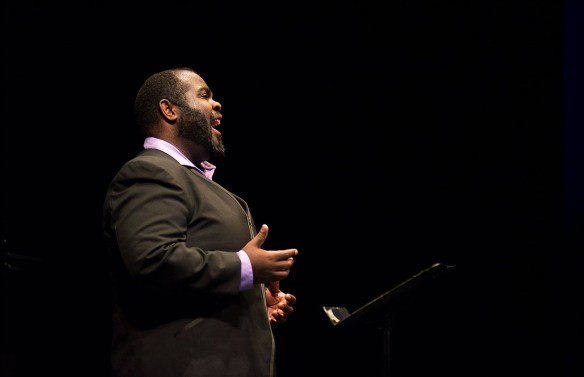 This was just the tip of the iceberg though. One of the great assets of the Monteverdi Choir is that its members are all potential soloists, making it a great team of individuals. Soprano Miriam Allan and bass Robert Davies dueted in the Aria and Chorale, and complemented each other very nicely, then tenor Hugo Hymas sang beautifully for the Recitative, while Mobley (above) once again impressed with his passionate and full-bodied tones in a duet with the tenor. The orchestra were once again on top form, though this time oboist Leo Duarte was keenly in focus, moving between the conventional wooden oboe, an oboe d’amore and an oboe di caccia (which looks rather like a banana!) with great dexterity and flair.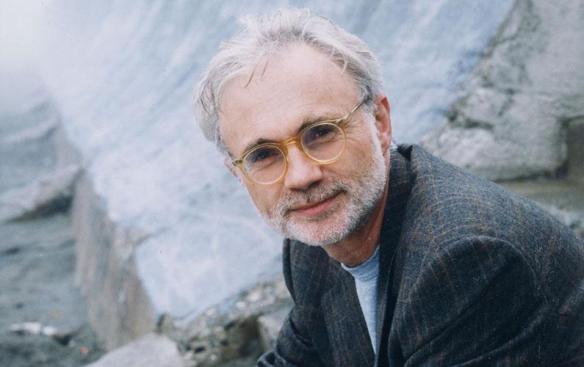
 This was no doubt intentional, for we were privy to a wonderful performance from French mezzo-soprano Marianne Crebassa (above). Shéhérazade is a magical song cycle when performed well, but here it transcended all expectations – in fact I don’t recall ever seeing a singer who gauged the acoustic of the Royal Albert Hall with quite the accuracy of Crebassa. Her direct communication with the audience was reinforced by the elegance and understated strength of her vocal delivery, a truly beautiful tone that caressed Ravel’s lines with clear love and affection.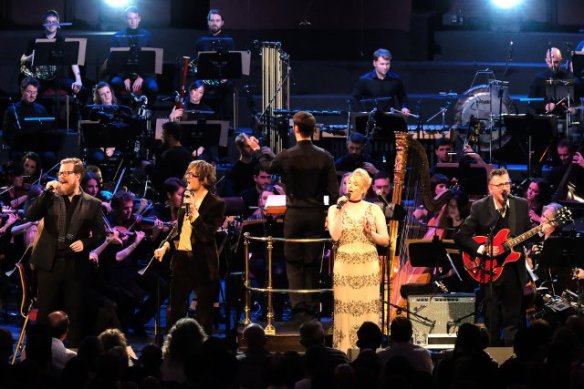
 As also would be one from Icelandic singer Susanne Sundfør (above), whose often brittle yet always focussed delivery teased out the deadpan humour from On Your Own Again then stripped Angels of Ashes of undue preciousness. Best of all was the edgy irony she brought to The Amorous Humphrey Plugg, another highpoint of Walker’s song-writing, while Hero of the War aligned anger and compassion to a telling degree. A slight pity that Long About Now, Walker’s one number intended for a female vocalist, was not featured. Maybe another time?
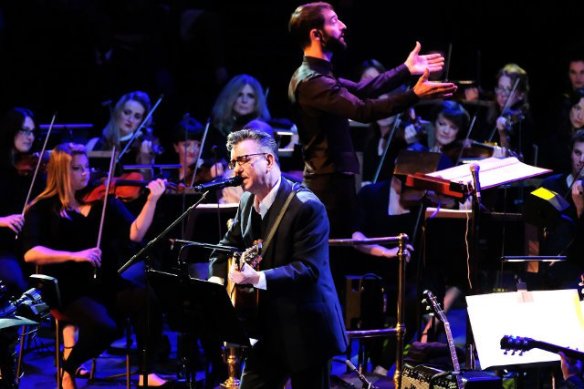 A fine guitarist and distinctive crooner, Richard Hawley proved as attentive to the tangible atmospherics of It’s Raining Today as to the warm evocation (so easy to sentimentalize) of Two Ragged Soldiers. Neither was there any dilution of that yearning for domestic bliss in Montague Terrace (in Blue) or sardonic humour in The Old Man’s Back Again (Dedicated to the Neo-Stalinist Regime) – a song which underlines Walker’s awareness of the political realities during this period, as has surfaced more obliquely in much of his more recent music.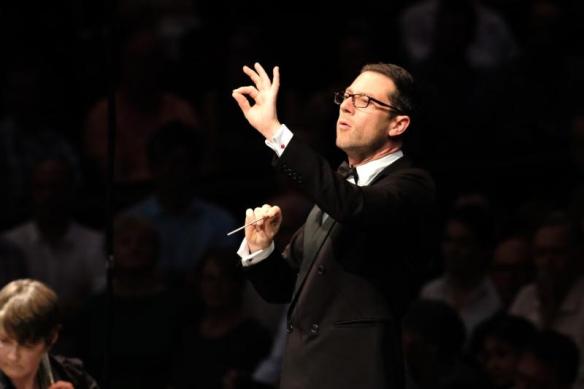
 The Planets has, of course, never looked back over the near-century since it first astounded a public confronted with the terrors of mechanized war. Perhaps one should not be surprised that Wilson was at pains to play down its cinematic quality (hardly something of which Holst could have been aware in any case) – his vehement take on Mars proceeding an eloquent if slightly cloying Venus; itself followed by an almost dance-like Mercury and an incisive Jupiter at its best in a trio section that managed to eschew almost all trace of false solemnity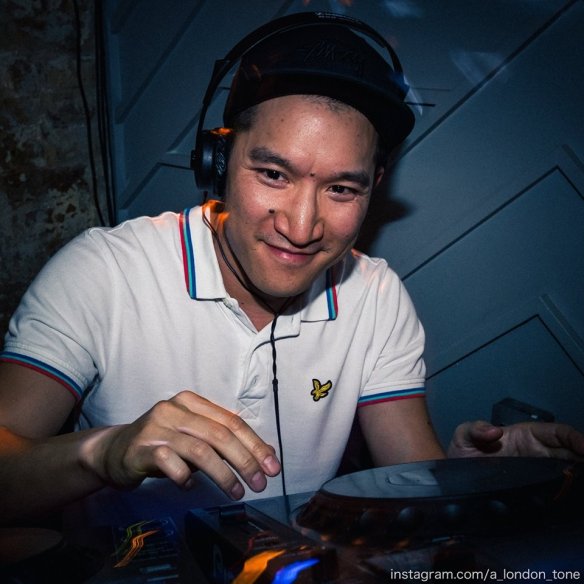
 Arcana.fm