New music – Guy Johnston’s British cello odyssey

from the press release, edited by Ben Hogwood

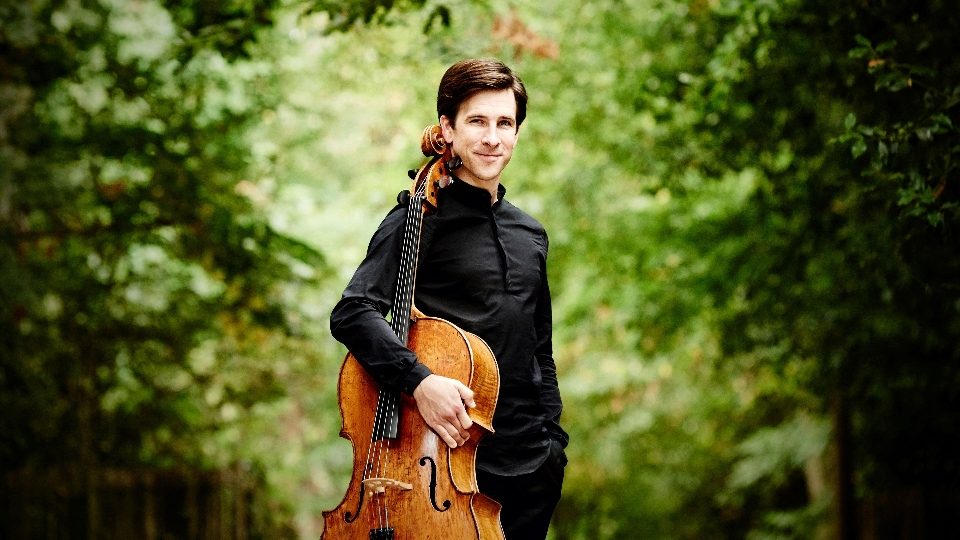
With his 1692 ‘Segelman, ex hart’ Stradivarius Cello, loaned to him from a private sponsor through the Beare’s International Violin Society, Guy Johnston embarks on a British cello odyssey, including the world premiere of a new cello concerto by Joseph Phibbs in January 2026.

To mark Bliss’ 50th anniversary, Johnston’s recording of Arthur BlissCello Concerto with the Royal Liverpool Philharmonic Orchestra conducted by Andrew Manze is released digitally on 25 July, 2025 on Onyx Classics. It will form a later album release with the Britten Cello Symphony.

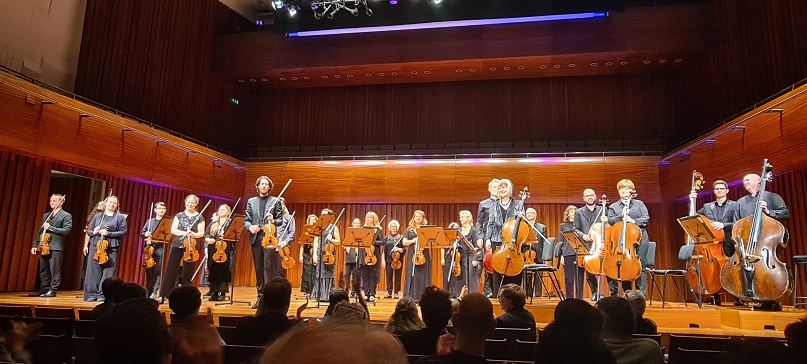
Following a performance at the 2025 Hatfield Music Festival on 12 October 2025, Johnston will record The Protecting Veil with the Britten Sinfonia directed and led by Thomas Gould in live concerts on 28 and 29 October, 2025 at St. Sophia’s Greek Orthodox Church in London. The album will be released on Signum in the summer of 2026.

Completed in 1988, Tavener’s The Protecting Veil was begun in response to a request from cellist Steven Isserlis for a short piece. It developed into a more substantial work, and was subsequently commissioned by the BBC for the 1989 Proms season. Like many of Tavener’s compositions, this work reflects the composer’s Orthodox religious faith. The inspiration for the piece comes from the Orthodox feast of the Protecting Veil of the Mother of God, which commemorates the apparition of Mary the Theotokos in the early 10th century at the Blachernae Palace church in Constantinople in grave danger from a Saracen invasion.

As Tavener explained, “the cello representers the Mother of God and never stops singing throughout. One can think of the stings as a gigantic extension of her unending song…the first and last sections relate to her cosmic beauty and power over a shattered world.”

Johnston met Tavener on a number of occasions and was touched to be asked by Britten Sinfonia to perform The Protecting Veil last year on the occasion of what would have been the composer’s 80th anniversary. Johnston was keen to record The Protecting Veil at St Sophia’s, where Tavener used to attend mass.

On 16 January 2026, Johnston will give the world premiere of Joseph PhibbsCello Concerto at the Barbican with the BBC Symphony Orchestra conducted by Clemens Schuldt. In 2021, Johnston previously premiered Joseph Phibbs’ Cello Sonata, partly based on an Elizabethan pavane found in the archive of Hatfield House.

Phibbs, who is a huge admirer of Britten, commented,

“The main focus of this concerto is on melody, and how this might be explored in various ways over the uniquely wide range of the cello. The work is symphonic in structure, adopting a multi-movement form as opposed to the traditional three, and ends with a short ‘Vocalise’ (song) for cello and strings which soars to the very top of the cello’s high register. Elsewhere, a dramatic opposition between soloist and orchestra is emphasized. At the forefront of my mind while composing this work has been the wonderfully varied facets of Guy’s playing, which I have admired for many years. It’s been a huge privilege and excitement to write for such a special performer”

In September 2026, Johnston will record Britten’s Cello Symphony with the RLPO conducted by Andrew Manze for Onyx Classics to coincide with the composer’s 50th anniversary (Britten d. on 4 December 1976). The album will include the Bliss Cello Concerto (previously released digitally).

The 2025-2026 season coincides with Johnston’s returns to the Royal Academy of Music as a Professor of Cello. This role will see him offer bespoke tuition to cello students throughout the year. Johnston started out as a professor at the Academy in 2011, later becoming visiting professor. The appointment follows Johnston’s recent relocation back to the UK following his tenure at the Eastman School of Music in Rochester, NY, from 2018 to 2024.

Johnston commented,

“I’m thrilled to have returned last year to the UK with my family for this exciting series of recordings, commissions and performances.”

Published post no.2,600 – Saturday 19 July 2025

In concert – Guy Johnston, Britten Sinfonia / Thomas Gould @ Barbican Hall: The Protecting Veil

Guy Johnston (cello, above), Britten Sinfonia / Thomas Gould (violin)

Beethoven arr. Weingartner Grosse Fuge Op.133 (1826)
Bartók Divertimento for String Orchestra Sz113 (1939)
Tavener The Protecting Veil (1988)

Barbican Hall, London
Thursday 15 February 2024

Reviewed by Ben Hogwood

The Protecting Veil is a special piece. Written by John Tavener in 1988, this musical meditation for cello and orchestra is based on and inspired by the Greeks resisting Saracen invasion in the early tenth century. They are heartened by a vision of Mary, the Mother of God, surrounded by a host of saints and spreading out her Veil as a protective shelter over the Christians.

In what is effectively a single-movement concerto, the cello represents the Mother of God, leading the string orchestra in eight prayerful chapters that respond to landmark events in which she is present. It may sound elegiac and deeply ambient for much of its duration, but to achieve this elevated state the performers require poise, concentration and inner strength.

It is hard to imagine a better performance than this one experienced at the Barbican. Guy Johnston led us in contemplation, the serenity of his upper register cello line immediately establishing a mood of calm, in complete contrast to the bustling city outside. The Britten Sinfonia responded in kind, conducted where necessary by violinist Thomas Gould but largely following the cello, a congregation responding to his prompting.

In spite of its inner serenity, The Protecting Veil is troubled by the shadows of violence throughout the world. This performance was a stark reminder of how little has changed in eleven centuries, for in the ominous falling motif that recurs for the cello it was impossible not to think of bombs and missiles raining down in the many warzones we see today. The Barbican fell largely silent as those images undoubtedly projected to many listeners, aided by a sympathetic light show that cast the distinctive markings of the back of the stage as a wooden chapel. When Johnston played alone in the central section, The Lament of the Mother of God at the Cross, he could easily have been playing solo Bach, the intimacy of his and Tavener’s thoughts laid bare.

There was, ultimately, consolation and redemption, and the lights burned yellow when the music soared back to the heights with which it began. Feverish anticipation gripped the strings as they responded excitably to the higher cello, and with a surety of tone that never dimmed, Johnston led us to the end. His was a remarkable performance of stamina and poise, those long notes held for what seemed like an eternity, their pure tones never dipping.

The musical contrast with the opening piece, Beethoven’s Grosse Fuge, was notable. Here is a piece that still sounds as new and every bit as challenging as the day it was written, the Everest of fugues. In this arrangement for string orchestra by Felix Weingartner, its angular subject is a touch smoother at the edges, though here the sharp lines were just as clear as in the string quartet original, the fugue subject escaping its restrictions. The Britten Sinfonia found its core in a well-drilled performance.

Bartók’s Divertimento for String Orchestra was lighter in mood to begin with, the ensemble celebrating the great outdoors as the folksy first tune went with a swing. Yet here too there were troubled minds, the slow movement wary of its place in history. Bartók wrote the Divertimento in 1939 in Switzerland, with Europe on the brink of the Second World War. The oppressive approach of the conflict could be felt in a profound slow movement, which began with feathery violas and reached a forbidding climax, emotion wrought from its pages. Those worries were largely banished by the finale, whose powerful unisons were led by Gould as the piece swaggered and bustled to the finish.

Guy Johnston and the Britten Sinfonia continue their tour with The Protecting Veil to Dublin and Manchester – for more details visit the Britten Sinfonia website

Published post no.2,090 – Saturday 17 February 2024

In concert – Britten Sinfonia / Thomas Gould & Agata Zając @ Milton Court: Musical Everests – The Year 1953

Thomas Gould (violin/director), Miranda Dale (violin), Caroline Dearnley (cello), Britten Sinfonia / Agata Zając (Maconchy)

Corelli Concerto Grosso in F major Op.6/2 (publ. 1714)
Tippett Fantasia Concertante on a theme of Corelli (1953)
Maconchy Symphony for Double String Orchestra (1953)
Phibbs Flame and Shadow (2023)
Walton Finale from Variations on an Elizabethan Theme (1953)

Milton Court, London
Wednesday 24 May 2023

Reviewed by Ben Hogwood Pictures (c) Ben Hogwood

This typically imaginative concert devised by the Britten Sinfonia took as its starting point the events of 1953, where the United Kingdom shifted on its axis. It was of course the year in which Britain witnessed a Coronation, and in which Everest was scaled, but other than Walton’s jubilant finale to the collaborative composer project Variations on an Elizabethan Theme, no explicit musical links were made.

Instead, the Britten Sinfonia concentrated on two major works written for string orchestra in that year – one now well-known and one barely performed. The underdog, Elizabeth Maconchy’s Symphony for Double String Orchestra, made a very strong impression in this performance, brilliantly played by string players using a handwritten manuscript from 1953. The difficulty of this task necessitated a conductor, with Agata Zając joining at short notice. Hers was a dynamic presence, helping emphasise the rhythmic flair and dramatic impetus of the piece.

Maconchy’s music has often been critically coveted but is rarely heard in the concert hall – sadly an all-too familiar plight for a female composer innovating in the 20th century. Where many British composers wrote to include the countryside around them she wrote in a continental style, her music powered by fertile melodic imagination and rhythmic vitality. At times there are elements of Stravinsky and Bartók in her music but the closest parallel is Frank Bridge, with whom she shared an ability to explore the outer reaches of tonality without selling listeners short on melody.

The first movement of the Symphony grips the listener immediately, its powerful forward momentum complemented by soaring violin solos, which Thomas Gould played to perfection here. The febrile main motif bore close resemblance to Stravinsky’s Symphony in Three Movements, and Maconchy’s treatment of it was economical and engaging. Emotionally, however, the heart of the piece lay in the second movement Lento, where an eerie figure crept slowly upwards from cellos and basses, refusing to give way to the sweeter intimate melodies above. A rustic Scherzo, laden with syncopation, was followed by an equally captivating finale, initially pensive but with gathering intensity and drive. Just before the end the music broke out into a joyous country dance before returning to its more angular outlines.

The Britten Sinfonia were at the top of their game, subtly and superbly drilled by leader Gould. Each player was fully engaged, with smiles and nods of encouragement frequently passing between the team. When these qualities are natural, as they were here, a performance is elevated for the audience – and that was certainly the case for Corelli’s Concerto Grosso in F major, second in his set of twelve published as Op.6 in 1714. This opened the concert, dovetailing neatly into the work of Sir Michael Tippett, which it inspired.

Elegance and style were to the fore in the Corelli, with clean melodic lines given just a hint of vibrato for expression, and the interplay and balance between the three soloists and orchestra ideally judged. The work’s sunny countenance spilled over into the Tippett, though here the sun’s rays took on a more ecstatic quality.

The Fantasia Concertante on a theme of Corelli, also dating from 1953, is a compelling study in time travel. Tippett presents the original 18th century material unadorned, but adds his own unique musical language incrementally, so the piece becomes awash with bright colour and reaches a feverish intensity. Gould led a performance to savour, with fulsome support from fellow soloists Miranda Dale (violin) and Caroline Dearnley (cello). Together with the enhanced Sinfonia they rendered the golden textures beautifully, enhancing the elegance of the original material.

With the Tippett and Maconchy works a formidable pair either side of the interval, it says much for the London premiere of Joseph Phibbs’ new work that it was not in any way overshadowed. Though Flame and Shadow looked beyond events of 1953 for its stimulus it nonetheless bore a resemblance to the new coronation, its fresh take on music for strings revealing a busy contemporary approach.

Phibbs has an original and imaginative way with writing for strings, using audience-friendly melodic figurations but allowing them to roam harmonically, changing their perspective. The punchy rhythms of the Dance section here were a thrill, as were the combination of rapid fire and sustained open string pizzicato heard throughout the Interlude. Flame and Shadow, taking its title from a collection of verse by Sara Teasdale, was an edge of the seat piece, even to its closing Vocalise section, where a melody closely related to that found at the opening of Sibelius Symphony no.4 had a sobering effect. The contrasts of darkness and light were vivid and left a lasting impression – as indeed did the whole concert.

In twenty years of covering Britten Sinfonia concerts, and marvelling at their programming and technical prowess, this Milton Court evening confirmed their musical health to be stronger than ever. If only the same could be said for their long-term financial prospects, thrown into doubt by the withdrawal of funding in the latest Arts Council England cuts. Without the immediate publicity of similar actions levelled at English National Opera and the BBC Singers, the Britten Sinfonia have just launched their Play On fundraising campaign. The initial response has been encouraging, but it needs to raise more to secure the organisation’s future. Please do consider giving – I certainly will. This is the only way their imaginative concerts and a wealth of community-based outreach across East Anglia – where they are the only full time orchestra – can continue.

You can read all about future concerts from the ensemble at the Britten Sinfonia website. Click on the composer names to read more about Joseph Phibbs, Elizabeth Maconchy and Sir Michael Tippett – and for more details on concerts at the venue, visit the Milton Court website

Talking Heads – Alison Balsom

interview by Ben Hogwood

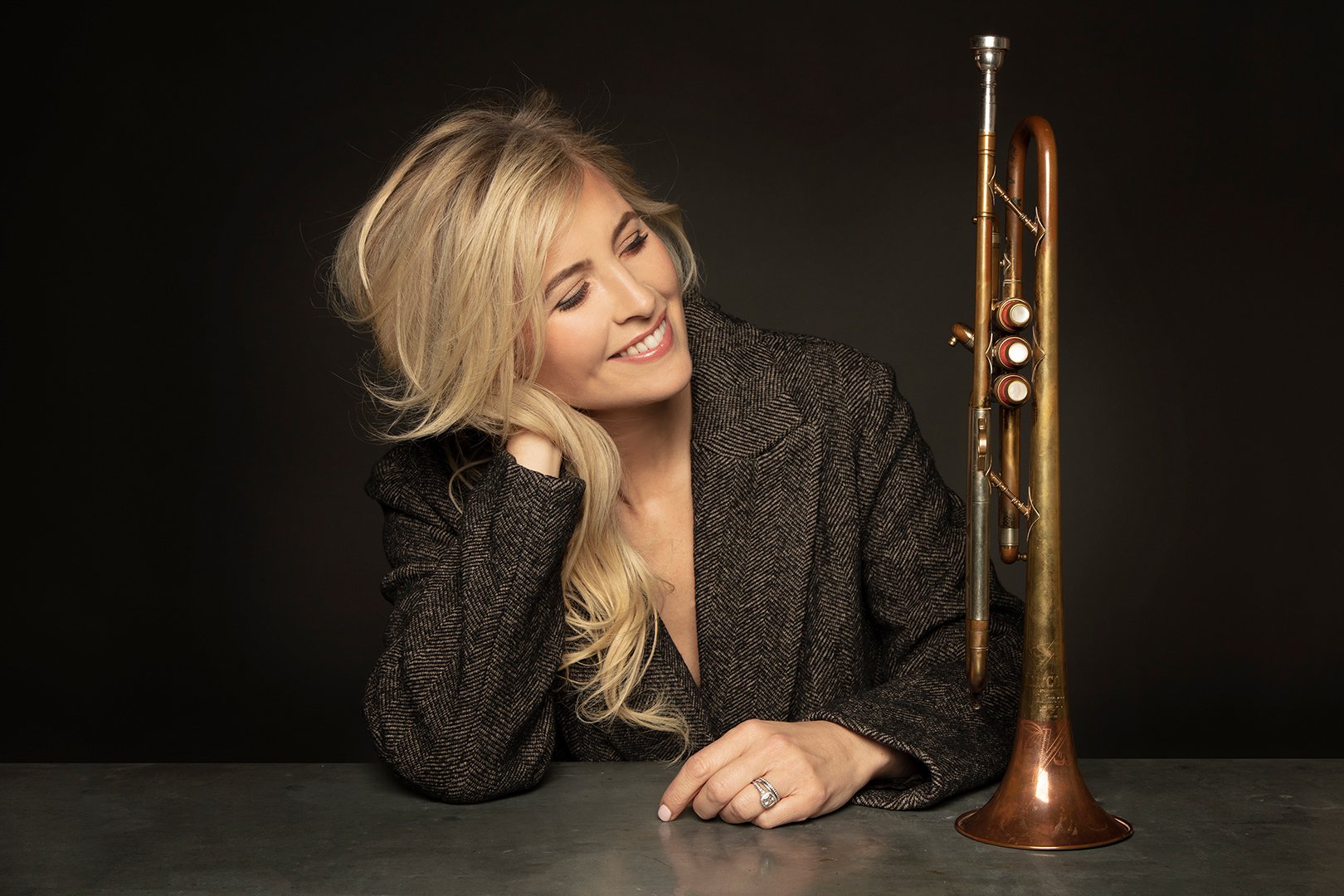
We still think of Alison Balsom as a new artist, a breath of fresh air for the trumpet in and around classical music. Yet all of a sudden it is nearly 25 years since she burst onto the scene, winning the Brass Final of the BBC’s Young Musician competition in 1998. Since then her recording career has yielded no fewer than 15 albums, for EMI Classics and latterly Warner Classics.

Quiet City will be her 16th – and in many ways it is her most personal album yet, as Arcana found when we sat down for a chat with the trumpeter. Balsom has poured herself a cup of tea, and the chat is punctuated with comfortable silences as she sips tea and I write. An extremely affable presence, she clearly has as much enthusiasm for the music now as she did in 1998, if not more.

Quiet City, as you may have guessed, is named after the Copland composition for trumpet, cor anglais and string orchestra of 1939. A forward-looking piece, it became a popular pick for online concerts during lockdown, its scoring favouring smaller orchestras and its mood wholly redolent of the times. It has held a very significant place in Balsom’s life, too. “I didn’t know I was going to make an album like this”, she confesses. “Quiet City is one of the very first pieces that I fell in love with to a deeper level when playing the trumpet. Copland understands the trumpet’s qualities, the melancholy aspects of the instrument and how it could sing. It is a relatively short work, so it was interesting to think about what it should be programmed with. I don’t think of myself as a jazz trumpeter, yet there is a really interesting point where in America composers were writing ‘in the gap’, letting themselves experiment. It didn’t matter that it was classical or jazz, they were taking from both realms. I found that this made a coherent journey, and found the nuggets growing to album ideas.”

She recognises the relevance of Quiet City to the pandemic. “Copland was a visionary with what we needed.  We made this recording in November 2021, when we were just coming out of lockdown. We all had an intense feeling of gratitude to be able to play this music live with a feeling of stillness in the concert hall, a voice that said, “Aren’t we lucky to be here?!” It is such a powerful vision, evoking the atmosphere from the first section, looking between building in New York like an Edward Hopper painting. Even working with a piano reduction I was in a melancholy mood. With this music I think of a film like Lost In Translation, and of two people with a luxury life, going to very different places. There is an isolated melancholy but beauty too, like a friend. As a piece, though, it is technically and physically challenging to play.”

She elaborates further. “Sustaining the notes can be a physical struggle, but you need command of the sound, the articulated notes – and you somehow need to make them tentative and nervous. You want to convey someone practising in an apartment block or something, being wonderfully balanced with the cor anglais and communicating with your audience or listeners.”

The cor anglais part on this recording is taken by Nicholas Daniel, who Balsom professes undying admiration for. “He is such a great musician, and has such a strong feeling about that piece. It was inspiring working with him and getting his insight and thoughts. It was incredible working with the Britten Sinfonia as well, they have great integrity and are always minded for collaboration. I worked with them in 2017, when we did the Barbican’s Sound Unbound festival. We did Miles Davis and Gil EvansSketches Of Spain, using transcriptions from the original studio recordings. I didn’t realise about the manuscripts, and there was a trumpet part revealed to me. He knew exactly what he wanted! I felt privileged to hear the players as at home playing jazz as they do classical.”

Also featured in the Sound Unbound concert was Gershwin’s Rhapsody In Blue, which appears on Balsom’s album in a very different guise – tastefully rejigged to bring the trumpet forward as a second soloist, alongside childhood friend Tom Poster on the piano. “I had a different hat on for this one!” she confesses. “I respect Tom so much, I think he’s the greatest pianist to play with. We met when I was ten, so we know each other really well. With the arrangement I phoned him up and suggested it, and he thought it was nuts but a good idea. We found that Rhapsody in Blue was out of copyright, but not in the Grofé arrangement. This made the job an enormous one for Simon Wright, who orchestrated it from scratch.  Any coincidences in the new version are Simon coming to the same conclusion as Grofé, and I think it is an amazing achievement. The piano part didn’t have to be set in stone, which gave Tom the opportunity to express himself even more. We did a concert in Norwich, when everything was closed, and we only had to get it right once to get it in the can.”

She may be 15 albums in, but Alison is keenly aware of how much the format has changed in that time, and how consumption habits are so different with streaming. “The greatest challenge has been finding my muse, making something that the world might want to hear”, she says, “and yet there is an amazing opportunity to pioneer. We put Quiet City with some things that we’re OK with, and some things that are more challenging, such as the Charles Ives piece The Unanswered Question, which I love, but Warner let me go for it. It’s a lucky situation to be in.”

Asking Balsom to cast her thoughts back, I ask who has been an influence on her career to date? “In terms of my teachers, I would say John Miller – an amazing teacher and trumpet guru. With him we focussed on sound, as the trumpet is all about the production of technique. I would compare him to Mr. Miyagi from Karate Kid, he wouldn’t let me do the cool stuff but I’m so glad he did that! I then went on to work with Håkan Hardenberger, who taught me how to teach myself. Physically the trumpet is so challenging, but that’s not how you master it. Getting to Grade 8 is just the start! It has this incredible, multifaceted personality, it reflects who you are. We play our personalities through our instruments!”

Balsom’s husband, film director Sam Mendes, had a small hand in the album’s running order. “He suggested the use of Leonard Bernstein‘s Lonely Town”, she says, and was a good soundboard for how the album was fitting together.” Has she returned the compliment on any of his film scoring? “I have made a few suggestions!” – she smiles – “and of course he has got to know a lot of trumpet repertoire through me.”

She recognises a change of focus in the musical landscape since the pandemic, with much more emphasis on recorded music. In spite of that there are a couple of concerts planned for the rest of the year. “There was the launch concert at Snape, with full bells and whistles, which is quite a complicated affair but the only live version of the album we will be doing. After that it gets quite random, but on October I’ll be doing a recital with Anna Lapwood, the organist, and a lighting designer, at a school in Tonbridge. It’s going to be an immersive trumpet and organ recital. We know the music is amazing but how can we present it and immerse people in the music? I’m really looking forward to doing that, she’s a real force for good! I wanted an amazing acoustic and organ, and there will be a few new pieces for that one.”

Plans are afoot for a seventeenth album, too. “I have had a good chat with Trevor Pinnock about my next project. Over the pandemic we had to re-evaluate travelling and what we have a desire to do – and there are some exciting plans on the horizon!”

You can discover more on Alison Balsom by visiting her website – and you can hear more of Quiet City and purchase the album on the Presto website. Meanwhile for more information on her recital with Anna Lapwood, and to buy tickets, go to the Tonbridge Music Club website

Talking Heads: Nicholas Daniel

nicholas-daniel

Interview by Ben Hogwood

As part of the inspiring Summer At Snape season, the counter-tenor Andrew Watts and oboist Nicholas Daniel, are giving world premiere performances of Sir John Tavener’s La Noche Oscura, with the Britten Sinfonia conducted by Sian Edwards. Arcana took the chance to talk with Daniel, who received an OBE for his dedication to music in October 2020, about his lasting friendship with Sir John, as well as his hopes for live music in such a difficult time.

To begin, we look back to Daniel’s first musical meeting with the composer. “I remember hearing The Whale and thinking it was fabulous and risqué,” he says. “It became a piece people talked about more than heard when I was at the Royal Academy. I first met him through Richard Hickox, who I persuaded to ask John to write for me as a thank you for playing at his and Pamela’s wedding.”

While writing La Noche Oscura, Tavener did not consult with his dedicatees. “He never consulted with me about writing”, says Daniel. “I don’t know whether he did with other artists, but for me his pieces seemed to have arrived as a newborn but sitting up and asking for food. Even with Kaleidoscopes we only vaguely discussed the idea of wearing Indian clothes to play it and lighting it really well, months before he wrote it.”

The piece itself is an intriguing balancing act “Noche has inside it a major contradiction in terms. The words are absolutely agonising: “Where have you hidden, beloved, and left me moaning?” “Tell him I suffer, grieve and die” “but thou hast utterly rejected us: thou art very wroth against us,” but the music is not. He says “shining, intense, with majesty and grandeur”, and from my preparation I see the music as flowing through the words to a place where the music is in control. It’s as though the grinding agony of the words are not ignored, but swept away by the beauty of the harmony. It seems a little like Niobe, Britten’s D flat Major tribute to the Queen whose 14 children died (from the 6 Metamorphoses after Ovid for solo oboe), or maybe Gluck’s Che faro senza Euridice, which has nobility in the face of death. Interestingly both those pieces take their lead from Greek Myth.”

Written for oboe and countertenor, La Noche Oscura blends a relatively unusual combination of soloists, though Daniel refutes my initial suggestion the combination would be hard to balance. “In what way would it be difficult? Because Andrew Watts has the biggest counter tenor voice on the planet and therefore the oboe would be drowned? Possibly. Or that the oboe in the high register might drown the counter tenor in the middle? Well, John knew my playing very well and my high register is something I’ve worked very much to develop over years, partly through composers writing death defyingly quiet music for me up there. Listen to the cadenza of John Woolrich’s Oboe Concerto for instance. Noche is a whole major third lower in my part than the highest parts of Kaleidoscopes and I know how to balance to the gentler parts of a counter tenor voice anyway.”

tavener

He speaks with great warmth of Tavener (above), both as a friend and as a composer. “I adored him. He was completely unique, and although he maybe lived in other realms as well as ours he was completely able to exist in a very charming and entertaining way in the here and now. I think that he probably felt quite relaxed with me because he was very free in what he said, possibly sensing in me the very non-judgemental and open nature of my soul. His health must have been such a burden to him, and I was always slightly aware of his frailty – the main time I knew him was towards the end of his life. I will never forget the sound he made on the piano and ‘singing’ the music he’d written for me. It was like a seance.”

Is his music particularly appropriate for the times we are living through? “I believe that John’s music is appropriate for any time and any space. He can turn a bike shed into a cathedral with his music. I would love to think that as we have entered the very promising Age of Aquarius we might find it has uses for meditation, for finding stillness, and for connecting ourselves with the planet and with each other.”

daniel-drake

Talk turns to the pandemic, and a particularly special concert Daniel and long-time recital partner Julius Drake gave at the Wigmore Hall in 2020 (above), part of a special season of lunchtime concerts marking the hall’s reopening in June. It was a meaningful concert for those watching online – and for the two performers. “Oh my goodness, thank you. Well, it was a fantastic moment to be able to play to the world, yes. We chose the programme to entertain, and to touch people’s hearts. It was very moving how the artists in that first week all supported each other by text messages!  It was so special to play two new pieces there, by Michael Berkeley and Huw Watkins, and also to play Madaleine Dring’s music, which I adore. As it happened it was two days after the murder of George Floyd, and I decided to dedicate the Bach encore to his memory. It proved harder than I thought to speak about it. The reality is the piece I played (basically in one breath using circular breathing) was shorter than the time he was prevented from breathing. The connection was obvious and absolutely shattering.”

The current situation with Government restrictions from the Coronavirus pandemic means plans for future concerts are sadly up in the air. The reality is stark, and Daniel’s diary has a small number of entries. “A few. Incredibly few. 2023 is looking a little better than the rest of 2021 and 2022 put together. This is all going to take some time. It’s also going to take some fearless programming and risk taking to make concerts irresistibly inviting. New music, new presentation, fresh diverse repertoire; young, diverse artists, a fresh dawn for true diversity and the certain knowledge that we will never take an audience for granted ever again.”

There is a little consolation on the recording front, where Daniel has been busy. “Haha! I’ve been very lucky to have some recordings released over the last while, music by Eleanor Alberga, Roxanna Panufnik and Mark Simpson with Mozart, the latter recorded in lockdown. I had the huge joy of recording a disc for my new label Chandos with the exquisite Doric Quartet of British music which will be out later in the year. On that disc I recorded the Delius Two Interludes on Leon Goossens’ 1911 Lorée Oboe. It was a huge privilege to be allowed to play this massively historic and important instrument.”

Will his approach to making music be any different after the pandemic? “Yes”, he says emphatically. “I’m saying to my students that it has to BURN. No prisoners can be taken, risk taking is everything and make it HIT the audience like your life depends on it. Now is the time to make music COMPLETELY relevant to people’s lives, especially to our children, each one of whom deserves to play an instrument and learn the language of music. Scotland is giving this to their children but England and the rest of the U.K.? Not yet.”

The effects of restrictions imposed in the pandemic are clear to see, and Daniel addresses this head on. “I would love audiences to spare a moment of thought for the artists right now, let alone the effect on our incomes. Not being on stage for more than a year plays havoc with your mind, and just getting to the concert hall seems to involve rules and regulations and risks we have never known before. Personally I’m very grateful that people are taking some of the same risks coming to hear concerts, but it feels weirdly exposing to walk on stage to the smell of hand sanitiser having just ripped off your mask, metres apart from your colleagues. We do it despite these things because we want to and because we have to, and because most of us are addicted to music and concerts.”

Andrew Watts and Nicholas Daniel will give two performances of Sir John Tavener’s La Noche Oscura with the Britten Sinfonia conducted by Sian Edwards at Snape Maltings on Friday 25 June. Their program, part of the ongoing Summer at Snape festival, includes music by Handel, Tansy Davies and two works by Britten, including the Temporal Variations orchestrated by Colin Matthews – who spoke with Arcana earlier in the season here. For details and tickets click here

Summer at Snape runs from Friday 4 June until Saturday 11 July. For full details on all the live events, visit the Snape Maltings website.
.