In concert – Helena Juntunen, CBSO / Osmo Vänskä: Sibelius & Shostakovich

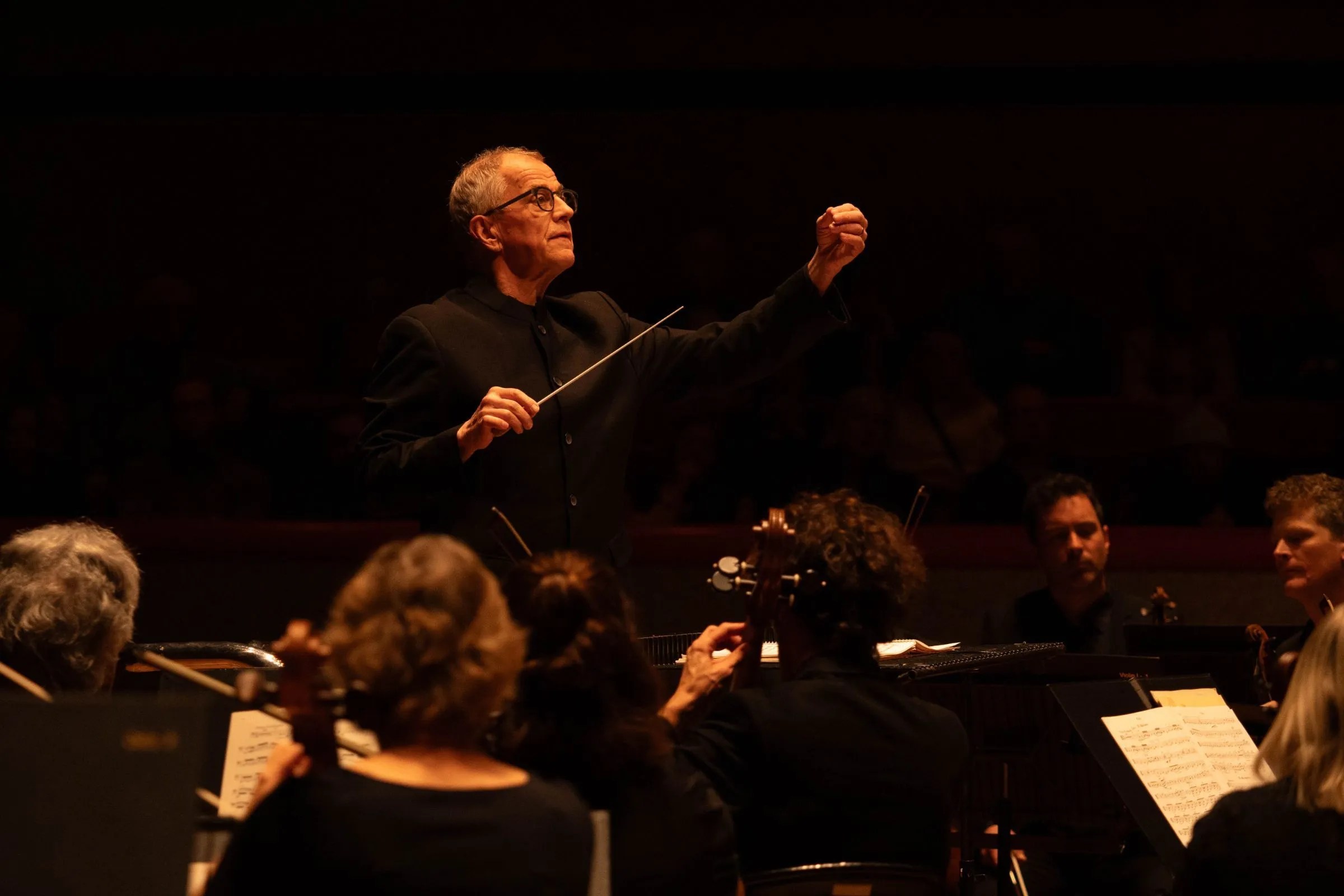
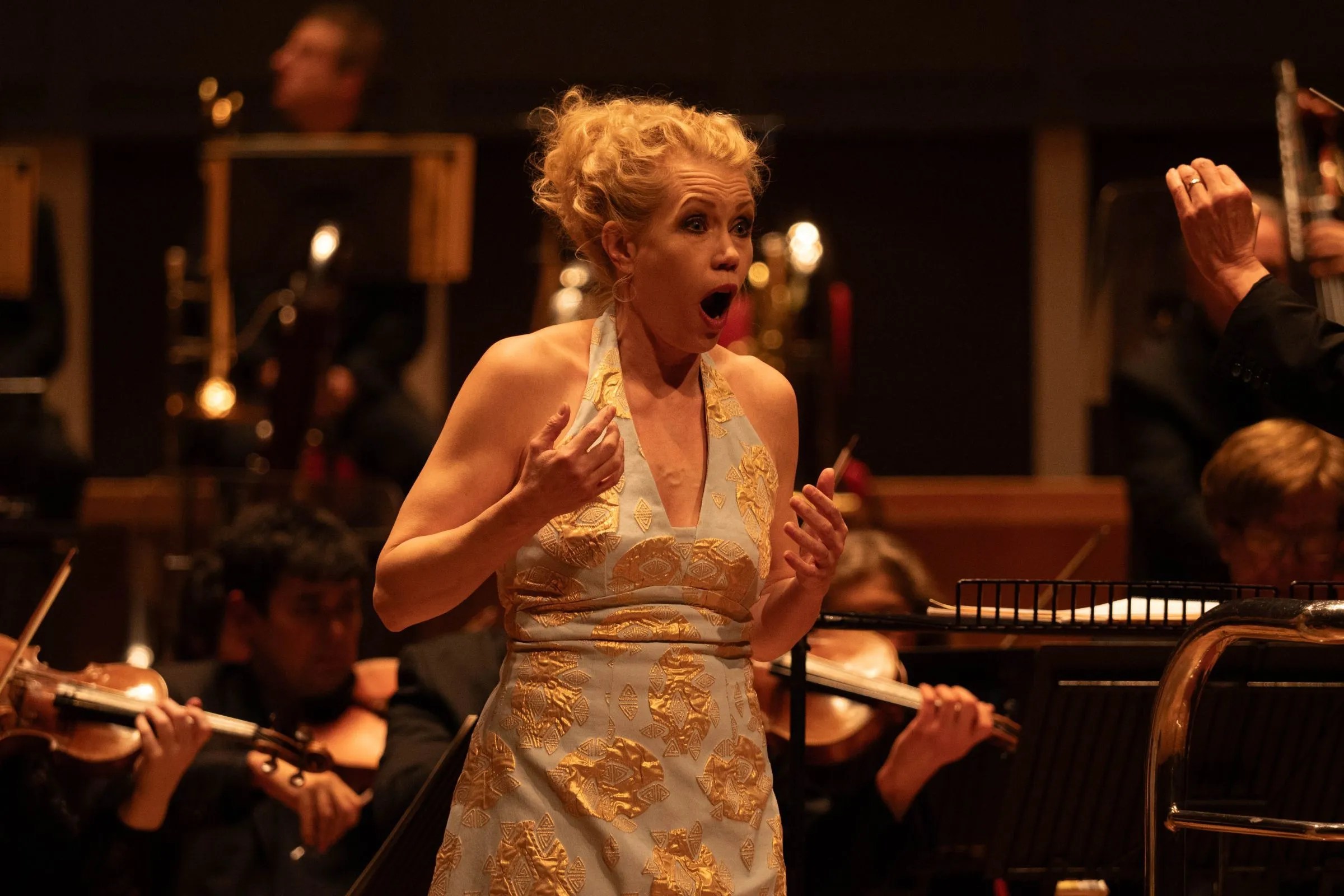
Helena Juntunen (soprano), City of Birmingham Symphony Orchestra / Osmo Vänskä (above)

Sibelius
Karelia Suite Op.11 (1893)
Songs – Höstkväll Op.38/1 (1903, orch. 1904); Hertig Magnus Op.57/6 (1909, orch. 1912); Våren flyktar hastigt Op.13/4 (1891, orch. 1913)
The Bard Op.64 (1913)
Luonnotar Op.70 (1913)
Shostakovich
Symphony no.15 in A major Op.141 (1970-71)

Symphony Hall, Birmingham
Wednesday 19 November 2025

Reviewed by Richard Whitehouse Pictures (c) Jonathan Ferro

Finnish conductor Osmo Vänskä makes relatively UK appearances these days such that this evening’s concert with the City of Birmingham Symphony Orchestra was to be anticipated, given the never less than intriguing juxtaposition of works from Sibelius and Shostakovich.

It now appears less frequently on programmes than half a century ago, but Karelia Suite finds Sibelius at his most uninhibited and Vänskä responded accordingly – whether the simmering motion of its Intermezzo or the pulsating activity of its Alla Marcia; its Ballade distilling the keenest atmosphere with Rachel Pankhurst making the most of her plaintive solo. Harpist Karherine Thomas was similarly attuned to her almost obligato role in The Bard, a tone poem whose sombre understatement hardly prepares one for the surging emotion towards its climax.

Elsewhere in this half it was Helena Juntunen (above) who stole the show with her judicious selection of Sibelius songs. That almost all these are settings of Swedish texts reflects an introspective Romanticism often overlooked in his output and Juntunen brought out the stark imagining of Autumn Evening then restless aspiration of Baron Magnus as potently as the ecstatic yearning of Spring is Flying. Her swapping sophisticated gown for traditional dress may have pointed up stylistic differences with Luonnotar, but it also underlined the inimitability of this setting from Finnish national epic the Kalevala. Birmingham audiences had been spoiled by hearing Anu Komsi in the piece, but Juntunen was no less inside music whose extremes of timbre or texture result in as heady a culmination then as spellbinding a conclusion as any in Sibelius.

Hard now to recall a time when Shostakovich’s 15th Symphony was believed too inscrutable for wider appreciation, rather than that masterly reassessment of Classical symphonism it is. Vänskä brooked no compromise in an initial Allegretto not without its technical mishaps, for all its sardonic and even scabrous humour came over unimpeded, but it was with the Adagio this performance wholly found its stride. As enhanced by eloquent contributions from cellist Eduardo Vassallo then trombonist Richard Watkin, this was palpably well sustained through to a climax shot through with a defiance borne of desperation, before retreating back into its initial numbness. Continuing directly, the ensuing Allegretto was an intermezzo no less acute in its expression and not least for the way solo instruments melded so deftly with percussion.

Vänskä did not make the mistake of rendering the finale an Adagio, such as holds good only with its portentous introduction. The main Allegretto was persuasively handled – broadening marginally for a central passacaglia builds stealthily if inevitably to a climax corrosive in its dissonance, before retracing its thematic steps towards a coda which evokes the notion of the ‘unbearable lightness of being’ more completely than any other music. Here, also, there was no mistaking the CBSO’s collective focus in bringing this totemic work to its deathless close.

Shostakovich 15 does not lack for probing or memorable readings these days and, if tonight’s did not answer all its questions, Vänskä nevertheless ensured this piece left its mark on what was a commendably full house, and which set the seal on a flawed while memorable concert.

For more information on the 2025-26 season head to the City of Birmingham Symphony Orchestra website. Click on the names to read more about soloist Helena Juntunen and conductor Osmo Vänskä

Published post no.2,727 – Sunday 23 November 2025

On this day – the first performance of Shostakovich’s Violin Concerto no.1

by Ben Hogwood

Today marks 70 years since the first performance of a Shostakovich masterpiece. The Violin Concerto no.1 in A minor Op.77/99 received its premiere at the hands of its dedicatee, David Oistrakh, with the Leningrad Philharmonic Orchestra conducted by Yevgeny Mravinsky.

Here it is from one of its most passionate recent exponents, Maxim Vengerov taking the solo part with the Novosibirsk State Philharmonic Orchestra conducted by Thomas Sanderling:

Published post no.2,702 – Wednesday 29 October 2025

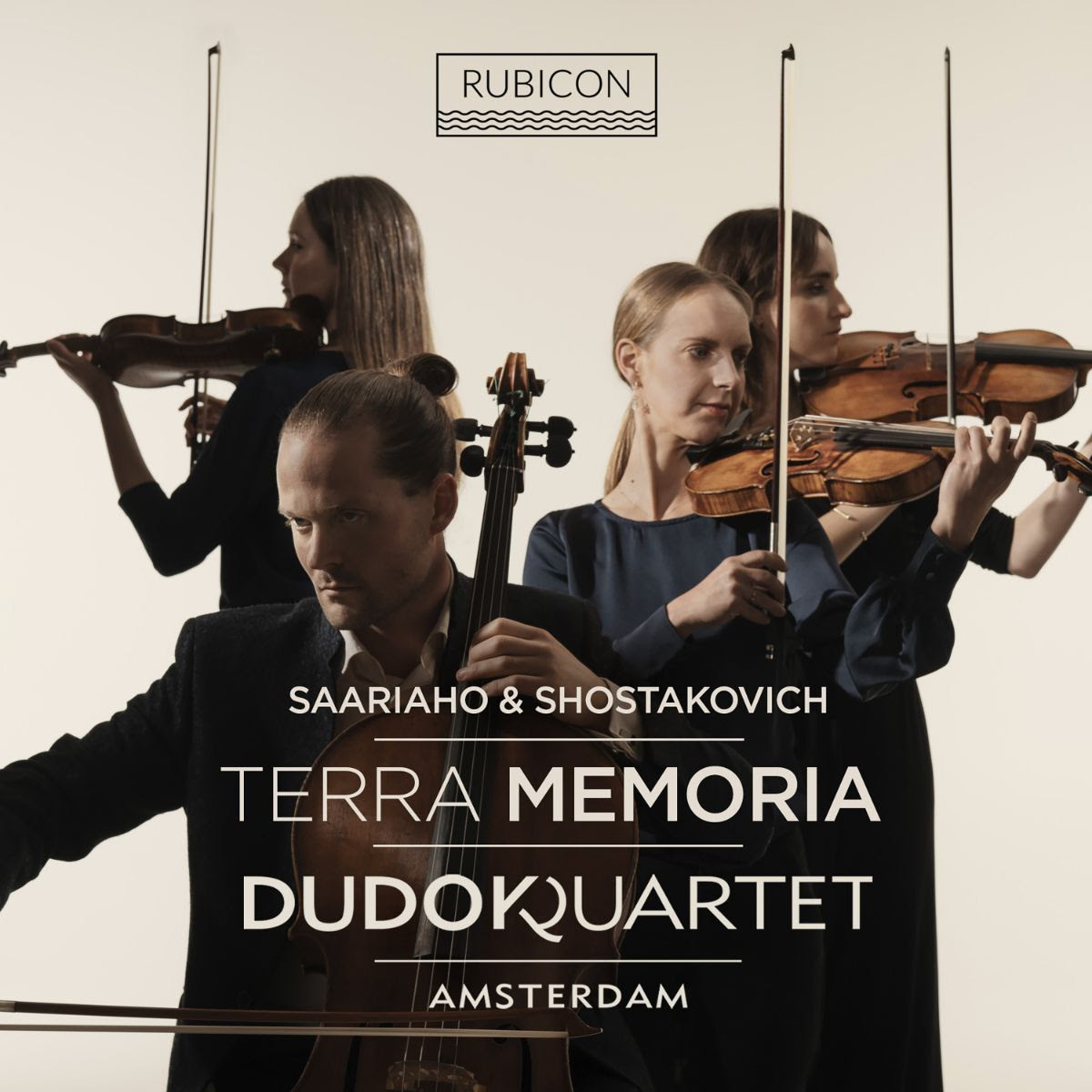
New music – Dudok Quartet: Terra Memoria (Rubicon Classics)

adapted from the press release by Ben Hogwood

TERRA MEMORIA
Kaija Saariaho String Quartet
Shostakovich String Quartet No 3 in F, Op. 73
plus a selection from 24 Preludes Op 34
Rubicon Classics RCD1218  Release date: 31 October 2025

I feel when writing for a string quartet that I’m entering into the intimate core of musical communication.
Kaija Saariaho 

Following two highly acclaimed composer-led volumes of Tchaikovsky’s string quartets last year, Dudok Quartet Amsterdam returns to another of its signature concept albums with a mix of thought-provoking repertoire.  Terra Memoria is the Quartet’s sixth album on the Rubicon Classics label and features Shostakovich’s third string quartet, from 1946, paired with Kaija Saariaho’s second String Quartet Terra Memoria from 2007. It is something of a partner to their 2022 album, Reflections, which paired Shostakovich’s String Quartet No 5 Op 92 with Grażyna Bacewicz’s String Quartet No 4and also featured other of the Quartet’s transcriptions of Shostakovich’s Preludes Op 34.
 
As a result of the Dudok Quartet’s inimitable and deeply inquisitive approach to understanding and expressing what they discover in these scores, they find that although Shostakovich and Saariaho are very different in their compositional approach, the outcome is similar; both possess unmistakeable musical signatures which empower their communication of imagination and emotion to performers and listeners alike.
 
Initially, Shostakovich gave titles to the five movements of his quartet No. 3, referencing a range of feelings and responses to the threat and ultimately the destruction and desolation of war.  If these titles intended any kind of narrative or explanation, the composer gave no reason for soon withdrawing them and, as Dudok violinist Judith van Driel explains, the force of the music cancels out any need for words; “Playing or listening to the third movement [for example] gives an infinitely more accurate meaning, by making adrenaline rush through your body causing your ears to ring from an unrelenting pounding. Its meaning is manifest in your sense of terror, fear and anger, whether or not you have ever experienced war up close.”
 
Throughout the quartet Shostakovich uses various compositional techniques to provoke immediate and reactive personal responses that are sometimes ambiguous and sometimes at odds – yet co-existing with each other. From the pastoral opening to the meandering melody searching for meaning in the fifth movement, it is the music that elicits inexplicable – in the most literal sense – and instinctive feelings.
 
Saariaho expressed a love for the richness and sensitivity of the string quartet sound, although she only composed two works in the genre. The second, Terra Memoria, captivated the Dudoks from the outset when they worked on it with her in 2011 (they were enchanted further by her music when they  collaborated in the world premiere of her penultimate opera, Only the Sound Remains, in 2016). Saariaho references the work as being ‘for those departed’, those whose lives are over, with nothing to be added, while those left behind are haunted by dreams and memories and find that the shape of remembrance can change as time passes.
 
But this explanation is only a starting point for the listener or player to make personal associations through experience of the composer’s sound world. Familiarising itself with her unique musical vocabulary was an absorbing and rewarding journey for the Dudok Quartet as they encountered a variety of unusual playing techniques and inventive musical mutations that include experimental threads of electronic music, minimalist-type repetition and operatic styles. For them, Saariaho’s music evokes a kind of intermediate zone between the known and the unknown, the living and the dead.
 
The Dudok Quartet is also known for its own transcriptions of works not originally composed for string quartet and rounds off the album with a selection from Shostakovich’s Preludes Op. 34 written for piano, all of them tiny gems which elicit personal stories and associations in the listener and player.

We aim to show that music affects people; that music can lead us to profundity and connection especially when it provokes friction. The true meaning of music reveals itself in a shared experience in which you, as a listener, play a vital role.
Dudok Quartet Amsterdam
 
The Dudok regularly performs in the UK and will feature Saariaho’s Terra Memoria in recital with Schubert’s Death and the Maiden in Portsmouth, Sheffield, Macclesfield and Hastings in November 2025, and Shostakovich’s String Quartet No 3 on tour in early 2026 – to the US in January and Scotland in February. Click here for further information.
 
Terra Memoria
Dudok Quartet Amsterdam 
Rubicon Classics RCD1218   Release date: 31 October 2025
 
Dmitri Shostakovich – String Quartet No. 3 in F, Op. 73 (1946)
I. Allegretto
II. Moderato con moto
III. Allegro non troppo
IV. Adagio (attacca)
V. Moderato
 
Kaija Saariaho – Terra Memoria (2007) for String Quartet
Shostakovich – 24 Preludes, Op. 34
No. 1 in C major – Moderato
No. 2 in A minor – Allegretto
No. 4 in E minor – Moderato
No. 6 in B minor – Allegretto
No. 12 in G sharp minor – Allegro non troppo
No. 22 in G minor – Adagio
 
DUDOK QUARTET AMSTERDAM 
dudokquartet.com

Published post no.2,668 – Thursday 25 September 2025

In concert – Chineke! Orchestra / Jonathon Heyward @ BBC Proms: Coleridge-Taylor, Coleman, James Lee III & Shostakovich

Chineke! Orchestra / Jonathon Heyward

Coleridge-Taylor The Bamboula Op.75 (1910)
Coleman Fanfare for Uncommon Times (2021) [UK premiere]
James Lee III Visions of Cahokia (2022) [European premiere]
Shostakovich Symphony no.10 in E minor Op.93 (1953)

Royal Albert Hall, London
Friday 5 September 2025

Reviewed by Richard Whitehouse Photos (c) BBC / Andy Paradise

Sir Simon Rattle may have stood down from his second Prom this season, but as his replacement for Chineke! Orchestra’s eighth appearance here was the highly regarded Jonathon Heyward (current music director of the Baltimore Symphony), a positive outcome was all but ensured.

Curious, if not unexpected, that Samuel Coleridge-Taylor’s The Bamboula enjoyed 16 Prom performances in 22 seasons before going into oblivion for 91 years. Although this ‘Rhapsodic Dance’, inspired by a West African drum that found its way into Haitian spiritual practice, is not among its composer’s major works, the increasingly fluid juxtaposition of animated and soulful dances makes for highly sophisticated light music of its period. Certainly, it came up newly minted in this effervescent and responsive reading under Heyward’s assured guidance.

Two pieces from American composers of the middle generation afforded productive contrast in this first half. Aside from its titular play on Copland’s evergreen, Fanfare for Uncommon Times found Valerie Coleman reflecting societal as well as musical ambiguities in a piece that builds not a little ominously in waves of activity towards a latter half whose interwoven brass and percussion conveys a vibrant if disturbing impression: her call to ‘‘face these ‘uncommon times’ with a renewed sense of hope and determination’’ shot through with not a little anxiety.

From here to James Lee III’s Visions of Cahokia was to be transported back into a Medieval settlement which became a centre for Mississippian culture until its still-unexplained demise in the 14th century. Whatever else, this provided inspiration for an orchestral triptych whose fusing elements from Stravinsky with those of Villa Lobos or even Revueltas was evident in the music’s variegated textures and evocative colours. Effectively a ‘concerto for orchestra’ of compact dimensions yet immediate impact, it might well prove a highlight of this season.

As, interpretively speaking, might the performance of Shostakovich’s Tenth Symphony after the interval. Interesting that this piece is currently the most often heard here of its composer’s symphonies – this being its 36th appearance – with Heyward having its measure not least in an opening Moderato such as built methodically yet assuredly from sombre beginnings to a powerful central climax before regaining its initial introspection. After this, the brief Allegro provided explosive contrast as made its being allegedly a ‘portrait’ of Stalin more irrelevant.

Unexceptionally fine as was Chineke!’s playing in these two movements, it came into its own with the Allegretto that ranks among Shostakovich’s most distinctive and personal creations – not least for its motivic interplay of boundless subtlety capped by a stentorian motto on horn to which Pierre Buizer was in accord. Heyward paced it ideally, as also the lengthy Andante whose plangency is swept aside only to return intensified by the finale’s ensuing Allegro; at the close, giving this music its head on route to a decisive and almost affirmative conclusion.

A memorable reading that rounded off a worthwhile concert and likely this orchestra’s most impressive Proms showing yet. Hopefully Chineke! will go on to tackle further symphonies of the later 20th century – maybe a much-needed UK premiere for Allan Pettersson’s Sixth?

Click on the artist names to read more about the Chineke! Orchestra and conductor Jonathon Hayward, and composers Coleridge-Taylor, Valerie Coleman, James Lee III and Dmitri Shostakovich – and the BBC Proms

Published post no.2,650 – Sunday 7 September 2025

In concert – English National Opera @ BBC Proms: Shostakovich’s Lady Macbeth of Mtsensk

Lady Macbeth of Mtsensk Op.29 (1932-33)

Opera in Four Acts (Nine Scenes)
Music by Dmitri Shostakovich
Libretto by Alaxander Preys and the composer after the novella by Nikolai Leskov
English translation by David Poutney
Semi-staged performance, sung in English with English surtitles

Katerina – Amanda Majeski (soprano); Boris/Ghost of Boris – Brindley Sherratt (bass); Zinovy – John Findon (tenor); Mill-hand/Priest – Thomas Mole (baritone); Sergey – Nicky Spence (tenor); Aksinya/Convict – Ava Dodd (soprano); Shabby Peasant – Ronald Samm (tenor); Steward – Alaric Green (baritone); Police Sergeant – Chuma Sijeqa (baritone); Teacher – William Morgan (tenor); Old Convict – Sir Willard White (bass-baritone); Sonyetka – Niamh O’Sullivan (mezzo-soprano)

BBC Singers, Chorus of English National Opera, Brass Section of English National Opera, BBC Philharmonic Orchestra / John Storgårds

Ruth Knight (director)

Royal Albert Hall, London
Monday 1 September 2025

Reviewed by Richard Whitehouse Photos (c) BBC / Andy Paradise

In this 50th anniversary year of Shostakovich’s death it made sense for the Proms to schedule Lady Macbeth of Mtsensk, his second and final completed opera, in a performance reminding one of English National Opera’s commitment to this work stretching back almost four decades.

In scenic terms, the semi-staging directed by Ruth Knight was little more than a gloss on what was heard. Its framing device of the heroine in the witness box now seems a tired device that served little purpose, and the emergence of a bed at rear of the platform as a focus for sexual activity had surely passed its sell-by date at the end of the David Poutney era. More effective was the use of lighting to accentuate dramatic highpoints; incidentally reminding one such a procedure had come of age around the time that Shostakovich’s opera first appeared on stage.

Vocally this was a mixed bag. No-one could accuse Amanda Majeski of lacking presence or, moreover, eloquence in her assumption of the title-role, yet her emotional aloofness made her seem not so much distinct as overly detached from the wretched circumstances all around her. Brindley Sharatt was a shoo-in for Boris, his boorishness yet evincing a cunning intelligence who easily held the stage – not least his latter ‘ghost’ incarnation. Nicky Spence was vocally assured but dramatically two-dimensional as Sergey and, as Zinovy, John Findon resembled more a provincial critic than a merchant, though Thomas Mole made a lively contribution as a dipsomaniac Priest with Chuma Sijeqa uproarious as the Police Sergeant. His cameo as an Old Convict found Sir Willard White in gratifyingly fine voice near the end of his eighth decade.

Smaller roles were generally well taken, not least Ava Dodd’s hapless Aksinya and Niamh O’ Sullivan’s scheming Sonyetka, while the ENO Chorus lacked little in forcefulness or clarity of diction, though this latter might have been felt a drawback given the frequent contrivance of Poutney’s translation – which has not aged well. Otherwise, this was very much the BBC Philharmonic Orchestra and John Storgårds’s show. Having impressed with Shostakovich symphonies over recent seasons, the latter had a sure grasp of this opera’s dramatic unfolding and paced it accordingly. No stranger to this composer’s music, his orchestra was as responsive to the seismic climaxes (suitably abetted by ENO brass) as to passages of mesmeric introspection which, in many respects, prefigure the composer Shostakovich was increasingly to become.

It has often been claimed that, had his fortunes not reversed so dramatically as on that fateful evening of 26th January 1936, Shostakovich would have continued upon his path as an opera composer. Yet there is a nagging sense that, whatever its theatrical potency, Lady Macbeth of Mtsensk is intrinsically no more than the sum of its best parts. Leaving aside the intermittent success of his and Alexander Freys’ remodelling of Nikolai Leskov’s ‘shabby little shocker’, dramatic characterization frequently seems to have been laminated onto its musical context.

If tonight’s performance never entirely banished these thoughts, it certainly gave this opera its head in what was a memorable night for orchestra, conductor and, for the ENO contingent, an impressive bowing-out as it prepares for the next phase of its existence – based in Manchester.

Click on the names to read more about soprano Amanda Majeski, director Ruth Knight, the BBC Philharmonic Orchestra and chief conductor John Storgårds. Click also for more on composer Dmitri Shostakovich, the BBC Proms and English National Opera

Published post no.2,645 – Tuesday 2 September 2025