In concert – Isabelle Faust, CBSO / Kazuki Yamada: Akio Yashiro: Symphony, Shostakovich: Violin Concerto no.2 & Bartók Dance Suite

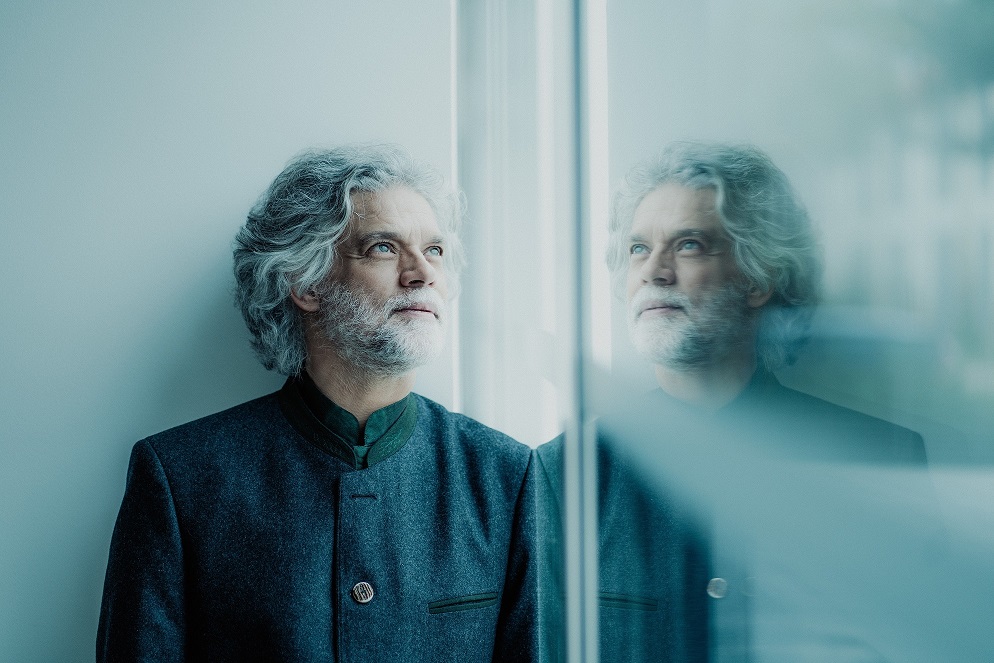
Isabelle Faust (violin, above), City of Birmingham Symphony Orchestra / Kazuki Yamada (below)

Bartók Dance Suite BB86a (1923)
Shostakovich Violin Concerto no.2 in C sharp minor Op.129 (1967)
Yashiro Symphony for Large Orchestra (1958) [UK Premiere]

Symphony Hall, Birmingham
Wednesday 5 February 2025

Reviewed by Richard Whitehouse Picture of Isabelle Faust (c) Felix Broede

It may not have been a popular programme, but tonight’s concert by the City of Birmingham Symphony Orchestra drew a pretty decent attendance in music clearly to the liking of music director Kazuki Yamada, who duly gave of his best for what proved a memorable evening.

Often seen as a breakthrough work in terms of its fusing indigenous musical expression with Western formal conceits, Bartók’s Dance Suite makes an ideal concert-opener. At its best in the rhythmic propulsion or harmonic astringency of the second and third dances, the present account felt a touch inhibited elsewhere; Yamada making overmuch of rhetorical pauses that should motivate rather than impede ongoing momentum. Not that this precluded a forthright response from the CBSO, pianist James Keefe making the most of his time in the spotlight.

Although not now the rarity it once was, Shostakovich’s Second Violin Concerto will always lag behind its predecessor as to performance. Coming near the outset of its composer’s final decade, its inwardness and austerity belie its technical difficulties – though these latter were rarely an issue for Isabelle Faust, who kept the initial Moderato on a tight if never inflexible rein so its demonstrative outbursts and speculative asides were more than usually integrated. Even finer was the central Lento, muted anguish finding potent contrast with plangent solo passages, and a closing contribution from horn player Elspeth Dutch of subdued pathos. Nor was the final Allegro an anti-climax, Faust drawn into engaging confrontation with timpani and tom-tom then heading to a denouement with more than a touch of desperation in its hilarity.

Inquiring listeners may have encountered a recording in Naxos’s Japanese Classics series of a Symphony by Akio Yashiro (1929-76). One of the first group of Japanese composers to study in Europe after the Second World War, his limited yet vital output witnesses a determined and distinctive attempt to fuse certain native elements with the more radical aspects of timbre and texture stemming from the West. Messiaen (with whom he studied) is audible in the fastidious harmonies of this work’s Lento that, building from pensive melodies on flute and cor anglais into a threnody of real emotional power, is its undoubted highlight. Otherwise, the music feels more akin to that of André Jolivet (whose three symphonies deserve revival) in its abundant orchestral colour and predilection for rhythmic ostinatos that galvanize the musical argument.

Such is evident in the implacable unfolding of a Prelude whose motivic ideas secure a more purposeful accord in the ensuing Scherzo, while the finale draws upon the slow movement’s intensity as it expands over successive waves of activity to an impetuous Allegro of no mean velocity prior to a seismic, even brutal peroration. Whatever its intermittent lack of subtlety and cohesion, Yashiro’s Symphony remains an imposing musical edifice such as makes one regret that the composer never managed to pen its successor during his subsequent 18 years.

It certainly found the CBSO at its collective best, so making one hope that Yamada (above) might yet schedule pieces by such as Toshiro Mayuzumi or Sadao Bekku. His next concert has a rather more familiar symphony by Tchaikovsky in the orchestra’s annual Benevolent Fund Concert.

For details on the 2024-25 season A Season of Joy, head to the City of Birmingham Symphony Orchestra website. Click on the names to read more about violinist Isabelle Faust and the CBSO chief conductor Kazuki Yamada, and also the composer Akio Yashiro’s symphony

Published post no.2,438 – Friday 7 February 2025

Roll out the bunting…Arcana is 10 years old today!

From Ben Hogwood, Arcana editor:

If you’ll forgive the indulgence…Happy Birthday to us!

Arcana is 10 years old today, a chance to celebrate a decade of sharing great music with our readers. I would like to thank you all for your encouragement and interaction with the site, to thank our guest writers – principally Richard Whitehouse and John Earls – for their excellent contributions and insights in recent years, and to thank my wife Sam Hogwood for her unerring support. This is an enterprise that run outside of working hours, so it is inevitably a balancing act where time is concerned!

As part of our birthday celebrations, we have invited readers to contribute with their ‘watershed’ musical moments from the last 10 years. I’m looking forward to sharing them with you over the next few days; there are some crackers! It’s not too late to share yours either, by contacting me on e-mail (editor@arcana.fm)

In the meantime, here is an appropriate piece of music to mark the occasion – while at the same time giving a clue to what is upcoming on Arcana in the coming months:

Image by Alexander Raths

Published post no.2,428 – Saturday 1 February 2025

In concert – Quatuor Danel: Shostakovich & Weinberg #8 @ Wigmore Hall

Quatuor Danel [Marc Danel & Gilles Millet (violins), Vlad Bogdanas (viola), Yovan Markovitch (cello)]

Shostakovich String Quartet no.11 in F minor Op.122 (1966)
Shostakovich String Quartet no.12 in D flat major Op.133 (1968)
Weinberg String Quartet No. 12 Op.103 (1969-70)

Wigmore Hall, London
Wednesday 15 January 2025

by Richard Whitehouse Photo (c) Marco Borggreve

This latest instalment in Quatuor Danel’s traversal of the string quartets by Shostakovich and Weinberg comprised the Twelfth Quartets from both composers – masterpieces both, and was prefaced by the teasing brevity and obliqueness of the former’s preceding such composition.

His 60th year marked the onset of Shostakovich’s ‘late period’ – its overt introspection being appropriate for a piece dedicated to the memory of Vasily Shirinsky, former second violinist of the Beethoven Quartet who premiered all but the first and last of the composer’s cycle. In fact, the Eleventh Quartet is appreciably more varied than this memorial aspect may suggest – the Introduction initiating a subdued discourse given an ironic twist in the Scherzo then erupting combatively in the Recitative, prior to the anxiety of the Etude and ruthlessness of the Humoresque. This performance came into its own with the Elegy, a remembrance of enfolding pathos – after which, the Finale assumed that retrospective function found in many of Shostakovich’s later works with due emphasis on its stealthy and quixotic humour.

Just two years on brought Shostakovich’s Twelfth Quartet – if not his greatest then surely in the top two, while arguably uncharacteristic in its self-conscious yet masterly formal design. Although not introductory as such, the Danel was mindful to keep its opening movement on a tight rein such that its interplay of mood and tempo inferred without defining those seismic confrontations to come. This longest and most diverse of its composer’s quartet movements did not disappoint – the Danel having fullest measure of an 18-minute span whose eventual subsiding presages a pizzicato-driven assault the more visceral for being so methodical in its unfolding. Nor was the allusion to initial material at all misconstrued as this work enters its climactic phase, a transformation whose unbridled affirmation was powerfully in evidence.

It might have emerged barely 18 months on, but Weinberg’s Twelfth Quartet feels comparable only in its scope and ambition. A likely response to the creative radicalism this composer had encountered on returning to his native Poland after over a quarter-century, its four movements essentially reinvent the Classical archetype so that the opening Largo outlines a succession of amorphous or disruptive elements with little audible regard for just how they might interact – something that will only come into focus as the work unfolds while opening-out expressively.

This evolution takes in a stealthy if always speculative Allegretto, and a Presto whose violence has become assaultive by its close. It remains for the final Moderato to effect closure through a synthesis almost improvisatory for all its formal rigour. Allied to this comes a dominance of playing techniques that does not intensify the music as drain it of all emotion and so reduce it to merest gestures by the end. A remarkable piece, even so, and a testament to its composer’s tenacity in the face of an unsympathetic, often antagonistic cultural climate at home or abroad.

Tonight’s impressive reading almost had to be abandoned as Gilles Millet’s bridge collapsed just before the end of the third movement, but his last-minute location of a replacement saw it resume to the close – an unexpected hiatus seemingly in accord with this extraordinary work.

You can hear the music from the concert below, in recordings made by Quatuor Danel -including their most recent cycle of the Shostakovich quartets on Accentus:

For more information on the next concert in the series, visit the Wigmore Hall website. You can click on the names for more on composer Mieczysław Weinberg and Quatuor Danel themselves.

Published post no.2,414 – Friday 17 January 2025

An Epiphany…Happy New Year!

The Adoration of the Magi, by Edward Burne-Jones

‘A moment of sudden and great revelation or realization’.

This is the second Oxford definition for the word ‘epiphany’…which is also a Christian feast day, ‘the manifestation of Christ to the Gentiles as represented by the Magi’.

It’s the ‘sudden realization’ that has descended on Arcana towers, however, as many of us go back to work today. Christmas is done, two weeks that have flown by – and just a heartbeat later we’re thrust wide-eyed into the New Year, back into the strong current of the river that is modern life.

Help is at hand, however. Music is such a reliable ally in times like this, whether it’s the music we know and love or the music we haven’t discovered yet. Both are reasons to look forward to 2025 with anticipation! Arcana will be hoping for several ‘epiphanies’, as we split our loyalties between the old and the new, covering music from the last 500 years or more as we go.

2025 will see the tenth birthday of this resource, believe it or not – on Saturday 1st February. By then we hope to be well in the groove of providing a daily digest of shared musical loves, interviews and concerts. Along the way there will be special focus on Shostakovich, who died 50 years ago this year, and is a favourite composer in these parts. We will also look to enjoy classical music from London, Birmingham and online, electronic music from all corners of the world, and plenty in between.

If you’d like to get in touch with us about any of it, suggest some things for us to listen to, or even write for us, get in touch! You can get me, Ben Hogwood, via e-mail (editor@arcana.fm), over BlueSky (Ben Hogwood or Arcana) or – if you must – on Twitter / X for a little while longer.

Before you go, do listen to this remarkable carol marking Epiphany from British composer Judith Bingham – both haunting and tremendously powerful. Happy New Year!

Published post no.2,403 – Monday 6 January 2025

In concert – Alexander Roslavets, Gidon Kremer, LPO / Andrey Boreyko @ Royal Festival Hall: A Dark Century

Alexander Roslavets (narrator / bass), Gidon Kremer (violin), London Philharmonic Choir (men’s voices), London Philharmonic Orchestra / Andrey Boreyko

Schoenberg A Survivor from Warsaw Op.46 (1947)
Weinberg Violin Concerto in G minor Op.67 (1959)
Shostakovich Symphony no.13 in B flat minor Op.113 ‘Babi Yar’ (1962)

Royal Festival Hall, London
Wednesday 27 November 2024

Reviewed by Richard Whitehouse Pictures (c) Richard de Stoutz (Andrey Boreyko), Angie Kremer (Gidon Kremer)

Anyone who heard one or other of these works for the first time at this concert by the London Philharmonic Orchestra could be forgiven for thinking that the twentieth century, if not a ‘dark century’ per se, was at the very least a troubled one for all that the quality of its music was undeniable.

With its elements of melodrama and cantata, Schoenberg’s A Survivor from Warsaw is one of his most original conceptions and necessarily so, given the unnerving immediacy of its text in which a speaker has to take on the roles of survivor and officer in just six minutes. Alexander Roslavets rose to this challenge, bringing out emotional contrasts as surely as he instilled his words with that ominous dread whose culmination in the prayer Shema Yisrael was intoned by the London Philharmonic Choir with the right balance between desperation and defiance.

One composer who witnessed something of such atrocities was Mieczysław Weinberg, and if his Violin Concerto demonstrably continues the ‘Romantic’ tradition, this is still an inherently personal statement. Gidon Kremer has championed the composer extensively in recent years and, while technical issues seemingly inhibited the respectively incisive and impetuous outer movements, the restless searching of its intermezzo-like Allegretto then confiding eloquence of its Adagio were abundantly in evidence. For all its outward virtuosity, the music’s essential inwardness is what prevails as the soloist remains musing when the orchestra fell silent at the close of the finale. Kremer was in his element here, as in a touching rendition of Silvestrov’s Serenade which made for an apposite encore and was dedicated to all the people of Ukraine.

Best known for giving the posthumous premiere of Gorecki’s Fourth Symphony with the LPO 10 years back, Andrey Boreyko is well established as an exponent of Shostakovich so that his take on the Thirteenth Symphony did not disappoint. At a distance of over six decades, it can be hard to recapture the provocation of that most eminent Soviet composer using verse by the most populist younger poet, as Yevgeny Yevtushenko then was, but this setting of Babi Yar retains all its expressive force through the immediacy and resourcefulness in which it relates official indifference to the Jewish massacre as that ravine outside Kyiv was transformed into landfill. Broodingly restrained, Roslavets emerged into his own with Humour – its scabrous send-up of bone-headed officialdom inspiring one of Shostakovich’s most scurrilous scherzos.

Fashioning the last three movements into a cohesive if cumulative unity, Boreyko underlined the potency of Shostakovich’s creative vision as he takes the Soviet establishment to task for various failings economic as In the Store, political as in Fears and cultural as in A Career. Implacable then volatile, these first two are rounded off by Yevtushenko’s considering of the relationship between society and the individual; framed by an undulating melody, for flutes then strings, which is one of its composer’s most evocative as well as affecting inspirations.

It duly brought this work, and this performance, to its subdued yet spellbinding close. As the relationship between East and West becomes ever more confrontational, Shostakovich’s 13th remains a testament to rationality and compassion whose denigration is to everybody’s cost.

For details on the 2024-25 season, head to the London Philharmonic Orchestra website. Click on the names to read more about soloists Alexander Roslavets and Gidon Kremer

Published post no.2,373 – Monday 25 November 2024