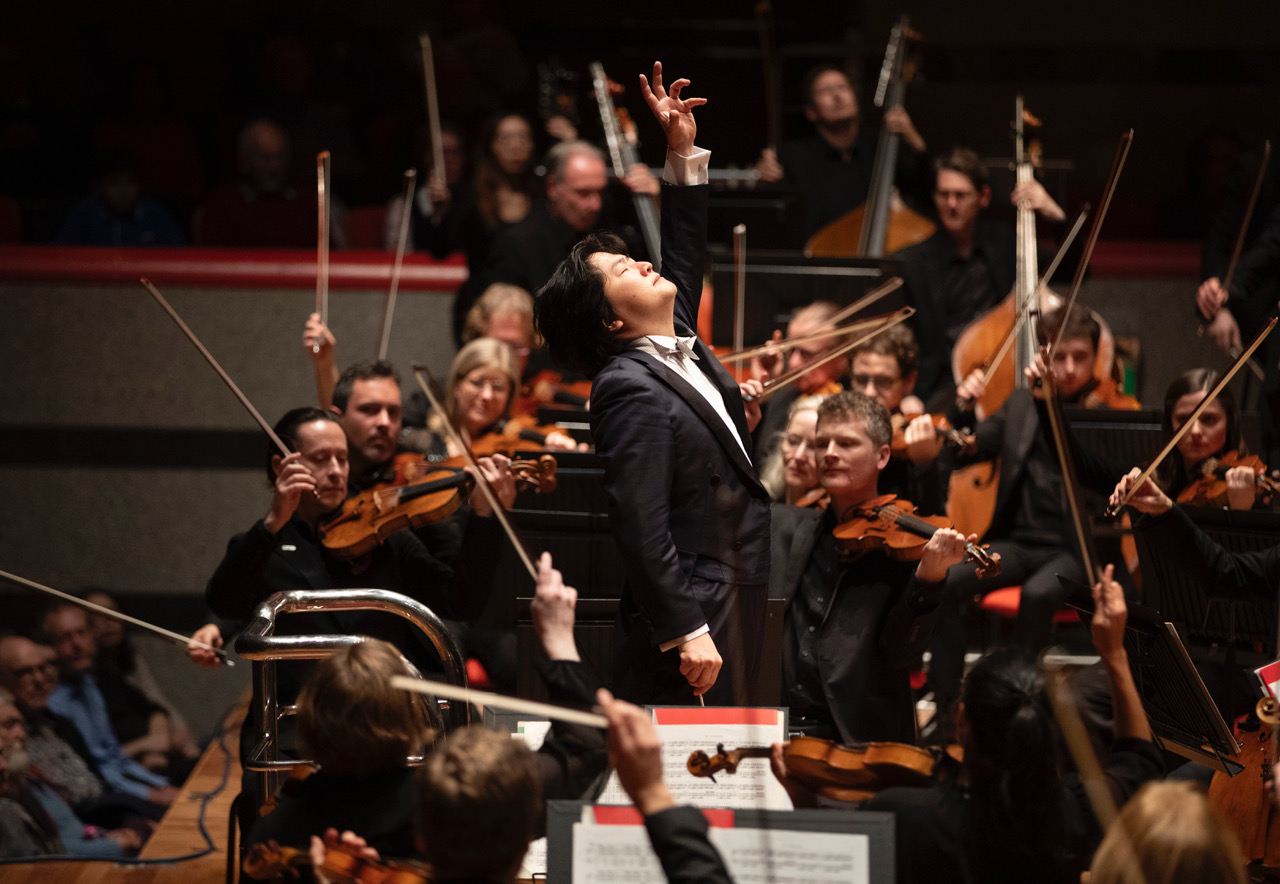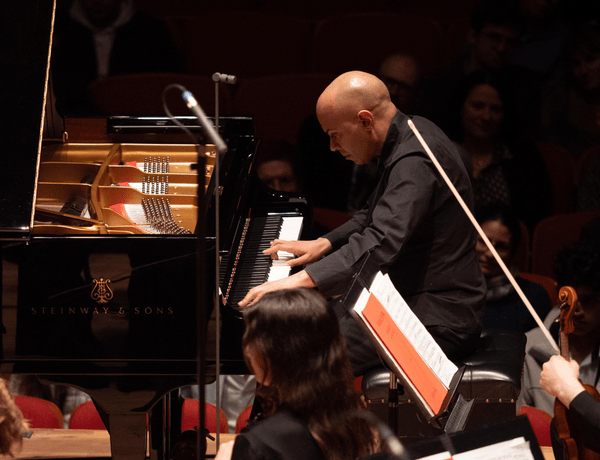
In concert – Jonathan Kelly, CBSO / Kazuki Yamada: Richard Strauss – Tod und Verklärung, Oboe Concerto, Also sprach Zarathustra

Jonathan Kelly (oboe), City of Birmingham Symphony Orchestra / Kazuki Yamada

Richard Strauss
Tod und Verklärung Op.24 (1888-9)
Oboe Concerto in D major AV144 (1945)
Also sprach Zarathustra, Op.30 (1896)

Symphony Hall, Birmingham
Wednesday 10 December 2025

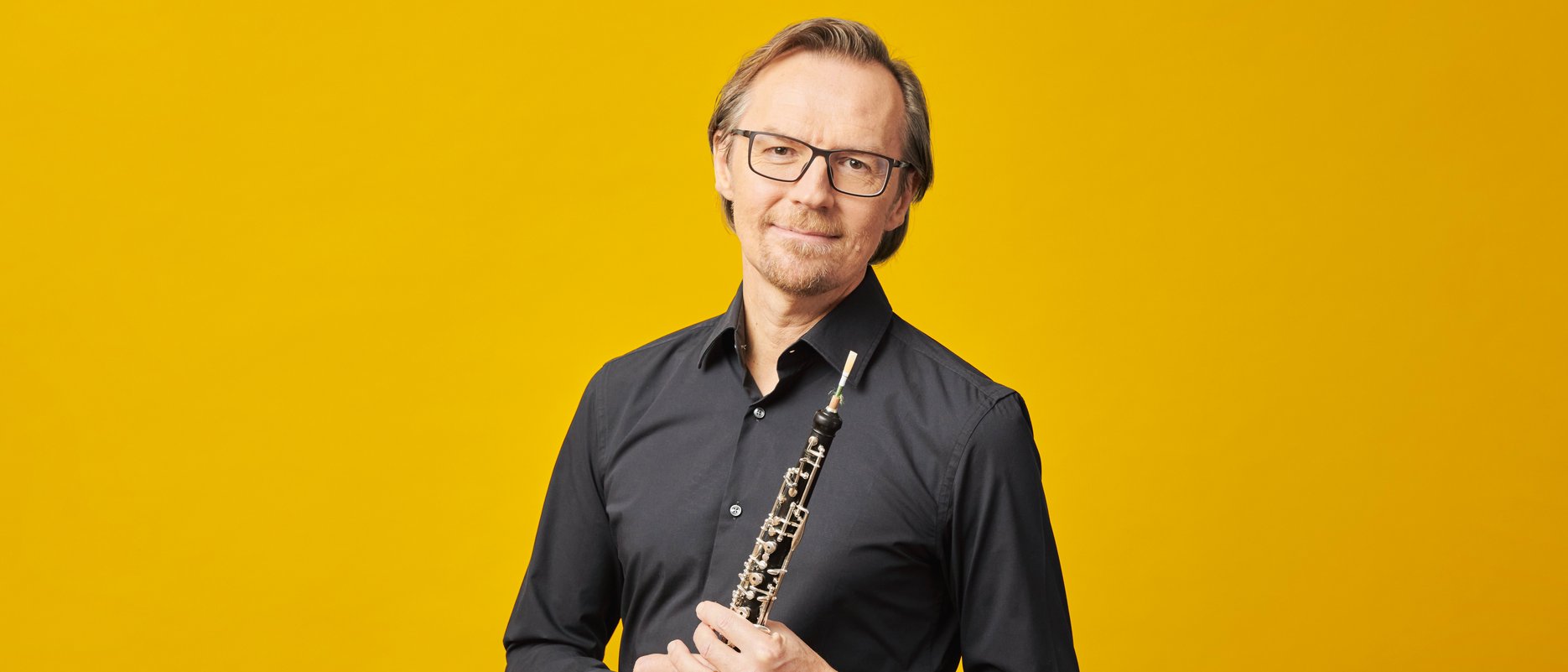
Reviewed by Richard Whitehouse Picture of Jonathan Kelly (c) Stefan Hoederath

Richard Strauss is among a relatively select number of composers, the range and breadth of whose output makes it suitable for a whole programme – as was evident from this evening’s concert by the City of Birmingham Symphony Orchestra and music director Kazuki Yamada.

Never one to miss such an opportunity, Strauss had evidently conceived his tone poem Death and Transfiguration in the wake of illness only to extend its remit accordingly. Yamada duly had its measure: whether in the not so stark fatalism of its opening pages, the tussle with his approaching demise audibly relished by the protagonist then emergence of that transfiguring state which, after the brief and rather jarring interjection of earlier angst (no more convincing here than almost any other performance) sees this work through to a fervent culmination then on to its beatific close. Not consistently more than the sum of its best parts, and with internal detail sometimes obscured in the onslaught of its vehement tuttis, this was still an involving account – lessened not a jot by its underlining Strauss’s enjoyment of his emotional strivings.

Onward 46 years to the Oboe Concerto the ageing composer wrote at the promptings of US army corporal and professional oboist John de Lancie. Much the finest of those concertante pieces from Strauss’s ‘Indian summer’, its three movements merge into the finely balanced continuity that Jonathan Kelly (above) – making a welcome return to the orchestra of which he was solo oboist during 1993-2003 – relished throughout. The elegance of its initial Allegro here abetted by a degree of nonchalance, as was the poise of its Andante with deftest pathos, his reading came into its own in a Vivace whose cadenza passages were as eloquent as the coda that Strauss duly extended to make this movement an unerring fusion of scherzo and finale. Kelly understandably offered no encore, but he returned to join the CBSO after the interval.

That second half consisted of Thus spake Zarathustra – if not the most ambitious of Strauss’ tone poems in size then surely in scope, whether or not the depths of Nietzsche’s existential musings are really plumbed. The indelible ‘Sunrise’ treading a fine line between profundity and portentousness, Yamada charted its idiosyncratic journey toward spiritual enlightenment with a sure sense of where this music was headed – no matter that the outcome felt as much   a glorification of orchestral power and opulence as of anything more intrinsically humane.

Highlights during its course included the sustained emotional force in ‘Of Joys and Passions’, the textural unanimity of the strings across their fugal writing in ‘Of Science and Learning’, and suavity then mounting animation of ‘The Dance Song’ with leader Eugene Tzikindelean in his element – before ‘Song of the Night Wanderer’ brought proceedings down from their orgiastic heights into that sombre repose whose tonal inconclusiveness may be an indicator  of Strauss’s own perspective; the certainly of those opening bars left pointedly unresolved.

Its pizzicato chords on lower strings made a telling farewell for Eduardo Vassallo, principal cellist throughout much of the past 36 seasons. His broad sympathies including Argentinian tango, and a characterful Don Quixote to boot, leaves players and listeners alike in his debt.

Published post no.2,747 – Saturday 13 December 2025

For more on the CBSO’s season for 2025/26, head to the CBSO website – and for more on the artists in this programme, click on the names to visit the websites of conductor Kazuki Yamada, oboist Jonathan Kelly and principal cellist Eduardo Vassallo

CBSO in the City 2025: Birmingham Comes Alive with a Week of Free Orchestral Events in Unexpected Places

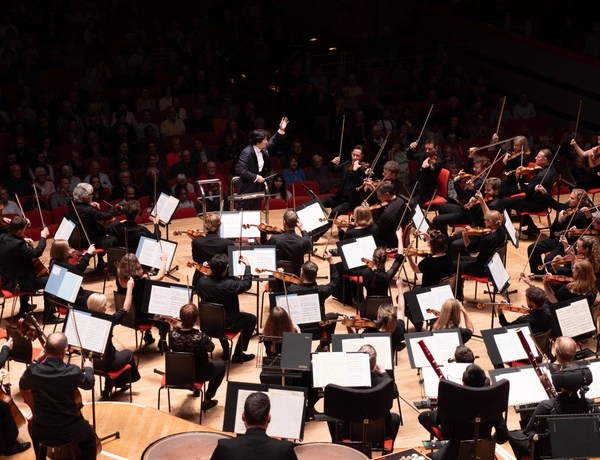
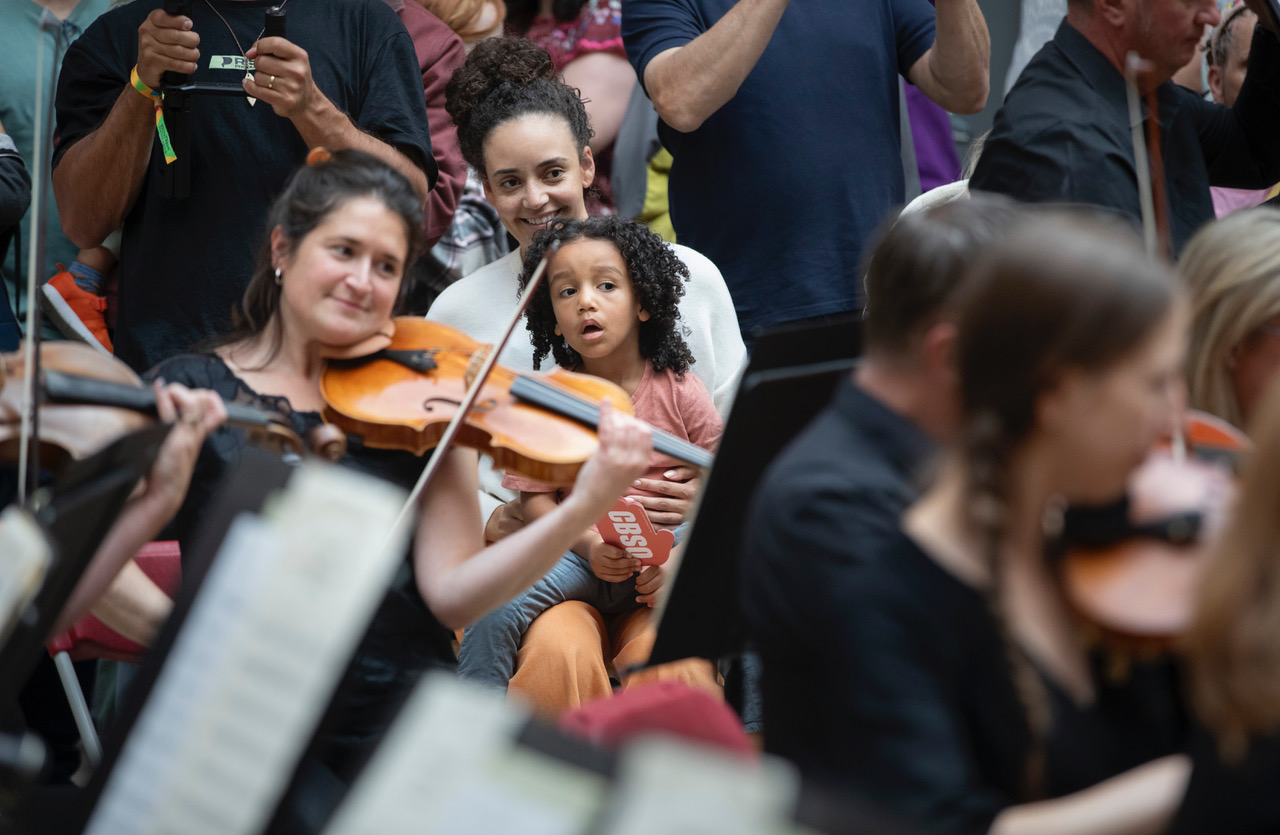
The CBSO performing in the Bullring, Birmingham.

From the press release:

The City of Birmingham Symphony Orchestra (CBSO) returns this summer with its acclaimed week-long musical takeover, CBSO in the City. Running from Wednesday 23 to Monday 28 July 2025, this much-anticipated second edition reaffirms the CBSO’s commitment to reach new audiences across the West Midlands and develop deeper connections with the city it calls home.

Building on the success of 2024’s inaugural CBSO in the City, which saw over 25 free performances in iconic and everyday locations across Birmingham, the 2025 programme blends rich musical experiences with moments of joyful spontaneity – taking the orchestra out of the concert hall and into the heart of the community.

This year’s festival offers an exciting series of free, un-ticketed performances right across the city, bringing CBSO musicians to some of Birmingham’s most recognisable venues. Highlights include:

New Street Station: pop-up performances for commuters

Library of Birmingham: including a space-themed family concert & string quintet with sitar in their wellbeing space

Ikon Gallery and RBSA Gallery: showcasing chamber groups in gallery settings

Birmingham Museum & Art Gallery: featuring flute and harp duets

Birmingham Botanical Gardens: string quartets & wind quintets in serene garden surroundings

Black Country Living Museum: brass quintets adding musical flair to the historic setting

West Midlands Metro: a clarinet trio bringing music on the move

Each performance is designed to meet audiences where they are – whether in transit, at leisure, or exploring with family – while showcasing the full diversity of the orchestra. From Star Wars and Brahms in New Street Station, to strings & winds among the blooms at Birmingham’s Botanical Gardens, a string quartet at the Ikon Gallery, and even a clarinet trio riding the West Midlands Metro.

As part of the celebrations, the orchestra is calling on Birmingham residents to nominate their street for the chance to host an unforgettable pop-up performance later this year.

CBSO Music Director Kazuki Yamada (above) leads the spirit of this initiative. He says: “For me, music is about connection. Taking the orchestra outside the concert hall helps us meet people where they are – and share something powerful, beautiful and unexpected.”

CBSO Chief Executive Emma Stenning adds: “CBSO in the City promises to once again fill Birmingham with incredible music, reimagining the city’s spaces as stages for celebration and musical discovery. From familiar faces to new friends, we’re excited to delight audiences, share special moments, and celebrate the vibrant spirit of our city. We believe music is for everyone – and this is one of the most joyful ways we bring it to life.”

CBSO in the City is generously supported by John Osborn CBE and NBB Law.

While all events are free and unticketed, standard admission applies at the Birmingham Botanical Gardens, RBSA Gallery, and Black Country Living Museum.

Full event listings and times can be found at the CBSO website

Published post no.2,591 – Thursday 10 July 2025

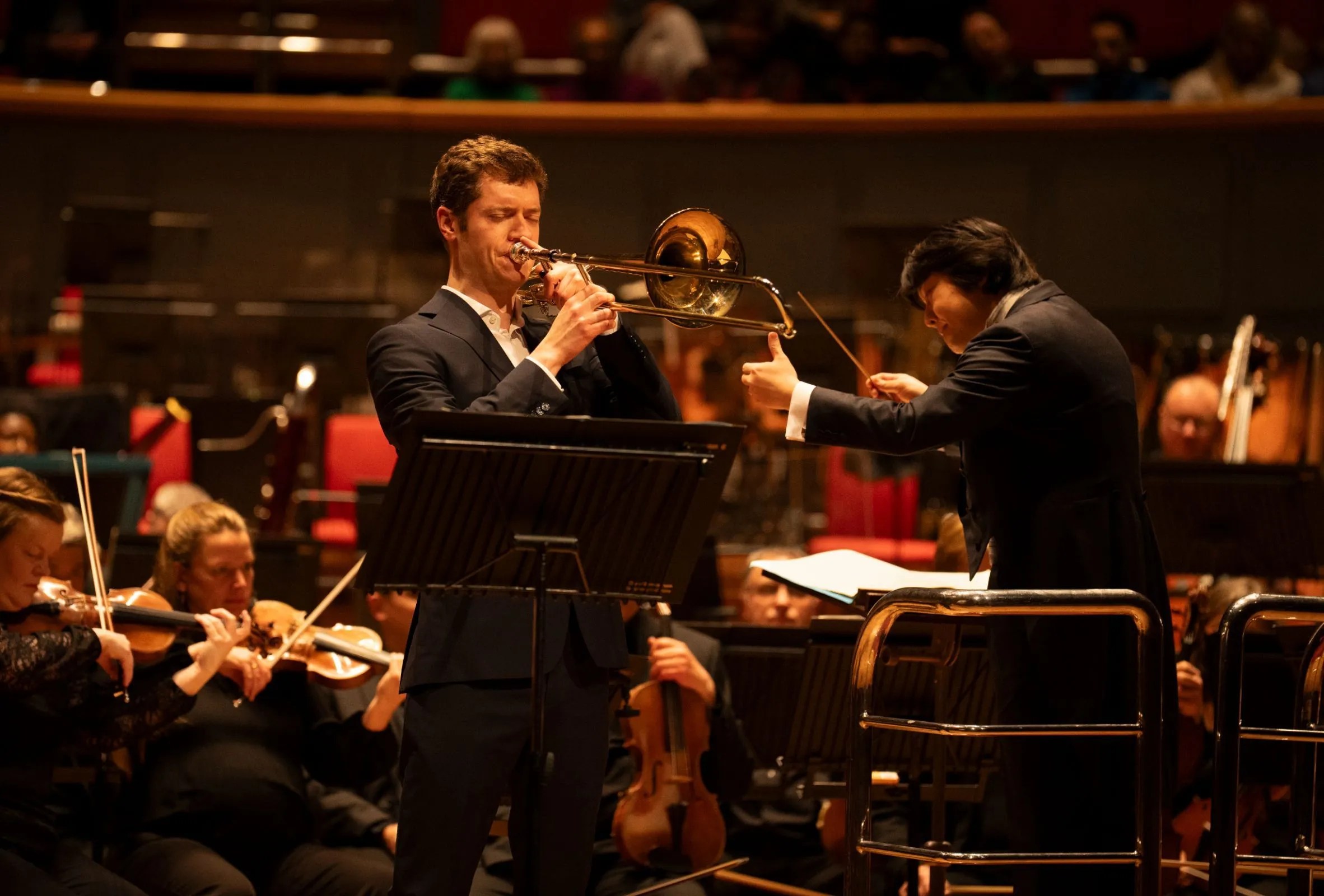
In concert – Sheku Kanneh-Mason, CBSO / Kazuki Yamada: Elgar Cello Concerto & Tchaikovsky Symphony no.5

Sheku Kanneh-Mason (cello), City of Birmingham Symphony Orchestra / Kazuki Yamada

Elgar Cello Concerto in E minor Op.85 (1919)
Tchaikovsky Symphony no.5 in E minor Op.64 (1888)

Symphony Hall, Birmingham
Thursday 19 June 2025 2:15pm

Reviewed by Richard Whitehouse Picture of Sheku Kanneh-Mason (c) Andrew Fox

The City of Birmingham Symphony Orchestra’s ‘Season of Joy’ ended (at least at its home base) this afternoon with this concert in E minor, featuring major works by two composers whose wresting triumph from out of adversity was by no means always their strongest suit.

It is all too prevalent these days to talk of Elgar’s Cello Concerto as being the ‘end of an era’ statement, so credit to Sheku Kanneh-Mason for leavening any overt fatalism with a lyrical intensity which paid dividends in the musing restiveness of the first movement – its indelible opening gesture rendered with an understated defiance that set the course for what followed. Nor was the Scherzo’s glancing irony at all undersold, its tensile energy seamlessly absorbing the mock nobility of its secondary theme on the way to a conclusion of throwaway deftness.

Others may have summoned greater fervency from the Adagio, yet Kanneh-Mason’s unforced poise in this ‘song without words’ was its own justification and an ideal entrée into the more complex finale. Especially impressive was his methodical while never calculated building of tension towards a climax of tangible emotional intensity, capped with the terse stoicism of its coda. Kazuki Yamada and the CBSO were unfailingly responsive in support. Kanneh-Mason returned with the 18th (Sarabande) of Mieczysław Weinberg’s 24 Preludes (1969) as a sombre encore.

If to imply that by being his most ‘classical’ such piece, Tchaikovsky’s Fifth Symphony may also be his most predictable, Yamada evidently had other ideas. Certainly, there was nothing passive about the first movement’s scene-setting Andante, Oliver Janes palpably ominous in its ruminative clarinet theme. A smattering of over-emphases in phrasing just occasionally impeded the Allegro’s rhythmic flow but was outweighed by the gripping spontaneity of the whole. Even finer was the Andante cantabile, as undulating lower strings launched french horn player Elspeth Dutch’s eloquent take on its ineffable main melody. The eventual climax was curtailed by a brutal intrusion of the ‘fate’ motto, before the music subsided into its calmly regretful close. Whether or not Tchaikovsky’s greatest slow movement, Yamada’s reading made it seem so.

Interesting this conductor made an attacca to the ensuing Valse, which proved effective even if one between the first two movements would have been even more so. Whatever its laissez-faire elegance, this cannily structured movement is more than a mere interlude – not least for the way the motto steals in at its close. Yamada ensured it connected directly into the Finale’s slow introduction, its fervency reined-in so as not to pre-empt the energy of the main Allegro as it surged toward one of the most theatrical ‘grand pauses’ in music. Taking this confidently in its stride, the CBSO was equally in control of an apotheosis whose grandiloquence never risked overkill. The charge of insincerity that its composer found hard to refute might never have gone away, yet heard as an inevitable outcome, this was pretty convincing all the same.

It found the CBSO in formidable shape as it embarks on a two-week tour of Japan under its music director. A handful of UK concerts (including an annual appearance at the Proms) then precedes next season which begins with more Elgar in the guise of The Dream of Gerontius.

For details on the 2025-26 season, Orchestral music that’s right up your street!, head to the City of Birmingham Symphony Orchestra website. Click on the names to read more about soloist Sheku Kanneh-Mason and conductor Kazuki Yamada

Published post no.2,571 – Saturday 21 June 2025

In concert – Marie-Christine Zupancic, Sebastian Heindl, CBSO / Kazuki Yamada: Saint-Saëns, Respighi, Takemitsu & Berlioz

Marie-Christine Zupancic (flute), Sebastian Heindl (organ), City of Birmingham Symphony Orchestra / Kazuki Yamada

Berlioz Le Corsaire Op.21 (1844)
Takemitsu I Hear the Water Dreaming (1987)
Respighi I Fontane di Roma P106 (1916)
Saint-Saëns Symphony no.3 in C minor Op.78 ‘Organ’ (1886)

Symphony Hall, Birmingham
Wednesday 4 June 2025

Reviewed by Richard Whitehouse Picture of Kazuki Yamada (c) Benjamin Ealovega

The dashing upsurge at the start of The Corsair launched this evening’s concert by the City of Birmingham Symphony Orchestra under its music director Kazuki Yamada in fine style. Nor was the pathos in this last of Berlioz’s concert overtures downplayed, and if the main portion lacked the pizzazz of illustrious predecessors, Yamada’s handling of the apotheosis proved an object-lesson in controlled spontaneity – setting the seal on a fine account of a piece that long -standing attendees will recall as a favourite of one-time principal conductor Louis Frémaux.

The music of Tōru Takemitsu was often heard in the era of Simon Rattle, but not I Hear the Water Dreaming. Taking its cue (along with other works of this period) from the ‘Dreamtime’ tradition of Aboriginal art, here a painting from the Papunya region of Western Australia, this short though eventful piece typifies its composer’s final creative phase – the formerly radical tendencies from previous years not so much disowned as finding an accommodation with the impressionist leanings of his earliest maturity. A sonic canvas, moreover, against which solo flute pursues its capricious course, with only a hint of something more confrontational either side of the cadenza-like passage towards its close. Certainly, this was music to which Marie-Christine Zupancic (taking time out as the CBSO’s first flute) sounded unerringly attuned.

CBSO regulars will recall Yamada presenting the whole of Respighi’s ‘Roman Triptych’ at a memorable concert four years ago. Tonight, Fountains of Rome rounded off the first half in a performance at its best in the effervescence of Triton at Morning or the dazzling majesty of Trevi at Midday, fading as if suspended in the Symphony Hall ambience. If Valle Giulia at Dawn felt a little passive in its allure, the enfolding serenity of Villa Medici at Sunset was fully sustained – the delicacy and suppleness of its entwining melodic lines accorded full rein.

The CBSO has been identified with Saint-Saëns’s Organ Symphony since Frémaux’s lauded recording of half-a-century ago, and it remains a work in which this orchestra excels. Yamada was (rightly) intent on stressing its symphonic cohesion, drawing ominous expectancy from the first part’s introduction and building no mean momentum in its ensuing Allegro. Sebastian Heindl’s hushed entry duly set the tone for a raptly eloquent slow movement, measured while never sluggish as it headed toward its heartfelt climax then on to a coda of bittersweet repose.

There was no lack of incisiveness or humour in the scherzo which opens the second part – its scintillating passagework for piano duet artfully integrated into the orchestral texture, with an ideally paced link into the finale with its indelible main melody and methodical build-up to a majestic peroration. Those thunderous initial chords aside, Heindl made less of an impact than might have been expected, but his always resourceful choice of registrations underlined the extent to which both he and Yamada continually had the ‘bigger picture’ uppermost in mind.

Overall, then, a concert which manifestly played to this orchestra’s collective strengths. The CBSO is back next week with its former music director Mirga Gražinytė-Tyla for what will be only a second UK performance, 63 years after the first, for Weinberg’s Fifth Symphony.

For details on the 2024-25 season A Season of Joy, head to the City of Birmingham Symphony Orchestra website. Click on the names to read more about soloists Marie-Christine Zupancic and Sebastian Heindl, and conductor Kazuki Yamada

Published post no.2,496 – Sunday 6 April 2025

Orchestral Music That’s Right Up Your Street: The CBSO announces its 2025-26 season

From the press release:

The City of Birmingham Symphony Orchestra (CBSO) today announces its 2025-26 season, presenting a compelling programme of concerts deeply connected to the city’s vibrant cultural identity.

Findings from the orchestra’s new “Listening Project” – a West Midlands focused research initiative reveals Birmingham’s strong cultural confidence. The new research shows 60% of Birmingham residents consider attending arts and cultural events to be a vital aspect of their free time. In addition, public support for Birmingham’s music venues is strong: 79% of people say they have attended a Birmingham venue in the last year – and 57% say they haven’t felt the need to travel beyond the city for music concerts.

In line with this, the CBSO has crafted a season that brings together world-class classical performances, diverse cultural collaborations, and accessible community events that reflect what Birmingham audiences value most.

CBSO Music Director, Kazuki Yamada, comments: “Our 2025-26 season celebrates both our classical heritage and Birmingham’s diverse cultural voices. We’re bringing orchestral music directly to communities across the city – honouring traditional masterworks while creating experiences that reflect what Birmingham audiences have told us they value most.”

The CBSO’s 2025-26 season at a glance

Classical tradition at its finest

The 2025-26 season offers ambitious classical programming:

· Kazuki Yamada enters his second year as Music Director by beginning a full Mahler Symphony Cycle with Symphony No.1, and leading more than 10 concerts in Birmingham, including as part of CBSO in the City.

· Elgar’s The Dream of Gerontius opens the season with the full CBSO Chorus.

· Puccini’s Tosca in concert featuring Natalya Romaniw, Gwyn Hughes Jones and Sir Bryn Terfel.

· The CBSO season has drawn top international soloists, including; Isata Kanneh-Mason, Benjamin Grosvenor, and Lisa Batiashvili.

Celebrating Birmingham’s cultural diversity

Building on successful past collaborations, the CBSO continues to champion the city’s rich cultural tapestry:

· Black Lives in Music brings a taste of their celebrated classical music festival to Birmingham with the return of award-winning singer-songwriter Laura Mvula to her hometown.

· The CBSO & The Orchestral Qawwali Project, a glorious blend of Sufi poetry, Indian Classical dance and symphony orchestra returns to Birmingham.

· Rushil Ranjan leads an evening that celebrates the musical and spiritual connections between western and eastern classical music.

· Satnam Rana presents Bringing the Light, an evening dedicated to celebrating light and winter festivals, including new commissions from contemporary voices including Cassie Kinoshi, Joan Armatrading and Roxanna Panufnik.

Taking music to Birmingham’s communities

The CBSO continues its commitment to bringing music directly to communities across the city:

· CBSO in the City week (23-28 July 2025) will return – as the CBSO delivers free music in public spaces throughout Birmingham.

Music for everyone

The season includes accessible programming designed to welcome new audiences:

· The complete Star Wars Original Trilogy performed over a full weekend, with live orchestra (24-26 October 2025).
· Symphonic Queen celebrating one of the UK’s greatest-ever rock bands.
· Charlie Chaplin’s The Gold Rush with live orchestra.

Inspiring music experiences for children and students

The CBSO’s 2025-26 season will also feature a strong focus on young people, giving more than 20,000 young people enriching music experiences through 36 concerts specifically designed for young people:

· Targeted Schools’ Concerts for different key stages, reaching thousands of children who might otherwise never experience live orchestral music.
· Notelets performances specifically designed for toddlers and young children’s first music experiences – these fun-filled interactive concerts give children the freedom to dance, sing and learn about musical instruments for the first time.
· Relaxed Concerts created for pupils attending Special Schools to enable pupils to experience live music in a supported, accessible and engaging environment.
· Four dedicated family concerts including “Music from the Movies”, “CBSO Family Christmas”, “Tunes & Tales” and “Dance Across America.”

“Our new season is a magnificent celebration of music” says Emma Stenning, CBSO Chief Executive, who promises that 2025-26 will deliver “joy filled concerts for everyone, whether you find us at Symphony Hall, across Birmingham and the West Midlands, or on national and international tour led by our incredible Music Director, Kazuki Yamada”.

She adds: “Birmingham is our inspiration. Our home city is fantastically musical, and full of diversity and creative adventure. This new season is drawn from exactly that spirit, and presents us to the world as a truly future facing orchestra, that both celebrates the great classical repertoire, and dares to try something new”.

“As you delve into what’s on offer, we hope that you will discover music that moves you, uplifts you and offers you moments of celebration and reflection. We very much look forward to welcoming you to a concert soon”.

Catherine Arlidge, Director of Artistic Planning and former CBSO violinist, added: “Our season marries the global with the local. Whilst the diversity of our season programming is informed by understanding our wide-ranging audiences locally, we are also delighted that so many top international artists are joining us for the new season – Sir Bryn Terfel, Lisa Batiashvili, Osmo Vänskä, Vilde Frang and the Jussen brothers to name but a few. At a time of international geo-political tensions, our concerts celebrate different geographies and cultures – and remind us all about music’s power to unite people. Through our research, we have a strong sense of the musical experiences that speak for the city today – yet in terms of repertoire, guest artists and composers, the season is richly international in flavour. It is a season about celebrating home – but on the world stage.”

To explore the 2025-26 CBSO season in full visit the CBSO website. Tickets for the new season go on sale from Wednesday 21 May 2025, 10am.

Published post no.2,519 – Thursday 1 May 2025