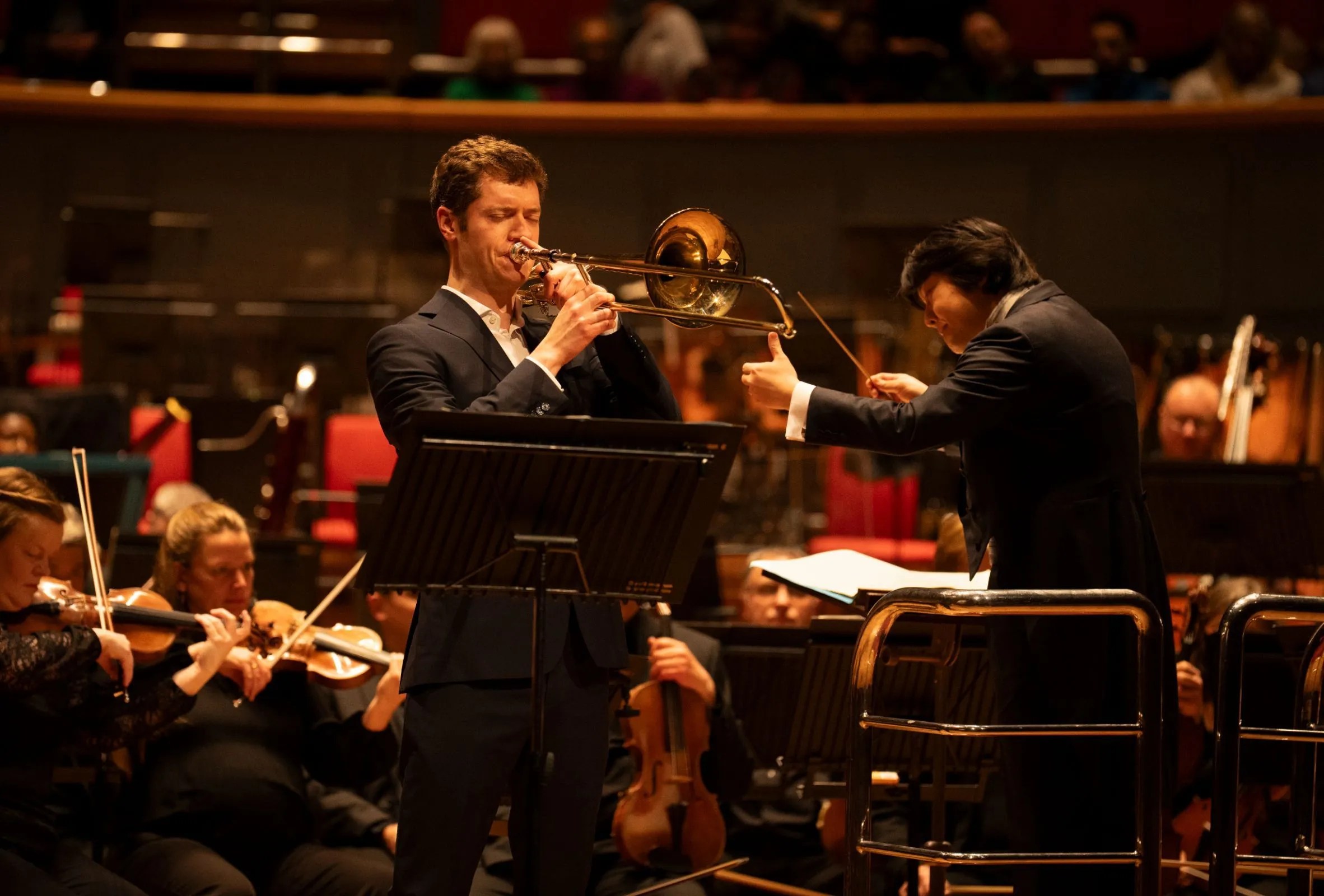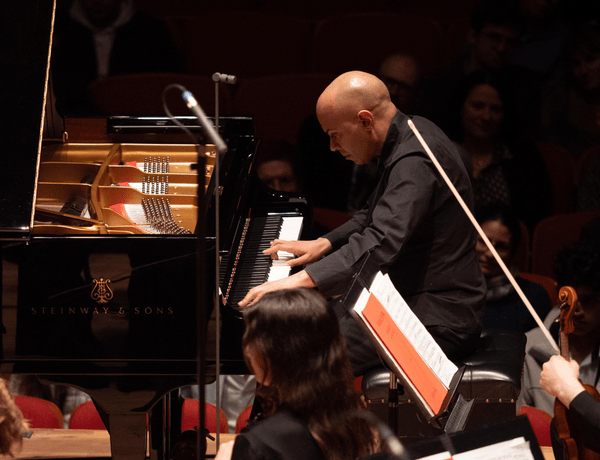
In concert – Sheku Kanneh-Mason, CBSO / Kazuki Yamada: Elgar Cello Concerto & Tchaikovsky Symphony no.5

Sheku Kanneh-Mason (cello), City of Birmingham Symphony Orchestra / Kazuki Yamada

Elgar Cello Concerto in E minor Op.85 (1919)
Tchaikovsky Symphony no.5 in E minor Op.64 (1888)

Symphony Hall, Birmingham
Thursday 19 June 2025 2:15pm

Reviewed by Richard Whitehouse Picture of Sheku Kanneh-Mason (c) Andrew Fox

The City of Birmingham Symphony Orchestra’s ‘Season of Joy’ ended (at least at its home base) this afternoon with this concert in E minor, featuring major works by two composers whose wresting triumph from out of adversity was by no means always their strongest suit.

It is all too prevalent these days to talk of Elgar’s Cello Concerto as being the ‘end of an era’ statement, so credit to Sheku Kanneh-Mason for leavening any overt fatalism with a lyrical intensity which paid dividends in the musing restiveness of the first movement – its indelible opening gesture rendered with an understated defiance that set the course for what followed. Nor was the Scherzo’s glancing irony at all undersold, its tensile energy seamlessly absorbing the mock nobility of its secondary theme on the way to a conclusion of throwaway deftness.

Others may have summoned greater fervency from the Adagio, yet Kanneh-Mason’s unforced poise in this ‘song without words’ was its own justification and an ideal entrée into the more complex finale. Especially impressive was his methodical while never calculated building of tension towards a climax of tangible emotional intensity, capped with the terse stoicism of its coda. Kazuki Yamada and the CBSO were unfailingly responsive in support. Kanneh-Mason returned with the 18th (Sarabande) of Mieczysław Weinberg’s 24 Preludes (1969) as a sombre encore.

If to imply that by being his most ‘classical’ such piece, Tchaikovsky’s Fifth Symphony may also be his most predictable, Yamada evidently had other ideas. Certainly, there was nothing passive about the first movement’s scene-setting Andante, Oliver Janes palpably ominous in its ruminative clarinet theme. A smattering of over-emphases in phrasing just occasionally impeded the Allegro’s rhythmic flow but was outweighed by the gripping spontaneity of the whole. Even finer was the Andante cantabile, as undulating lower strings launched french horn player Elspeth Dutch’s eloquent take on its ineffable main melody. The eventual climax was curtailed by a brutal intrusion of the ‘fate’ motto, before the music subsided into its calmly regretful close. Whether or not Tchaikovsky’s greatest slow movement, Yamada’s reading made it seem so.

Interesting this conductor made an attacca to the ensuing Valse, which proved effective even if one between the first two movements would have been even more so. Whatever its laissez-faire elegance, this cannily structured movement is more than a mere interlude – not least for the way the motto steals in at its close. Yamada ensured it connected directly into the Finale’s slow introduction, its fervency reined-in so as not to pre-empt the energy of the main Allegro as it surged toward one of the most theatrical ‘grand pauses’ in music. Taking this confidently in its stride, the CBSO was equally in control of an apotheosis whose grandiloquence never risked overkill. The charge of insincerity that its composer found hard to refute might never have gone away, yet heard as an inevitable outcome, this was pretty convincing all the same.

It found the CBSO in formidable shape as it embarks on a two-week tour of Japan under its music director. A handful of UK concerts (including an annual appearance at the Proms) then precedes next season which begins with more Elgar in the guise of The Dream of Gerontius.

For details on the 2025-26 season, Orchestral music that’s right up your street!, head to the City of Birmingham Symphony Orchestra website. Click on the names to read more about soloist Sheku Kanneh-Mason and conductor Kazuki Yamada

Published post no.2,571 – Saturday 21 June 2025

In concert – Marie-Christine Zupancic, Sebastian Heindl, CBSO / Kazuki Yamada: Saint-Saëns, Respighi, Takemitsu & Berlioz

Marie-Christine Zupancic (flute), Sebastian Heindl (organ), City of Birmingham Symphony Orchestra / Kazuki Yamada

Berlioz Le Corsaire Op.21 (1844)
Takemitsu I Hear the Water Dreaming (1987)
Respighi I Fontane di Roma P106 (1916)
Saint-Saëns Symphony no.3 in C minor Op.78 ‘Organ’ (1886)

Symphony Hall, Birmingham
Wednesday 4 June 2025

Reviewed by Richard Whitehouse Picture of Kazuki Yamada (c) Benjamin Ealovega

The dashing upsurge at the start of The Corsair launched this evening’s concert by the City of Birmingham Symphony Orchestra under its music director Kazuki Yamada in fine style. Nor was the pathos in this last of Berlioz’s concert overtures downplayed, and if the main portion lacked the pizzazz of illustrious predecessors, Yamada’s handling of the apotheosis proved an object-lesson in controlled spontaneity – setting the seal on a fine account of a piece that long -standing attendees will recall as a favourite of one-time principal conductor Louis Frémaux.

The music of Tōru Takemitsu was often heard in the era of Simon Rattle, but not I Hear the Water Dreaming. Taking its cue (along with other works of this period) from the ‘Dreamtime’ tradition of Aboriginal art, here a painting from the Papunya region of Western Australia, this short though eventful piece typifies its composer’s final creative phase – the formerly radical tendencies from previous years not so much disowned as finding an accommodation with the impressionist leanings of his earliest maturity. A sonic canvas, moreover, against which solo flute pursues its capricious course, with only a hint of something more confrontational either side of the cadenza-like passage towards its close. Certainly, this was music to which Marie-Christine Zupancic (taking time out as the CBSO’s first flute) sounded unerringly attuned.

CBSO regulars will recall Yamada presenting the whole of Respighi’s ‘Roman Triptych’ at a memorable concert four years ago. Tonight, Fountains of Rome rounded off the first half in a performance at its best in the effervescence of Triton at Morning or the dazzling majesty of Trevi at Midday, fading as if suspended in the Symphony Hall ambience. If Valle Giulia at Dawn felt a little passive in its allure, the enfolding serenity of Villa Medici at Sunset was fully sustained – the delicacy and suppleness of its entwining melodic lines accorded full rein.

The CBSO has been identified with Saint-Saëns’s Organ Symphony since Frémaux’s lauded recording of half-a-century ago, and it remains a work in which this orchestra excels. Yamada was (rightly) intent on stressing its symphonic cohesion, drawing ominous expectancy from the first part’s introduction and building no mean momentum in its ensuing Allegro. Sebastian Heindl’s hushed entry duly set the tone for a raptly eloquent slow movement, measured while never sluggish as it headed toward its heartfelt climax then on to a coda of bittersweet repose.

There was no lack of incisiveness or humour in the scherzo which opens the second part – its scintillating passagework for piano duet artfully integrated into the orchestral texture, with an ideally paced link into the finale with its indelible main melody and methodical build-up to a majestic peroration. Those thunderous initial chords aside, Heindl made less of an impact than might have been expected, but his always resourceful choice of registrations underlined the extent to which both he and Yamada continually had the ‘bigger picture’ uppermost in mind.

Overall, then, a concert which manifestly played to this orchestra’s collective strengths. The CBSO is back next week with its former music director Mirga Gražinytė-Tyla for what will be only a second UK performance, 63 years after the first, for Weinberg’s Fifth Symphony.

For details on the 2024-25 season A Season of Joy, head to the City of Birmingham Symphony Orchestra website. Click on the names to read more about soloists Marie-Christine Zupancic and Sebastian Heindl, and conductor Kazuki Yamada

Published post no.2,496 – Sunday 6 April 2025

Orchestral Music That’s Right Up Your Street: The CBSO announces its 2025-26 season

From the press release:

The City of Birmingham Symphony Orchestra (CBSO) today announces its 2025-26 season, presenting a compelling programme of concerts deeply connected to the city’s vibrant cultural identity.

Findings from the orchestra’s new “Listening Project” – a West Midlands focused research initiative reveals Birmingham’s strong cultural confidence. The new research shows 60% of Birmingham residents consider attending arts and cultural events to be a vital aspect of their free time. In addition, public support for Birmingham’s music venues is strong: 79% of people say they have attended a Birmingham venue in the last year – and 57% say they haven’t felt the need to travel beyond the city for music concerts.

In line with this, the CBSO has crafted a season that brings together world-class classical performances, diverse cultural collaborations, and accessible community events that reflect what Birmingham audiences value most.

CBSO Music Director, Kazuki Yamada, comments: “Our 2025-26 season celebrates both our classical heritage and Birmingham’s diverse cultural voices. We’re bringing orchestral music directly to communities across the city – honouring traditional masterworks while creating experiences that reflect what Birmingham audiences have told us they value most.”

The CBSO’s 2025-26 season at a glance

Classical tradition at its finest

The 2025-26 season offers ambitious classical programming:

· Kazuki Yamada enters his second year as Music Director by beginning a full Mahler Symphony Cycle with Symphony No.1, and leading more than 10 concerts in Birmingham, including as part of CBSO in the City.

· Elgar’s The Dream of Gerontius opens the season with the full CBSO Chorus.

· Puccini’s Tosca in concert featuring Natalya Romaniw, Gwyn Hughes Jones and Sir Bryn Terfel.

· The CBSO season has drawn top international soloists, including; Isata Kanneh-Mason, Benjamin Grosvenor, and Lisa Batiashvili.

Celebrating Birmingham’s cultural diversity

Building on successful past collaborations, the CBSO continues to champion the city’s rich cultural tapestry:

· Black Lives in Music brings a taste of their celebrated classical music festival to Birmingham with the return of award-winning singer-songwriter Laura Mvula to her hometown.

· The CBSO & The Orchestral Qawwali Project, a glorious blend of Sufi poetry, Indian Classical dance and symphony orchestra returns to Birmingham.

· Rushil Ranjan leads an evening that celebrates the musical and spiritual connections between western and eastern classical music.

· Satnam Rana presents Bringing the Light, an evening dedicated to celebrating light and winter festivals, including new commissions from contemporary voices including Cassie Kinoshi, Joan Armatrading and Roxanna Panufnik.

Taking music to Birmingham’s communities

The CBSO continues its commitment to bringing music directly to communities across the city:

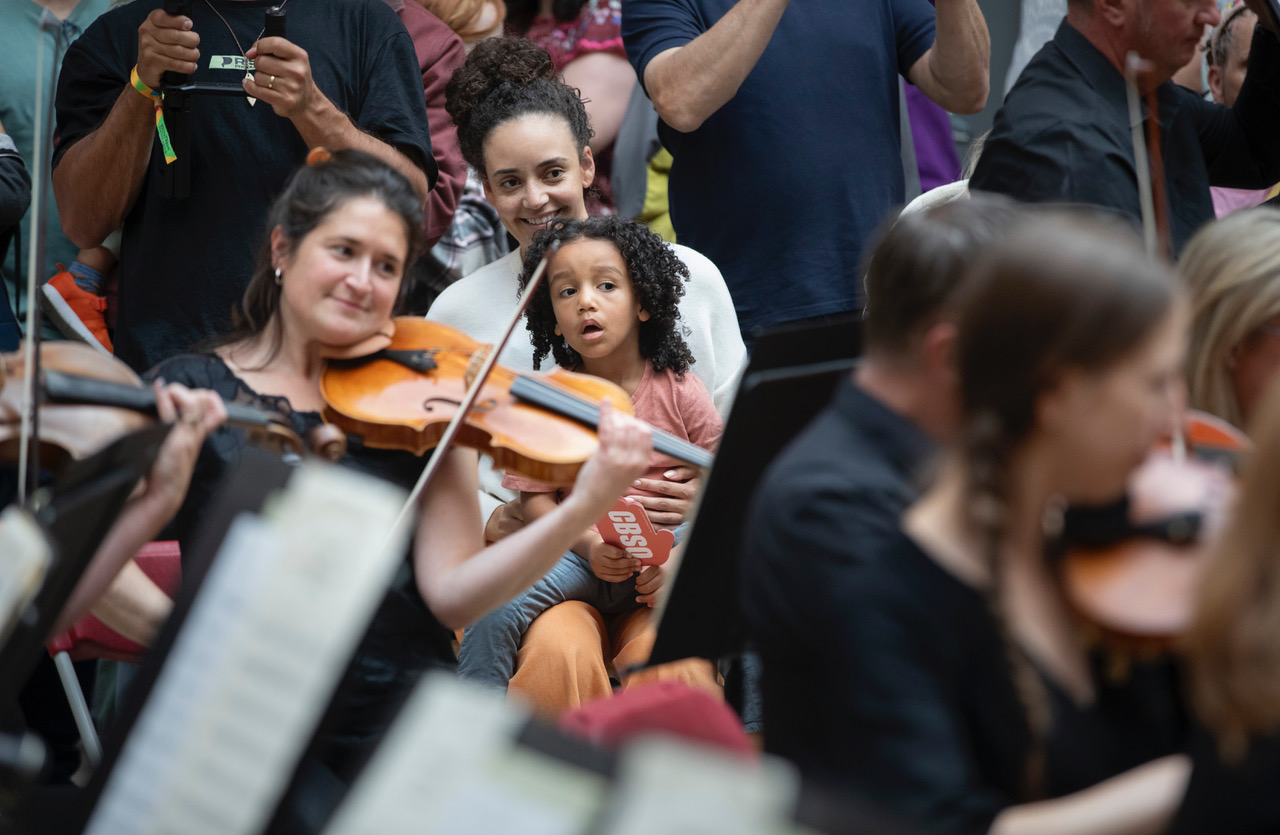
· CBSO in the City week (23-28 July 2025) will return – as the CBSO delivers free music in public spaces throughout Birmingham.

Music for everyone

The season includes accessible programming designed to welcome new audiences:

· The complete Star Wars Original Trilogy performed over a full weekend, with live orchestra (24-26 October 2025).
· Symphonic Queen celebrating one of the UK’s greatest-ever rock bands.
· Charlie Chaplin’s The Gold Rush with live orchestra.

Inspiring music experiences for children and students

The CBSO’s 2025-26 season will also feature a strong focus on young people, giving more than 20,000 young people enriching music experiences through 36 concerts specifically designed for young people:

· Targeted Schools’ Concerts for different key stages, reaching thousands of children who might otherwise never experience live orchestral music.
· Notelets performances specifically designed for toddlers and young children’s first music experiences – these fun-filled interactive concerts give children the freedom to dance, sing and learn about musical instruments for the first time.
· Relaxed Concerts created for pupils attending Special Schools to enable pupils to experience live music in a supported, accessible and engaging environment.
· Four dedicated family concerts including “Music from the Movies”, “CBSO Family Christmas”, “Tunes & Tales” and “Dance Across America.”

“Our new season is a magnificent celebration of music” says Emma Stenning, CBSO Chief Executive, who promises that 2025-26 will deliver “joy filled concerts for everyone, whether you find us at Symphony Hall, across Birmingham and the West Midlands, or on national and international tour led by our incredible Music Director, Kazuki Yamada”.

She adds: “Birmingham is our inspiration. Our home city is fantastically musical, and full of diversity and creative adventure. This new season is drawn from exactly that spirit, and presents us to the world as a truly future facing orchestra, that both celebrates the great classical repertoire, and dares to try something new”.

“As you delve into what’s on offer, we hope that you will discover music that moves you, uplifts you and offers you moments of celebration and reflection. We very much look forward to welcoming you to a concert soon”.

Catherine Arlidge, Director of Artistic Planning and former CBSO violinist, added: “Our season marries the global with the local. Whilst the diversity of our season programming is informed by understanding our wide-ranging audiences locally, we are also delighted that so many top international artists are joining us for the new season – Sir Bryn Terfel, Lisa Batiashvili, Osmo Vänskä, Vilde Frang and the Jussen brothers to name but a few. At a time of international geo-political tensions, our concerts celebrate different geographies and cultures – and remind us all about music’s power to unite people. Through our research, we have a strong sense of the musical experiences that speak for the city today – yet in terms of repertoire, guest artists and composers, the season is richly international in flavour. It is a season about celebrating home – but on the world stage.”

To explore the 2025-26 CBSO season in full visit the CBSO website. Tickets for the new season go on sale from Wednesday 21 May 2025, 10am.

Published post no.2,519 – Thursday 1 May 2025

In concert – Isabelle Faust, CBSO / Kazuki Yamada: Akio Yashiro: Symphony, Shostakovich: Violin Concerto no.2 & Bartók Dance Suite

Isabelle Faust (violin, above), City of Birmingham Symphony Orchestra / Kazuki Yamada (below)

Bartók Dance Suite BB86a (1923)
Shostakovich Violin Concerto no.2 in C sharp minor Op.129 (1967)
Yashiro Symphony for Large Orchestra (1958) [UK Premiere]

Symphony Hall, Birmingham
Wednesday 5 February 2025

Reviewed by Richard Whitehouse Picture of Isabelle Faust (c) Felix Broede

It may not have been a popular programme, but tonight’s concert by the City of Birmingham Symphony Orchestra drew a pretty decent attendance in music clearly to the liking of music director Kazuki Yamada, who duly gave of his best for what proved a memorable evening.

Often seen as a breakthrough work in terms of its fusing indigenous musical expression with Western formal conceits, Bartók’s Dance Suite makes an ideal concert-opener. At its best in the rhythmic propulsion or harmonic astringency of the second and third dances, the present account felt a touch inhibited elsewhere; Yamada making overmuch of rhetorical pauses that should motivate rather than impede ongoing momentum. Not that this precluded a forthright response from the CBSO, pianist James Keefe making the most of his time in the spotlight.

Although not now the rarity it once was, Shostakovich’s Second Violin Concerto will always lag behind its predecessor as to performance. Coming near the outset of its composer’s final decade, its inwardness and austerity belie its technical difficulties – though these latter were rarely an issue for Isabelle Faust, who kept the initial Moderato on a tight if never inflexible rein so its demonstrative outbursts and speculative asides were more than usually integrated. Even finer was the central Lento, muted anguish finding potent contrast with plangent solo passages, and a closing contribution from horn player Elspeth Dutch of subdued pathos. Nor was the final Allegro an anti-climax, Faust drawn into engaging confrontation with timpani and tom-tom then heading to a denouement with more than a touch of desperation in its hilarity.

Inquiring listeners may have encountered a recording in Naxos’s Japanese Classics series of a Symphony by Akio Yashiro (1929-76). One of the first group of Japanese composers to study in Europe after the Second World War, his limited yet vital output witnesses a determined and distinctive attempt to fuse certain native elements with the more radical aspects of timbre and texture stemming from the West. Messiaen (with whom he studied) is audible in the fastidious harmonies of this work’s Lento that, building from pensive melodies on flute and cor anglais into a threnody of real emotional power, is its undoubted highlight. Otherwise, the music feels more akin to that of André Jolivet (whose three symphonies deserve revival) in its abundant orchestral colour and predilection for rhythmic ostinatos that galvanize the musical argument.

Such is evident in the implacable unfolding of a Prelude whose motivic ideas secure a more purposeful accord in the ensuing Scherzo, while the finale draws upon the slow movement’s intensity as it expands over successive waves of activity to an impetuous Allegro of no mean velocity prior to a seismic, even brutal peroration. Whatever its intermittent lack of subtlety and cohesion, Yashiro’s Symphony remains an imposing musical edifice such as makes one regret that the composer never managed to pen its successor during his subsequent 18 years.

It certainly found the CBSO at its collective best, so making one hope that Yamada (above) might yet schedule pieces by such as Toshiro Mayuzumi or Sadao Bekku. His next concert has a rather more familiar symphony by Tchaikovsky in the orchestra’s annual Benevolent Fund Concert.

For details on the 2024-25 season A Season of Joy, head to the City of Birmingham Symphony Orchestra website. Click on the names to read more about violinist Isabelle Faust and the CBSO chief conductor Kazuki Yamada, and also the composer Akio Yashiro’s symphony

Published post no.2,438 – Friday 7 February 2025

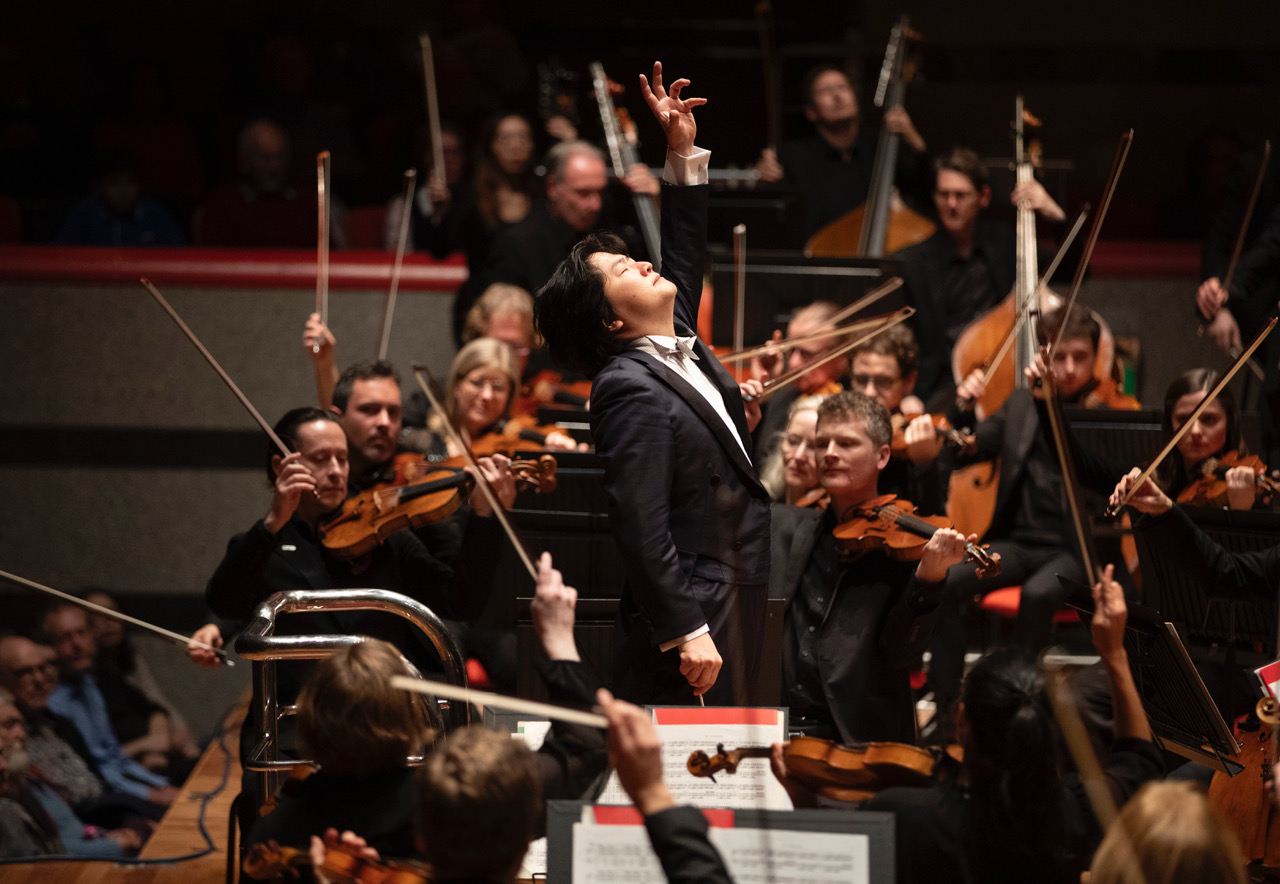
News – The CBSO announce a two-year extension for music director Kazuki Yamada

The following text comes from a City of Birmingham Symphony Orchestra press release:

The City of Birmingham Symphony Orchestra (CBSO) today announces a two-year contract extension for Music Director, Kazuki Yamada – reflecting his ever-deepening relationship with the orchestra and increasing involvement in creative decision making. The extension means that Yamada will remain as Music Director until the end of the 2028 – 2029 Season. 

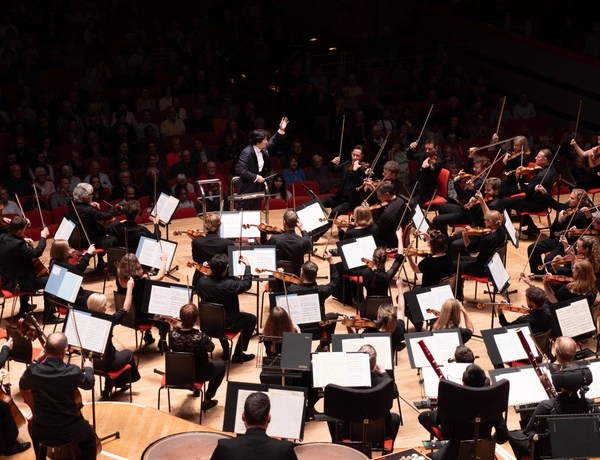
In this season alone, he will have conducted more than 20 concerts in Birmingham, ranging from performances of landmark classical works, including an exploration of Ninth Symphonies by Mahler, Bruckner, Dvořák, and Beethoven. He appears twice with the CBSO Youth Orchestra and takes to the podium for the CBSO’s annual Schools’ concerts.

Last summer, Yamada played a pivotal role in bringing free live music to thousands across Birmingham during the CBSO In the City event – including performances on a tram, at New Street Station, and within the bustling Bullring shopping centre. Yamada’s role with the Orchestra extends far beyond Birmingham and this spring, he will take the Orchestra on tour to both Europe and Japan.

CBSO: Beethoven’s 9th Symphony.

Kazuki Yamada, Music Director, CBSO, says: “I am extremely happy to be renewing my contract with the City of Birmingham Symphony Orchestra. Over the past few years, I have developed such a strong connection with the orchestra, and it has been a true privilege to build on the special relationship I have with these talented musicians. The CBSO is a super happy, positive, and motivated orchestra, and I have always been inspired by their passion and dedication. There’s so much potential for us to explore together, and I’m excited about the possibilities which lie ahead. 

I love the audiences and people of Birmingham as I fully immerse myself in the culture of Birmingham as a Brummie conductor! To continue my time with the orchestra feels like a wonderful affirmation of the trust and mutual respect we’ve built, and I can’t wait to see what we will achieve together moving forward.”

The news of Kazuki’s extension follows the announcement of Catherine Arlidge MBE being appointed into the role of Director of Artistic Planning at the CBSO last month, further strengthening the Orchestra’s artistic team.

Simon Halsey CBE, who has served as Chorus Director with the CBSO since 1982, will also take on the new role of Director, CBSO Chorus later this year. In his new role, Simon will focus his work on CBSO Chorus, working closely with leaders of Children’s & Youth Choruses, and SO Vocal, to programme an incredible season of choral music.

Simon will hold the new position for two seasons, while the organisation recruits a new Director, CBSO Chorus, to begin in the 2027/28 season. Once a new Director is appointed, Simon will take on an honorary title with continued commitment to the organisation. This marks the beginning of a new chapter in his longstanding partnership with the Orchestra, which will continue for many years to come – including his 50th anniversary in 2032.

Simon Halsey CBE, Chorus Director, CBSO, says: “As I enter my 43rd year as Chorus Director of the CBSO, I continue to be thankful for the extraordinary family of singers and players, adult and youth, that strive for the very best in our large and excitingly diverse city.

An informal calculation suggests that I’ve heard over ten thousand choral auditions and taken some three thousand rehearsals on behalf of our inspiring music directors!
We have formed children’s, youth and community choirs in addition to the CBSO Chorus. And we’ve helped train 50 postgraduate choral conductors in association with the University of Birmingham.

I am beyond thrilled to extend my relationship with our choirs and orchestra in the long-term and grateful that the organisation – my musical family – will allow me to share more widely the responsibilities as the years pass; allowing me to be an active part of the organisation for 50 years.”

Emma Stenning, Chief Executive, CBSO, says: “I am thrilled that the brilliant Kazuki Yamada will remain Music Director of the CBSO until August 2029. 

From working with students at our incredible school, the Shireland CBSO Academy, to leading the Orchestra at the BBC Proms, he is truly at the heart of our music making.

More than that, he is totally committed to Birmingham, as a city of immense cultural breadth and creative opportunity.  That he can delight audiences at Symphony Hall with performances of such emotion, depth and joy, jump on a tram to bring free music to commuters, or don a Halloween costume to lead us in a night of spooky adventure at the Hockley Social Club, he entirely embodies everything that CBSO hopes to be, and we are privileged to extend our relationship with him in this way.

Simon Halsey’s work with the CBSO Chorus is already the stuff of legend. Planning through towards celebrating a remarkable half century with him in 2032 has reminded all of us of the brilliance, creativity and absolute class of his creative leadership, and we all greatly look forward to the exciting work that is to come.

Along with Cath’s step out of the orchestra into her new Director of Artistic Planning role, the CBSO’s creative leadership shows exceptional strength, and I look forward to us working together over the coming years to bring great music to Birmingham, the West Midlands and beyond.”

Pictures of Kazuki Yamada (c) Hannah Fathers (top) and Andrew Fox

Published post no.2,425 – Wednesday 29 January 2025