In concert – Paul Lewis, CBSO / Kazuki Yamada: Ravel, Mozart, Holmès & Mussorgsky / Wood

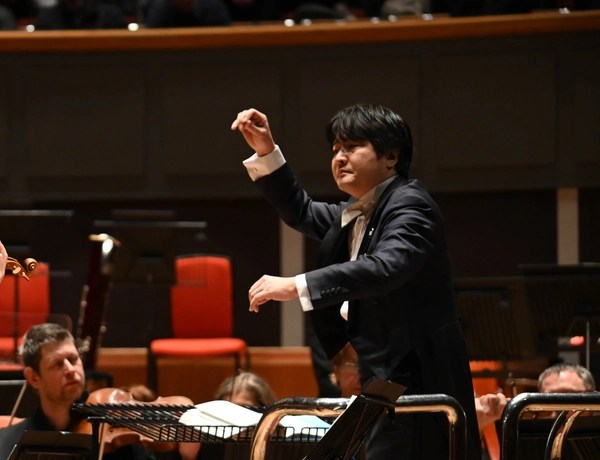
Paul Lewis (piano, above), City of Birmingham Symphony Orchestra / Kazuki Yamada

Ravel Ma mère l’Oye – suite (1910-11)
Mozart Piano Concerto No. 27 in B flat, K595 (1790-91)
Holmès La Nuit et de l’Amour (1888)
Mussorgsky arr. Wood Pictures at an Exhibition (1874, orch. 1915)

Symphony Hall, Birmingham
Wednesday 21 August 2024

Reviewed by Richard Whitehouse

Although the CBSO has not put on its own Proms season for many years, a concert featuring the programme for its annual Proms appearance has been a regular fixture and this evening’s event proved to be much more than merely a ‘dry run’ for tomorrow’s Royal Albert Hall date.

Despite the timing, this was indeed the suite as orchestrated by Ravel from his Mother Goose piano duets before being expanded into a ballet. It took a while to get going – Pavane of the Sleeping Beauty feeling impassive and Little Tom Thumb enervated, yet Laideronette had the requisite playfulness. Conversations of Beauty and the Beast was ideally poised between whimsy and pathos, before The Enchanted Garden concluded this sequence with an inward rapture made more so thanks to its exquisite contribution from leader EugeneTzikindelean.

Paul Lewis must have played Mozart’s 27th Piano Concerto on innumerable occasions (and several times with the CBSO) but his perspective constantly varies. The opening movement had a spaciousness resulting in an unusually moderate Allegro, albeit never at the expense of a subtly incremental intensity unerringly sustained through to a cadenza of limpid eloquence. Even finer was the Larghetto – dependent, as with much of Mozart’s late music, on what the performer brings to it; here yielding a serenity informed by not a little fatalism. After which the finale provided an ideal complement in its buoyancy and unforced humour, leading into a cadenza (how fortunate Mozart’s own have survived) of pensive understatement, then a coda launched with a guileless interplay of soloist and string that set the seal on this performance.

Opening the second half was Augusta Holmès’s La Nuit et l’Amour – actually, an interlude from Ludus pro Patria, her ‘Ode-Symphonie’ which, even if it might not sustain the present piece’s enfolding passion, should certainly be worth at least a one-off hearing in its entirety.

In Henry Wood’s orchestration, Mussorgsky’s Pictures at an Exhibition proved a highlight of last season. Wood retains only the first appearance of the Promenade but is not unfaithful to the original’s essence. Hence the shock-horror of Gnomus, sombre aura of The Old Castle with its baleful euphonium, playful insistence of The Tuileries or fatalistic tread of Bydlo with its evocative percussion. The whimsical Ballet of the Unhatched Chicks contrasts with the grim realism of Samuel Goldberg and Schmuÿle or the frantic bustle of The Market at Limoges.

Respighi surely took note of this glowering Catacombs with its plangent recollection of the promenade refrain hardly less effective than in Ravel, and while Baba Yaga is unnecessarily curtailed here, its sudden dispersal more than prepares for the crescendo of offstage bells that launches The Great Gate[s] of Kiev. This set the tone for a realization which, if its opulence borders on overkill, could not prevent the CBSO from projecting Wood’s cinematic sonics to the maximum. Those present once again erupted during that echoing resonance at its close.

Quite a way, then, to end an impressive performance and memorable concert. Kazuki Yamada and the orchestra will be doing it all over again tomorrow evening at their Prom, at which this orchestration of the Mussorgsky will be heard in the environs as envisaged by its orchestrator.

The playlist below collects the music from this concert, including the only available recording of the arrangement of Pictures At An Exhibition by Sir Henry Wood:

For details on the 2024-25 season A Season of Joy, head to the City of Birmingham Symphony Orchestra website. Click on the names to read more about pianist Paul Lewis and chief conductor Kazuki Yamada

Published post no.2,279 – Friday 23 August 2024

Arcana at the opera: Madam Butterfly @ CBSO, Symphony Hall

Madam Butterfly (1903-04)

Semi-staged performance with English surtitles

Cio-Cio San – Maki Mori (soprano), Pinkerton – Pene Pati (tenor), Suzuki – Hiroka Yamashita (mezzo-soprano), Sharpless – Christopher Purves (baritone), Goro – Christopher Lemmings (tenor), Kate – Carolyn Holt (mezzo-soprano), Yamadori/Bonze – Sanuel Pantcheff (baritone), Imperial Commissionaire – Jonathan Gunthorpe (bass), Yakuside – Matthew Pandya (bass), Cousin – Abigail Baylis (soprano), Mother – Hannah Morley (mezzo-soprano), Aunt – Abigail Kelly (soprano), Ufficiale – Oliver Barker (bass)

Thomas Henderson (director), Laura Jane Stanfield (costumes), Charlotte Corderoy (assistant conductor), Charlotte Forrest (repetiteur), Daniel Aguirre Evans (surtitles)

CBSO Chorus, City of Birmingham Symphony Orchestra / Kazuki Yamada

Symphony Hall, Birmingham
Saturday 29 June 2024

reviewed by Richard Whitehouse Photo (c) Yuji Hori

The current season by the City of Birmingham Symphony Orchestra ended on an undoubted high with this performance of Madama Butterfly – if not Puccini’s greatest opera, then likely his most affecting and one with which Kazuki Yamada demonstrably feels an acute empathy.

Semi-stagings can be a mixed blessing, but Thomas Henderson fulfilled this task admirably through several strategically placed screens at either end and across the rear of the stage that enabled the singers to enter or exit without detriment to musical continuity. The costumes by Laura Jane Stanfield brought authenticity without risk of caricature, while whoever handled the lighting should be commended for so discreetly intensifying those emotional highpoints – notably when the ‘heroine’ meets her end in what felt as powerful visually as it did aurally.

The cast was a fine one and dominated (as it needed to be) by the Cio-Cio San of Maki Mori – her unforced eloquence and innate goodness evident throughout, while her only occasionally being overwhelmed by the orchestra underlined her technical assurance. A pity that Pene Pati was not on this level as, apart from his rather cramped tessitura in its higher register, his was a Pinkerton neither suave not alluring but precious and self-regarding – with barely a hint of remorse when forced to recognize the consequences of his actions. Hiroka Yamashita had all the necessary empathy as Suzuki, while Christopher Purves gave a memorable rendering of Sharpless – unsympathetic as to profession yet emerging as a hapless participant conveying real humanity, if unable to prevent what could hardly be other than a tragedy in the making.

Smaller roles were well taken, not least Carolyn Holt as a well-intentioned Kate and Samuel Pantcheff as a yearning if not over-wrought Yamadori. The CBSO Chorus gave its collective all in a contribution that goes a long way to defining the culture and atmosphere in a turn-of-century Nagasaki riven between its Oriental tradition and Occidental intervention. Otherwise, the CBSO was the star of this show in responding to Yamada’s direction, as disciplined as it was impulsive, with a precision and finesse maintained over even the most opulently scored passages. It is often overlooked just how wide-ranging Puccini’s idiom had by then become, with its impressionist and even modal elements duly subsumed into music whose Italianate essence is consistently enhanced while without sacrificing any of its immediacy or fervour.

Some 120 years on and attitudes to what this opera represents have inevitably changed, but it is a measure of Puccini’s theatrical acumen that anti-imperialist sentiment abounds in the narrative without drawing attention to itself conceptually or musically. Conducting with an audible belief in every bar, Yamada ably maintained underlying momentum – not least those potential longueurs in the initial two acts, while his handling of the third act made an already compact entity the more devastating in its visceral drama and ultimately unresolved anguish.

Overall, a gripping account of an opera too easy to take for granted as well as an impressive demonstration of the CBSO’s musicianship after just a year with Yamada at the helm. And, if ‘joy’ was in relatively short supply this evening, next season should more than make amends.

For information on the new CBSO season for 2024-25, click here

In concert – Jeremy Denk, CBSO / Kazuki Yamada: Gershwin, Clyne, Ravel & Mussorgsky / Wood

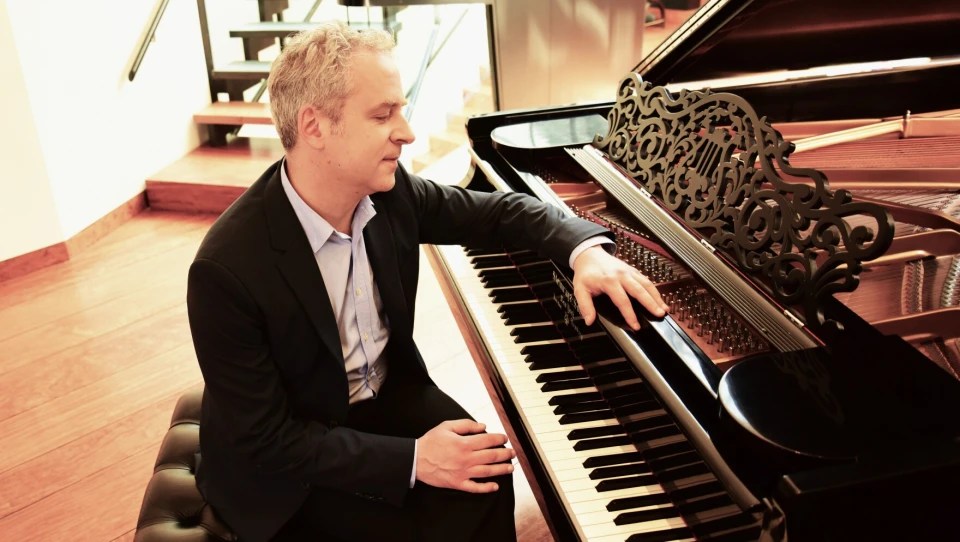
Jeremy Denk (piano, above), City of Birmingham Symphony Orchestra / Kazuki Yamada

Gershwin An American in Paris (1928)
Clyne ATLAS (2023) [CBSO Co-Commission: UK Premiere]
Ravel Pavane pour une infante défunte (1899, orch. 1910)
Mussorgsky orch. Wood Pictures at an Exhibition (1874, orch. 1915)

Symphony Hall, Birmingham
Wednesday 1 May 2024

Reviewed by Richard Whitehouse

This evening’s concert by the City of Birmingham Symphony Orchestra may have taken its overall title from the final work, but ‘pictures’ were everywhere in evidence and not merely those ‘at an exhibition’ – not least with Kazuki Yamada as enthusiastic as ever at the helm.

While it loses out to his Rhapsody in Blue in the popularity stakes, Gershwin’s An American in Paris is surely the most successful of his orchestral pieces for matching its immediacy of imagery to a resourceful structure. Encouraging the CBSO to a bracing response in the outer sections, and with Jason Lewis’s nostalgic trumpet initiating that pathos-laden central phase, Yamada secured a response whose full-on expression was offset by too sectional an approach – the music proceeding in a stop-start fashion rather than unfolding organically as it should.

Over recent years, the New York-based Anna Clyne has emerged among the leading British composers of her generation, with this first UK hearing for her piano concerto ATLAS keenly anticipated. Inspired by the eponymous and epic collection of the artist Gerhard Richter, this likewise falls into four ‘volumes’ rather than movements, which also underlines their relative formal freedom. Certainly, the ingenious interplay between soloist and orchestra is a tough challenge which Jeremy Denk met head-on – whether in the coursing energy then yielding eloquence of the opening Fierce, alluring textural overlaps of Freely, intimate, the lilting nonchalance of Driving or cumulative activity of the final Transparent with its surge to an emphatic close that (as with this work overall) was capricious and allusive in equal measure.

Doubtless motivated by Denk’s coruscating virtuosity, the CBSO gave its collective all in a work which (rightly) appealed to those present – the pianist responding with his deft take on the Heliotrope Rag co-written by Scott Joplin and the tragically short-lived Louis Chauvin.

After the interval, a rare moment of calm – Ravel’s Pavane for a Dead Princess given with a studied if never stolid grace, Elspeth Dutch’s horn and Katherine Thomas’ harp enhancing its appeal. As with Fauré’s Pavane, this is ideal music for opening the second half of a concert.

And so, to Mussorgsky’s Pictures at an Exhibition – heard here in the orchestration by Henry Wood which preceded and was duly superseded by Ravel’s. Wood is more interventionist, not least by reducing the recurrent ‘Promenade’ to a stealthy introduction, but not necessarily less faithful to the piano work’s spirit – hence the scabrous immediacy of Gnomus, sombre aura of The Old Castle (Andrew McDade’s tuba balefully intoning on high above stage-right), or fatalistic tread of Bydlo with its evocative percussion. Respighi was probably taken by this glowering depiction of Catacombs with a ghostly recollection of the promenade hardly less effective, and if Baba Yaga gets summarily curtailed here, the crescendo of bells launching The Great Gate[s] of Kiev set the tone for a treatment whose opulence borders on overkill.

Not that this inhibited the CBSO from projecting Wood’s organ-clad texture to the maximum, to the enthusiasm of an audience that erupted in the lingering resonances at its close. Quite a way to end an impressive performance, and a memorable concert, on a day that saw Yamada become this orchestra’s Music Director and the CBSO launch ‘A Season of Joy’ for 2024/25.

Click on the link to read more on the current CBSO concert season, and also to read about the recently announced 2024/25 programme. Click on the names for more on pianist Jeremy Denk, conductor Kazuki Yamada, and composer Anna Clyne

Published post no.2,168 – Saturday 4 May 2024

In concert – Maria Dueñas, CBSO / Kazuki Yamada: Beethoven Violin Concerto & Elgar ‘Enigma’ Variations

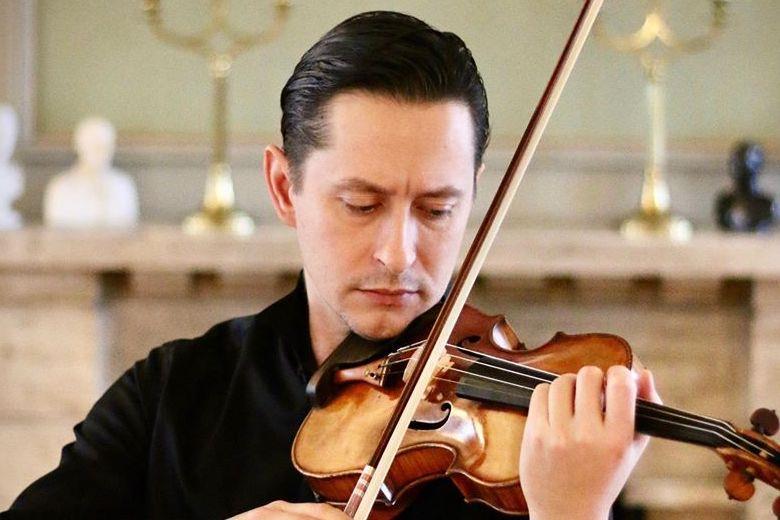
Maria Dueñas (violin, above), City of Birmingham Symphony Orchestra / Kazuki Yamada (below)

Beethoven Violin Concerto in D major Op. 61 (1806)
Elgar Variations on an Original Theme, ‘Enigma’, Op. 36 (1898-9)

Symphony Hall, Birmingham
Thursday 22 February 2024

Reviewed by Richard Whitehouse Picture (c) Tam Lan Truong

Having given its ‘first part’ yesterday evening, Kazuki Yamada and the City of Birmingham Symphony Orchestra moved on to ‘Elgar & Beethoven: Part 2’ this evening, with an astute coupling of the latter’s Violin Concerto being followed by the former’s ‘Enigma’ Variations.

Anyone having heard Maria Dueñas in Lalo’s Symphonie espagnole at last year’s Proms will know she is a violinist destined for great things, as was reinforced her take on the Beethoven. Admittedly she and Yamada were not consistently as one in its lengthy first movement – the soloist’s tendency to rhapsodize and to tease out expressive nuance jarring, however slightly, with the conductor’s forthright assertiveness in tuttis. Yet there was no absence of insight on either part, such undeniable eloquence continuing through a central Larghetto that was more adagio as Dueñas conceived it, though which still conveyed a rapt inwardness. The ensuing Rondo lifted this mood appreciably, its impulsive main theme and whimsical episodes deftly eliding into a purposeful traversal of a finale whose conclusion was nothing if not decisive.

As with her recent recording of this concerto, Dueñas played her own cadenzas. That for the first movement had Bach-like deliberation and a harmonic astringency which readily held the attention; if that connecting the latter two movements seemed a little too protracted, and that towards the close of the finale rather offset its overall momentum, there could be no doubting her underlying conviction. She duly acknowledged the considerable applause with a suitably serene, never cloying arrangement for violin and strings of Fauré’s early song Après un rêve.

In his initial remarks, Yamada recalled conducting a Japanese brass band in the First Pomp and Circumstance March as his first experience with Elgar, and this account of the ‘Enigma Variations amply reaffirmed his identity with the composer. Not that this was an integrated or seamless account – Yamada’s halting, even ambivalent take on the Theme intensified in the first variation and, while the swifter variations had no lack of character or impetus, it was in such as the fifth variation’s suffused earnestness with whimsy that this reading left its mark.

On one level the Enigma is a forerunner of the ‘concerto for orchestra’ with its emphasizing various soloists – not least viola in the sixth variation, dextrously negotiated by Adam Römer, or cello in the 12th where Eduardo Vassallo was at his ruminative best. Initially a little stolid, Nimrod built to a culmination of real pathos, and even finer was Yamada’s take on the 10th variation for an intermezzo of unfailing poise and deftness. A tangible atmosphere pervaded the 13th variation – uncertainty as to its dedicatee just part of its fascination, with those veiled allusions to Mendelssohn elegantly rendered by Oliver Janes. From here to the final variation in all its confidence and anticipation was to be recall the impact this music made at the end of the 19th century, Yamada steering it with unforced rightness towards a resounding peroration. Overall, a performance full of insight and one hopes that Yamada will be continuing his Elgar exploration in future seasons. Next week, though, brings two concerts for which former music director Sakari Oramo will be returning to this orchestra for the first time in some 15 years.

Click on the link to read more on the current CBSO concert season, and on the names for more on violinist Maria Dueñas and conductor Kazuki Yamada. Arcana’s Listening to Beethoven series will reach the Violin Concerto soon!

Published post no.2,101 – Tuesday 27 February 2024

In concert – Eugene Tzikindelean, CBSO / Kazuki Yamada: Dai Fujikura, Walton & Berlioz

Eugene Tzikindelean (violin), City of Birmingham Symphony Orchestra / Kazuki Yamada

Fujikura Wavering World (2022) [CBSO co-commission: UK premiere]
Walton Violin Concerto in B minor (1938-9, rev. 1943)
Berlioz Symphonie Fantastique, Op. 14 (1830)

Symphony Hall, Birmingham
Wednesday 17th January 2024

Reviewed by Richard Whitehouse. Photos (c) Beki Smith

Tonight’s concert by the City of Birmingham Symphony Orchestra brought a varied trilogy of works, one which started with a first UK hearing (following its premiere in Seattle almost two years ago) of Wavering World by the Japanese-born and British-based composer Dai Fujikura.

In his programme note, Fujikura remarks on how little he knew of his traditional culture until having left Japan, and this piece draws upon the myth surrounding creation for an eventful if always cohesive journey through the emergence of the heavenly world, the human world and the underworld. This is achieved by separating the orchestra into stratified layers that do not succeed each other as merge into diverse and intricate textures where these sizable forces are imaginatively deployed; the music gradually moving away from its earlier austerity toward a luxuriance whose salient motifs are recognizable despite their transformation. Directing with unerring focus, Kazuki Yamada secured a vivid rendition which also served as a reminder that Fujikura is less often heard than might be in his country of residence these past three decades.

The fortunes of Walton’s Violin Concerto have lessened this past quarter-century, so Eugene Tzikindelean’s advocacy was its own justification. He had the measure of the initial Andante’s alternation between languor and agitation, ingenuity of thematic transformation offsetting any lack of originality in its themes, then gave of his best during a central Presto whose technical fireworks are tellingly balanced by yearning lyricism. If the final Vivace was less convincing, this might have reflected on the actual music – Walton putting his ideas through their audibly Prokofievian paces before evoking Elgar in a lengthy accompanied cadenza then gratuitously affirmative coda. The CBSO gave stalwart support, just over 50 years since it accompanied Yehudi Menuhin and the composer in a performance commemorating Walton’s 70th birthday.

After the interval, Yamada (above) presided over a ‘no holds barred’ reading of Berlioz’s Fantastic Symphony. The latter-day tendency is to stress its symphonic cogency, but there was little of this in a Daydreams and Passions veering impulsively, even recklessly, between despondency and elation. The waltz element of A Ball was nudged out of shape, but its darker undertones were well judged, with the lengthy build-up then lingering subsidence of Scene in the Fields enhanced by Rachael Pankhurst’s plangent cor anglais and ominous timpani toward the close.

This was hardly the first performance to head off seemingly at a tangent, but March to the Scaffold (shorn of its first-half repeat, as had been the opening movement) quickly became   a parade-ground romp in which the fateful fall of the guillotine went for relatively little. Nor was Dream of a Witches’ Sabbath without its Disney-like element of overkill, though here Yamada ensured a stealthy accumulation through its reiterations of the Dies irae plainchant and fugal episode to a peroration whose thunderous power seemed nothing if not conclusive.

An Episode in the life of an Artist, indeed, as demonstrably left its mark on the enthusiastic audience. Yamada and the CBSO will be doing it all again on April 10th, but next week sees the more Classical appeal of Mozart and Beethoven in the company of Maxim Emelyanychev.

Click on the link to read more on the current CBSO concert season, and on the names for more on violinist Eugene Tzikindelean, conductor Kazuki Yamada and composer Dai Fujikara

Published post no.2,063 – Sunday 21 January 2024