Acclaimed electronic musicians, producers and sound architects Max Cooper and Rob Clouth team up for a new collaborative EP; a dark, playful four-track dive into ambient, breakbeat and techno’s subconscious flow, featuring a standout vocal performance from South London rapper FLOHIO.
Recorded over a series of spontaneous London sessions, 8 Billion Realities channels years of creative exchange between two of the genre’s most quietly innovative artists and is a result of a decision between the long time friends to refrain from conceptual overthinking in favour of instinct and joy.
As long-time admirers of each other’s audio/visual work, Cooper and Clouth collaborated in London together after both emerging from intense, idea-heavy album cycles. What followed was a series of exploratory sessions, half-improvised, half-built around half-formed thoughts. The result is a club-ready EP that feels alive and human: imperfect and hypnotically rich.
“Rob Clouth has been one of my favourite electronic music producers since I first heard his work in 2011,” says Cooper. “His work is more full of ideas and structure than anyone else.” “We were both coming from extensive conceptual studio albums and both in the mood for simplifying things and having some fun with the music, so that’s what we did”.
For Clouth, no stranger to Max Cooper’s Mesh label having previously released an array of EPs plus his 2020 debut album Zero Point this record marks a new chapter, both creatively and personally. “Something pretty new for me is collaborating,” he says. “You kind of have to know when to stop, because if you develop an idea all the way to its endpoint, the other person has nowhere to jump in.”
The first A Moment Set Aside began as a break from another idea, a live, unplanned improvisation based around arps and ambience. “The track was written in about as long as it took to play it,” says Cooper. “It was pulled from a one-hour recording session, more or less as you hear it… the energy and excitement grew as the unplanned moment bore some magic.”
“The lesson being that sometimes it’s helpful to set aside a moment without forcing results, and let the subconscious have something to say.” What followed was darker, heavier. “Asymptote” is detuned techno. Subversive and euphoric in its descent. “We found a sort of brain mangling, half consonant, half wandering detuned techno pulse, which we started chatting about being a sort of pit of spiralling body parts we were falling into,” says Cooper. “It was a lot of fun to work on and let loose with bigger kicks than I usually ever get to unleash.”
Then came 8 Billion Realities, featuring a standout rap performance from FLOHIO; an emerging figure in the UK grime and rap scene. The track was inspired by conversations about algorithmic echo chambers and hyper-personalised online worlds. Frantic, direct, and South London to the core, FLOHIO brings this tension to life. Her sharp, intense flow cuts through distortion and rhythm, landing the track somewhere between chaos and control instantly making it one of the most striking moments in either artist’s catalogue. “A different reality for all 8 billion of us,” says Cooper. “We weren’t sure if it would work… but there was something about the energy of the percussive idea and the story which felt like it might fit.” “Then FLOHIO had a play with it and straight off the bat absolutely killed it, not just with the lyrics and energy, but the harmonising too, it was a beautiful process.”
The final piece on the EP Candeleda originated from Clouth’s solo experiments with a live rig made entirely of vocals and keys, using his self-developed “cheatbox” system. “He put forward a beautiful stumbling melodic sequence which we bounced back and forth adding harmonies and synth layers,” says Cooper. “It rounds off a collection covering some of the breadth of music that we both love.”
Speaking about the video release for ‘A Moment Set Aside’, Max Cooper states: “We chatted with Dimitri Thouzery about forests as a visual counterpart for taking a moment out to be immersed in rich form. When I’m feeling stressed the forest is my favourite place to go. Dimitri collected 3D scans of nearby forest floor locations and told the story beautifully with a nod towards something greater than just the forests themselves. Thanks for having a look and a listen.”
Listen / Buy
Published post no.2,712 – Saturday 8 November 2025
Pianist Bruce Brubaker is a man who likes a challenge. A prolific and highly respected performer of music by Philip Glass, Steve Reich and Meredith Monk – and recent collaborator with Max Cooper, Brubaker has in recent times turned his attention to the music of Brian Eno. In November he released an album of piano interpretations taken from the former Roxy Music keyboard player’s solo work – including a complete account of the seminal Music For Airports. The album, Eno Piano, has been released on the InFiné label, Arcana sat down with him to discuss the project, gleaning some fascinating insights into Brubaker’s world of contemporary and classical piano playing.
Given his impressive CV up until now, the music of Brian Eno appeared a logical step – albeit not an easy one. The genial pianist takes up the story. “No, because as you know, Music For Airports and almost all of Brian’s earlier work in this ambient area was studio music and he made it without really any kind of reference to live performing. There were no scores, no plan even! On Music For Airports he provides these little drawings showing you about the patterns involved, but the idea of playing it live was really very far away.
The prospect of recording Eno on the piano had great appeal. “I’m fascinated by the idea of using the wrong tools to make this music. In the original they are physical tape loops that have been used to make the sounds of Music For Airports, so when you hear a particular pattern of notes, and it’s repeated, you are literally hearing the same thing – the exact micro timings the exact balances are the same. In our version I’m playing those things by hand each time, so they’re not the same thing. It’s an interesting problem, and I kind of like it!”
It also resonates with Eno’s methods of composition. “You know Brian did that thing with Peter Schmidt called Oblique Strategies, with the deck of cards – one of my very favourite Oblique Strategies is “Repetition is a form of change”. That’s really a big part of this, so even when you use a tape loop, and play the same notes exactly in the same rhythm, exactly the same way, the effect to the listener / human is not exactly the same. We’re impinging on that, in a slightly different way, because now things are not identically the same. Perhaps the listener perceives this, perhaps they don’t. I think all that ambiguity is right in the neighbourhood of what he was doing in the first place.”
Certainly in music of this kind, the fifth instance – for example – of a melodic phrase is very different from the first, because of the listener being more ‘in the zone’. Brubaker agrees. “Absolutely. I think that as each person hears a piece of music, because of all the things you’ve heard before, the place you live, the sound environment you’re in, every single person – as they hear musical sounds – makes a new piece of music by listening. For everybody sitting in a room, at a concert or hearing a recording there’s a somewhat different piece of music being completed as they listen. That appeals very much to me and our sense of our own time, where people’s participation in the process of music is, I think, much greater. It’s not a passive thing. When you’re hearing something like Music For Airports, you really are invited or allowed to be inside and to make those connections yourself. It’s infinitely variable. Then when you come back and hear it again, it will also vary, so if you hear it for the tenth time, you probably don’t hear the same thing as you did in the beginning. I’m thinking of If on a Winter’s Night a Traveler by Italo Calvino, where he says something like, “I returned to the books that I read when I was a young man, and I find that they have changed”. Of course, he knows that they haven’t, the physical printed book is exactly the same – but different when he reads it. I think that that’s where we were trying to be with this.” The question also arises that if Brian Eno sat down to write Music For Airports today, we would end up with something very different. “Definitely”, he agrees.
In spite of its ambience, Music For Airports has a number of interpretative issues and is an intense experience for the performer. “One of the challenges was to figure out how much to allow these repetitions of the same material to vary, or how much to try to make them the same. As a human being, if repeat something over and over again, each one will be different. Do you intentionally push them to be different or not? It’s actually not that much different than playing other minimalist or repetitive music like Glass because I think it’s the same thing. I always found in Glass that if you intentionally varied something, it usually seemed like too much. The better way to do it was to be more like an observer and not really a participant. If you can get yourself into a state of being where you’re listening to the sound as it happens, but to be outside and hearing it happen, and then responding to whatever is unequal but not really making it happen. That is true here too, as it goes by, you monitor and notice the things that vary, but you’re not really making them happen. If you try to do that, then it almost always seems like a heavy hand too much.”
Brubaker’s detail is fascinating, as he moves on to consider his topic further. “I guess it’s true of a lot of kinds of art. One of the strange things about music that’s improvised versus music which is planned beforehand is that a lot of the music that we like, which is planned in advance, aspires to a quality of improvisation. Even if you’re listening to a Beethoven symphony, probably the best performance is the one that seems like it’s not written down, the one that seems like it just happened – even though we know that’s not true. If you map that on to the world of movies or theatre, that’s exactly the same, right? In a movie, for the most part, you understand the actors have learned their lines and rehearsed them many times, but if you’re lucky, you forget all about them. You have the sense that whatever the action is, in the scene you’re watching, it’s really happening. The same thing is true in music, you want to be engaged in what’s happening so that it seems like it’s just a spontaneous event.”
Although he cannot remember his first encounter with Eno’s music, Brubaker admits to a connection with the minimalism of the 1960s and 1970s. “I did get this idea of trying to play Music For Airports on the piano quite a while ago, but then there always seemed to be this big problem, which was how we can make very long sustained notes, because that’s such a feature of the piece – and some parts of the music actually have human singing. Then I heard this jazz pianist in America play a concert where he had modified one of these devices that electric guitar players use, the E-bow – and cut it down to put on one string inside a piano. He did an improvisation around this long droning note. I started to think maybe you could do that with the piano and use a bunch of E-bows to make long notes. Then almost by chance I was talking to one of the people at my record company who happen to know of an inventor in France, who had started working on a system like this, specifically for the piano. We met and started talking about it, and that is what we used for this album.”
He explains the methodology. “There are these electromagnets suspended over a piano string, and the string is allowed to vibrate either by putting down the pedal on the piano or in some other way where you can raise the damper. The electromagnet creates a signal that causes this vibration in the spring, which can be controlled very specifically with frequency. You can also produce overtones. Then we found with the lower strings, if you continually excite one of those strings, which are wrapped with another kind of metal, you actually get a pulse. This also fascinates me because we’ve never heard a piano string that was vibrating continuously! When you’re hearing piano sounds in a normal piece of music, you’re always just hearing the decay of that sound, you’re not really hearing the impulse and you’re the impulse for just a little tiny bit of time. What we’re doing now is we’re actually making the string vibrate for a long period of time, like you would on a violin. And so, you know, the nature of the tone, in some cases was really surprising because we’ve never heard it before.”
A new instrument, even! “I was joking about this, but I think it’s true. Eno Piano is not just the title of the album, it’s also an instrument. A long time ago Brian said that the studio is a musical instrument, so it is turning it around and showing that an instrument can also be a studio! The way we’re using it is something that really couldn’t have happened very, very long ago.” The emphasis falls on the string part of the piano rather than its percussive element. “There are other examples of course, in John Cage, and the American composer C. Curtis Smith, who wrote a whole bunch of music for pieces of string or fishing line were used inside the piano. I also played a Cage piece where you had to thread the strings through, and we were able to make a long tone that way.”
Brubaker had the pleasure of meeting Cage on several occasions. “I actually played with him a couple of times. I played Radio Music with him once, and a new chamber music piece he had written. I always found his effect was really very powerful and a spark towards something more. This chamber music piece, called Seven, he had notated using a heavy Japanese brush with ink, and so a lot of it was very difficult to read. The brush was irregular and some of the notes were very thick and some of them were very thin and scrappy and you couldn’t really tell what the notes were. I remember saying, “Mr Cage, can you tell me what the notes are in this chord?” He probably gave the ultimate advice that you could give to any musician in any situation. He said, “Just listen, and you’ll know what to do”, which I thought was pretty good. At the time I just wanted him to tell me what the notes were, but he wouldn’t do that!”
He also recalls a musical example. “I played a little solo piece called Dream, with a long meandering melody, a pretty piece like a lot of his music from the 1940s and early 1950s. I played a concert where he was giving a commentary and had played it from memory. One of the audience asked Cage, “What would happen in the performance if the pianist got lost?” Right away Cage said, “That would be wonderful!” That was good – and that touches this illusion of spontaneity, the illusion of something that isn’t planned. By getting lost, you might be found again. Even in the 19th century, it’s pretty well documented that pianists giving concerts from memory was a kind of substitution for people who didn’t improvise. When Liszt played his own music in public, he always held up the score so that people would know he was not improvising. That back and forth between what the music is and how it sounds is something very interesting, especially with the recent importance of sound artists. A lot of these people come from the visual art world, using sound not as music but as something that they can manipulate and sculpt. I think that actually connects back to Brian Eno. You could say he wasn’t really making music but more creating this sound environment, this space to be inside. That boundary between written music and the world of sound has got much closer, and that will probably continue to be the case.”
One of Eno’s more recent compositions, the single-track album Reflection from 2017, comes to mind. “I think that’s the greatest achievement, being on the cusp of paying attention, or not paying attention”. Some of the pieces chosen on Brubaker’s album – By This River and The Chill Air – sound as written. In the live show we are using those two short pieces in the middle of Music For Airports which I was very sceptical about at first, but I think it does help and is good for the audience.”
Though Brubaker’s recent recorded output is more minimal, his background is steeped in classical music. “I trained as a classical pianist, and I taught at Juilliard for a long time. Even now the students I teach really are primarily interested in Beethoven and Liszt, not even going very far into the 20th century. Sometimes I feel like I almost have a double life! When I go out and do my own artistic work it tends to focus on much more recent things, but when I go back to teaching it’s Beethoven all the time. On the other side I still feel there’s a long connection, and that some of the things we’re talking about with non-directional music, which is to be completed by the listener, connect to what was happening in European music, maybe in the 10th and 11th century. If you go back long before the Classical period, before the composer identity was so formed, there were many other ways of making music, and in other musical cultures outside of European music. One of the things that happened, say with minimalism in the 1960s, is that some of that authority of the composer was lessened. It’s not so much a kind of top-down hierarchical format, and instead the listener, the performer are much more included in the complete art. I think that’s a good thing.
We always seem to blame Beethoven, but he really created a kind of art where the composer really was operating as a kind of God and, and making this musical experience where you weren’t really invited to be a participant. I’m probably overstating it a little bit because I think these different ways of using music exist in lots of kinds of music, so you can approach almost any piece with various ways of participating. But I think Glass actually is the one who said that he found that when you listen to a symphony by Beethoven, the climax generally happens at the same place every night and the organisation of the overall peace really remains the same. His contrast was going to see a play by Samuel Beckett, where the play seemed like a different experience each time he saw it. It was much more of a of a network of relationships rather than this narrative of beginning and development and progression to some kind of goal. It was less teleological if you want to go that way! A lot of European art of the 18th and 19th centuries was directed towards a goal, which could be very satisfying, and then there’s some kind of conclusion. On the other side, with a lot of minimalist music and repetitive music, you can argue that there is no ending – and no beginning either. You’re just in the middle. And of course, isn’t that the experience of life? You don’t remember being born and you haven’t died? So here we are, and I think that’s a very appealing art for our time.”
Finally we move on to discuss Brubaker’s work with Max Cooper, where the pair reinterpreted the music of Glass. “That was a really good project for me, I enjoyed it a lot. It was quite unpredictable, because there was this algorithm in use in the software that translated the signals from my piano playing. Every time we did the performance, those signals would vary slightly, depending on the precise touch, the dynamics, everything about the pedalling, and then those signals were controlling Max’s computers and his synthesizers. Every time we did the performance, that information that he received was really quite different, so what I would hear from him was really varying every day. So it was quite unpredictable, and sometimes it was a little confusing because it could be quite chaotic. What you hear on that album is actually a live show from Paris, and he did a little bit of changing because he didn’t like the quality of the sound. It was quite a voyage!”
Brubaker hasn’t spoken to Eno about his new project – yet – but the pair have conversed previously. “He’s working on the rehearsals for The Ship live show, which are using up all his time, as well as a bunch of other things. I started talking to him about this a long time ago, and I think he’s very open to the idea now of other people taking his music. I always wonder about that with very iconic pieces. I did some piano transcriptions of music by Meredith Monk, and that was a very interesting project where she was really very involved. It was complicated for her because she liked the idea that it was going to be her music heard in a different way, but at the same time she really wanted to be sure it was what she wanted. And I think Brian is not like that and has a very different attitude. In that sense, he is probably much open to other possibilities.”
Eno Piano rewards focussed listening – as well as giving the listener the option to draw back and observe from afar. Typically Brubaker, before he goes, is able to introduce another point of reference. “You probably know this piece that Erik Satie wrote at the beginning of the 20th century, called Furniture Music. My understanding is that he wrote it for some kind of art gallery, some kind of show that was being given. He had the musicians in the room, and he told the audience not to pay attention to them – but he got unhappy because when the musicians started to play the audience got quiet! They were listening intently, and Satie was unhappy because he wanted them to ignore it. I rather liked that.”
Before finishing for Christmas and New Year celebrations, I wanted to offer some thoughts on the musical year that has been 2020. And what a year. I doubt we will experience its like again, that’s for sure – and those of you reading this will no doubt have had some incredible challenges to overcome, or have been instrumental in helping other with their challenges. Everything is firmly in perspective, that is for sure.
In the year of a global pandemic, as in all times of strife, music has been there offering a consoling shoulder to lean on. Much of my listening this year has been of the ambient kind, a place of retreat when all has been too frenetic / inhuman / scary. Music has really shown us its true colours again this year, offering the required escape route along with some real inspiration.
Live music, of course, has suffered greatly, and my thoughts are with all those musicians and people working behind the scenes in the arts, their lives irrevocably affected by COVID. As listeners we thank them for their remarkable resilience and inventiveness, bringing live-streamed concerts of such quality they have been the best possible substitute for the real thing. Wigmore Hall set the scene in June, and many others have followed. The orchestras and choirs should be held in the highest regard for their efforts.
Needless to say I did not attend many concerts in 2020, but two of great note were from soprano Louise Alder (above) and pianist Joseph Middleton, showcasing their exceptional album Lines written during a sleepless night at Wigmore Hall in January, and the Orchestra of the Age of Enlightenment under Iván Fischer performing the last three Mozart symphonies at the Royal Festival Hallin February.
I wanted to share with you my favourite music on record this year. It was of course Beethoven 250, and my aim was to listen to the composer’s entire works. That aim continues, but the deadline has been extended massively! It is proving a thoroughly enjoyable experience but circumstances mean it has taken much longer than expected. To enjoy the listening project to its full potential, I look forward to reconvening with the first Sonatas for cello and piano in 2021, and taking it over the finishing line later in the year.
This year’s new releases have been extremely fine – and I have eight to share with you here, beginning with Steven Osborne’s remarkable disc of three Prokofiev piano sonatas on Hyperion. This appeared at the same time as the Coronavirus and felt like a direct response to it. Prokofiev was writing these works during the Second World War, in part a reaction to intense world and personal strife, and what a performance they get from the Hyperion pianist. You can read about them here
On the orchestral front, John Wilson and his Sinfonia of London came out with a simply outstanding program of French music. Escales did the wonderful job of blending seasoned favourites such as Chabrier’s España with gems that benefited from a dusting off – Duruflé’s Trois Danses and Ibert’s Escales among them. My thoughts on the disc are here
One of the most striking contemporary releases this year capped a fine showing from KennethWoods, both with the English Symphony Orchestra and–ashere–withthe BBCNationalOrchestraofWales. Philip Sawyers’Symphony no.4 and Hommage to Kandinsky are captured by Richard Whitehouse in this review of two exceptional pieces of new music, given great performances under conductor Kenneth Woods.
Of the electronica that I mentioned, there are some rather special examples. First among them is Kaitlyn Aurelia Smith’s The Mosaic Of Transformation, an enchanting journey of vividly coloured musical motifs. I attempted to describe them and their impact here
For something closer to home, Erland Cooper’s Hether Blether signed off his Orcadian trilogy with deeply emotive recollections and portraits of home. Complementing the previous instalments Solan Goose and Sule Skerry, it was a life affirming, communal piece of work uniting thoughts at just the right time. You can read Arcana’s interview with Erland here
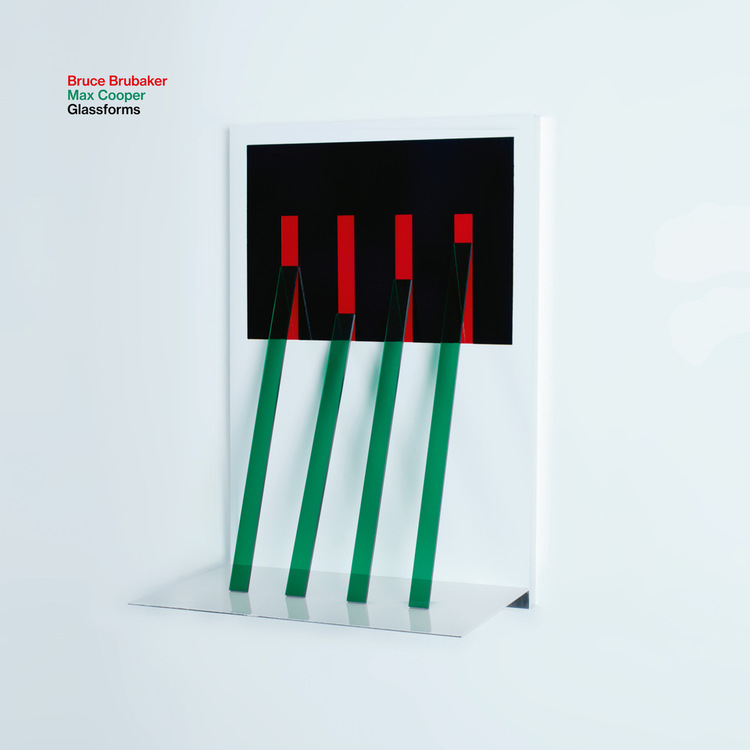
Meanwhile Bruce Brubaker & Max Cooper took a minimalist composer as their inspiration for Glassforms, a set of electronic reworkings of the music of Philip Glass. Rather than simply dress up the originals, it is an imaginative and very well thought-out set of recastings, detailed here
Also taking inspiration from similarly minimal sources were New York’s Bing & Ruth, through the excellent Species long player. You can read about ithere – and the background to the album in an emotive interview with leader David Moorehere
On the other end of the scale sit Rick Wakeman and the English Rock Ensemble. After a series of stripped back piano albums this is Wakeman at his progressive best, in the company of some exceptional musicians, creating some dramatic and involving music. You can read Arcana’s review here – and an extensive interview with the keyboard wizard here
For music of great verve and positivity, drummer Tony Allen’s collaboration with trumpeter Hugh Masekela, posthumously published, took some beating. The recordings were made in 2010, but were unfinished at the time of Masekela’s death. The passing of Allen himself this year lent their completion extra poignancy. It was the closest I could find to pure musical joy in 2020, as documented here!
Meanwhile, returning after a long break was Charles Webster, making Decision Time – an album of very fine, futuristic soul and deep house. Much has changed since we last heard from Webster in this way, but his musical values remain the same, as reported here
It is not too much of a stylistic shift from Webster to Róisín Murphy, where we find my personal album of the year. Róisín Machine is a brilliant combination of Murphy’s effervescent, spiky personality and some really fine future disco, created with the help of Crooked Man (aka Richard Barratt). As noted here, it has the resilience and strength in the face of adversity we all needed in 2020, but crucially the sense of fun we will still need – and will surely get back – in 2021. Happy Christmas!
The music of the so-called ‘minimalists’, led by Philip Glass and Steve Reich, has always provided a strong link between classical and electronic music, and has naturally inspired a number of artists positioned at that junction.
Reinterpretations of Glass and Reich have varied considerably though, from those who like to perform the music straight with no added frills to those who have added drum tracks and remixed them beyond almost all recognition. In that sense the music has been an inspiration, but it has on occasion proved difficult to get the balance right.
Pianist Bruce Brubaker and scientist / electronic music producer Max Cooper have teamed up for their own reinterpretation of the music of Philip Glass, approaching it with a view to adding subtle enhancements rather than radically changing its essence. Cooper has developed his own system for musical expression with Alexander Randon, taking live feeds from the piano to drive his own systems.
What’s the music like?
Brubaker performs well-known Glass piano pieces such as Mad Rush, Two Pages and Metamorphosis 2 with great sensitivity, to which Cooper adds the expressive studio touches and atmospherics. That may seem like straightforward solution, but both performers have to be careful to avoid over-egging what Glass has already done.
The pair link the originals with improvised music of their own. This is through a series of five preludes where Brubaker channels the spirit of Glass but brings in external influences from the likes of Liszt and Bach to galvanizing effect.
There are so many notes in the busy keyboard pieces such as Mad Rush that to do too much would not work – but here the judgement of both performers is right on the money. The piano parts are essentially the same, but Cooper cleverly highlights elements of the busy lines with his own spotlit textures, putting shards of white noise on the top of the likes of Mad Rush and opening out the sound with long bass notes, taking us from intimate beginnings to cinematic, big-venue textures. He does this without compromising the solitary world of a piece like Metamorphosis 2, and each one makes an unexpectedly weighty emotional impact.
While the reinterpretations of pieces like Tirol Concerto are excellent, Brubaker and Cooper’s interpretation of Two Pages is outstanding. It is ideally paced, the tracer lights of the keyboard operating over great waves of synthesizer pads, the chords shifting simply but with a devastatingly effective emotional payoff. So far each listen to this particular track has left a tear in the eye!
Does it all work?
Yes. It is immediately clear that Brubaker and Cooper hold the music of Glass in the utmost respect, but also that they know how to bring it forward and point it towards a slightly more club-orientated audience. There are no beats at any point, but the electronic sounds and textures bring them much closer – and Glass’s own rhythmic impetus is enough in any case. Each track is carefully woven and lovingly produced, and sounds great on headphones.
Is it recommended?
Very much so. Glass and Reich have had some excellent remix treatment in the last 25 years or so, but Bruce Brubaker and Max Cooper have really raised the game with this album, which is both wholly complimentary to Glass but offers something new in its own right. It is a really fine achievement.
As we move halfway through the eighth week of lockdown here in the UK, I thought it a good time to round up some of the best sounds I’ve been enjoying in the last week or two.
The arrival of spring is hopefully in full swing, and there are good signs of creativity throughout the electronic music community.
This playlist begins with the first track of the Conference Of Trees album from Pantha du Prince, before enjoying some rather wonderful pictures brought to us by Peter Broderick, Erland Cooper, Kaitlyn Aurelia Smith and brothers Brian and Roger Eno.
There is brand new music from Bibio, one of the standout tracks from Nathan Fake‘s Blizzards album and to wrap things up a remix of Philip Glass‘s Two Pages by none other than Max Cooper.




 Arcana.fm