In concert – Sheku Kanneh-Mason, CBSO / Kazuki Yamada: Elgar Cello Concerto & Tchaikovsky Symphony no.5

Sheku Kanneh-Mason (cello), City of Birmingham Symphony Orchestra / Kazuki Yamada

Elgar Cello Concerto in E minor Op.85 (1919)
Tchaikovsky Symphony no.5 in E minor Op.64 (1888)

Symphony Hall, Birmingham
Thursday 19 June 2025 2:15pm

Reviewed by Richard Whitehouse Picture of Sheku Kanneh-Mason (c) Andrew Fox

The City of Birmingham Symphony Orchestra’s ‘Season of Joy’ ended (at least at its home base) this afternoon with this concert in E minor, featuring major works by two composers whose wresting triumph from out of adversity was by no means always their strongest suit.

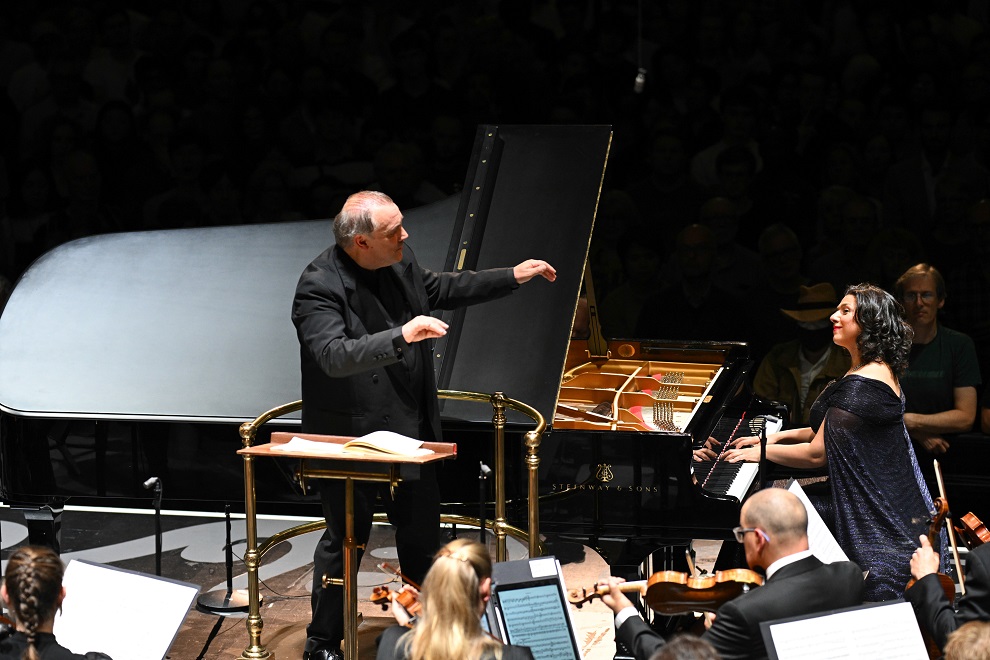
It is all too prevalent these days to talk of Elgar’s Cello Concerto as being the ‘end of an era’ statement, so credit to Sheku Kanneh-Mason for leavening any overt fatalism with a lyrical intensity which paid dividends in the musing restiveness of the first movement – its indelible opening gesture rendered with an understated defiance that set the course for what followed. Nor was the Scherzo’s glancing irony at all undersold, its tensile energy seamlessly absorbing the mock nobility of its secondary theme on the way to a conclusion of throwaway deftness.

Others may have summoned greater fervency from the Adagio, yet Kanneh-Mason’s unforced poise in this ‘song without words’ was its own justification and an ideal entrée into the more complex finale. Especially impressive was his methodical while never calculated building of tension towards a climax of tangible emotional intensity, capped with the terse stoicism of its coda. Kazuki Yamada and the CBSO were unfailingly responsive in support. Kanneh-Mason returned with the 18th (Sarabande) of Mieczysław Weinberg’s 24 Preludes (1969) as a sombre encore.

If to imply that by being his most ‘classical’ such piece, Tchaikovsky’s Fifth Symphony may also be his most predictable, Yamada evidently had other ideas. Certainly, there was nothing passive about the first movement’s scene-setting Andante, Oliver Janes palpably ominous in its ruminative clarinet theme. A smattering of over-emphases in phrasing just occasionally impeded the Allegro’s rhythmic flow but was outweighed by the gripping spontaneity of the whole. Even finer was the Andante cantabile, as undulating lower strings launched french horn player Elspeth Dutch’s eloquent take on its ineffable main melody. The eventual climax was curtailed by a brutal intrusion of the ‘fate’ motto, before the music subsided into its calmly regretful close. Whether or not Tchaikovsky’s greatest slow movement, Yamada’s reading made it seem so.

Interesting this conductor made an attacca to the ensuing Valse, which proved effective even if one between the first two movements would have been even more so. Whatever its laissez-faire elegance, this cannily structured movement is more than a mere interlude – not least for the way the motto steals in at its close. Yamada ensured it connected directly into the Finale’s slow introduction, its fervency reined-in so as not to pre-empt the energy of the main Allegro as it surged toward one of the most theatrical ‘grand pauses’ in music. Taking this confidently in its stride, the CBSO was equally in control of an apotheosis whose grandiloquence never risked overkill. The charge of insincerity that its composer found hard to refute might never have gone away, yet heard as an inevitable outcome, this was pretty convincing all the same.

It found the CBSO in formidable shape as it embarks on a two-week tour of Japan under its music director. A handful of UK concerts (including an annual appearance at the Proms) then precedes next season which begins with more Elgar in the guise of The Dream of Gerontius.

For details on the 2025-26 season, Orchestral music that’s right up your street!, head to the City of Birmingham Symphony Orchestra website. Click on the names to read more about soloist Sheku Kanneh-Mason and conductor Kazuki Yamada

Published post no.2,571 – Saturday 21 June 2025

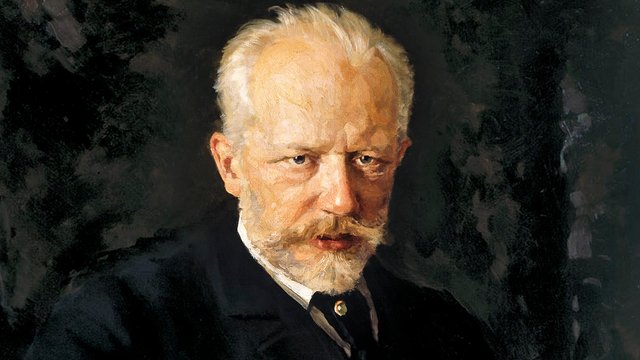
On this day – the world premiere of Tchaikovsky’s ‘Manfred’ Symphony in 1886

by Ben Hogwood

This day marks the anniversary of one of Tchaikovsky‘s biggest orchestral works, which over the last few decades has gained a foothold in the concert hall and the studio.

Tchaikovsky’s Manfed Symphony was written in between his Fourth and Fifth symphonies, and, at the suggestion of the composer Balakirev, was based on the poem of the same name by Lord Byron.

It is actually longer than any of Tchaikovsky’s numbered symphonies, and shows the influence of Berlioz – who, ironically, was given the opportunity to write Manfred but declined due to old age. Tchaikovsky too declined initially, but Balakirev, who had worked closely with him on the final revision to Romeo and Juliet, persuaded him otherwise.

Ultimately Tchaikovsky responded with a powerful work, whose impact on the listener is considerable. The composer summed it up as follows: “The symphony has turned out to be huge, serious, difficult, absorbing all my time, sometimes to utter exhaustion; but an inner voice tells me that my labour is not in vain and that this work will perhaps be the best of my symphonic works.”

Time has proved him right – and while the work, dedicated to Balakirev, was not universally praised on its premiere in Moscow, it has stood the test of time. Here it is in a 1986 performance with the Oslo Philharmonic Orchestra conducted by Tchaikovsky specialist Mariss Janssons:

Published post no.2,482 – Sunday 23 March 2025

On this day – the world premiere of Tchaikovsky’s Romeo and Juliet in 1870

This day marks the anniversary of the premiere of Tchaikovsky‘s Romeo and Juliet, an ‘Overture-Fantasy’ marking the pinnacle of his inspiration from the plays of William Shakespeare.

Although one of his most successful works nowadays, the work had a tricky genesis – the reaction to its premiere in Moscow in 1870 was lukewarm to say the least. Two more revisions followed, the last of which we can hear in this white hot live version from the New York Philharmonic Orchestra under Leonard Bernstein:

Published post no.2,475 – Sunday 16 March 2025

In concert – Jong-Gyung Park, Tonbridge Philharmonic Orchestra / Oliver Cope: Tchaikovsky, Rachmaninov & Brahms

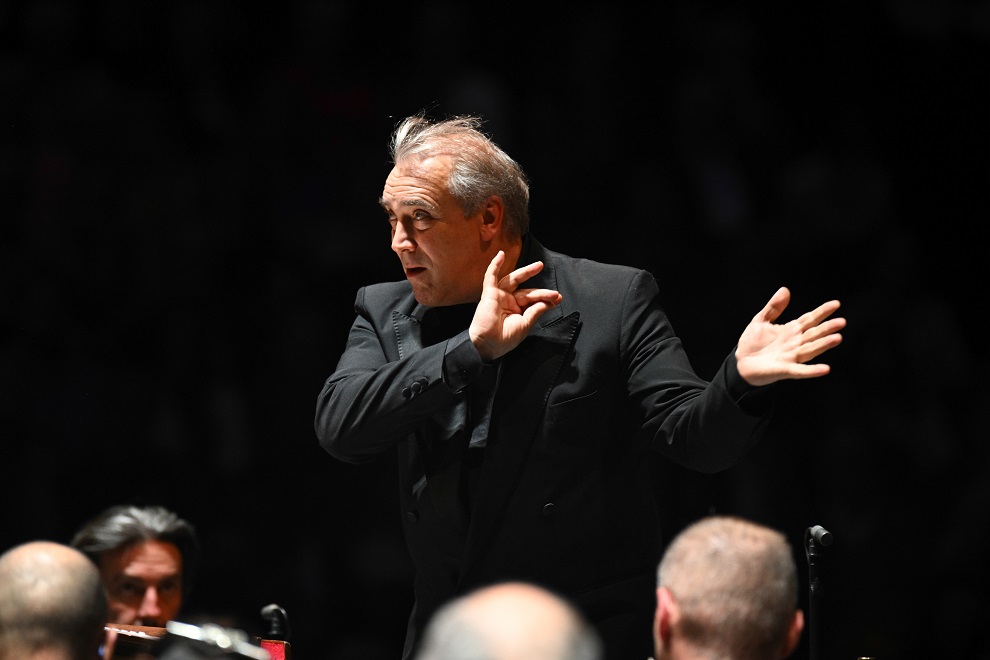
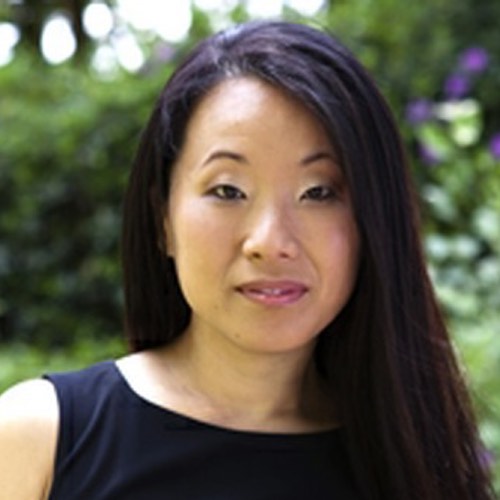
Jong-Gyung Park (piano, below), Tonbridge Philharmonic Orchestra / Oliver Cope (above)

Tchaikovsky Romeo & Juliet Fantasy Overture (1869, rev. 1880)
Rachmaninov Rhapsody on a Theme of Paganini Op.43 (1934)
Brahms Symphony no.4 in E minor Op.98 (1884-5)

Chapel of St Augustine, Tonbridge School, Tonbridge
Saturday 22 February 2025

Reviewed by Ben Hogwood Photos of Oliver Cope, Chapel of St Augustine (c) Ben Hogwood

This was the first concert for the Tonbridge Philharmonic Orchestra under their interim musical director Oliver Cope, in the position while current incumbent Naomi Butcher is on maternity leave. On this evidence he has quickly built a rapport with the orchestra, already in fine fettle under Butcher’s recent direction. On this occasion they responded with a memorable concert of Romantic favourites, given in the spectacular setting of the Chapel of St Augustine in Tonbridge School.

It is easy to take Tchaikovsky’s inspiration for granted, for his storytelling and melodic gifts are so abundant that his best music flows irrepressibly. Such is the case with the Romeo & Juliet Fantasy Overture, in spite of the two revisions required for its composer to be fully satisfied. Cope was an athletic presence on the podium as the orchestra responded with a dramatic account of the lovers’ story, the sword duel between Mercutio and Tybalt particularly vivid, while the soaring love theme tugged at the heartstrings. With fire and brimstone, and crisp ensemble playing, this performance lit the touch paper at the start of the evening.

If anything, Rachmaninov’s Rhapsody on a Theme of Paganini was even better. This was because Jong-Gyung Park (above), the popular rehearsal pianist with the Tonbridge Philharmonic Choir, delivered a sparkling account of the theme and its 24 variations. Cope threw down the gauntlet with a brisk tempo, yet Park rose to the challenge by taking control of even the quickest exchanges. There was an instinctive flow through the first six variations, the mood acquiring an appropriate chill as the Dies Irae was introduced in the seventh. From here the music travelled down darker roads, though still found time for a baleful sixteenth variation, before a shiver could be felt in the air as the seventeenth took hold. The famous eighteenth variation was lovingly delivered, before a flight to the finish that saw Park dazzle with her virtuosity, never losing sight of the whole picture.

To complete a challenging program, Brahms’s Symphony no.4 – and after initial hesitation, a convincing interpretation revealing this work’s unique bridges to the past – notably Bach – and the future, with Schoenberg on the horizon. There was an attractive open-air quality to much of the orchestra’s music making, with the second movement becoming a spring-like counterpart to the obdurate first. The scherzo built on this, dancing with a smile on its face. Flautist Rebecca Rees led a fine woodwind section in the second movement, where the horns, led by Paul Kajzar, were suitably fulsome. They were to prove critical to the success of the finale as the passacaglia developed, capping a performance with serious outlines but shot through with bursts of optimism suggesting Brahms still had a great deal to be thankful for later on in life. It put the seal on an extremely impressive concert.

For details on their 2024-25 season, head to the Tonbridge Philharmonic Society website. Click on the names to read more about pianist Jong-Gyung Park and conductor Oliver Cope

Published post no.2,456 – Tuesday 25 February 2025

In concert – Summer Music in City Churches: Tier3 Trio @ St Giles Cripplegate

Tier3 Trio [Joseph Wolfe (violin), Jonathan Ayling (cello), Daniel Grimwood (piano)]

Liszt arr. Saint-Saëns Orpheus
Tchaikovsky arr. Grimwood Andante non troppo (second movement of Piano Concerto no.2 in G major Op.44) (1880)
Arensky Piano Trio no.1 in D minor Op.32 (1894)

St Giles Cripplegate, London
Thursday 13 June 2024, 1pm

Reviewed by Ben Hogwood

‘Love’s Labours’ is the title of this year’s Summer Music in City Churches festival, based opposite the Barbican Hall in St Giles Cripplegate. The ten day-long enterprise is proving ample consolation for the much-missed City of London Festival, which once captivated audiences in the Square Mile for three weeks and offers music of equal range and imagination.

For the second year in succession the Tier3 Trio visited for a lunchtime recital, following up last year’s tempestuous Tchaikovsky Piano Trio with an attractive programme subtitled From Russia with Love. They began with a curiosity, playing Saint-Saëns’ little-known arrangement of Liszt’s symphonic poem Orpheus for piano trio. A highly effective transcription, it retained its dramatic thread in this fine performance, notable for its attention to detail and well-balanced lines when reproducing Liszt’s slow-burning music. Pianist Daniel Grimwood successfully evoked Orpheus’ lyre, while Jonathan Ayling’s burnished cello sound probed in counterpoint to Joseph Wolfe’s violin.

Tier3 was formed during lockdown, and in the same period when he was performing Tchaikovsky’s Piano Concerto no.2 in Germany, Grimwood realised the suitability of the work’s slow movement for trio. He rightly complemented ‘the extent to which Tchaikovsky was an experimenter in form’, a trait found in many works but at its inventive peak in the second concerto, whose slow movement is in effect a piano trio with orchestra. Here the arrangement was just right – balanced, elegant and fiercely dramatic towards the end. Clarity of line was secured through sensitive pedalling from Grimwood, the trio using the resonant acoustic to their advantage, while the individual cadenzas were brilliantly played.

These two notable curiosities linked beautifully into one of the best-known works of Anton Arensky, his Piano Trio no.1 in D minor. Arensky is not a well-known composer, fulfilling in part an unkind prophecy from his teacher, Rimsky-Korsakov. However that does not mean his music is without merit – far from it, as in his brief life of 45 years he wrote two symphonies, four orchestral suites, a substantial output of piano and high quality chamber music, of which the first piano trio is the pick.

Dedicated to the cellist Karl Davidov, it is equal parts elegy, drama and ballet – with a powerful first movement setting the tone. The balletic second movement Scherzo demands much of the piano, but Grimwood was its equal, sparkling passagework from the right hand dressed with twinkling figures for cello and piano. The emotional centre of the trio was in the slow movement, with a heartfelt tribute to Davidov in Ayling’s first solo, while the finale rounded everything up in a highly satisfying payoff, a return to the first movement’s profound theme capped with an emphatic closing section.

These were very fine performances from a trio at the top of their game, navigating the resonant acoustic of St Giles with power and precision. On this evidence, Rimsky-Korsakov would have had to eat his words!

You can read more about Summer Music in City Churches at the festival website – and you can listen to a Spotify playlist below, containing the music heard in this concert – with the original version of the Tchaikovsky:

Published post no.2,209 – Friday 14 June 2024