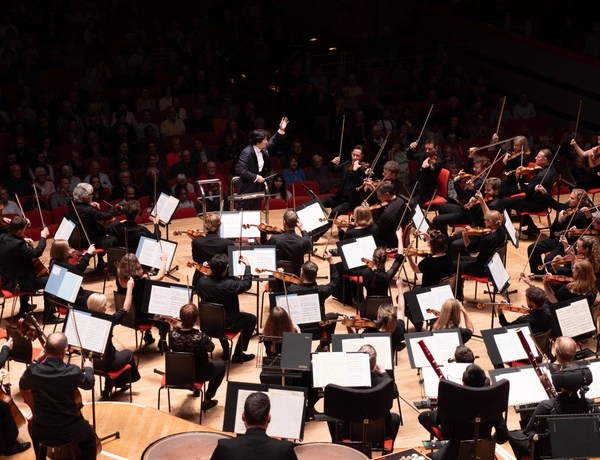
In concert – Jonathan Kelly, CBSO / Kazuki Yamada: Richard Strauss – Tod und Verklärung, Oboe Concerto, Also sprach Zarathustra

Jonathan Kelly (oboe), City of Birmingham Symphony Orchestra / Kazuki Yamada

Richard Strauss
Tod und Verklärung Op.24 (1888-9)
Oboe Concerto in D major AV144 (1945)
Also sprach Zarathustra, Op.30 (1896)

Symphony Hall, Birmingham
Wednesday 10 December 2025

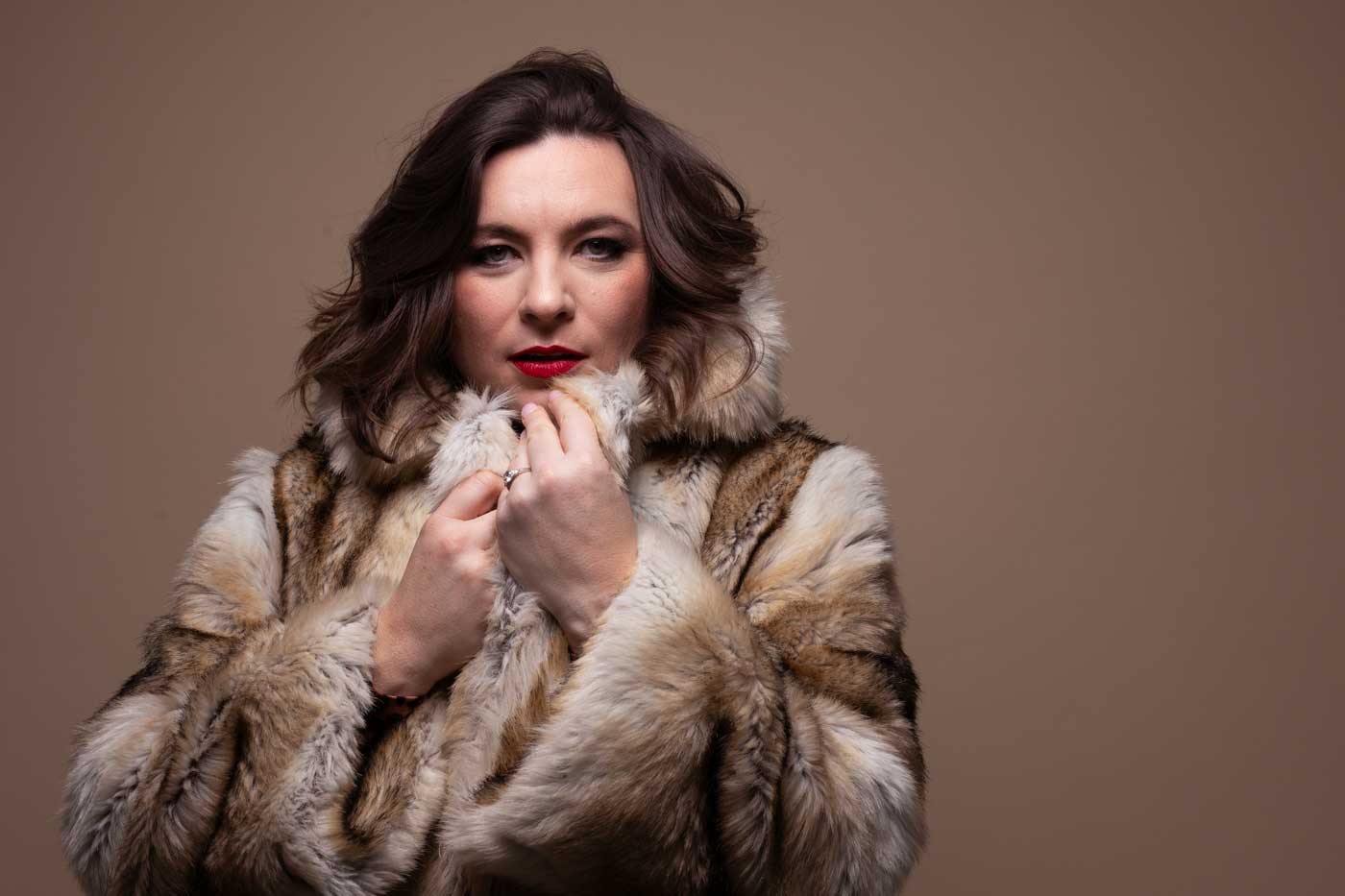
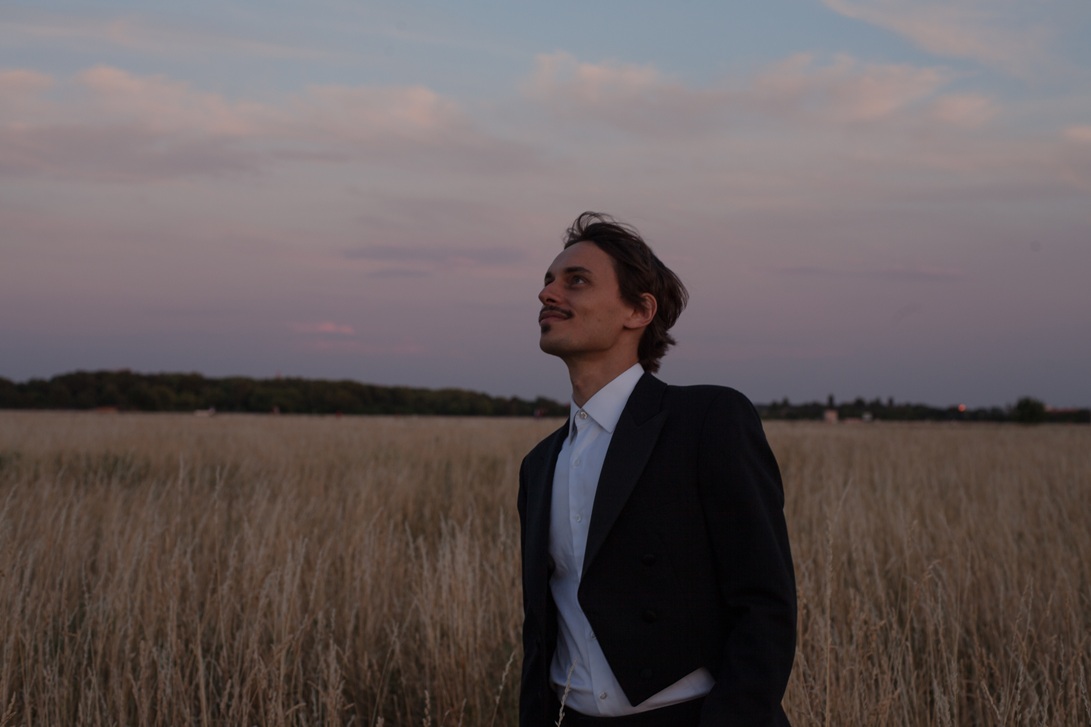
Reviewed by Richard Whitehouse Picture of Jonathan Kelly (c) Stefan Hoederath

Richard Strauss is among a relatively select number of composers, the range and breadth of whose output makes it suitable for a whole programme – as was evident from this evening’s concert by the City of Birmingham Symphony Orchestra and music director Kazuki Yamada.

Never one to miss such an opportunity, Strauss had evidently conceived his tone poem Death and Transfiguration in the wake of illness only to extend its remit accordingly. Yamada duly had its measure: whether in the not so stark fatalism of its opening pages, the tussle with his approaching demise audibly relished by the protagonist then emergence of that transfiguring state which, after the brief and rather jarring interjection of earlier angst (no more convincing here than almost any other performance) sees this work through to a fervent culmination then on to its beatific close. Not consistently more than the sum of its best parts, and with internal detail sometimes obscured in the onslaught of its vehement tuttis, this was still an involving account – lessened not a jot by its underlining Strauss’s enjoyment of his emotional strivings.

Onward 46 years to the Oboe Concerto the ageing composer wrote at the promptings of US army corporal and professional oboist John de Lancie. Much the finest of those concertante pieces from Strauss’s ‘Indian summer’, its three movements merge into the finely balanced continuity that Jonathan Kelly (above) – making a welcome return to the orchestra of which he was solo oboist during 1993-2003 – relished throughout. The elegance of its initial Allegro here abetted by a degree of nonchalance, as was the poise of its Andante with deftest pathos, his reading came into its own in a Vivace whose cadenza passages were as eloquent as the coda that Strauss duly extended to make this movement an unerring fusion of scherzo and finale. Kelly understandably offered no encore, but he returned to join the CBSO after the interval.

That second half consisted of Thus spake Zarathustra – if not the most ambitious of Strauss’ tone poems in size then surely in scope, whether or not the depths of Nietzsche’s existential musings are really plumbed. The indelible ‘Sunrise’ treading a fine line between profundity and portentousness, Yamada charted its idiosyncratic journey toward spiritual enlightenment with a sure sense of where this music was headed – no matter that the outcome felt as much   a glorification of orchestral power and opulence as of anything more intrinsically humane.

Highlights during its course included the sustained emotional force in ‘Of Joys and Passions’, the textural unanimity of the strings across their fugal writing in ‘Of Science and Learning’, and suavity then mounting animation of ‘The Dance Song’ with leader Eugene Tzikindelean in his element – before ‘Song of the Night Wanderer’ brought proceedings down from their orgiastic heights into that sombre repose whose tonal inconclusiveness may be an indicator  of Strauss’s own perspective; the certainly of those opening bars left pointedly unresolved.

Its pizzicato chords on lower strings made a telling farewell for Eduardo Vassallo, principal cellist throughout much of the past 36 seasons. His broad sympathies including Argentinian tango, and a characterful Don Quixote to boot, leaves players and listeners alike in his debt.

Published post no.2,747 – Saturday 13 December 2025

For more on the CBSO’s season for 2025/26, head to the CBSO website – and for more on the artists in this programme, click on the names to visit the websites of conductor Kazuki Yamada, oboist Jonathan Kelly and principal cellist Eduardo Vassallo

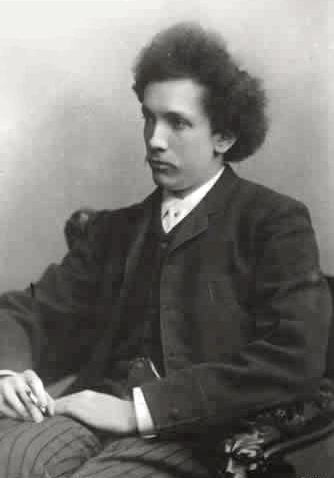
On this day – the first performance of Richard Strauss’s Till Eulenspiegels lustige Streiche

by Ben Hogwood. Image unattributed, used courtesy of Wikipedia

On this day in 1895, the first performance took place of a much-loved work by Richard Strauss. Till Eulenspiegels lustige Streiche (Till Eulenspiegel’s Merry Pranks) was published as the composer’s Op.28, and is a portrait of the German peasant.

Strauss’s melodic invention and canny orchestration make this piece a treat, with genuine wit and musical humour that works a treat when given a good performance. You can watch a live performance below, with the London Symphony Orchestra & François-Xavier Roth:

Published post no.2,719 – Saturday 14 November 2025

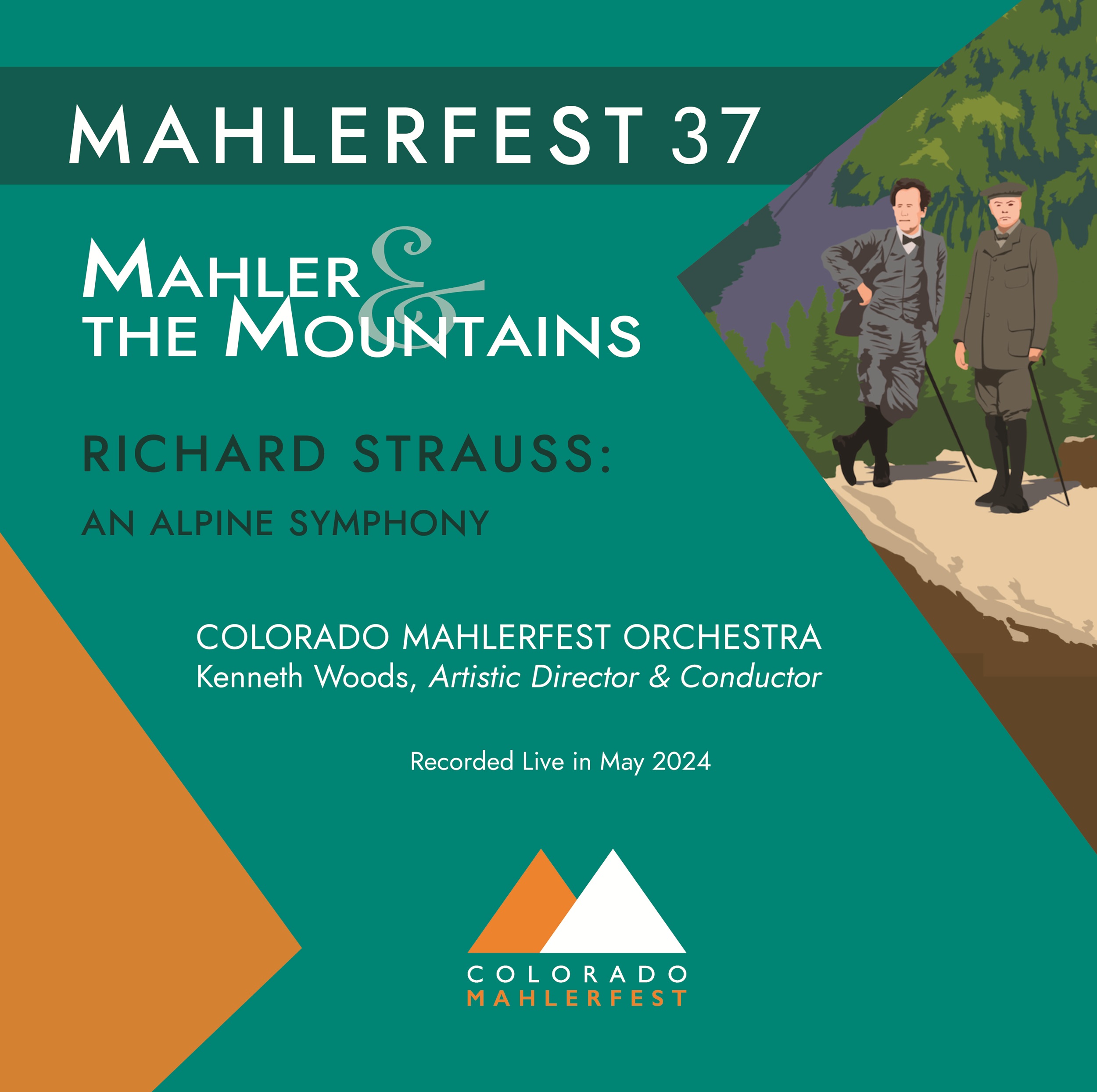
On Record – MahlerFest XXXVII: Kenneth Woods conducts Richard Strauss: Eine Alpensinfonie

Colorado MahlerFest Orchestra / Kenneth Woods

Richard Strauss Eine Alpensinfonie Op.64 (1911-15)

Colorado MahlerFest 195269359249 [49’47”]
Producer Jonathan Galle Engineer Tim Burton
Live performance at Macky Auditorium, Boulder, Colorado, 18 May 2024

Reviewed by Richard Whitehouse

What’s the story?

With its underlying concept that of Mahler and the Mountains, this 37th edition of Colorado MahlerFest was probably the most ambitious yet. As was reflected in those works featured at its main orchestral concerts, and not least this performance of Richard Strauss’s An Alpine Symphony.

What’s the music like?

This being its composer’s final large-scale orchestral piece is not fortuitous, as it concludes a sequence of symphonic works stretching back some 35 years to his Symphony in D minor. Strauss may subsequently have abandoned the symphony for the tone poem, but these latter became increasingly symphonic in formal scope or expressive density with the present work bringing full circle a process as could hardly be resumed given the tonal retrenchment of his idiom henceforth. An Alpine Symphony represents an impressive and a defining culmination.

Although it nominally outlines a day’s ascent then descent in the Bavarian Alps (actually the Heimgarten), this work is equally the ‘journey of a life’ duly articulated through an extended sonata-form design. It is this latter aspect which emerges at the forefront of Kenneth Woods’ interpretation – one which unfolds cohesively and, most important of all, organically out of then back to its evoking of Night. The crescendo of activity through to Sunrise then The Ascent is keenly maintained, with those expository episodes that follow not lacking scenic immediacy or formal impetus. Neither is the ensuing developmental sequence underplayed on route to the emotional crux of On the Summit then Vision: music, it might be added, whose grandiloquent expression is shot through with a knowledge of its imminent demise.

What goes up must inevitably come down: the transition into the reprise is finely handled in terms of its encroaching Elegy, though momentum does falter slightly in the recapitulatory phase of Storm and Descent. Not that the Colorado MahlerFest Orchestra is found wanting as regards its commitment; more likely, the clear if somewhat confined acoustic of Boulder’s Macky Auditorium is not able to encompass the sheer volume of sound effected in this phase. Woods nevertheless heads into Sunset with requisite poise and if the coda that is Ausklang – a term more or less untranslatable but which approximates to ‘catharsis’ – is just a little too passive, its rapt recollections of Wagner and Mahler are eloquently inferred. As is the return to Night, audibly linking into that from the opening for what becomes an indissoluble unity.

Does it all work?

Pretty much throughout. Once a piece reserved for special occasions, An Alpine Symphony is now among the most often recorded of Strauss’s orchestral works but while this performance cedes to others in terms of tonal opulence and visceral impact, it has relatively few peers as regards its symphonic credentials. A pity, incidentally, the performance of Schubert’s Death and the Maiden quartet from the first half, which Woods has elaborated from Mahler’s often sketchy arrangement for strings, could not have been included as to make this a two-disc set.

Is it recommended?

It is. The CD comes with a full listing of personnel on its rear inlay, and you can scan the QR code or click here for Kelly Dean Hansen’s detailed notes. Mahler’s Fourth Symphony from this edition will be issued separately.

Listen / Buy

For further purchase options, visit the MahlerFest website – and for more information on the festival itself, click here. Click on the name for further information on conductor Kenneth Woods

Published post no.2,665 – Monday 22 September 2025

In concert – Sean Shibe, BBC Philharmonic Orchestra / Anja Bihlmaier @ BBC Proms: Richard Strauss, Mark Simpson ‘ZEBRA’ & Berlioz

Sean Shibe (guitar), BBC Philharmonic Orchestra / Anja Bihlmaier

Richard Strauss Tod und Verklärung Op.24 (1888-89)
Simpson ZEBRA (or, 2-3-74: The Divine Invasion of Philip K. Dick) (2025) [BBC commission: World premiere]
Berlioz Symphonie fantastique Op.14 (1829-30)

Royal Albert Hall, London
Tuesday 22nd July 2025

Reviewed by Richard Whitehouse Photos (c) BBC / Mark Allan

The current BBC Proms season features several high-profile premieres, not the least of them being tonight’s from Liverpool-born clarinettist and composer Mark Simpson, remembered at these concerts for his orchestral fanfare sparks launching 2012’s Last Night in no uncertain terms.

On one level, ZEBRA (or, 2-3-74: The Divine Invasion of Philip K. Dick) is a straightforward three-movement concerto following the customary formal trajectory. No work that draws its inspiration from one of Sci-Fi’s most distinctive authors could be deemed predictable and so it proved with this musical representation of an epiphany which, experienced in his mid-40s, pervaded his thinking until his untimely death. Whether or not possessing divine overtones, it duly provided an imaginative context for the present work as it unfolds from a combative and even assaultive opening movement, through a mostly ruminative yet sometimes restive elegy, into a finale whose rapidly accruing energy surges towards an apotheosis of theatrical overkill – the ‘Zebra’ of the title as demonstrative as it remained elusive a presence during Dick’s life.

Music whose virtuosity summoned an orchestral response to match – the BBC Philharmonic Orchestra responding with alacrity to Simpson’s often febrile textures and translucent sonorities under the assured guidance of Anja Bihlmaier. Ultimately, of course, this was Sean Shibe’s show – his magnetic presence and mastery of electric guitar making it a notable addition to a genre still lacking in worthwhile contributions. His encore of a dreamily disembodied soundscape might even have been paying oblique homage to the great, happily not so late Robert Fripp.

On another level, Simpson’s concerto chimed ideally with the likely concept of this concert. One that commenced with an unexceptionally fine account of Richard Strauss’s Tod und Verklärung, Bihlmaier characterizing its more inward episodes with affecting poignancy as compensated for a lack of implacability in its early stages or a slightly underwhelming affirmation toward its close. Rarely in doubt was the direction in which this composer’s metaphysical musings were headed, even if the outcome was a performance no more than the sum of its best parts.

Berlioz pursued a rather less elevated ‘death and transfiguration’ in his Symphonie fantastique, but an approach with which Bihlmaier seemed more fully in accord. The lengthy introduction of Rêveries – Passions was eloquently delineated, and if the main portion of this movement (without exposition repeat) was overly self-contained, it elided naturally into Un bal with its ingratiating waltz offset by passages of despondency and elation. The highlight was a Scène aux champs which unfolded seamlessly from its plangent cor anglais solo, through mounting agitation, near catastrophe then uneasy resignation, to its mesmeric ending made more so by undulating timpani chords. After this, Marche au supplice (with first-half repeat) built with ominous tread to a climax almost graphic in its depiction of the ‘hero’ condemned to death.

An outburst of applause suggested many had not anticipated the orgy to come, but Bihlmaier responded with a Songe d’une nuit du Sabbat that, if lacking the ultimate drama, set the seal on an engaging performance with the BBC Philharmonic at something like its collective best.

You can listen back to this Prom concert on BBC Sounds until Sunday 12 October.

Click on the artist names to read more about Sean Shibe, Anja Bihlmaier, the BBC Philharmonic Orchestra and composer Mark Simpson – and for more on the BBC Proms

Published post no.2,605 – Thursday 24 July 2025

In concert – Leila Josefowicz, CBSO / Thomas Søndergård: Richard Strauss, Adès & Brahms

Leila Josefowicz (violin, above), City of Birmingham Symphony Orchestra / Thomas Søndergård (below)

Richard Strauss Don Juan Op.20 (1888)
Adès Violin Concerto, Op.24 ‘Concentric Paths’ (2004)
Brahms Symphony no.2 in D major Op.73 (1877)

Symphony Hall, Birmingham
Thursday 10 October 2024

Reviewed by Richard Whitehouse Pictures (c) Tom Zimberoff (Leila Josefowicz), Chris McDuffie (Thomas Søndergård)

He may be spending more time in the US than in the UK these days, but Thomas Søndergård tonight made a timely reappearance with the City of Birmingham Symphony Orchestra in a programme such as placed a highpoint among recent concertos between two established German classics.

Richard Strauss‘s Don Juan poses few technical issues for an orchestra these days – the only proviso about this performance being its almost too easy unfolding, the initial stages seeming suave rather than impetuous and emotional contrasts following on almost too seamlessly. Yet the central ‘love’ episode featured a melting contribution from oboist Lucie Sprague, with horns duly firing on all cylinders in a unison theme ultimately capped by a silence of tangible anticipation then a postlude of hushed resignation – heroic aspiration submerged in an aura of starkest fatalism.

If much of Thomas Adès’ music the past two decades has been of a conceptual brilliance that outweighs its intrinsic content, the Violin Concerto is destined to endure and rightly so given these Concentric Paths complement each other in a finely balanced totality. One, moreover, with which Leila Josefowicz identifies wholeheartedly: despatching its brief outer movements with an energy and a panache so that Rings conveyed a volatility channelled towards greater affirmation in Rounds; between them, the relatively expansive Paths proved a chaconne as methodical in evolution as it was affecting in its suffused intensity. Assured in her handling of the solo part, Josefowicz dovetailed it unerringly into orchestral writing as resourceful as any the composer has written. Those in the audience unfamiliar with it were most likely won over.

Many of those present were no doubt looking forward to BrahmsSecond Symphony after the interval, where Søndergård (above) and the CBSO did not disappoint. Outwardly its composer’s most equable such piece, this yields more than its share of ambiguities and equivocations that were rarely absent here. Not least in the opening movement, its unforced progress duly taking in an eventful development whose granitic culmination set its easeful themes at a notably uncertain remove, then with a coda whose restive horn solo was eloquently rendered by Elspeth Dutch. Søndergård was no less probing in the Adagio, flexibly paced so its autumnal main theme did not override the more whimsical and anxious elements which inform its longer-term progress. Certainly, the closing reflection on that theme cast a potent shadow on what had gone before.

The other two movements are usually thought to present few if any interpretative problems, so credit to Søndergård for finding no mean pathos in those reiterations of the Intermezzo’s main theme – not least when it returns as a winsome coda. Nor was the final Allegro lacking in incident, such as that spellbinding transition into the reprise whose epiphanic aspect was not lost on Mahler. Given its head without sounding at all rushed, the coda then emerged as the ebullient though never grandstanding peroration which Brahms himself surely intended.

A resounding close to an impressive performance, and there should be more music-making on this level next week when the CBSO is joined for the first time in many years by former chief guest conductor Mark Elder for an enticing programme of Brahms, Janáček and Shostakovich.

For details on the 2024-25 season A Season of Joy, head to the City of Birmingham Symphony Orchestra website. Click on the names to read more about violinist Leila Josefowicz, conductor Thomas Søndergård and composer Thomas Adès.

Published post no.2,331 – Monday 14 October 2024