
Wigmore Mondays – Roderick Williams & Roger Vignoles in French art-song

Roderick Williams & Roger Vignoles – French Art Song

Fauré Mirages, Op 113 (1919)

Caplet Cinq ballades françaises de Paul Fort (1919-20)

Honegger Petits cours de morale (1941)

Poulenc Deux poèmes de Guillaume Apollinaire (1938); Parisiana (1954)

Listen to the BBC broadcast here

Written by Ben Hogwood

How heartening to have such an inventive hour-long recital of French art-song for a Monday lunchtime. In choosing a programme mostly comprising rarely performed works Roderick Williams and Roger Vignoles demonstrated both the depth of the genre and the rich variety of source texts on which the composers drew.

For this concert we had the intriguing combination of late Fauré, bright Caplet, silly Honegger and typically heart-on-sleeve Poulenc, and both baritone and pianist applied themselves to each with great enthusiasm and character. No stone was left unturned as they strove to bring the texts to life, helped as they were by some wildly differing moods of interpretation.

Late Fauré has a uniquely timeless approach, and the essentially slow Mirages are no exception. The composer’s last song cycle, it is a quartet of settings from the collection of the same name by Renée de Brimont. Williams and Vignoles inhabited a still world, especially in the remarkable passage in Reflets dans l’eau (Reflections in the water) (beginning 4:44 on the radio broadcast), the song almost stopping completely, seemingly in the middle of the lake, for sustained contemplation (from 8:08)

Still more affecting was Danseuse (Dancer), a haunting closing song that vividly portrays the languid movements of the dancer. With his single melodic line in the right hand Vignoles had the lilt just right, as did Williams in his controlled singing.

The Caplet cycle of Paul Fort setting was an altogether different story. André Caplet was a close friend of Debussy, and did a lot of work for him on editions and such. Debussy comes through to some of the harmonies and sleights of hand, but Caplet’s own style makes itself known and is fascinating. Here Vignoles was exceptional in his setting of the five scenes, with some incredibly tricky piano parts made to sound comparatively easy. The start of Cloche d’aube (Tolling dawn) (from 18:09) was a sparkling, brightly lit piano part, complemented by Williams’ sonorous tones.

Notre chaumière en Yveline (Our cottage in Yveline), the third song (from 23:38), was even more striking, falling over itself in rapture, while the glissando of the piano and soaring vocal of Songe d’une nuit d’été (A Midsummer Night’s Dream) (from 26:07) continued the rapt mood of the recently married composer and his domestic bliss. Only the final song, L’adieu en barque (Farewell from a boat) struck a note of caution with the refracted bell ringing conveyed so vividly by Vignoles.

The Honegger songs (from 34:46) were little picture postcards, lasting just over four minutes in total. Described as ‘a short course in morality’, they were written with some striking if rather odd observations by Jean Giraudoux, four of which centred on locations in the UK. Each one, given a woman’s name, had a certain charm – the wandering Jeanne, a rather brusque Adèle (35:25), the heady scents of Cècile (36:11), a strident Irène (37:03) and finally Rosemonde (37:48). Williams and Vignoles clearly enjoyed them, and were on sparkling form throughout.

Finally music by Poulenc, one of the great French songwriters, was given exemplary performances. We heard 2 poems by Guillaume Apollinaire, the colourful Dans le jardin d’Anna (In Anna’s Garden) (40:16), the increasingly bothered Allons plus vite (Move Along) (43:35) and the two Max Jacob poems making up Parisiana (Jouer du bugle (Playing the cornet)) from 46:44 and the short but riotous Vous n’écrivez plus? (You do not write any longer?) (48:15). Both performers were again wreathed in smiles as they enjoyed Poulenc’s direct emotional approach, and then, as a bonus, we had a reflective encore in the form of La Grenouillère (The Froggery).

Even Vignoles was silently singing along at this point, the two finding a strong bond in this little known but richly rewarding box of treats.

Further listening

One of my favourite discs of French song is from the baritone François le Roux, joined by a crack team of French soloists under Charles Dutoit. It includes Poulenc’s Le bal masqué and Le Bestiare cycles, along with the Rapsodie nègre:

On record: Now Comes Beauty – Commissions from the English Music Festival

now-comes-beauty

Richard Blackford Spirited (2013)

Paul Carr Now Comes Beauty (2009); Suddenly It’s Evening (2013)

Matthew Curtis A Festival Overture (2008)

Philip Lane Aubade Joyeuse (1986)

Paul Lewis Norfolk Suite (2013)

David Matthews White Nights Op.26 (1980)

David Owen Norris Piano Concerto (2008)

John Pickard Binyon Songs (2015)

Christopher Wright Legend (2013)

Roderick Williams (baritone – Pickard); Rupert Marshall-Luck (violin – Carr & David Matthews); David Owen Norris (piano); BBC Concert Orchestra / Owain Arwel Hughes (Blackford), Gavin Sutherland (all others)

EM Records

Summary

Over the decade of its existence, the English Music Festival has revived an impressive number of works from (not always deserved) obscurity and commissioned numerous others. Some of the latter are brought together on this set, with a stylistic range wider than might be supposed.

What’s the music like?

The discs adopt a roughly similar layout, each opening with an overture as makes for a lively curtain-raiser. How else to describe A Festival Overture by Matthew Curtis (b1959), its bustle offset by a lyrical melody redolent of those in Sullivan’s Irish Symphony, whereas Spirited by Richard Blackford (b1954) adds a hint of Adams-like minimalism to broaden the transatlantic appeal of his engaging piece. Of the two works featuring solo violin, White Nights by David Matthews (b1943) draws on Dostoevsky (via Bresson) and the composer’s own experiences in a haunting and eventful nocturne – later remodelled as the opening movement of his First Violin Concerto. More limited in its content and expressive range, Suddenly It’s Evening by Paul Carr (b1961) exudes a wistfully elegiac air that is no less fully conveyed by Rupert Marshall-Luck.

Carr also appears on the other disc with Now Comes Beauty, formerly a song then a motet before emerging as a miniature for strings ideal for the ‘Smooth Classics’ slot on Classic FM. Aubade Joyeuse by Philip Lane (b1950) is (to quote the composer) an ‘introduction and allegro’ that assumes mounting activity prior to its climactic fugato and vigorous close. Firmly in the lineage of British geographical pieces, Norfolk Suite by Paul Lewis (b1943) takes in the heroic setting of Castle Rising, evocative ruins of Wymondham Abbey, ruminative calm of Ranworth Broad and bustling jollity of Norwich Market over its appealing course. Further down the east coast, the Suffolk hamlet of Shingle Street had inspired Legend by Christopher Wright (b1954), its sombre yet affecting mood amply evoking the aura of this isolated place.

Of the works ending each disc, the Piano Concerto by David Owen Norris (b1953) is a three-movement entity on ostensibly Classical lines. The solo writing is as idiomatic and assured as might be expected from this fine pianist, with that for orchestra hardly less idiomatic. Yet after a well-argued Allegro, the Andante loses its way in misplaced rhetoric and emotional cliché, with the finale too reliant on its underlying jig rhythm prior to an overstretched and predictable apotheosis. ‘‘Keys have personalities’’ says the composer: his music could do with more of it.

Binyon Songs by John Pickard (b1963) might well have emerged as a song-cycle malgré-lui, but the motivic cohesion and expressive logic with which these unfold cannot be gainsaid. The first four may be relatively brief, yet the wrenching ambivalence of Nature, tenuous hope of Sowing Seed, tensile anger of Autumn Song and suffused rapture of When all the World is Hidden make their mark no less acutely than the expansive The Burning of the Leaves that makes for a cathartic ending. Roderick Williams sings with his customary poise and eloquence.

Does it all work?

Yes, in terms of the complementary and contrasting aspects which inform this collection as a whole. The set is further enhanced by the excellence of the BBC Concert Orchestra’s playing, with Owain Arwel Hughes making a welcome appearance in the two overtures and the rest of the programme directed with unstinting conviction by Gavin Sutherland. The recorded sound takes full advantage of Watford Colosseum’s spacious immediacy, while the booklet includes detailed overviews of each work and composer together with full texts for the Binyon settings.

Is it recommended?

Indeed. Since its inception, EM Records has amassed a notable catalogue of predominantly first recordings – with the present release among its most ambitious and rewarding. Uneven in overall quality though it may be, the best of the music here deserves the widest dissemination.

Richard Whitehouse

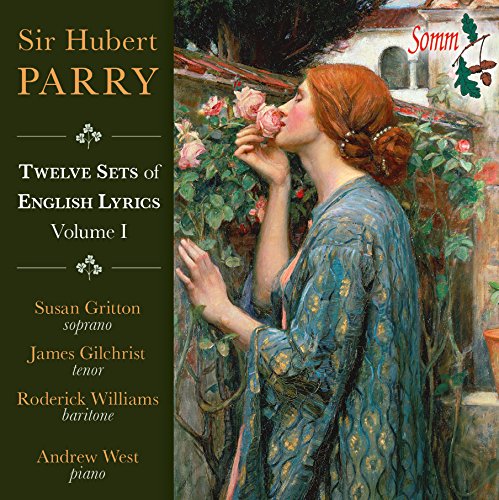
Under the surface – Parry: English Lyrics

parry

Composer: Sir Charles Hubert Hastings Parry (1848-1918)

Nationality: English

What did he write? One composition springs to mind when you think of Parry – for the hymn Jerusalem is heard at many a national occasion. Beyond the Last Night of the Proms his choral anthems are also revered, with I Was Glad and Blest Pair of Sirens two of the most popular. Beyond that there are five symphonies and a number of orchestral and chamber works.

What are the works on this new recording? Although his choral works are often heard, Parry’s songs are a relatively rare breed. Promisingly, this is billed as volume one of the English Lyrics, a massive collection in twelve volumes that the composer wrote between around 1885 and 1920. The 31 songs on this new recording include 26 from the English Lyrics but finish with five settings of Shakespeare.

What is the music like? The disc takes in many moods, and although it flits around the different volumes of English Lyrics it is very well structured in this collection. Parry’s setting of Shelley’s Good Night is an early high point, Susan Gritton slightly husky in her description of nocturnal, and this is followed by the refrain ‘Soft shall be his pillow’ in Sir Walter Scott’s Where shall the lover rest, Gritton controlling the vibrato on her top ‘G’ with impressive precision.

There are some very popular texts in these Parry settings, and Roderick Williams handles O Mistress Mine and Take, O take those lips away with unfussy poise. On the other hand there are tiny trifles such as Julia, where the baritone introduces a touch of mischief. Meanwhile Gilchrist is especially effective in the anonymous text Weep you no more, a lovely piece of consolation. Andrew West is a sensitive picture painter alongside the three singers, introducing When icicles hang by the wall with chilly detachment and accompanying Williams in On a time the amorous Silvy with an instinctive sense of when to push on and when to hang back.

What’s the verdict? Somm have put together an enterprising release that unites some of the best English singers around, with pianist Andrew West joined by Susan Gritton (soprano), James Gilchrist (tenor) and Roderick Williams (baritone). It is a nice and effective contrast to move between the male and female voices, and it helps that the words are sung so clearly.

Give this a try if you like… Brahms, Schumann or Vaughan Williams songs

Listen

You can listen to Good night, sung by Susan Gritton, here