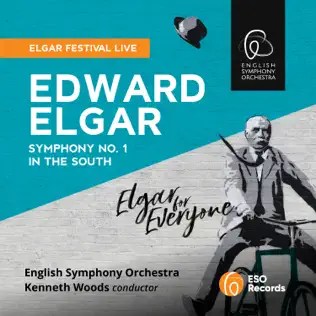
On Record – English Symphony Orchestra / Kenneth Woods: Elgar Festival Live – Symphony no.1 & In The South (ESO Records)

Elgar
Symphony no.1 in A flat major Op.55 (1907-08)
In the South (Alassio) Op.50 (1903-04)

English Symphony Orchestra / Kenneth Woods

ESO Records ESO2501 (80’10″]
Producer and Engineer Tim Burton

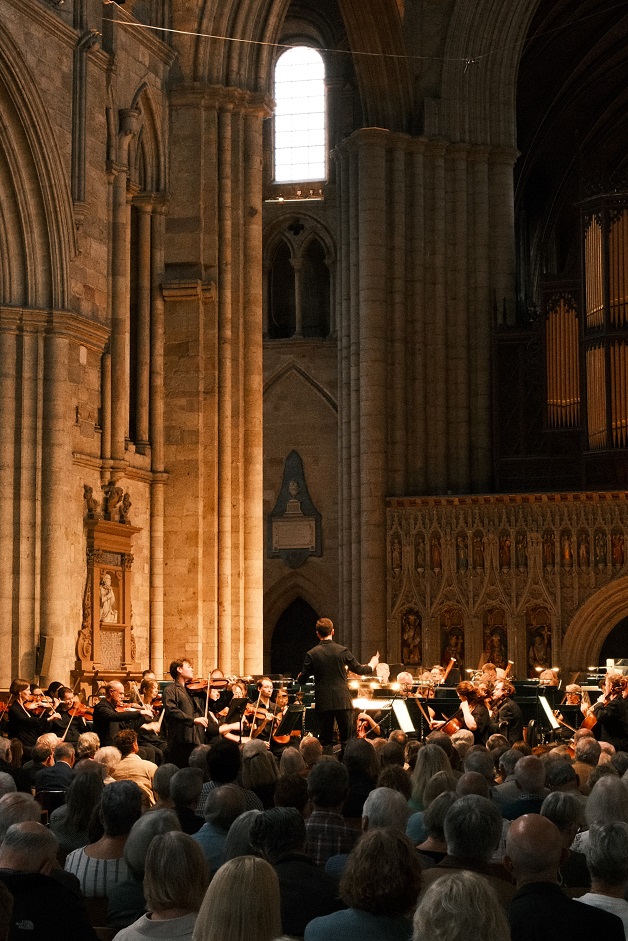
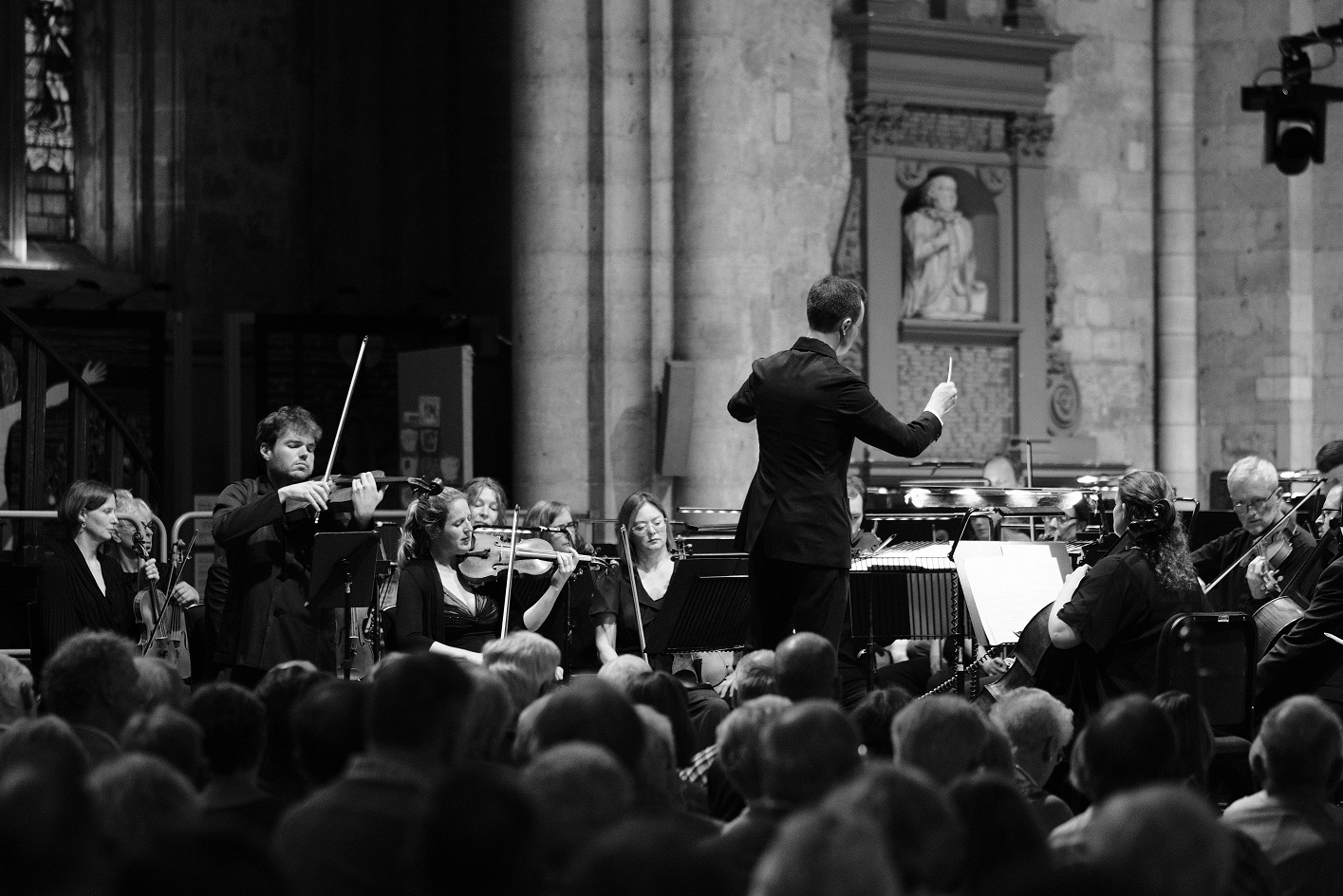
Live performances at Worcester Cathedral on 4 June 2022 (In The South) and 3 June 2023 (Symphony)

Reviewed by Richard Whitehouse

What’s the story?

There could hardly been a more fitting release to launch the English Symphony Orchestra’s own label than these performances drawn from past editions of the Elgar Festival, with both of them a reminder of the ESO’s formidable prowess over the range of symphonic writing.

What are the performances like?

The First Symphony may not have the usual number of strings to complement its triple wind, but due to the resonance of Worcester Cathedral this is not evident as regards internal balance. Not least in an opening movement whose motto-theme is never indulgent, setting the tone for an Allegro where expressive variety goes hand in hand with formal focus. Especially fine is a hushed transition into the reprise, then a coda that distils the equivocal mood as this subsides into ruminative calm. Woods is mindful to invest scherzo and trio with consistency of pulse, so if the former feels reined in on return, the latter has an ideal poise and wistfulness. Nor is the transition other than indicative of the Adagio’s profundity, Woods negotiating its soulful main theme and wistful episodes with unerring rightness through to the ineffable closing bars.

If the finale has any marginal falling-off of inspiration, it is not apparent here. Sombre if shot through with expectancy, its introduction launches an Allegro whose alternating incisiveness and suavity holds good over an impulsive development, then a transformation of the codetta whose pathos intensifies for an apotheosis where the motto-theme carries all before it. Not that the closing pages are bombastic or grandiloquent in import – rather, they set the seal on a work whose affirmation is made the greater for its having been so purposefully attained.

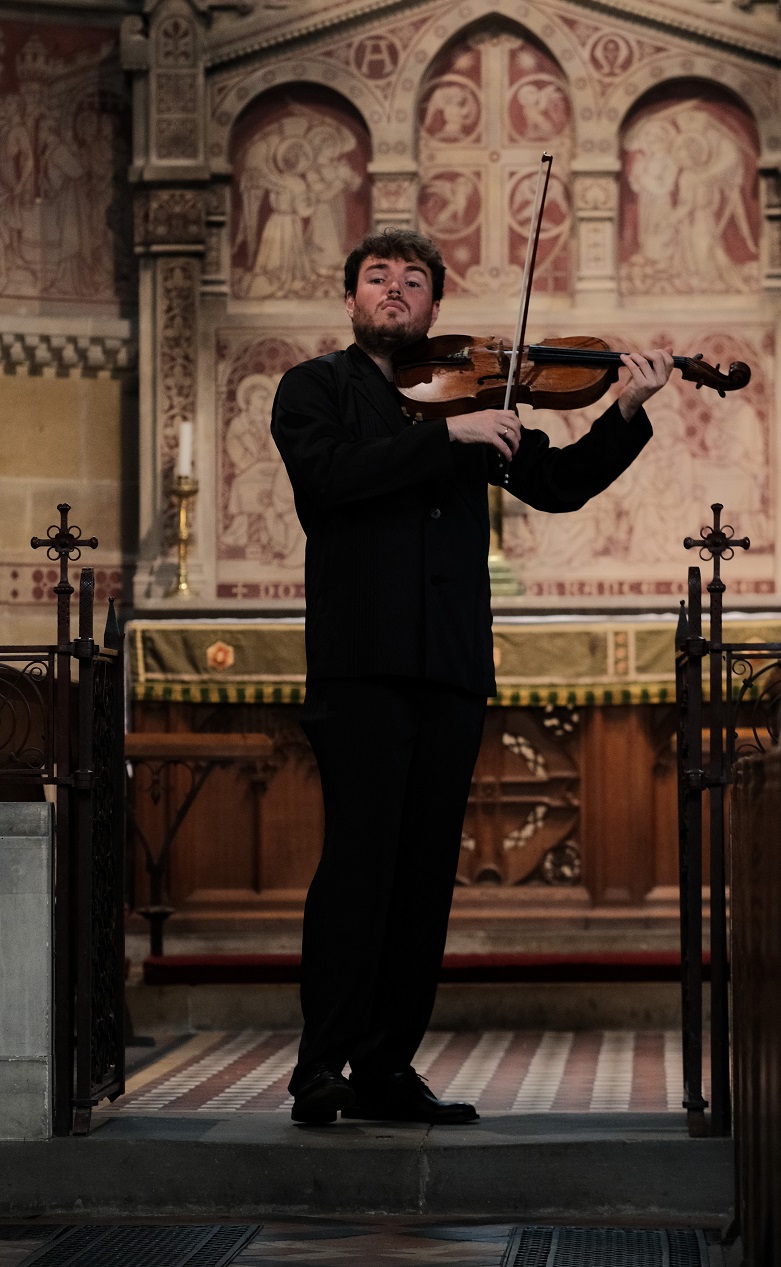
As for In the South, the main issue is in setting a tempo flexible enough to accommodate this concert overture’s extended sonata design without it becoming episodic. Here a surging main theme, its speculative transition and suave second theme emerge seamlessly – the underlying tension carried into a development whose impulsiveness is maintained across the intervening first episode. Amply evoking the grandeur of ‘empires past’, this is astutely handled such that its implacability eschews bathos. If the second ‘canto populare’ episode is just a little reticent, its expressive raptness – and Carl Hill’s eloquent playing of its indelible viola melody – more than compensates. Nor is there any loss of continuity during the reprise, Woods’s building of momentum near the start of the coda ensuring an irresistible yet never overbearing peroration.

Does it all work?

Almost always. ESO concerts at the Elgar Festival have yielded numerous performances of note, with In the South among the finest yet in vindicating a work that can all too easily fall victim to its seeming indulgencies. Nor is that of the First Symphony far behind in revealing the formal intricacy and expressive variety of music as personal as is any of this composer’s major works. Anyone who may have harboured doubts about either piece is likely to be won over, confirming an empathy as augers well for the Second Symphony at this year’s festival.

Is it recommended?

Absolutely. These readings are far more than mementos of their concerts, this being ‘Volume 1’ suggests that further performances from the Elgar Festival will be made available. Note too the first instalment of a Sibelius cycle is downloadable as the second release on ESO Records.

Listen / Buy

You can read more about this release and explore purchase options at the ESO website Click to read more about the English Symphony Orchestra, conductor Kenneth Woods and the Elgar Festival 2025

Published post no.2,536 – Sunday 18 May 2025

In concert – Peter Donohoe, RPO / Brabbins: Elgar ‘Enigma’ Variations; Bliss Piano Concerto; Vaughan Williams @ Cadogan Hall

Peter Donohoe (piano, above), Royal Philharmonic Orchestra / Martyn Brabbins (below)

Vaughan Williams Five Variants of Dives and Lazarus (1939)
Bliss Piano Concerto in B flat major Op.58 (1938-9)
Elgar Variations on an Original Theme Op.36 ‘Enigma’ (1898-9)

Cadogan Hall, London
Wednesday 16 April 2025

Reviewed by Richard Whitehouse Pictures (c) Andy Paradise

June 1939 saw one of the more memorable occasions for British music with several premieres at the World’s Fair of New York, this multi-day festival with its theme of ‘Building the World of Tomorrow’ thrown into ironic relief given the outbreak of war in Europe three months later.

The first half of tonight’s concert by the Royal Philharmonic Orchestra duly replicated that on June 10th, beginning with Five Variants of Dives and Lazarus which Vaughan Williams wrote for the event. One of the few non-symphonic orchestral works from his later years, its scoring for divided strings and harp gives a warmly evocative context to this succession of paraphrases whose steadily unforced evolution is rounded off by one of its composer’s most radiant codas. Various solo passages provided the RPO’s section-leaders with their moment in the spotlight.

That concert 85 years ago continued with the Piano Concerto that Arthur Bliss had written for Solomon which enjoyed frequent revival over the next quarter-century. This 50th anniversary of its composer’s death provided an ideal opportunity to reassess a work conceived within the late-Romantic lineage, notably an opening movement whose thunderous initial gestures set in motion this large-scale sonata design whose overt rhetoric is tempered by an expressive poise and more ambivalent asides which make it anything but the epigone of an already bygone era.

Among a few present-day pianists to have this piece in his repertoire, Peter Donohoe tackled its many technical challenges head-on; the RPO and Martyn Brabbins (who had never before conducted it) overcoming some occasional moments of mis-coordination so as to present it to best advantage. He brought a lighter touch and no little emotional poise to bear on the central Adagietto, its inwardness carried over into a finale whose probing introduction was a perfect foil to the bravura that followed. Whatever qualms Bliss may have had regarding the ‘world situation’, there was little sense of doubt as the music surged to its emphatic and affirmative close – thereby setting the seal on this memorable performance and a work which, whatever it lacks in distinctive invention, vindicates Bliss’s overall ambition to an impressive degree.

A pity that logistics (and economics!) made revival of Bax’s Seventh Symphony, which had originally featured in those New York concerts, impracticable but hearing Brabbins direct so perceptive an account of Elgar’s Enigma Variations was no hardship. Perhaps because of the immediacy of the Cadogan Hall acoustic, it was also one in which the relatively brief livelier variations came into their own – hence the unbridled impetus of the fourth (W.M.B), seventh (Troyte) or 11th (G.R.S) variations, though there was no lack of eloquence in the first (C.A.E) and fifth (R.P.A) variations, or suffused fervour in the ninth (Nimrod). The 10th (Dorabella) variation was made into an intermezzo halting if whimsical, and the 13th became a romanza such as opened out this work’s expressive remit onto an altogether more metaphysical plane.

Those having heard Brabbins conduct this work in the Royal Albert Hall quite likely missed that organ-reinforced opulence afforded the 14th (E.D.U) variation yet, as this finale built to its triumphal conclusion, the unfailing conviction of this performance could hardly be denied.

For details on their 2024-25 season, head to the Royal Philharmonic Orchestra website. Click on the artist names to read more about pianist Peter Donohoe and conductor Martyn Brabbins, and also to discover more on The Arthur Bliss Society

Published post no.2,509 – Monday 21 April 2025

In concert – English Symphony Orchestra / Kenneth Woods @ Kings Place: Elgar, Truscott, Fribbins, Weinberg & Shostakovich

Laura Jellicoe (flute), Rosemary Cow (bassoon), Rosalind Ventris (viola), English Symphony Orchestra / Kenneth Woods

Elgar Romance in D minor Op.62 (1910)
Truscott Elegy in E flat major (1944) [London premiere]
Fribbins Folk Songs (2022) [London premiere]
Weinberg Flute Concerto no.1 in D minor Op.75 (1961)
Shostakovich arr. Barshai Chamber Symphony in A flat major Op.118a (1964, arr. 1971)

Kings Place, London
Sunday 23 March 2025

Reviewed by Richard Whitehouse

What has become the English Symphony Orchestra’s annual appearance in London Chamber Music Society’s season saw an appealing programme of (relatively) familiar and (relatively) unfamiliar British and Soviet-era music as wide ranging as it had been carefully assembled.

It cannot often have begun a concert, but the Romance that Elgar wrote for bassoonist Edwin James made an attractive entrée – its pathos and eloquence fully conveyed by ESO principal Rosamary Cow, always heard to advantage against the strings’ warmly ruminative backdrop.

Harold Truscott finished only three works for orchestra, his Elegy for strings the undoubted masterpiece – eliding intuitively between the already burgeoning British lineage with that of Central Europe (Dvořák’s crepuscular Nocturne, heard at last year’s ESO concert, affords an interesting precedent). Despite its major-key grounding, this is music of intense while often anguished emotion – Truscott bearing his soul to a degree he was rarely, if ever, to do again. As in Worcester four seasons ago, Kenneth Woods searched out its every expressive nuance.

Concertante pieces have featured prominently in Peter Fribbins’s output, with Folk Songs the most recent example. Those traditional tunes range widely geographically and expressively – the Prelude drawing on Welsh melody Bugail Yr Hafod (When I was a Shepherd) in soulful restraint, the Fugue on Serbian tune Ajde Jano (C’mon Jana) in animated dexterity, then the Fantasia on Hungarian song Azt gondoltam eső esik (I thought it rains) in elegant profundity. Superbly played by Rosalind Ventris, it makes a welcome addition to a still-limited repertoire.

Hardly less valuable in its own context is the First Flute Concerto by Mieczysław Weinberg. Written for Alexander Korneyev, its modest proportions fairly belie its substance – whether the energetic interplay of its opening Allegro, the deftly understated threnody of its Adagio, or the whimsical humour of an Allegro anticipating numerous Weinberg finales. It was also the ideal showcase for ESO principal Laura Jellicoe to demonstrate her solo prowess, with ESO strings responding ably to what must be among its composer’s most performed pieces.

Dedicated to Weinberg and written over just 11 days, Shostakovich’s Tenth String Quartet is something of a standalone in the composer’s cycle – coming between four innately personal quartets and four dedicated to each member of the Beethoven Quartet. Yet it is music no less focussed in intent and Rudolf Barshai’s arrangement for string orchestra defines its character more markedly – not least the winsome ambivalence of its initial Andante or visceral force of its ‘furioso’ scherzo, the ESO players tackling those fearsome rhythmic unisons head on. The cellos came into their own with the emotionally restrained variations of the Adagio before, its link seamlessly effected, the final Allegretto built methodically if inexorably to a heightened restatement of the passacaglia’s theme before tentatively retracing its steps to a wistful close.

An impressive demonstration overall of the ESO’s prowess and, moreover, the ideal way to close 17 seasons of LCMS recitals at Kings Place. September finds this series relocating to the newly refurbished St John’s Church at Waterloo, ready for a new chapter in its existence.

Visit the English Symphony Orchestra website to read more about the orchestra, and click on the artist names to read more about flautist Laura Jellicoe, bassoonist Rosemary Cow, viola player Rosalind Ventris and conductor Kenneth Woods. Click also to read more on composers Peter Fribbins and Harold Truscott

Published post no.2,483 – Monday 24 March 2025

In concert – Westminster Philharmonic Orchestra / Jonathan Butcher: Bliss: A Colour Symphony

Westminster Philharmonic Orchestra / Jonathan Butcher (below)

Elgar In the South (Alassio) Op.50 (1903-4)
Bernstein On the Waterfront – Suite (1954-5)
Bliss A Colour Symphony (1921-2, rev. 1932)

St John’s Church, Waterloo, London
Saturday 1 March 2025

Reviewed by Richard Whitehouse

The Westminster Philharmonic Orchestra has given any number of well programmed concerts over the 53 years of its existence and tonight’s was no exception, featuring as it did a welcome revival of A Colour Symphony with which Arthur Bliss nonplussed first-night listeners 102 years ago.

Much has been written about the relationship between the colours as referenced in each of the movement headings with the music in question. In fact, the heraldic source from which these are derived was the means to focussing what could otherwise have remained the ‘Symphony in B’ of its working-title. The Purple of its opening movement evokes a processional whose emergence then retreat sets out the salient ideas in its wake, while that of Red is a scherzo with its two trios drawn into a sonata form whose unwavering impetus makes contrast with Blue more potent. Nor is this latter an archetypal slow movement – its expressive eddying an anticipation of that inexorable momentum with which Green traverses its double fugue, towards an apotheosis that sets the seal on the overall design with unmistakable conviction.

A Colour Symphony is not an easy work to make cohere – in which respect, this performance succeeded admirably. Jonathan Butcher ensured that Purple fulfilled its preludial function with sufficient gravitas to launch Red with an energy as amply underpinned its productive thematic elaboration; the work effectively becoming a tale of two halves, with the latter an extended and varied take on the ideas already established. The nervous energy that informs Blue was admirably conveyed, with the WPO giving of its collective best, while Butcher (rightly) did not rush the unfolding of Green – its respectively methodical then impetuous fugal subjects persuasively fused into a coda whose affirmation is far from that of a ‘‘mere paragraphist’’, as Elgar lamented, but of one able to refashion symphonic principals at will.

In the first half, Leonard Bernstein demonstrated a symphonic cohesion far greater than that of his actual symphonies in the suite from his score to Elia Kazan’s film On the Waterfront. For all its violent energy (and lessons well learned from Copland’s ballet Billy the Kid), this is music defined by its wind solos and it was to the credit of horn player Adrian Wheeler, oboist Tony Freer or alto saxophonist Bernie Hunt they were never less than plangently emotional. Whether or not Bernstein’s most ambitious orchestral work, this is by some way his finest.

Music by Elgar had opened the concert. His In the South might be as much a tone poem as a concert overture, but its effective overall design – anticipating those first movements of the symphonies to come – is its own justification. While he eschewed something of this music’s often scenic opulence, Butcher certainly had the measure of its formal ingenuity – with only the final peroration failing to deliver that necessary emotional frisson. Earlier on, Jonathan Welch’s viola playing brought pathos as well as tenderness to its exquisite ‘canto populare’.

Overall, a concert such as matched in execution what it had in ambition and which should equally be the case with the WPO’s next concert, where highly contrasted works by Barber and Tchaikovsky are to be followed by the mighty edifice of Bruckner’s Ninth Symphony.

For more information on the orchestra’s 2024-25 season, head to the Westminster Philharmonic Orchestra website Click on the names to read more about conductor Jonathan Butcher, and about Sir Arthur Bliss himself. You can also find out more about The Bliss Trust

Published post no.2,464 – Wednesday 5 March 2025

In concert – Best of British @ Royal Birmingham Conservatoire

Recital Hall, Royal Birmingham Conservatoire, Birmingham
Monday 17 & Tuesday 18 February 2025

Reviewed by Richard Whitehouse

Royal Birmingham Conservatoire has put on some notable extended events over recent years, the latest being Best of British – a two-day retrospective of piano music from UK composers past and present, all performed by current, former and associated musicians of this institution.

Monday lunchtime centred on composers ‘Made in Birmingham’, beginning with the Second Sonata of John Joubert. His three such works encompass almost his whole maturity, of which this is the longest – taking in a cumulatively intensifying Allegro, volatile Presto with a more equable trio, then a finale whose fantasia-like unfolding culminates in a powerful resolution. Rebecca Watson was a sure and perceptive exponent. Dorothy Howell’s Toccata was given with verve by Rufus Westley, with Christopher EdmondsPrelude and Fugue in G elegantly rendered by Ning-xi Wu. Chiara Thomson was dextrousness itself in Howell’s Humoresque, then Zixin Wen found quixotic humour in her Spindrift, before John Lee and Ruimei Huang enjoyed putting Joubert’s early and engaging Divertimento for piano duet through its paces.

Monday afternoon opened with Frank Bridge – his Three Lyrics given by John Lee with due appreciation of their keen insouciance, as too the menacing aura of his much later Gargoyles. Established as the pre-eminent English art-song composer of his generation, Ian Venables is no less adept in combining violin and piano – witness the expressive poise but also rhythmic impetus of his Three Pieces, to which RBC alumni Chu-Yu Yang and Eric McElroy were as emotionally attuned as they were in plumbing the expressive depths of Gerald Finzi’s Elegy.

Next came John Ireland – his imposing if somewhat discursive Ballade finding a committed advocate in Roman Kosyakov, who had no less the measure of his atmospheric Month’s Mind with its undertones of Medtner. Yinan Tong proved suitably alluring in The Island Spell (the first of Ireland’s Decorations), while Ruimei Hang conveyed elegance as well as playfulness in Bridge’s Three Sketches. Expertly partnered by Sarah Potjewijd, clarinettist Jamie Salters steered an insightful course through the diverting formal intricacy of Ireland’s Fantasy Sonata.

Monday evening commenced with further Ireland in ‘Phantasie’ mode – his First Piano Trio finding a productive accord between its Brahmsian inheritance and his own, subtly emerging personality at the hands of violinist Roberto Ruisi, cellist Nicholas Trygstad and pianist Mark Bebbington. They were joined by violinist Shuwei Zuo and violist Jin-he Huang in Venables’ Piano Quintet, among the most substantial and certainly the best known of his chamber works. Its opening Allegro is preceded by an Adagio whose acute pathos underlies the robust energy of what follows, before a Largo such as takes in the capriciousness of its scherzo-like central section without disrupting its soulful discourse; while the finale’s animation is not necessarily resolved by its slow postlude, a sense of this music come affectingly full circle is undeniable.

The second half found these artists in a performance of Sir Edward Elgar’s Piano Quintet doing full justice to a work which, whatever its eccentricity of form and content, is worthy to stand beside any of his mature masterpieces. How persuasively they elided between the haunting ambivalence of the first movement’s introduction and its trenchant Allegro, with the central Adagio gradually emerging as a statement of great emotional import, then the final Allegro building inevitably to an ending of fervent affirmation. Memorable music-making indeed.

Tuesday lunchtime brought more ‘Made in Birmingham’. Michael Jones gave an interesting overview of his teacher Christopher Edmonds, two more of whose Preludes and Fugues – the elegance of that in E then the rapture of that in A – preceded his Aria Variata which, inspired by wartime experiences in the Crimea, channels the influences of Scriabin and Cyril Scott to personal ends. Zoe Tan teased out unity from within the diversity of Howell’s appealing Five Studies, before Duncan Honeybourne gave of his best in the Third Sonata written for him by Joubert. Inspired by lines from Thomas Hardy on the innate futility of the human condition, its three movements unfold an inevitable trajectory from aggression, through compassion, to a resolution more powerful for its inherent fatalism. A fine piece and performance to match.

Tuesday afternoon brought a varied programme in terms of style and media. Chian-Chian Hsu was alive to the limpid poise of Frederick Delius’s Cello Sonata, while otherwise leaving her attentive pianist Charles Matthews to set the interpretive parameters. Honeybourne was then joined by Katharine Lam in the Sonata for Two Pianos by Andrew Downes – whose subtitle A Refuge in times of trouble indicates the ominous unease, shot through with a consoling warmth, that pervades these three, lucidly designed movements by its underrated composer.

Jing Sun gave her own, attractive take on Bridge’s Rosemary (second of his Three Sketches) – before which, Ren-tong Zhao and Jake Penlington offered an unexpected highlight in Ralph Vaughan Williams’ Fantasia on a Theme of Thomas Tallis as stylishly arranged for two pianos by Maurice Jacobson. A not inconsiderable composer, the latter was represented by his quirky Mosaic with Zijun Pan and Julian Jacobson as fluent duettists; Julian returning for his Piccola musica notturna that feels more Busoni than Dallapiccola, if a haunting study in its own right.

Tuesday evening consisted of four notable works. Daniel Lebhardt opened proceedings with Joubert’s First Sonata, this tensile single movement fusing a variety of ideas into an eventful and, above all, cohesive whole through a masterly formal and motivic development. Not that Ethel Smyth’s Second Sonata was lacking such cohesion and if its three movements, arrayed in the expected fast-slow-fast sequence, seemed indebted to the pianistic idiom of Schumann more than that of Brahms, the unbridled rhythmic elan of its opening Allegro (set in motion by a no less forceful introduction), the gently enfolding harmonies of its central Andante (a ‘song without words’ in spirit), then its impulsive final Presto as surges to an aptly decisive close needed no apology. Just the sort of piece that is worth revival at a festival such as this.

As equally was Howell’s Piano Sonata, its more understated and equivocal emotion no doubt representative of a very different persona and one which Rebecca Watson duly brought out – whether the eddying motion of its initial Moderato, intimate calm of its central Tranquillo, or mounting resolve of its final Allegro to a (more or less) decisive close. Yun-Jou Lin rounded things off with SarniaAn Island Sequence that is arguably Ireland’s most successful such piece for its keenly evocative quality, as was conveyed here though her scintillating pianism. Quite an embarrassment of riches, but one which came together effectively in performance – thanks not least to Mark Bebbington in his curating of the event. It hardly needs adding that there is an abundance of this music for a ‘Best of British, Part Two’ on some future occasion.

For artist and repertoire details in listing form, head to the Royal Birmingham Conservatoire website – clicking here for Day One and here for Day Two

Published post no.2,455 – Monday 24 February 2025