Unknown's avatar

About Arcana

My name is Ben Hogwood, editor of the Arcana music site (arcana.fm)

In concert – Jess Gillam, CBSO / Eduardo Strausser: Villa-Lobos, John Williams, Rimsky-Korsakov & Stravinsky

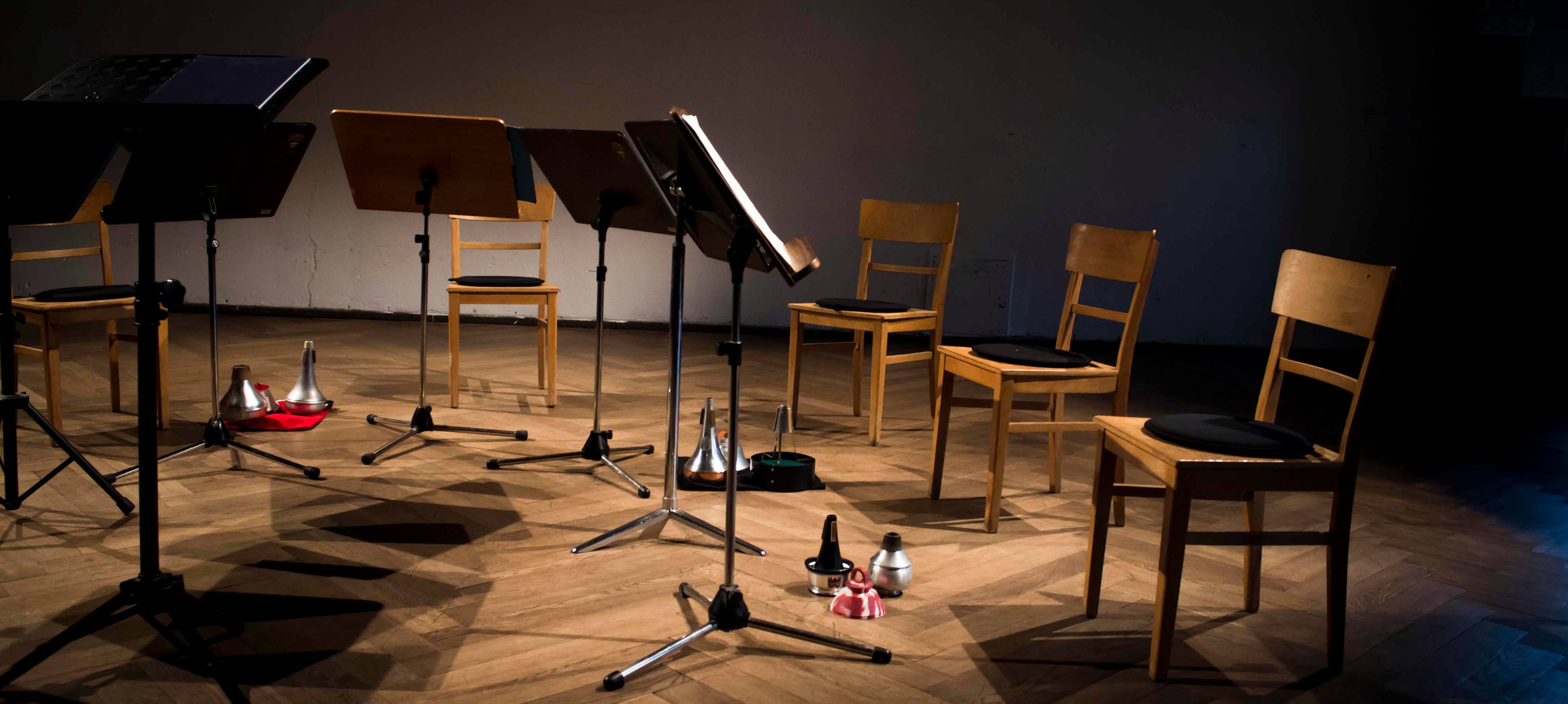
Jess Gillam (soprano & alto saxophone, above), City of Birmingham Symphony Orchestra / Eduardo Strausser

Rossini La Cenerentola (1817) – Overture
Villa-Lobos Fantasia for Saxophone, W490 (1948)
Rimsky-Korsakov arr. Glazunov/Steinberg Le Coq d’or – Suite (1908, arr. 1909)
Williams Escapades (2002)
Stravinsky L’Oiseau de feu – Suite (1910, arr. 1919)

Symphony Hall, Birmingham
Wednesday 31 January 2024

Reviewed by Richard Whitehouse. Photo (c) Robin Clewley

Brazilian conductor Eduardo Strausser made his welcome return to the City of Birmingham Symphony with a programme where three orchestral showpieces were heard alongside two pieces that gave full rein to the charismatic playing and persona of saxophonist Jess Gillam.

Although he featured the saxophone on numerous occasions, Heitor Villa-Lobos wrote just one concertante piece. His Fantasia makes a virtue out of brevity in the lively declamation of its opening movement then the motoric impetus of its finale. No slouch in either, Gillam sounded most involved (understandably so) in the central Lent – its initial melody for viola, soulfully rendered by Adam Römer, soon giving rise to an eloquent dialogue which (hardly for the first time) inferred, that in this most productive of composers, less can often be more.

More compelling overall was Escapades, a concerto drawn from his soundtrack to the Steven Spielberg film Catch Me if You Can by John Williams. A movie as promises rather more than it delivers, this features one of the most appealing of its composer’s latter-day scores with its evoking US culture in the early 1960s that the present work encapsulates to perfection. From the ominous while humorous expectancy as conjured by Closing In, via the lightly applied pathos of Reflections to the coursing energy of Joy Ride – this is Williams at something near his best and Gillam responded accordingly. A pity the contributions of double bass and vibraphone was not as prominent aurally as it was visually (maybe they should have been given more to do?), but this hardly affected the scintillating immediacy of what was heard.

Having opened proceedings with an account of the overture to Rossini’s Cinderella as deft and as scintillating as could be wished, Strausser ended the first half with a (surprisingly?) rare outing for the whole suite from Rimsky-Korsakov’s final opera The Golden Cockerel. For all the controversy aroused by its scenario, this is otherwise an archetypal example of its composer relying on technique rather than inspiration. Most of the best music can be found   in a suite made posthumously by Glazunov and Maximilian Steinberg that provides a telling portrait of Tsar Dodon – whether mired in the superstitious inertia of his palace, hapless (and helpless) on the battlefield, serenaded by the alluring Queen of Shemakha, or exuberant at his intended wedding before meeting his ‘lamentable end’ to the crowing of that pesky cockerel.

The CBSO despatched what is effectively a ‘concerto for orchestra’ before its time with real aplomb, then sounded no less committed in the second of those suites Stravinsky drew from his highly Rimskian ballet The Firebird. Here the sombre aura of its Introduction segued effortlessly into Appearance… and Dance of the Firebird, the latter exuding an infectious lilt, before a plaintive take on the Princesses’ Khorovod. Others have found greater abandon in the Infernal Dance, but the clarity and articulation conveyed here were beyond reproach. Strausser then steered a secure course through the Lullaby, its folk-derived bassoon melody plaintively intoned by Nikolaj Henriques, into a Finale whose hymnic jubilation set the seal on an evening where the absence of any Austro-German element proved its own justification.

Click on the link to read more on the current CBSO concert season, and on the names for more on saxophonist Jess Gillam, conductor Eduard Strausser and composer John Williams

Published post no.2,075 – Friday 2 February 2024

Let’s Dance – Various Artists: Kaleidoscope Vol. 1 (ZEF Music)

by Ben Hogwood

What’s the story?

There is very little padding with the press release from ZEF Music for their first label compilation. Straight to the point, it reads, “We are proud to presents our first compilation, a Kaleidoscope of emerging artists destined to shape the future of electronic music. With an infusion of deep house and melodic techno, our Various Artists Vol. 1 is a testament to the boundless creativity and innovation pulsating within the underground scene.”

What’s the music like?

The bold claims made by the label are largely fulfilled – as the seven tracks here are all high quality. Akkam’s Freeze sets the tone, a really classy piece of Moroder-inflected electro disco – and Cuprite’s Asid is a great night time panorama. The brooding Spirit from Cyclone is deeper and darker, with rippling synth lines, while James De TorresPerseidas has a more mechanical edge, industrial even. Kirwan’s Dark Space is excellent, an urgent beat with vocals in the middle ground, and Qiel’s With You is likewise, a great shape shifting bit of club music. That leaves Tarantula, a suitably busy cut laced with dark textures from Mark (BR).

Does it all work?

It does. The melodic invention is not always to the fore, but that doesn’t matter when the beats and production are on point, as they are throughout.

Is it recommended?

It is – ZEF Music are ones to watch, providing stimulating music for the deeper side of house and techno.

For fans of… the deeper, darker side.

Listen & Buy

You can listen to clips from this release and explore purchase options at the Beatport website

Published post no.2,073 – Wednesday 31 January 2024

Let’s Dance – Various Artists: 20 Years of Phonica (Phonica Records)

by Ben Hogwood

What’s the story?

When Phonica Records opened in 2003, Soho was a very different place to what it is now. I was working just round the corner, and my initial scepticism at another record shop opening was quickly found to be misplaced. Because Phonica is not just an ordinary record shop, and in fact it has outlasted almost every vinyl-selling neighbour, to our great disappointment. What a treasure it is, though, one of those establishments capable of giving you a musical rush as soon as you step foot in the door. The number of times I have had to enquire to the patient staff what the current tune is (because it’s too new for Shazam!) I could have been saddled with a restraining order. Instead the staff are always helpful and enthusiastic, because they are working in a shop they love.

Why the long intro, you ask? It is because Phonica’s enthusiasm for their art and craft translates directly into the music they sell on their own label, and the tracks appearing on this packed compilation. In their 20 years they have responded to new trends while keeping the old ones happy, and again that is reflected in the music.

What’s the music like?

This is a treasure trove of dance music, a joy from start to finish – and with the added benefit of a fresh track selection that will fill the listener with joy. 18 new tracks is nothing to be sniffed at, and if you read the detailed commentary on the label’s Bandcamp page you’ll see exactly what fits where.

The many highlights can be condensed – only slightly – but include some lithe drum & bass from Tim Reaper & Comfort Zone‘s Subterranean. Daniel Avery contributes the typically brilliant Bells, then the jittery Read My Lips zips along with rushes of euphoria from Paramida & E-Talking. Nyra‘s Broken Needs is a cracker, no messing – while the shuffling beat of Gene On Earth‘s Club Jacket mining the best of 90s garage house. Dam Swindle‘s Alright (Just A Tribute) is also a mid-90s update, a kind of cross between Grace and Crystal Waters. Dauwd‘s Slam is superb, with hushed vocal and leading drum track, while System Olympia‘s Mezzonotte breaks towards 80s electro to very good effect.

The high standard continues, with nocturnal shades from Willow‘s Willbush, and an excellent disco-house hybrid from Austin Ato, Song For Mr Lewis with a great spoken bit in the middle. There is some classy, nippy deep house from Felipe Gordon & Bob The EgoistGet Your Body Movin’ complete with tasteful flute solo. Eli Escobar‘s FindAWay2Day is a really good, zippy track while, Will Saul‘s For Joanie is superb, with vocal displacement and a slightly glitchy house beat and atmospheric pads.

Does it all work?

It does – nothing to quibble with here, other than electronic excellence and energy that translates from the big city to the bedroom studio.

Is it recommended?

Without doubt. Compilations like this are few and far between in electronic music these days, but Phonica have filled the gap with some aplomb.

For fans of… all sorts of house, garage and techno!

Listen

Buy

Published post no.2,073 – Wednesday 31 January 2024

Online review – Bruce Hornsby in the BBC Radio 2 Piano Room

by Ben Hogwood

Anyone listening to Bruce Hornsby‘s music over the last five years will know he is a restless artist in the best possible way, pursuing a direction taking him ever closer to the 20th century classical music he has come to know and love.

With that in mind, his billing at the very front of BBC Radio 2’s Piano Room month was always likely to provide something special – and so it proved.

Hornsby is a fascinating personality, one I was lucky enough to interview for an hour in 2022. We talked about his love of the music of Messiaen and Ives, and how his musical explorations with the New York chamber ensemble yMusic are taking him ever closer to those composers, without forgetting his earlier musical persona as writer of one of the 1980s all-time classic songs, The Way It Is.

His performance with the strings of the BBC Concert Orchestra showed how far that song has journeyed, finding new life through Tupac Shakur and now sounding more relevant than ever in troubled times. What struck here was the lightness of touch Hornsby applied to the piano, softer than the steely edge he used to apply. There was room, too, for thoughtful asides, departing from the song almost completely with the help of the orchestra – whose musicianship should never be undervalued, for they are one of the unsung jewels in the BBC’s creative crown.

Hornsby’s next song was Cast Off, co-written with Bon Iver frontman Justin Vernon. It is one of the many highlights from 2019’s outstanding album Absolute Zero, a quiet number but a frisson of resentment. “Is my back for stabbing?”, Hornsby asks, tellingly.

Then, by way of an enlightening mini interview with host Vernon Kay, Hornsby played The End Of The Innocence, a co-write with Don Henley who originally sang it in 1989. It is a wistful but moving song, and Hornsby did it full justice here, even breaking up the verses for tasteful improvisations with soloists from the orchestra.

His piano playing speaks with even greater conviction than his words, and the mood – while warm and cosy in the studio – reflected a stand against the troubled world outside the studio doors. Hornsby’s piano offers an escape from that, and if you haven’t watched it yet then you will find half an hour in his company wholly beneficial.

You can watch the full set of Bruce Hornsby in the Radio 2 Piano Room by clicking here

Screen Grab: Fargo, Season 5

Currently the Arcana household is in the grip of Fargo, Season 5 – and a couple of musical masterpieces have shown their hand already.

We didn’t have to wait long, either – the opening scene (no spoilers!) took place against the magnificent backdrop of All Good People by Yes. The directors used it brilliantly, too – the build up from the massive organ chorale was the centrepiece of the scene, which then dropped off the edge of a cliff and into a completely different sonic world. If you watch it you’ll see exactly what I mean, but for now you can enjoy the song in its entirety:

Then, in episode four, a reappearance for Bartók’s Music for Strings, Percussion and Celesta, specifically the passage from the third movement Adagio which Stanley Kubrick used in The Shining, when Johnny’s descent into insanity was almost complete:

Here the genius is to follow Bartók almost immediately with a polar opposite, The Prodigy’s Smack My Bitch Up. It works a treat, see what happens when you do the same below!

We await the rest of the series with interest…and it goes without saying there is some superb original music from regular composer Jeff Russo to enjoy as well: