Unknown's avatar

About Arcana

My name is Ben Hogwood, editor of the Arcana music site (arcana.fm)

On Record – Saint Etienne: International (Heavenly Recordings)

by Ben Hogwood

What’s the story?

After 35 years as a successful pop trio, Saint EtienneSarah Cracknell, Bob Stanley and Pete Wiggs – are finally calling time on their career as a group.

International is the last of their thirteen studio albums, and also the most collaborative, with spots for Tom Rowlands of The Chemical Brothers, Confidence Man, Vince Clarke, Paul Hartnoll, and – strikingly – Nick Heyward.

What’s the music like?

Late summer is the perfect time to be releasing an album like this. Perhaps inevitably there is a rich element of nostalgia, but there is no sitting on laurels or wallowing in sadness – though it has to be said the final few tracks leave a tear in the eye.

Rather, it is more of the same – slightly arty pop but with really rewarding diversions in league with the guests. The breezy Brand New Me, with Confidence Man, is a treat, Cracknell at her most winsome in the vocal. Glad is of a similar vintage, pointing towards the club in Tom Rowlands’ production. Already at the venue are Paul Hartnoll and Vince Clarke, with the former’s work on Take Me To The Pilot creating visions of a 1990s basement. Clarke’s work on Two Lovers is more reflective, but again ideally suited to Cracknell’s versatile voice, which has many more tones than we often give it credit for.

The Nick Heyward collaboration Gobetweens is a lyrical and musical treat, rhyming ‘Letraset’ with ‘internet’ to emphasise the contrast between the late 1980s of the band’s forming and the technology now. Facebook also falls under the microscope, a subtly dismissive take in the closing The Last Time. This is where everything comes to a head and a tear comes to the eye, Saint Etienne’s final statement leaving us all a bit emotional.

Does it all work?

It does – for one last time. This is a winsome collection, the band playing to their strengths, and clearly having fun right up to the end.

Is it recommended?

It is essential for Saint Etienne devotees to have the band’s final album as a keepsake; all the more so when it is revealed to be an ideal summing up of their achievements. Equal parts tenderness and attitude, it does exactly what they promised, delivering bittersweet pop winners that cover nostalgia and the future with panache. A wholly appropriate signing-off.

For fans of… Goldfrapp, Happy Mondays, The Cardigans, Divine Comedy

Listen / Buy

Published post no.2,666 – Tuesday 23 September 2025
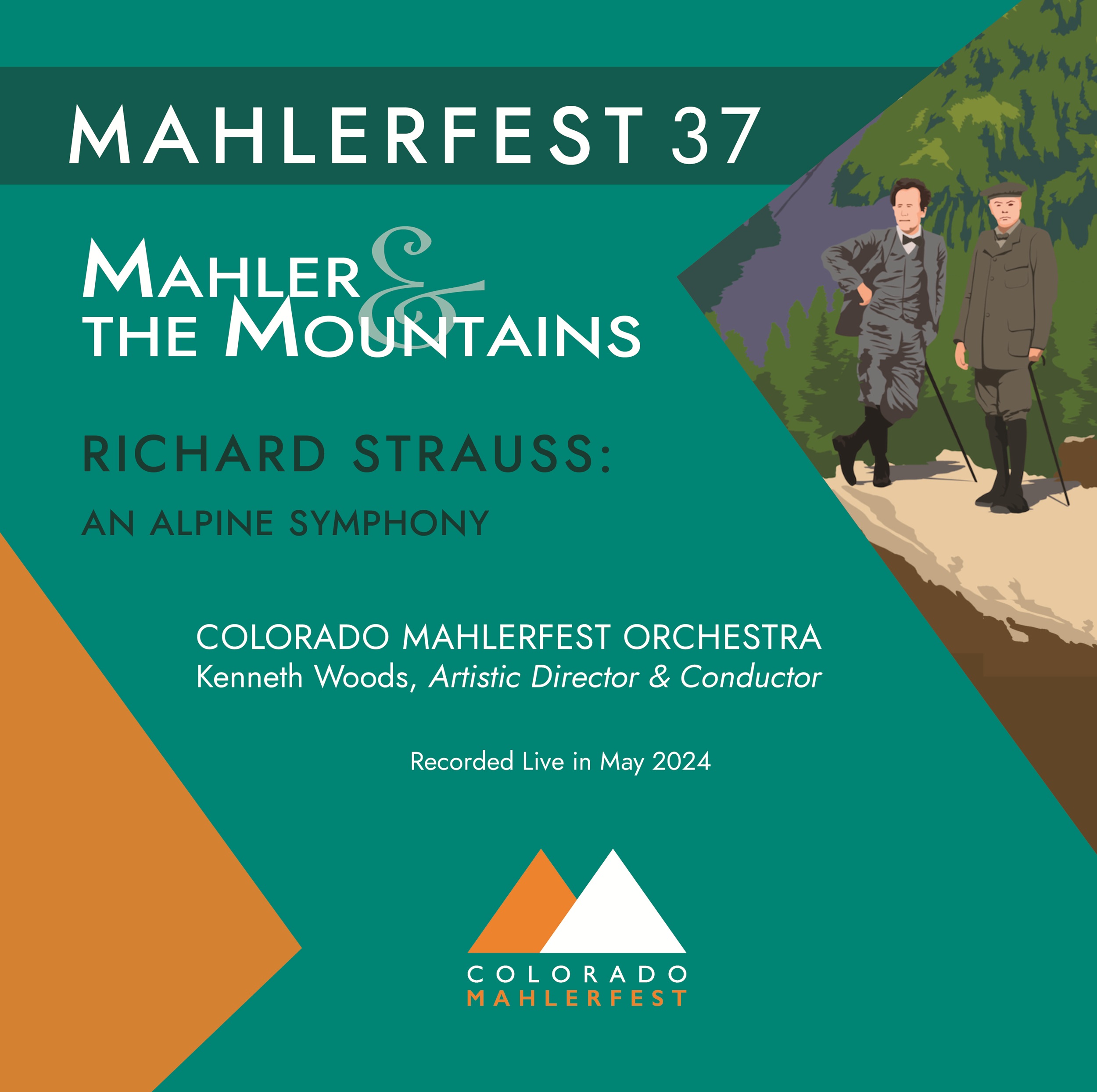
On Record – MahlerFest XXXVII: Kenneth Woods conducts Richard Strauss: Eine Alpensinfonie

Colorado MahlerFest Orchestra / Kenneth Woods

Richard Strauss Eine Alpensinfonie Op.64 (1911-15)

Colorado MahlerFest 195269359249 [49’47”]
Producer Jonathan Galle Engineer Tim Burton
Live performance at Macky Auditorium, Boulder, Colorado, 18 May 2024

Reviewed by Richard Whitehouse

What’s the story?

With its underlying concept that of Mahler and the Mountains, this 37th edition of Colorado MahlerFest was probably the most ambitious yet. As was reflected in those works featured at its main orchestral concerts, and not least this performance of Richard Strauss’s An Alpine Symphony.

What’s the music like?

This being its composer’s final large-scale orchestral piece is not fortuitous, as it concludes a sequence of symphonic works stretching back some 35 years to his Symphony in D minor. Strauss may subsequently have abandoned the symphony for the tone poem, but these latter became increasingly symphonic in formal scope or expressive density with the present work bringing full circle a process as could hardly be resumed given the tonal retrenchment of his idiom henceforth. An Alpine Symphony represents an impressive and a defining culmination.

Although it nominally outlines a day’s ascent then descent in the Bavarian Alps (actually the Heimgarten), this work is equally the ‘journey of a life’ duly articulated through an extended sonata-form design. It is this latter aspect which emerges at the forefront of Kenneth Woods’ interpretation – one which unfolds cohesively and, most important of all, organically out of then back to its evoking of Night. The crescendo of activity through to Sunrise then The Ascent is keenly maintained, with those expository episodes that follow not lacking scenic immediacy or formal impetus. Neither is the ensuing developmental sequence underplayed on route to the emotional crux of On the Summit then Vision: music, it might be added, whose grandiloquent expression is shot through with a knowledge of its imminent demise.

What goes up must inevitably come down: the transition into the reprise is finely handled in terms of its encroaching Elegy, though momentum does falter slightly in the recapitulatory phase of Storm and Descent. Not that the Colorado MahlerFest Orchestra is found wanting as regards its commitment; more likely, the clear if somewhat confined acoustic of Boulder’s Macky Auditorium is not able to encompass the sheer volume of sound effected in this phase. Woods nevertheless heads into Sunset with requisite poise and if the coda that is Ausklang – a term more or less untranslatable but which approximates to ‘catharsis’ – is just a little too passive, its rapt recollections of Wagner and Mahler are eloquently inferred. As is the return to Night, audibly linking into that from the opening for what becomes an indissoluble unity.

Does it all work?

Pretty much throughout. Once a piece reserved for special occasions, An Alpine Symphony is now among the most often recorded of Strauss’s orchestral works but while this performance cedes to others in terms of tonal opulence and visceral impact, it has relatively few peers as regards its symphonic credentials. A pity, incidentally, the performance of Schubert’s Death and the Maiden quartet from the first half, which Woods has elaborated from Mahler’s often sketchy arrangement for strings, could not have been included as to make this a two-disc set.

Is it recommended?

It is. The CD comes with a full listing of personnel on its rear inlay, and you can scan the QR code or click here for Kelly Dean Hansen’s detailed notes. Mahler’s Fourth Symphony from this edition will be issued separately.

Listen / Buy

For further purchase options, visit the MahlerFest website – and for more information on the festival itself, click here. Click on the name for further information on conductor Kenneth Woods

Published post no.2,665 – Monday 22 September 2025

In concert – BBC Singers / Martyn Brabbins @ St Paul’s Knightsbridge – Holst, Britten, Garrard, Elgar & Pickard

BBC Singers, Elizabeth Bass (harp), Richard Pearce (piano), Andrew Barclay (percussion) / Martyn Brabbins

Holst Choral Hymns from the Rig Veda – Group 3, H90 (1910)
Britten The Ballad of Little Musgrave and Lady Barnard (1943)
Garrard Missa Brevis (2017-18)
Elgar Five Part-Songs from the Greek Anthology Op.45 (1902)
Pickard Elemental (2024-25) (BBC commission: World premiere)

St Paul’s, Knightsbridge, London
Friday 19 September 2025

Reviewed by Richard Whitehouse

The upsurge of interest in and performances by the BBC Singers in the wake of its intended demise shows little sign of abating, and there could be few vocal ensembles able to put on a programme as stylistically inclusive or as technically demanding as that heard this afternoon.

Nowhere more so than Elemental by John Pickard, its first performance occupying the second half. Never absent from the composer’s output, choral music came into own with the powerful Mass in Troubles Times (premiered nearby at St Peter’s, Eaton Square in 2019) and the present work can be heard as a continuation in terms of its underlying concept. A further collaboration with author and theologian Gavin D’Costa, its form is of a journey through the elements such as Pickard had favoured earlier in his output but here with its emphasis firmly on the spiritual arising out of human concerns. Whether individually or collectively, the writing for 18 voices could hardly be more varied and imaginative, while the obbligato roles for harp plus a single percussionist playing across the spectrum of instruments enhances these settings accordingly.

After the evocative Prologue with its Paracelsian take on living matter, Earth draws on the recollections of those in the Tham Luang Cave Rescue – notably teenagers of the Wild Boars football team – in music whose initial bravado gradually assumes a near metaphysical import. Fire integrates its Shakespeare quotations into consideration of this most transformative and cathartic of elements. Air centres on Bessie Coleman with her ambition, racially rather than personally motivated, to become the first professional pilot from African-American ancestry – her combative and ultimately ill-fated career depicted with often graphic immediacy. Water then illustrates the Biblical flood narrative from an oblique and even ambivalent perspective, before Epilogue returns to evocation of the numinous as it builds with a frisson of emotion.

Not that the first half was any mere preparation. Most intimate and alluring of four such sets, the third group of Holst’s Choral Hymns from the Rig Veda traverses the ethereal, the limpid, the hieratic then the questing in the company of female voices and harp. The former were no less attuned to the greater astringency of Sara Garrard’s Missa Brevis – its bracing inclusion of traditional Estonian music offset by the greater introspection elsewhere; these contrasted aspects finding at least a degree of release with the emotional immediacy of the Agnus Dei.

Heard in alternation, the male voices duly came into their own with Britten’s The Ballad of Little Musgrave and Lady Barnard – its folk melody (Matty Groves) stretched through this plangent wartime setting with piano of illicit love, innocent betrayal, desperate revenge and stark lament. Facets that barely feature in Elgar’s Five Part-Songs from the Greek Anthology yet these brief if characterful treatments of translations by Alma Strettell, no less typical than his major choral and orchestral works from this period, were dispatched here with due relish.

Whatever else, this showcase with substance was conducted with unfailing insight by Martyn Brabbins, whose prowess in choral repertoire needs hardly more reiterating than his advocacy of Pickard, and is absolutely worth hearing when broadcast by BBC Radio 3 this Wednesday.

You can hear the BBC Radio 3 broadcast on Wednesday 24 September by clicking here

For more information on the artists, click on the names: BBC Singers, Martyn Brabbins, Elizabeth Bass, Richard Pearce and Andrew Barclay, and composers John Pickard and Sara Garrard

Published post no.2,664 – Sunday 21 September 2025

In appreciation – Jean Sibelius

by Ben Hogwood. Picture by Henry B. Goodwin – The last masterpieces 1920–1927 (Public Domain, used from Wikipedia)

On this day in 1957, Finnish composer Jean Sibelius died at the age of 91.

Even now the extent of Sibelius’s genius and influence has not fully been established, for his is a unique and powerful voice, particularly in the field of orchestral music. Here is his relatively unsung Symphony no.3, a propulsive work that is a remarkable combination of economy and expression:

Published post no.2,663 – Saturday 20 September 2025

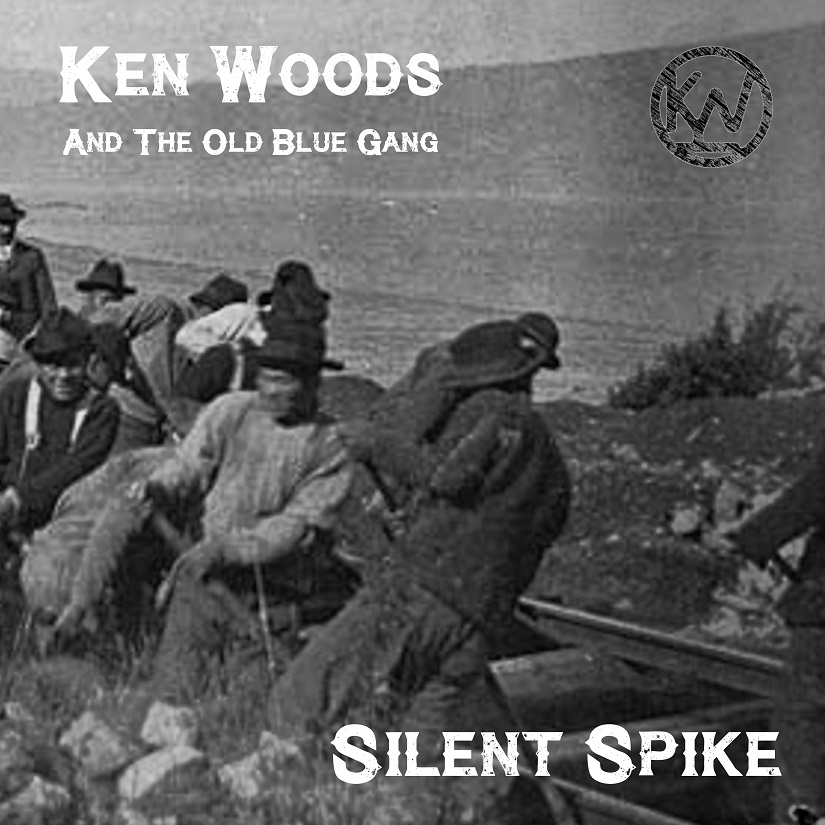
On Record – Ken Woods and the Old Blue Gang – Silent Spike (Kenneth Woods)

by Richard Whitehouse

What’s the story?

Kenneth Woods issues the debut of his band The Old Blue Gang, less a concept album per se than themed reflections on a shameful while all too typical incident (then as now) of migrant workers who were first exploited then betrayed in the American West of some 150 years ago.

What’s the music like?

Best known as a conductor, notably at the helm of the English Symphony Orchestra for over a decade, Kenneth Woods also works extensively as cellist and guitarist. This latter career is showcased in Silent Spike, the first album with his band The Old Blue Gang, which affords a probing take on the largely forgotten role of Chinese immigrants involved in constructing the Transcontinental Railway line from California via Oregon to Washington. A tale of alienation, exploitation and ostracization which has lost none of its horrific impact over ensuing decades.

Opening track The Voyage emerges ‘Déjà Vu’-like into focus, its commentary about those coming to the New World with little or no expectation delivered in suitably deadpan fashion by Woods, whose searing guitar affords contrast with Joe Hoskin’s methodical yet ominous bass and Steve Roberts’s forceful yet flexible drumming. The arduous workload endured by the immigrants is vividly conveyed by the grunge-inflected Steel Stretcher, before Dead Line Creek puts musicians (and listeners) through their collective paces with its unsparing depiction of mass murder by the gang fronted by Old Blue – an outlaw whose reward is as much destructive as monetary. Much the longest track at 21 minutes and its evolution more instrumentally than narratively driven, this is alt-Americana at its most uncompromising.

It might have been preferable to sequence this epic after the next three tracks, each of them streamed as singles in advance of the album. Sundown Town evokes its intolerance with a fatalism redolent of Johnny Cash, intensified by Lilly White with its chilling recollection   of miners being deliberately incarcerated so they need not be paid. Ride the Rails provides a natural continuation with its tale of the immigrants being driven out of town by the under-employed during economic depression, who were (inevitably) acquitted of any wrongdoing. It remains for closing track Gather the Ghosts and Bones to inject a degree of empathy as it recounts the returning of remains of those who received burial in their native China – people otherwise known only through the handful of faded photographs that have come down to us.

Does it all work?

Indeed. Ensemble is unusually dense and layered for a three-piece outfit, though this does not mean excessive ‘noodling’ or wanton virtuosity; the playing being characterized by a restraint or even austerity such as fittingly underlines the grimness of the narrative and the austerity of its realization. Pertinent comparison, conceptually if not musically, can be made with Fairport Convention’s 1971 masterpiece ‘Babbacombe’ Lee – for all that this album touches, however obliquely, upon a redemptive quality understandably absent from what is encapsulated here.

Is it recommended?

Very much so. It hardly makes for comfortable listening, but Silent Spike is a plangent while resourceful treatment of a subject whose contemporary relevance cannot be gainsaid. It also offers intriguing pointers as to where The Old Blue Gang might be headed on future albums.

Listen / Buy

You can explore purchase options on the Kenneth Woods website

Published post no.2,662 – Friday 19 September 2025