Unknown's avatar

About Arcana

My name is Ben Hogwood, editor of the Arcana music site (arcana.fm)

In concert – Eugene Tzikindelean, CBSO / Kazuki Yamada: Elgar Violin Concerto & Walton Symphony no.2

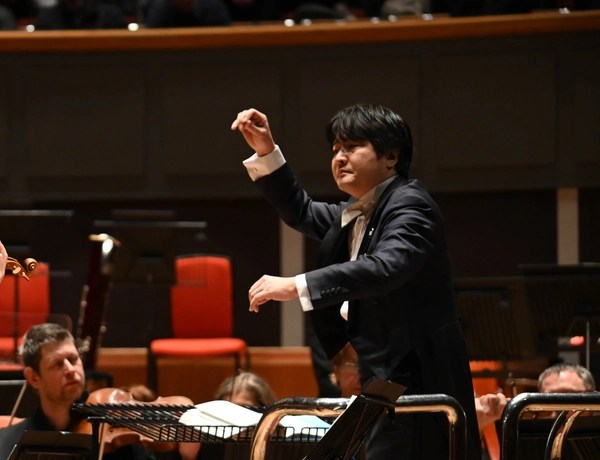
Eugene Tzikindelean (violin, above), City of Birmingham Symphony Orchestra / Kazuki Yamada (below)

Elgar Violin Concerto in B minor Op.61 (1909-10)
Walton Orb and Sceptre (1952-3)
Walton Symphony no.2 (1957-60)

Symphony Hall, Birmingham
Wednesday 4 December 2024

Reviewed by Richard Whitehouse

His tenure so far as music director of the City of Birmingham Symphony Orchestra has shown Kazuki Yamada to have real sympathy for British music, hence it was no surprise to encounter this programme of works by Elgar and Walton, which itself proved (unexpectedly?) satisfying.

Following on his highly regarded performances of Nielsen and Walton over previous seasons, CBSO leader Eugene Tzikindelean took on Elgar’s Violin Concerto for a reading which was fine if not consistently so. The opening movement, in particular, lacked forward momentum in its restless first theme so that not enough contrast was established with its rapt successor – the highlights being Yamada’s vigorous handling of its orchestral introduction and a development as powerfully sustained as it was combatively rendered. Tzikindelean was more fully at home with the central Andante, its variously reflective and heartfelt melodies drawn into a seamless continuity enhanced by a notably beguiling response from the CBSO woodwind. Whether or not the most profound of Elgar’s slow movement, this is arguably his most perfectly achieved.

The finale was, for the most part, equally successful – this being hardly the first performance setting off at a suitably incisive tempo, only to lose impetus once the poised second theme has entered the frame. Not that there was insufficient energy to make the emergence of its lengthy accompanied cadenza other than startling – this latter proceeding with a suffused mystery and poignancy, not least in recalling previous themes, as finds Elgar as his most confessional; the movement then resuming its earlier course as it surged on to a decisive and affirmative close.
Although his later orchestral works have never quite fallen into obscurity, Walton’s tended to fare better in the US than in the UK. Not least the coronation march Orb and Sceptre – all too easily denigrated next to the opulent grandeur of predecessor Crown Imperial, but evincing a jazzy lack of uninhibition and, in its trio, a suavity Yamada clearly relished in the company of an orchestra that made benchmark recordings with Louis Frémaux almost half a century ago. Even the latter could not summon the pizzaz conveyed here with that trio’s infectious return.

Walton’s Second Symphony has been equivocally regarded ever since its Liverpool premiere, but Yamada clearly harboured few doubts as to its conviction. The opening Allegro unfolded methodically if remorselessly, its main themes subtly yet meaningfully differentiated not least in bringing out the compositional mastery of sizable orchestral forces. Nor was there any lack of pathos in the ensuing Lento, its ominous tones denoting music shot through with intensely ambivalent emotion. Much the most difficult movement to sustain, the final Passacaglia was no less successful – Yamada binding its successive variations into a tensile if never inflexible whole, while making a virtue of Walton’s premise that a 12-note theme can resolve effortlessly in tonal terms at the peroration: a journey as fascinating as its destination proved exhilarating.

Interesting to note this concert was ‘being recorded for future release;, given the Walton was undoubtedly an account to savour. Yamada is back with the CBSO next week in a programme which pairs Mozart’s penultimate piano concerto and Bruckner’s (unfinished) final symphony.

For details on the 2024-25 season A Season of Joy, head to the City of Birmingham Symphony Orchestra website. Click on the names to read more about CBSO leader, violinist Eugene Tzikindelean – and the orchestra’s principal conductor Kazuki Yamada

Published post no.2,386 – Saturday 7 December 2024

On Record – Kim Deal – Nobody Loves You More (4AD)

by Ben Hogwood

What’s the story?

It’s hard to believe that this is Kim Deal’s first full solo album. She has hinted at music on her own since 2011, when she recorded Are You Mine? and Wish I Was, composed after her contribution to The Pixies’ ‘Lost Cities’ tour. Deal is an original Pixies member, playing bass guitar from 1986 to 1993 then reprising her role in 2004. Simultaneously she has fronted The Breeders, from their founding in 1989.

The album has a plethora of collaborators, from Breeders past and present (Mando Lopez, twin sister Kelley Deal, Jim Macpherson, Britt Walford), to Raymond McGinley (Teenage Fanclub), Jack Lawrence (Raconteurs), SavagesFay Milton and Ayse Hassan, and Steve Albini, who recorded a good deal of the record.

What’s the music like?

Full of depth, and with the odd surprise.

Deal has a slight husk to her delivery, her voice an instrument that can move between intimate, heartfelt asides and more brash statements. The big band blast of the title track is a case in point, where the bold brass complement her softer thoughts.

There is a most enjoyable wit and mischief to this album, too, delivered in the catchy Coast – not just in Deal’s voice but in the rasp of the accompanying trombone and slide guitar. The polar opposite of this are the slow songs Come Running and the heart-melting Are You Mine?, where serene strings tug at the emotions and Deal asks to “Let me go where there’s no memory of you, where everything is safe and nothing is true”.

On a more psychedelic tip are Crystal Breath, layered with distorted thoughts, the garage rock call to arms of Disobedience, and the boomy Big Ben Beat. The album ends with the winsome Summerland, with “music blowing in the breeze”

Does it all work?

It does. Deal’s versatility between styles makes for a tightly structured album, compressed but full of expression, emotion and musical twists and turns.

Is it recommended?

Definitely. Kim Deal’s solo debut is well worth the wait, containing a wealth of good music and letting us into all aspects of her world. One of the albums of the year for sure!

For fans of… Cate Le Bon, The Breeders, The Pixies, Joan Armatrading, Sonic Youth

Listen and Buy

Published post no.2,385 – Friday 6 December 2024

On Record – Mark Barrott – Everything Changes, Nothing Ends (Reflections)

by Ben Hogwood

What’s the story?

Mark Barrott’s eleventh album under various guises is his most personal yet. It tells the story of the sad passing of his wife Sara in 2023, but at the same time recognises the incredibly positive effect she ultimately left on his life.

About the record, he has said, “This is a story. A story of life and ultimately death. A story of two lives coming together through a chance meeting on an aeroplane and spending the next 20+ years together via the craziness of Berlin in the late 90’s to Northern Italy, South America and finally the tranquility of rural Ibiza. The story of how life can change and be snatched away in the blink of an eye. But this is not a sad story, it’s a story of joy, love, grief and gratitude for what was.”

For the first time Barrott has harnessed choral and orchestral forces to tell the story. This was not the original intention, but once started the music continued to expand, its natural point of expression found.

What’s the music like?

Unlike anything Barrott has done before. If your way into his music has been through the pair of heat-soaked Sketches From An Island albums, this will come as a surprise – in a good way.

This is not an album where the orchestra and choir are used almost for the sake of it, to beef up the sound. Instead Barrott uses them sparingly, shading their contributions with a delicacy that suggests he’s been doing it for a long time in his head.

The music proceeds with a really satisfying blend of presence and poise, Barrott successfully embracing the orchestral medium with confidence. The muted trumpet on the second part of Butterfly In A Jar offers a beautiful hint of melancholy, while ushering in a track where the blend of jazz and electronic inflections is beautifully judged. Meanwhile Looking Through The Mirror Of The Soul catches telling reflective glimpses, its lovely flashes of light from the strings adding a mysterious edge to the music.

January 25th – presumably the day of his wife’s passing – is the most powerful track on the album, the shackles off as Barrott harnesses the choral power at his disposal. It has a slow but deliberate tread, and a full-bodied, widescreen sound laced with drama.

Ultimately, as Barrott says, the outlook is positive, and the beautiful weightlessness of The Light Is Still There looks upward to much better times ahead, its electronics floating on a warm breeze.

Does it all work?

It does. This is a moving testament from Barrott, one that traverses all kinds of emotion as the album naturally runs its course.

Is it recommended?

Very much so. This was clearly a cathartic album for Mark Barrott to make, and his heavy personal investment bears fruit in music of great beauty and emotional power.

For fans of… Hybrid, Sasha, A Winged Victory for the Sullen, Thomas Newman

Listen and Buy

Published post no.2,384 – Thursday 5 December 2024

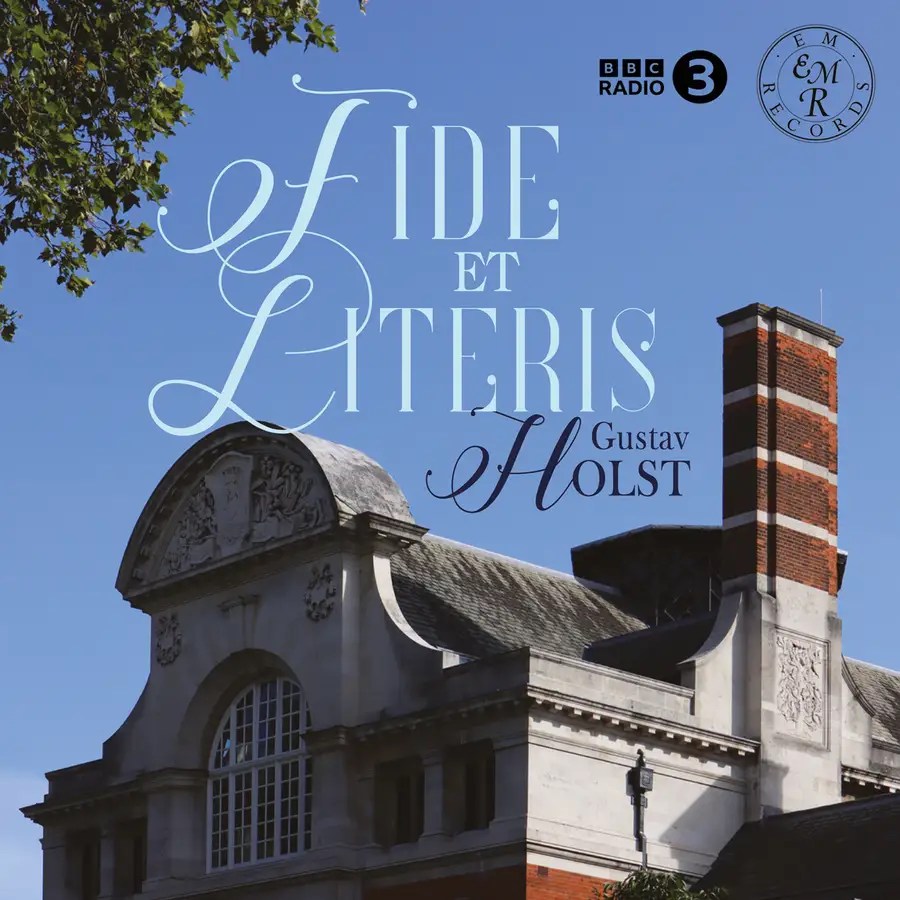
On Record – Em Marshall-Luck, Paulina Voices, BBC Concert Orchestra / Leigh O’Hara: Fide et Literis – Gustav Holst

Holst
St Paul’s Suite H118 (1912-13)
Brook Green Suite H190 (1933)
Gavotte H190a (1933)
Seven Choruses from the Alcestis of Euripides, H146 (1920)
Playground Song H118a (1911)
The Vision of Dame Christian, H101 (1909)

Em Marshall-Luck (reciter), Paulina Voices / Heidi Pegler, BBC Concert Orchestra / Leigh O’Hara

EM Records EMRCD090 [69’48”]
Producer Neil Varley Engineer Christopher Rouse

Recorded 4-5 November 2023 in the Great Hall, St. Paul’s Girls’ School, Brook Green, London

Reviewed by Richard Whitehouse

What’s the story?

EM Records further extends the Holst discography in the 150th anniversary year of his birth (and 90th anniversary year of his death) with this collection of works written at and intended for pupils of St Paul’s Girls’ School, where the composer taught for 29 years until his death.

What’s the music like?

For all his interest in matters spiritual and arcane, Gustav Holst was an eminently practical musician whose educational pieces were tailored to the situation at hand. Not least his Seven Choruses from the Alcestis of Euripides, written for a production of this drama at St Paul’s. Its scoring for unison female voices, three flutes and harp recalls those diaphanous settings in the Third Group of Choral Hymns from the Rig Veda – not least its sixth chorus ‘I have sojourned in the Muse’s Land’ that, in its fusion of yearning with sensuousness, is ideal for such a text as this.

Most substantial here is The Vision of Dame Christian – aka The Masque – written for the play by Frances Gray, who was the first headmistress (then High Mistress) at St Paul’s. The ‘Dame Christian’ in question is Christian Colet, mother of John Colet who had founded the original St Paul’s School 400 years before. Set in 1523, the sequence comprises three choruses with a prelude, interlude and finale – the scoring, for female voices with small orchestra, conveying a pathos devoid of sentimentality which is typical of Holst’s music for this school. Revived at decade-long intervals until 1958, it was heard again in 1973 (and issued privately on LP) then given a full production in 2013, but this first professional recording captures its deftness and eloquence in ample measure. Perhaps future performances would be feasible in other venues?

The two suites for strings long ago took their place within a lineage of compositions for this medium to which British artists have contributed so extensively throughout some 150 years. Certainly, the St Paul’s Suite is a classic of its genre – what with its rumbustious initial Jig, its animated Ostinato, its alternately soulful then playful Intermezzo, or a Finale which revisits Holst’s Second Suite for Military Band by combining traditional tunes The Dargason and Greensleeves in a fantasia ingenious and affecting. The Brook Green Suite is simpler in design – which is not to deny the appeal of its homely Prelude, its wistful Air or its lively Dance. Recorded for the first time is the Gavotte which Holst omitted at the premiere, its brusque charm enhancing the whole when heard in its original context as second movement.

Does it all work?

It does. This project was evidently a labour of love for St Paul’s Girls’ School, whose Paulina Voices duly rise to the challenge of continuing their venerable tradition under the admirable direction of Heidi Pegler, not least in the Playground Song with its ‘Henry Newbolt meets St Trinian’s’ text. The passages of recitation are rendered with clarity and elegance by Em Marshall-Luck (herself a Paulinian), while Leigh O’Hara secures a spirited response from the BBC Concert Orchestra in music whose sheer directness and accessibility are never for a moment naïve or simplistic.

Is it recommended?

It is. The presentation is well up to EMR’s customary standards, with detailed annotations by Em Marshall-Luck and school archivist Howard Bailes. Clearly the Great Hall of St Pauls’ Girls’ School is as ideal for recording as ‘Mr Holst’s Room’ in the Music Wing proved to be for his composing.

Listen & Buy

For further information visit the EM Records website, and for purchase information visit the Presto website. Click on the names for more on conductor Leigh O’Hara, Paulina Voices, the BBC Concert Orchestra and for more on The Holst Society

Published post no.2,382 – Wednesday 4 December 2024

On Record – Early Stereo Recordings Vol. 6: Sibelius – Finlandia, Pohjola’s Daughter, String Quartet etc (First Hand Records)

Sibelius
Finlandia Op.26 (1899)(a)
Finlandia – Hymn (1938)(b)
Song of My Heart Op.18/6 (1900)(b)
The Origin of Fire Op.32 (1902, rev, 1910)(c)
Pohjola’s Daughter Op.49 (1906)(d)
Valse triste Op.44/1 (1904)(a)
String Quartet in D minor Op. 56 ‘Voces intimae’(e)
Finlandia Op.26 (1899)(f)

cSulo Saarits (baritone); eQuatuor Pascal [Jacques Dumond, Maurice Crut (violins), Léon Pascal (viola), Robert Salles (cello)]; bcHelsinki University Chorus / Martti Turunen; cdCincinnati Symphony Orchestra / Thor Johnson; aOrchestra del Maggio Musicale Fiorentino / Vittorio Gui; fPhilharmonia Orchestra / George Weldon

First Hand Records FHR85 [82’37”]
Producer and Engineer Raphaël Mouterde

Recorded aOctober 9th and b10th 1953, November bd20th and c21st 1953, fMarch 12th 1956, ebefore July 1957. Transfers and Remastering Paul Baily
Detailed production credits at the First Hand Records website

Reviewed by Richard Whitehouse

What’s the story?

First Hand Records continues its valuable Early Stereo Recordings series with this volume devoted to Sibelius, mostly featuring performances that had little wider availability on their initial release and which have seldom, if at all, been reissued in their original stereo format.

What are the recordings like?

First issued on two Livingston Audiosphere binaural tapes, Vittorio Gui’s Sibelius confirms this conductor’s wide-ranging sympathies as to repertoire. Finlandia is accorded a forthright and impulsive reading which is brooding and even ominous in its earlier stages, then with its hymnic melody elegantly while unaffectedly rendered. Valse triste feels arguably even more persuasive as Gui secures playing of poise and finesse from the strings of Maggio Musicale Fiorentino, building up to a culmination of sustained intensity prior to its elegiac conclusion.

George Weldon’s Finlandia affords instructive comparison. First issued on an EMI Columbia stereosonic tape, it exudes no mean spontaneity and panache with the Philharmonia sounding as idiomatic as on the Sibelius recordings made with Herbert von Karajan during this period.

Most valuable are those remaining items. What was initially issued as an A-V Tape Libraries binaural tape is a fascinating collection, not least for this first studio recording of the cantata The Origin of Fire which is overall the best of Sibelius’s Kalevala-derived choral works, and combatively rendered here by Sulo Saarits with the Helsinki University Chorus – which latter contributes respectively stirring then evocative accounts of the indelible Finlandia Hymn and delectable Song of My Heart under Martti Turunen. The Cincinnati Symphony Orchestra comes into its own with Pohjola’s Daughter, the symphonic fantasia that straddles its composer’s nationalist and more classical phases – duly endowed with often irresistible momentum by Thor Johnson (1913-1975), the American conductor who made numerous important recordings at this time.

Surely the highlight, though, is Quatuor Pascal’s reading of Voces intimae. First issued as a Concert Hall Society stereophonic tape, this was only the work’s fourth recording (after those (two) by the Budapest and Griller quartets) and demonstrates acute appreciation of Sibelius’s idiom as shared by few French musicians at this time. From the powerfully wrought opening Allegro with its pulsing Vivace continuation, via the inwardly eloquent Adagio then trenchant Allegretto, to the impetuous final Allegro – this is an interpretation to rank with the very best.

Does it all work?

Yes it does, remembering these recordings were made in Sibelius’s lifetime (just two months before his death in the case of the String Quartet) and can lay claim to pioneering status. The transfers have been expertly managed, conveying the dynamic range and tonal range of those original masters without unwarranted intervention. Tully Potter pens informative annotations, and Peter Bromley invaluable context, though the timing for Weldon’s Finlandia should read 9’17” rather than 8’31” hence is faster than Gui by mere seconds rather than almost a minute.

Is it recommended?

Indeed it is, and it could well be regarded as the most significant release in this FHR series so far. Coming in the wake of groundbreaking inter-war projects from the Sibelius Society, these issues are a vital chapter in the history of Sibelius recording and an indispensable acquisition.

Listen & Buy

For further information and purchase information visit the First Hand Records website. Additional details on (most of) these recordings can be found on the Discogs website

Published post no.2,381 – Tuesday 3 December 2024