Yesterday marked 200 years since the death of the influential composer and teacher, Antonio Salieri, at the age of 74.
Salieri gets a very one-dimensional press these days, known primarily for his rivalry with Mozart, but as with so many of these things there is a whole lot more to the story as far as we can tell it.
As a teacher, Salieri was responsible for helping shape the careers of Beethoven, Schubert and Liszt, along with Hummel and Franz Xaver Wolfgang Mozart, Wolfgang Amadeus’s son. His keen dramatic instincts were honed by his own teacher Gluck, who became a good friend and was a clear influence on an operatic career whose gems are only just being revealed.
Of course the rivalry with Mozart makes very good press – but without the full knowledge, I’m going to sidestep that and simply present a short playlist of Salieri’s own, highly accomplished music – some from the concert hall and some from the stage:
Complementing the playlist is a new recording of the 1788 opera Cublai, gran kan de’ Tartari, conducted by Christoph Rousset – his fourth venture into the stage works of Salieri for the Aparté label.
by Ben Hogwood Photo By Unknown author – Original publication
On this day, 50 years ago, the composer Dmitri Shostakovich died at the age of 68 in Moscow.
He is without doubt one of my favourite composers…but I will save a full appraisal for a major, extended project that is due to begin on Arcana pages shortly, studying Shostakovich’s music in the context of his contemporaries.
For now I will post four pieces, the last three in the form of a concert that show Shostakovich to have a number of strings to his bow. Beginning with a home favourite, the String Quartet no.7, we move to three orchestral works – the Jazz Suite no.1, the Cello Concerto no.2, and the Symphony no.8. The Cello Concerto no.2 is given in a fantastic recording by Heinrich Schiff, conducted by the composer’s son Maxim, while the symphony is the first recording of his music that I heard, with Rudolf Barshai conducting the Bournemouth Symphony Orchestra:
Natalya Romaniw (soprano), Jennifer Johnston (mezzo-soprano), Russell Thomas (tenor), James Newby (baritone) Carlos González Nápoles (treble), Malakai Bayoh (alto), Constanza Chorus, BBC Symphony Chorus, BBC Symphony Orchestra / Hannu Lintu
Boulez Rituel in memoriam Bruno Maderna (1974-75) Mahler Das klagende Lied (1878-80)
Royal Albert Hall, London Tuesday 4 August 2025
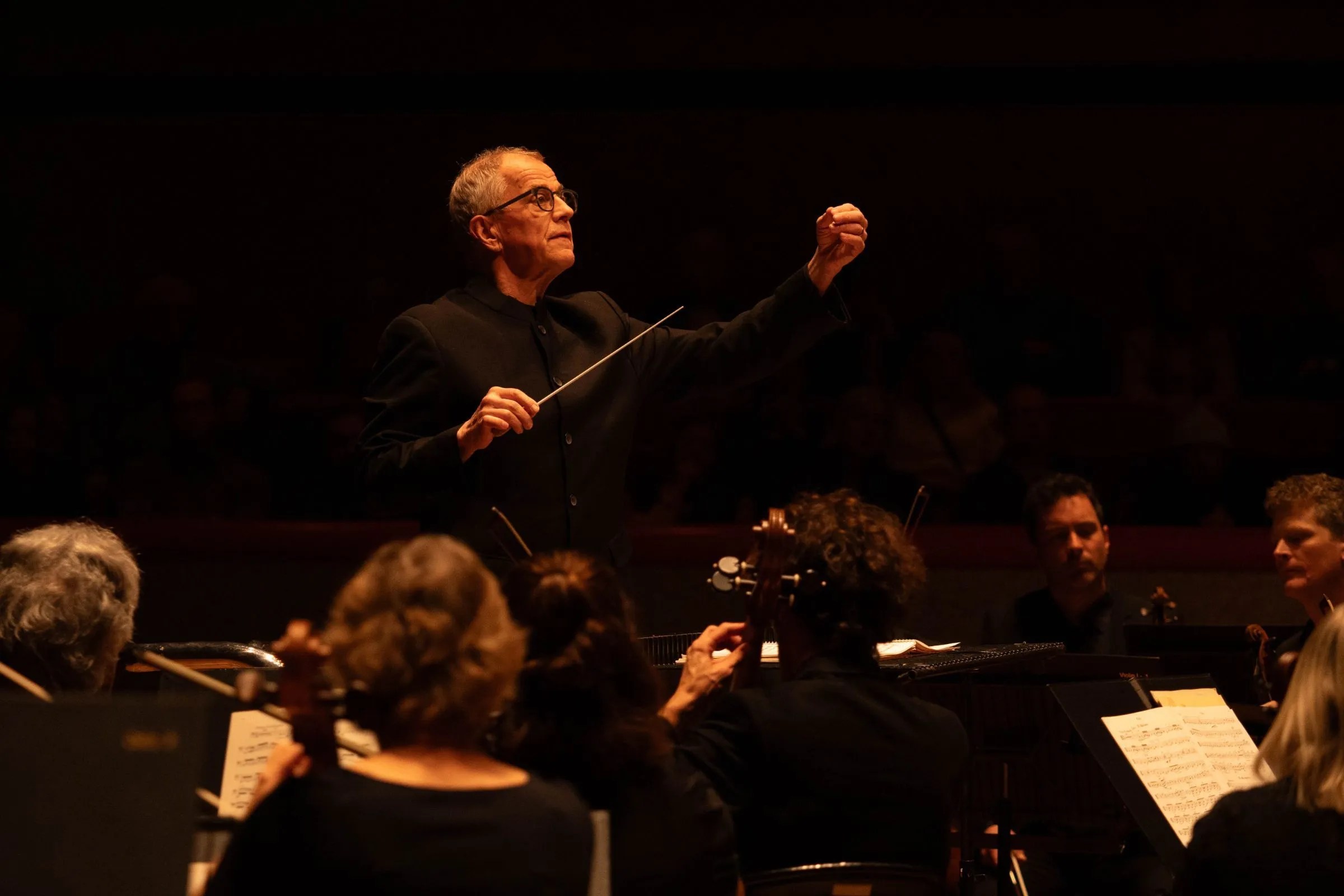
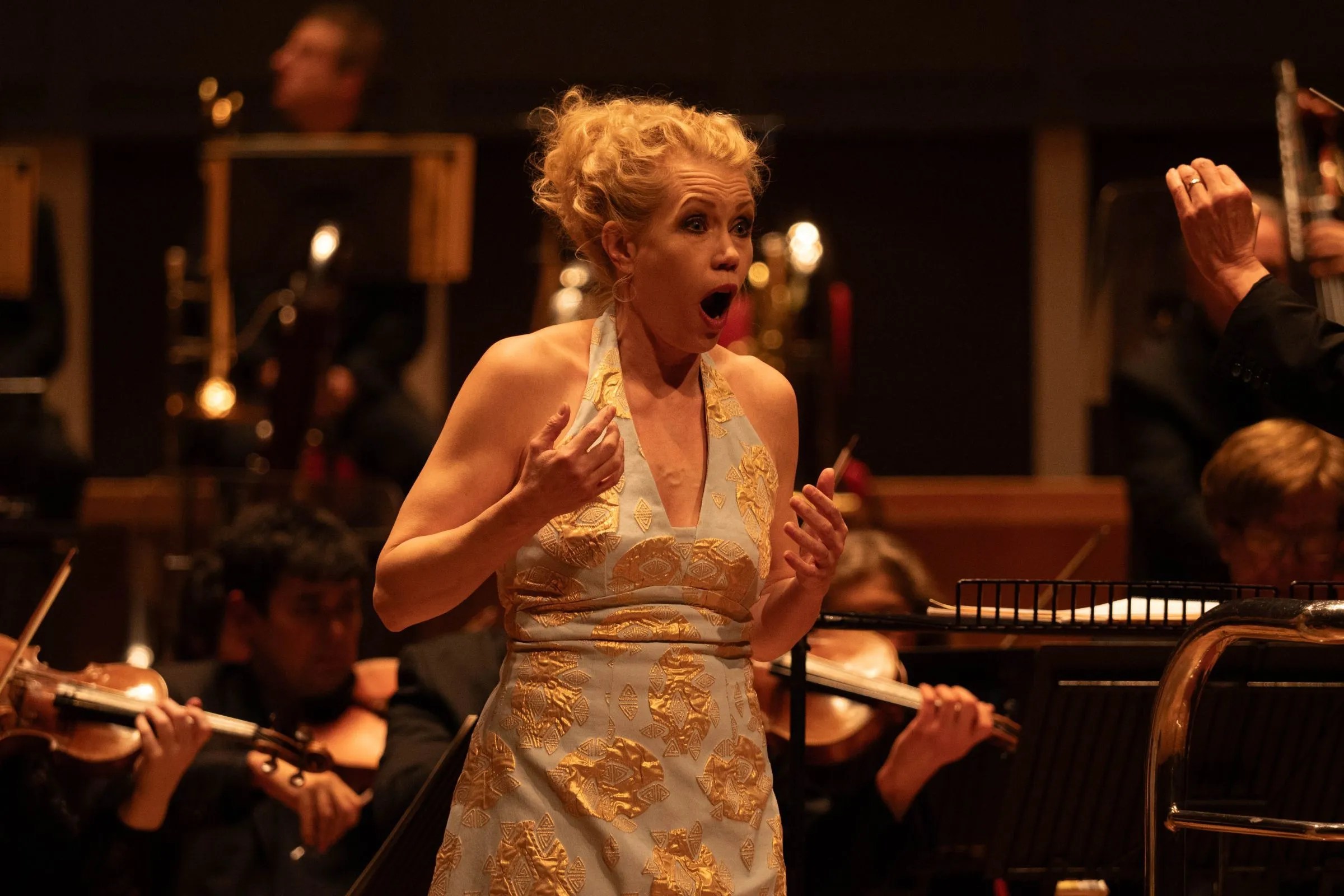
Reviewed by Richard Whitehouse Photos (c) BBC Proms (from the festival’s uncredited Facebook upload)
Boulez and Mahler may not seem an obvious coupling, until one recalls the would have-been centenarian regularly conducted all the latter’s major works including that heard tonight – as well having made the first recording of its original three-part version more than 55 years ago.
When it appeared in 1975, Rituel in memoriam Bruno Maderna was thought something of an anomaly in Boulez’s output – its hieratic aura and structural (if never literal) use of repetition a homage more to his teacher Messiaen than his late colleague who, revealingly perhaps, had grown disenchanted in the avant-garde project of the post-war era. To which this work might seem an envoi – one eschewing any trace of nostalgia as it pursues its inevitable course from the response of the individual to that of the collective then (almost) returning to the singular.
Outwardly Rituel unfolds a series of litanies from one to seven players and refrains for a 14-piece brass ensemble, but such distinctions increasingly merge towards its mid-point so that its latter half is an intricate mesh of overlaid textures, moving around those groups arrayed on stage. Maintaining audible balance is crucial – in which respect, Hannu Lintu succeeded admirably, as in pacing the overall sequence (memory recalls Boulez as opting for a discreet acceleration across the later stages) so its ending conveyed arrival though hardly fulfilment.
What marked a crucial juncture for Boulez was no less evident, almost a century before, for Mahler. The virtual absence of any previous music only makes Das klagende Lied the more remarkable for conveying the essence of what its composer, barely out of his teens, went on to achieve. At this time, he aspired to opera and though this cantata was never envisaged for staging, its scenic evocation and its dramatic immediacy suggest that, had he been awarded the 1881 Beethoven Prize for his entry, his creative priorities could have been very different.
The work has fared well at the Proms, this being its seventh hearing and the third to use the edition of the original version that restores the first of its three parts and enables the latter to be heard as conceived, thereby making musical as well as dramatic sense. A leisurely course through Waldmärchen enabled Lintu to highlight the motivic richness of its prelude, and if the alternation of solo verses with choral refrains felt a little stolid, the latter stages with the discovery of the flower, the fratricide and a desolate postlude were consummately rendered.
With its anticipations of later Mahler (via Wagner and Bruckner), Der Spielmann is the most characteristic part as it pivots deftly yet pointedly between genial whimsy and ominous dread. That this latter gains the upper hand with discovery of the ‘singing bone’ is offset by the blaze of glory with which Hochzeitstück begins; the offstage orchestra – head to advantage in the gallery – underpinning an increasingly desperate course of events as the fratricide is revealed and the wedding descends into mayhem, with deathly stillness pervading those final minutes.
There was some persuasive solo singing, notably Jennifer Johnston who carries the primary narrative thread; Russell Thomas was fervent if slightly strained and James Newby warmly eloquent, with Natalya Romaniw conveying real dramatic acuity. Treble and alto roles were poignantly taken, while Lintu drew an assured response from sizable choral and orchestral forces – the latter’s quartet of harps assuming a concertante role in an orchestration whose encompassing of dramatic impetus and intimate reflection is already that of Mahler alone.
Playing for around 70 minutes, Das klagende Lied seems as rich in incident as any Mahler symphony; not all of which, whatever their greater stylistic assurance or maturity, feature a conclusion as spine-tingling as this – and one which certainly drove its point across tonight.
You can listen back to this Prom concert on BBC Sounds until Sunday 12 October – or listen to recordings of the two works conducted by Pierre Boulez on Tidal here
Rebecca Hardwick (soprano), Dame Sarah Connolly (mezzo-soprano), Michael Bell (tenor), Malachy Frame (baritone), Three Choirs Festival Chorus, Philharmonia Orchestra / Adrian Partington
Howells Paradise Rondel (1925) Bliss Mary of Magdala (1962) Howells Hymnus Paradisi (1936-38)
Hereford Cathedral Wednesday 30 July 2025
Reviewed by Richard Whitehouse Photos (c) Dale Hodgetts (Dame Sarah Connolly, Festival Chorus), James O’Driscoll (Hereford Cathedral, Rebecca Hardwick, Adrian Partington)
Interesting that all three works comprising this concert were premiered at the Three Choirs in Gloucester or Worcester but they were, for the most part, admirably suited to the less opulent while always spacious ambience of Hereford Cathedral in what was a welcome retrospective.
Upsurge of Arthur Bliss performances in this fiftieth anniversary of his death continued with Mary of Magdala, essentially a cantata albeit with an element of operatic scena in the intense characterization of its title-role. Compiled by Christopher Hassall (the last collaboration with Bliss before his untimely death), its text finds Mary approaching the sepulchre where Christ’s body has been placed after crucifixion only to find it gone – Christ having assumed the guise of a gardener who bestows his blessing upon this most maligned yet most loyal of his circle.
The main part was given by Dame Sarah Connolly (above) with her customary fervour and insight, not least in the final stages after recognition when the music exudes a radiant gentleness rarely, if ever, encountered in Bliss hitherto. Malachy Frame drew an understated strength from the brief yet crucial role of Christus, but excessively large choral numbers rather compromised the relative intimacy of the music. Not that it seriously undermined the conviction of a timely revival for what is one of the least known though inherently personal among the composer’s later works.
It stayed under-wraps for over a decade after completion, but Hymnus Paradisi has long been the best known of Herbert Howells’s larger pieces and something like a ‘sacred text’ in Three Choirs culture. Written after the death of the composer’s son, it is avowedly music within the English choral tradition; not least that Gerontius-like aura of a Preludio (actually written last) whose yearning theme pervades what follows. The Requiem aeternam further intensifies such introspection, and if a setting of Psalm 23 tends towards the discursive, even generalized, that of Psalm 121 has a rapture that builds on an effervescent Sanctus in what is the most arresting section. A ruminative setting from The Burial Service precedes the impulsiveness of that from Salisbury Diurnal, with the return of the Requiem aeternam bringing about a fatalistic repose.
Something of a staple at these festivals it might be, Hymnus Paradisi is never an easy work to sustain in performance and tonight’s was a notable though not unqualified success. The vocal parts were well taken, Rebecca Hardwick’s occasional shrillness ostensibly a price to be paid for surmounting those often dense choral textures and Michael Bell making up for in accuracy what he lacked in personality. The sizable orchestral forces of the Philharmonia proved more than equal to the task, not just of balancing but in opening-out the expressive power of choral writing where the Three Choirs Festival Chorus was wholly in its element. Adrian Partington secured an interpretive focus that gained in conviction as the performance unfolded, making for an account which underlined the strengths yet also the weaknesses of this singular work.
It was the earlier and uninhibited Howells which ushered in proceedings. With its translucent orchestration and, at times, almost concertante-like piano part, Paradise Rondel makes for as irresistible a curtain-raiser as it no doubt was evoking that Cotswold hamlet of a century ago.
Sean Shibe (guitar), BBC Philharmonic Orchestra / Anja Bihlmaier
Richard Strauss Tod und Verklärung Op.24 (1888-89) Simpson ZEBRA (or, 2-3-74: The Divine Invasion of Philip K. Dick) (2025) [BBC commission: World premiere] Berlioz Symphonie fantastique Op.14 (1829-30)
Royal Albert Hall, London Tuesday 22nd July 2025
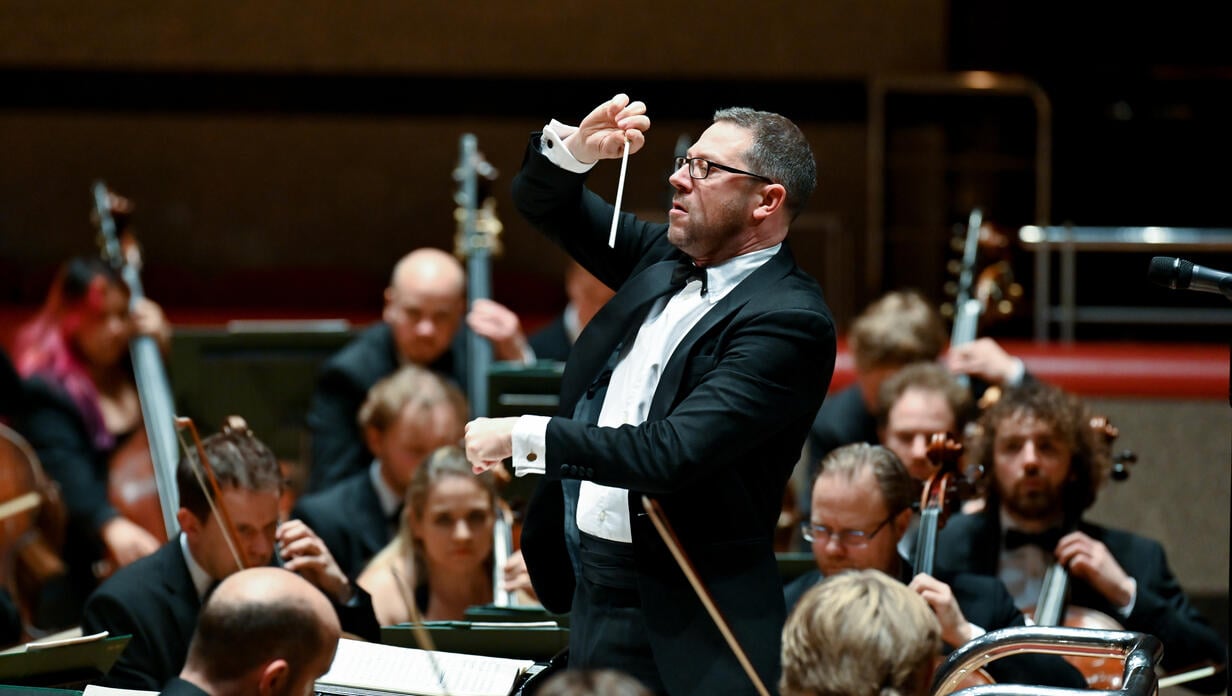
Reviewed by Richard Whitehouse Photos (c) BBC / Mark Allan
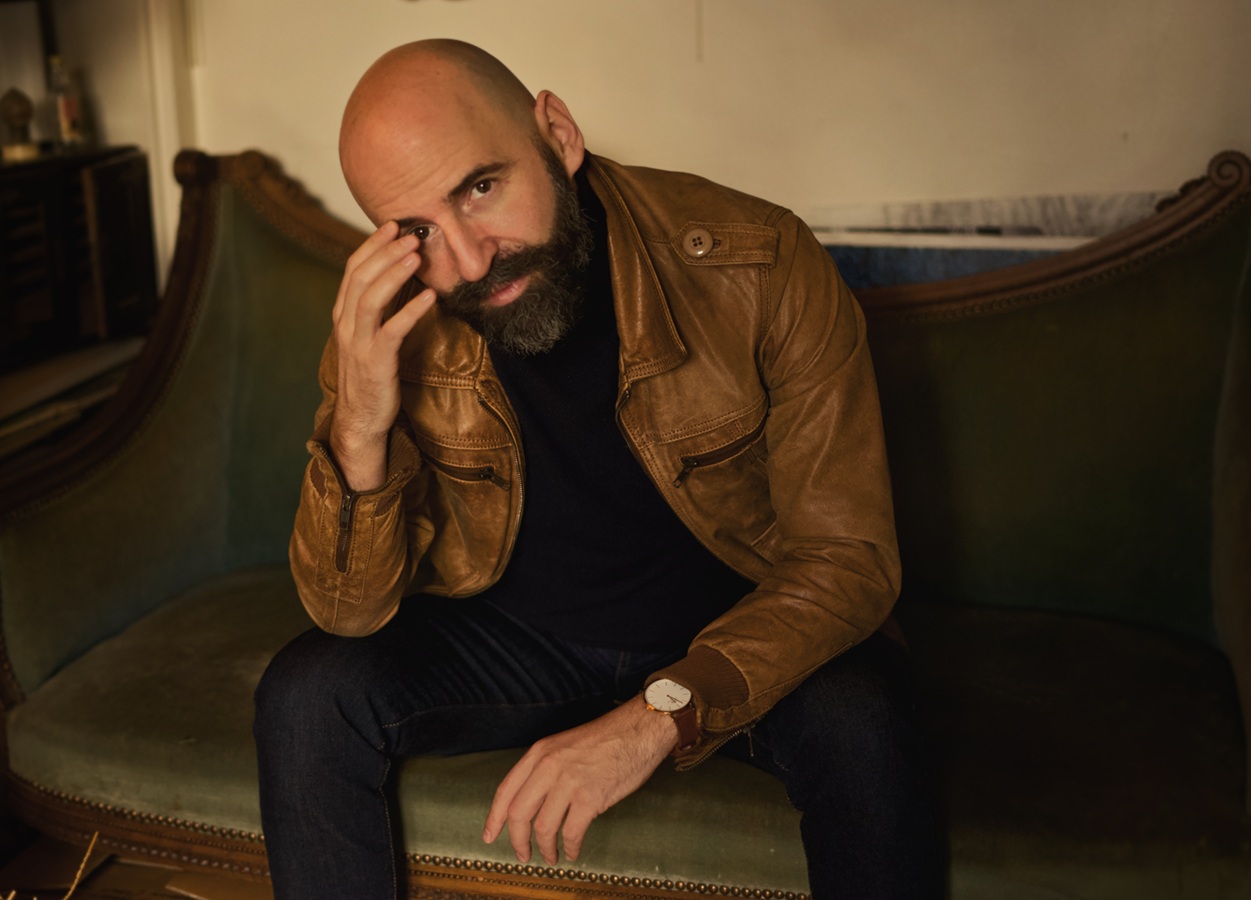
The current BBC Proms season features several high-profile premieres, not the least of them being tonight’s from Liverpool-born clarinettist and composer Mark Simpson, remembered at these concerts for his orchestral fanfare sparks launching 2012’s Last Night in no uncertain terms.
On one level, ZEBRA (or, 2-3-74: The Divine Invasion of Philip K. Dick) is a straightforward three-movement concerto following the customary formal trajectory. No work that draws its inspiration from one of Sci-Fi’s most distinctive authors could be deemed predictable and so it proved with this musical representation of an epiphany which, experienced in his mid-40s, pervaded his thinking until his untimely death. Whether or not possessing divine overtones, it duly provided an imaginative context for the present work as it unfolds from a combative and even assaultive opening movement, through a mostly ruminative yet sometimes restive elegy, into a finale whose rapidly accruing energy surges towards an apotheosis of theatrical overkill – the ‘Zebra’ of the title as demonstrative as it remained elusive a presence during Dick’s life.
Music whose virtuosity summoned an orchestral response to match – the BBC Philharmonic Orchestra responding with alacrity to Simpson’s often febrile textures and translucent sonorities under the assured guidance of Anja Bihlmaier. Ultimately, of course, this was Sean Shibe’s show – his magnetic presence and mastery of electric guitar making it a notable addition to a genre still lacking in worthwhile contributions. His encore of a dreamily disembodied soundscape might even have been paying oblique homage to the great, happily not so late Robert Fripp.
On another level, Simpson’s concerto chimed ideally with the likely concept of this concert. One that commenced with an unexceptionally fine account of Richard Strauss’s Tod und Verklärung, Bihlmaier characterizing its more inward episodes with affecting poignancy as compensated for a lack of implacability in its early stages or a slightly underwhelming affirmation toward its close. Rarely in doubt was the direction in which this composer’s metaphysical musings were headed, even if the outcome was a performance no more than the sum of its best parts.
Berlioz pursued a rather less elevated ‘death and transfiguration’ in his Symphonie fantastique, but an approach with which Bihlmaier seemed more fully in accord. The lengthy introduction of Rêveries – Passions was eloquently delineated, and if the main portion of this movement (without exposition repeat) was overly self-contained, it elided naturally into Un bal with its ingratiating waltz offset by passages of despondency and elation. The highlight was a Scène aux champs which unfolded seamlessly from its plangent cor anglais solo, through mounting agitation, near catastrophe then uneasy resignation, to its mesmeric ending made more so by undulating timpani chords. After this, Marche au supplice (with first-half repeat) built with ominous tread to a climax almost graphic in its depiction of the ‘hero’ condemned to death.
An outburst of applause suggested many had not anticipated the orgy to come, but Bihlmaier responded with a Songe d’une nuit du Sabbat that, if lacking the ultimate drama, set the seal on an engaging performance with the BBC Philharmonic at something like its collective best.
You can listen back to this Prom concert on BBC Sounds until Sunday 12 October.