
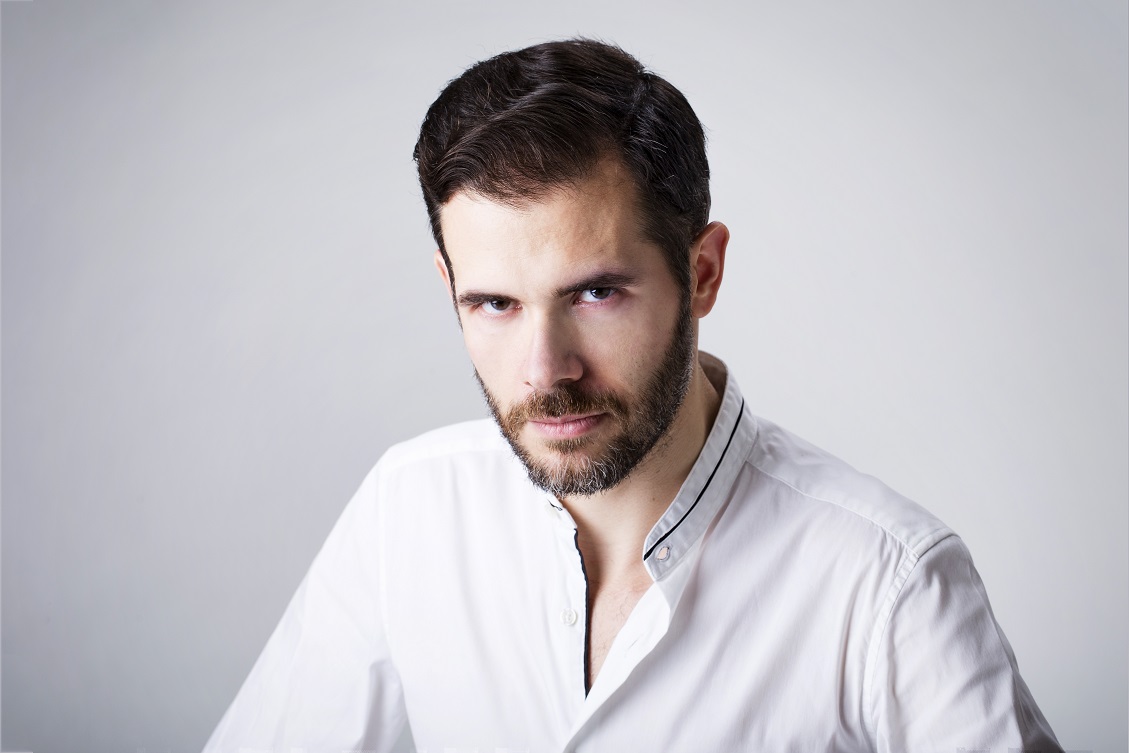
by Ben Hogwood pictures (c) Ribaltaluce Studio (Francesco Cilluffo); Pádraig Grant (rehearsals)
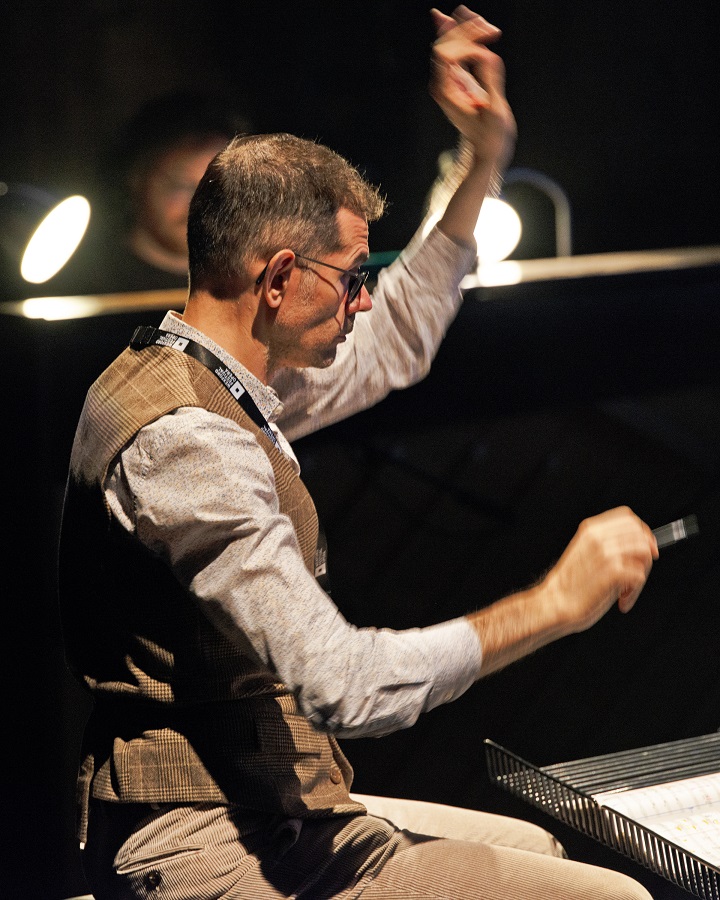
Arcana has the pleasure of an audience with conductor Francesco Cilluffo, in his third year as Principal Guest Conductor at Wexford Festival Opera. Previous outings have led to encounters with Alfredo Catalani’s Edmea (2021) and Fromental Halévy’s La tempesta (2022), both Italian operas with Shakespearean connections. This year, however, the action shifts to the coast of Florida, for a production of Frederick Delius‘s rarely heard opera The Magic Fountain.
As we talk, it is clear Cilluffo is excited and deeply passionate about communicating this little-known work to a wider audience, from his own unique position. “I’m a very unusual Italian conductor!” he says. “Alongside the staple repertoire one expects from an Italian conductor, I’ve always had a great curiosity about less performed repertoire. My musical upbringing was a mixture, because I grew up in Italy, but lived and studied in London for many years, and worked a fair amount of time in English speaking countries. I remember the first time I was exposed to Delius was when I heard The Walk to the Paradise Garden, in a Barbirolli recording. I thought there something very soothing about the music, but at the same time I could feel there were more layers. It made me very interested to know more and I learned it was from his opera A Village Romeo & Juliet, and gradually about Delius.
As I said I have an unusual profile, and to prove that I can say that The Magic Fountain is already better known than the only Delius opera I have already performed, which is Margot la Rouge, which I did in Opera Holland Park as part of a double bill (with Puccini’s Le Villi) two years ago. That is completely unknown but is his fourth opera, so not an early attempt. It’s a weird piece, because it is in French, and there are no other versions in any other language because it was written for a competition, for the famous Verismo opera competition that was in Italy, and was won by Leoncavallo’s Cavalleria Rusticana. Delius forced himself to enter it, because if you think of Delius, you don’t necessarily think about life and blood, or drama. Because I’ve conducted it now I can say it is probably the least interesting of his operas, because apart from his craft in writing for the orchestra, it sounds like something he felt he had to do, and it was not successful. So I arrived at The Magic Fountain knowing a lot about Delius. In the years coming up to this performance, I have always felt a particular connection with the music. It is gorgeous music, very personal, and clearly the music of someone with a very interesting and difficult life. All of that gets into the notes!”
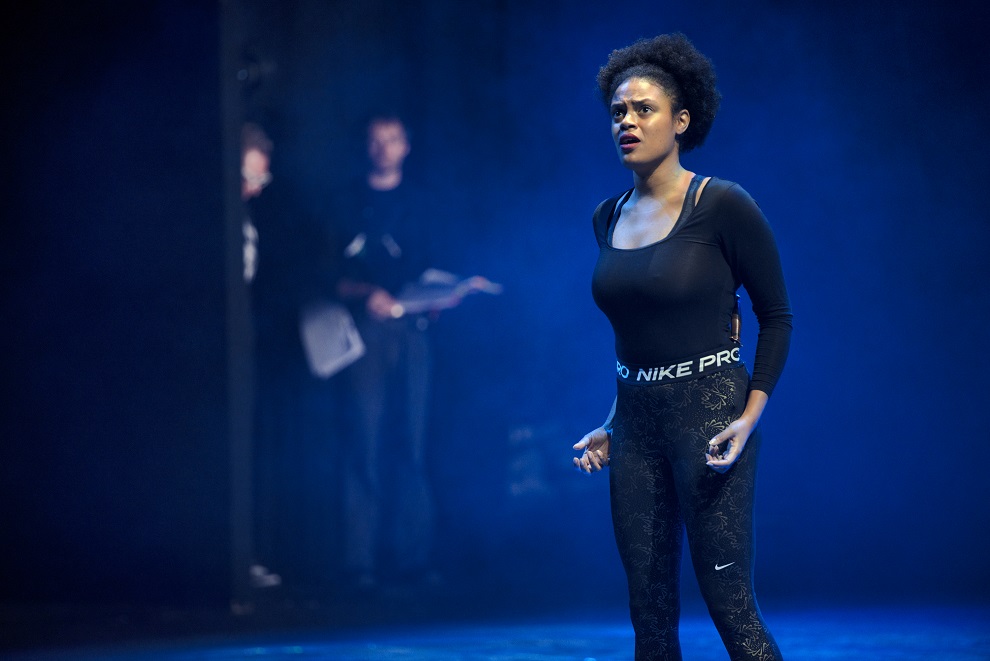
The plot has strong autobiographical elements that Cilluffo recognises. “It’s not just an isolated case, because all the Delius operas deal with a similar situation”, he says. “You could say the same thing about Benjamin Britten’s operas. Delius has different worlds, backgrounds, countries and social backgrounds, different worlds that collide through love. We can read a lot of autobiographical meaning here, starting with the name of the main lead, Solano. We know that one of the many crazy things that Delius did was manage the orange plantation in Florida, called Solana Grove, and while there is no proof, we know when he was there he probably had a love child with one of the locals. There is also a letter from Delius planning an operatic trilogy about outcasts. In a way he did, because if you think of his three main operas, The Magic Fountain has the native Americans and the clashes between their culture and the conquistadors. Then his opera Koanga is a clash between slaves and the owner of a plantation, and in a way A Village Romeo & Juliet is about, again, innocence versus society, but again there is the strong character of the Traveller, who is central to the plot.”
Like Britten, the connection runs deep. “Delius probably felt some connection with the outcast, for the main reason that he was a man without a motherland. In my experience a lot of British people don’t really see Delius as a British composer. His DNA starts in North Europe, then most of his early life was in Bradford, but then he moved everywhere! Apparently he didn’t master British language as flawlessly as one would expect, because he was writing this weird German with a hint of Norwegian, because of his relationship with Grieg. I am aware of a bit of a Delius renaissance, because I’ve seen a lot of programming of his stuff. I’m very glad, because I think he stands in a category of his own.”
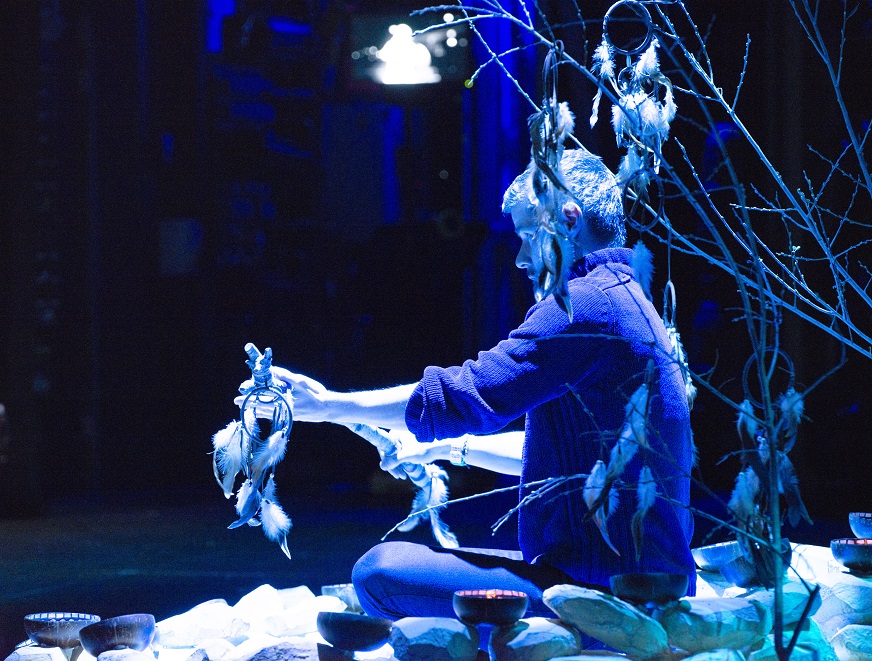
Cilluffo remembers fellow countryman, the critic Paolo Isotta, sharing this view. “He was a very old school music critic, who was very controversial in his taste, but I remember he kept saying he thought Delius was one of the most interesting orchestral composers of the 20th century. That’s quite a statement, and it clicked in my thinking – I thought there must be a grain of truth there. So I was very glad to spend a lot of time learning and studying his music.”
One of Delius’ strongest characteristics is an ability to create vivid pictures in the mind of his listener, which carries through to The Magic Fountain. Yet Cilluffo goes further. “I think so, but descriptive music is just the surface. There’s a veneer of that, but what really stands out is an incredibly physical and sexual drive in the music, a sensuality needs to be embraced in a very unapologetic way.”
He also considers how the quality of the performance is particularly important in Delius’s music. “I think Beethoven and Puccini can survive, but for some composers a bad performance can harm them. I don’t mean technical, of course, but I mean when the music is not done in a way that does it justice or bring through the many layers of the music. Some composers can be doomed by that, and I think that’s the case with Delius. As much as Sir Thomas Beecham was an incredible champion of his music, and was an amazing conductor, I still feel to this day he gave the idea that this is lovely countryside, beautiful English music. As gorgeous as that can be, people can say after five minutes, “I’m done with your beautiful English idyll, there’s nothing else. Only by starting with the Delius biography, and reading his letters, which I’ve done, and knowing about the culture of Paris and Northern Europe at the start of the 20th century, then you start to see more. You see that why this person connected much more with expressionist painters and writers than any other – because there’s an incredibly violent and sensual layer in the music there. You just need to bring it up!”
There are interpretative dangers for conductors taking on Delius’s music. “The way it’s written – and we know that Delius was a self-taught musician – can lend itself to misinterpretation. If we talk about historical performers, I think Sir John Barbirolli understood him better, despite the fact that Beecham was the great champion of his music. We also have to remember that Delius never heard most of his music in his lifetime. He never sat through a performance or even the read through of The Magic Fountain. I don’t say to suggest that he would have changed anything, but I think there is an element of frustration and anger inside, of knowing he was writing this amazing music, but nobody wanted to put it on. That somehow creeps into the writing, especially towards the end.”
His health – and sexual health – also played a part. “We know that his syphilis was such a constant in his life. His relationship with an illness that was inevitably linked with sexual freedom was against his very strict upbringing, with a Protestant father. If we put on one side his friendships with Munch and Gauguin, and writers like Strindberg, there is very little room left for beautiful, idyllic, ‘make you feel good’ music.”
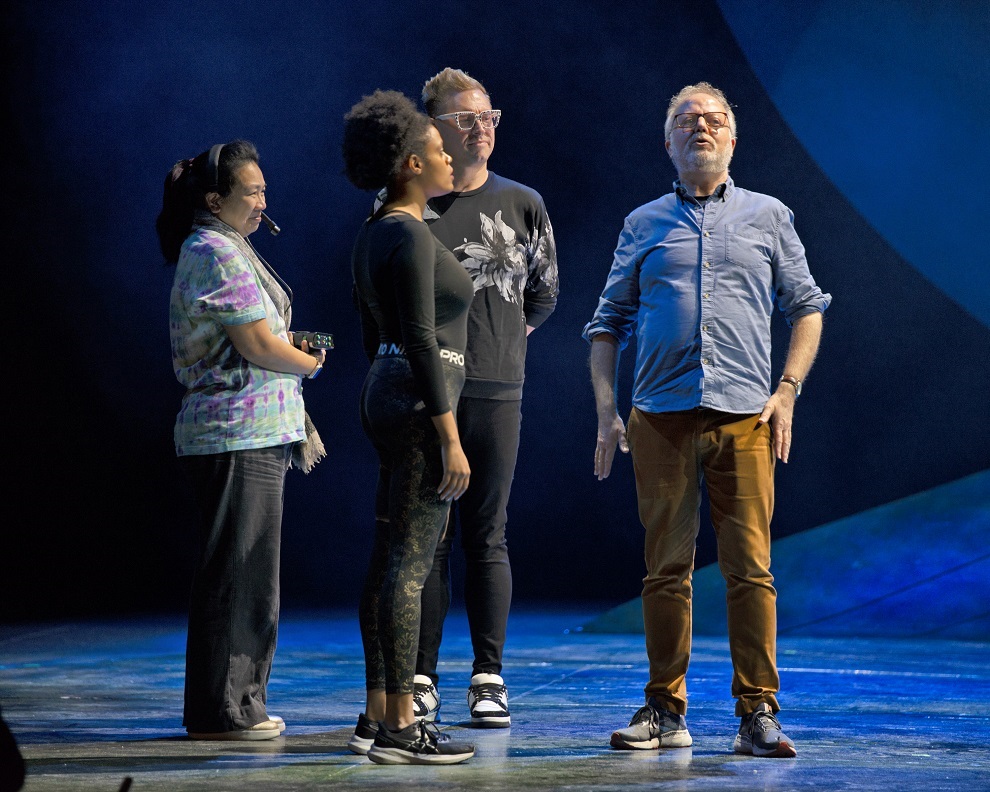
For this production of The Magic Fountain, Cilluffo is drawing on previous creative relationships. “We are very much on the same level with the director, Christopher Luscombe, as we already worked together at Grange Opera on Tosca together. We have one recording of The Magic Fountain to refer to, which is already one more than we would normally have for Wexford style operas. As good a reference as that recording is, we feel we are going in completely the opposite direction. The recording sounds too beautiful, too even, and this is an opera with bursts of passion and conflict. There is also something very courageous about this opera, where someone who is so clearly middle class wanted to put on stage people who are victims of the very same system of which Delius is part. Maybe that’s also one of the reasons why people didn’t go out of their way to put on operas like Koanga or The Magic Fountain, because it was uncomfortable. With Koanga, we are talking about decades before Porgy and Bess could be considered as an opera to put on the stage. All this is part of what we have in mind in bringing this work back to life.”
When conducting Delius, what does Cilluffo consider to be the principal challenges? “There are two sides to this answer”, he says. “One is that as an opera composer, Delius always thought of the orchestra first. The orchestra is the colour that brings out the drama, contrary to a lot of opera where the drama is always from the voice, and enhanced by the orchestral palette. You also have to keep in mind that he never heard it, and – I’m going to use a very bad word here – he never ‘workshopped’ it. Nobody told him that if you want to have three horns blasting out when a soprano is singing in the middle register, you might want to consider lowering the dynamics here and there. But that’s the work we do, and where my background as a composer comes in very useful. The technical challenge is to adjust the work so that the orchestra doesn’t become the only character.”
As to the other side, Cilluffo says, “The one composer that keeps coming up as a reference when we speak with Chris about the opera is Puccini, which you would imagine is as far as possible from this world. However he isn’t far, because Puccini is another one who suffered, especially in the past decades, as being labelled as just one thing, an Italian composer of desperate love. Puccini was a very troubled and dark soul and was in contact with the same world at the same time – Paris and Northern Europe, of the beginning of 20th century. You know, Delius used to go and attend autopsies in the morgue in Paris. Part of that goes into Margot La Rouge, which is set on the outskirts of Paris and is a fight between prostitutes and dealers. I’m bringing this up because that’s something we read about in the novels of Émile Zola, like Thérèse Raquin, and that’s the same world Puccini was fascinated by, as in one of the operas of Il Trittico – Il Tabarro. I think both composers, as different as they were, were triggered by the incredible war in Paris for artists at the beginning of 20th century.”
Coincidentally, Francesco’s diary for 2025 has been dominated by two composers – Puccini and Delius, heightening the levels of interest in linking them. “What really stood out – and finally made Puccini be considered a proper great composer – was the orchestra, and how the orchestra conveys, in a post-Wagnerian but personal way, what’s going on, the psychology, or what we’re really talking about. It’s always with the lesser known operas where it is easier to see, and I think a great underrated opera of Puccini in La Rondine. You could say it is a lighter version of La Traviata, but if you listen to the music, and the duet at the end of the opera, it’s about the end of a world of certainties, of the Austo-Hungarian Empire. It’s interesting because you read his letters, and Puccini writes, “I want La Rondine to be my Der Rosenkavalier”. That’s why I always insist with younger colleagues that you have to study what’s in between the notes as well studying the notes, because by reading these things, words open up to you about how to actually make it work apart from the technical side. Of course Delius was a very different experience, because Puccini was one of the most famous and richest composers of his time, while Delius had to sell his Gauguin painting towards the end of his life because he just couldn’t make money – and of course he was becoming blind as well.”
Yet the similarity of what they experienced persists. “I feel they were both in touch with this incredible age, where we cannot even start to feel what it was like to be in the Paris at the beginning of 20 century, with all the contradictions, the violence, and their approach towards love, sexuality and wars – and, up to a certain point, the approach to different and far away cultures. Puccini treated it in a very normal way of his time, with Madama Butterfly and Turandot using different cultures as a background for a story that was totally Western European. In the case of Delius, he actually went to the places, and dealt with rather less comfortable situations. As part of my background research I have been reading a book by Claude Levi Strauss, the French anthropologist. One of his books, Tristes Tropiques, talks about his work in South America, and how that changed the perception of different culture and how we actually go from an anthropological point of view, at that time, to interpret things according to our own system of beliefs. He talks of how not to do that.”
Turning to Wexford, the 2025 incarnation of the festival looks set to be a colourful one. “I started going to Wexford in 2015”, recalls Cilluffo, “and my first experience was a Mascagni opera, Guglielmo Ratcliff. Funnily enough, one of the three operas that year was Koanga by Delius! It’s funny after ten years I’m now the one conducting the Delius, but that is one of many reasons why I keep coming back and I was very happy to be nominated principal conductor in 2022. It’s the one moment of the year where I know I’m going back to a place where music and studying matter. As a guest conductor I travel all over the world, and most of the time it is with operas that are well known. It is very much a traveller’s life, but sometimes you do feel you are just one wheel of a big machine. I always think that in Wexford, the real core of Wexford is an act of love, because you take some less fortunate operas, that for some reason have been forgotten. Some of them, when they were premiered, were huge success and were for a long time but then suddenly disappeared. I think Wexford reconnects you with the very reason you want to do this, which is to make a difference, to really live a month in a work of art that has been rarely heard, and to make a case for it. I cannot lie – not all the operas are going to be blockbusters – but I’m not sure that’s the point. It’s a great moment to reflect and to connect with this repertoire. I always look forward to this every year, it is a privilege to think I am going to spend a month with Delius, and with this work. I’m already fascinated, and I haven’t done the first rehearsal yet!”
The location is also a draw. “Wexford is a very Delius-like festival, the coming together of different countries and cultures in one space, and the nature there is so outstanding. Most of us go from one city to another, but suddenly here you are, with the Irish Sea in front of you, and you are far away from the closest big city, Dublin, which is two hours north. It is a very Delius-esque festival, and in fact this is the third Delius opera they have done in under 20 years – with A Village Romeo & Juliet, Koanga and now this. I do have to say personally, however, that I think Delius’ operatic masterpiece is Fennimore and Gerda. I hope one day to that, it’s a one-act opera so has to be part of a double. It deals with so much material of his life, art and life in Northern Europe, Scandinavia. It’s the closest he got, I think, to writing Pelléas et Mélisande.”
We may hear more of that in time, of course – but for now it is clear anyone attending The Magic Fountain will be treated to a fascinating work by a composer whose creative wealth and originality is finally being transmitted to the stage.
The Magic Fountain runs at the O’Reilly Theatre, National Opera House, Wexford, on 19, 23, 25 and 31 October. For more information and tickets, visit the Wexford Festival Opera website
Published post no.2,684 – Saturday 11 October 2025



 Arcana.fm