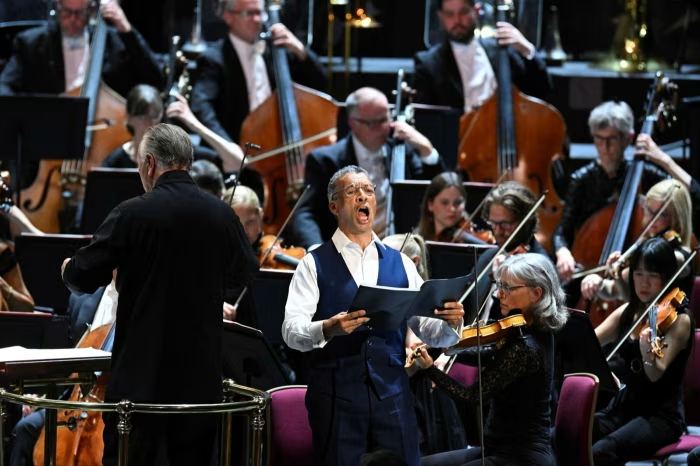
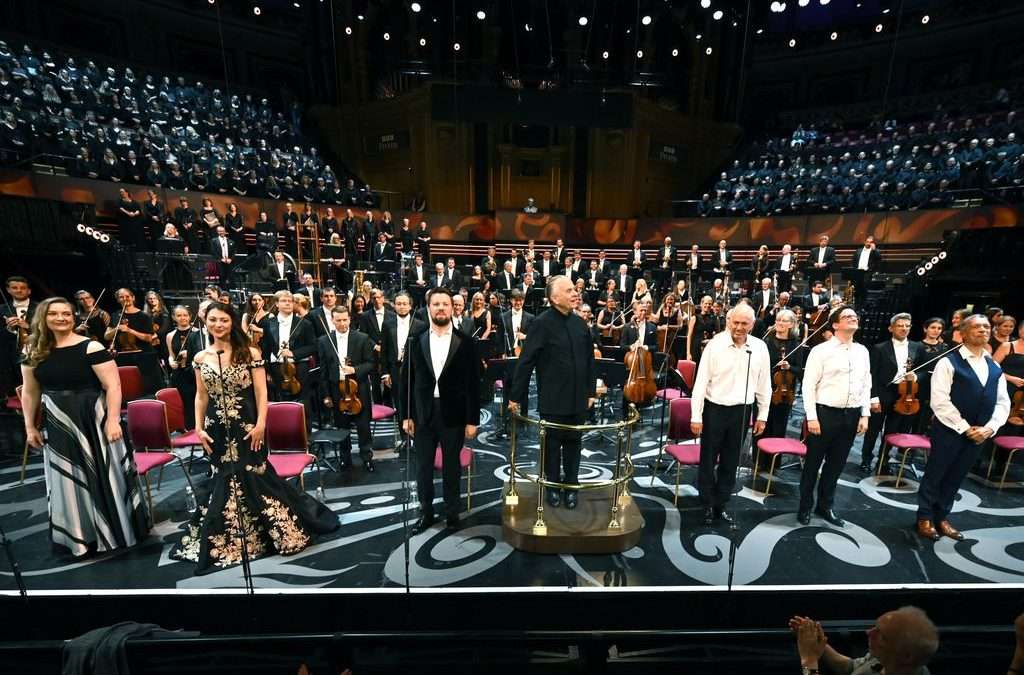
In concert – Estonian Philharmonic Chamber Choir / Tõnu Kaljuste @ BBC Proms: Arvo Pärt at 90

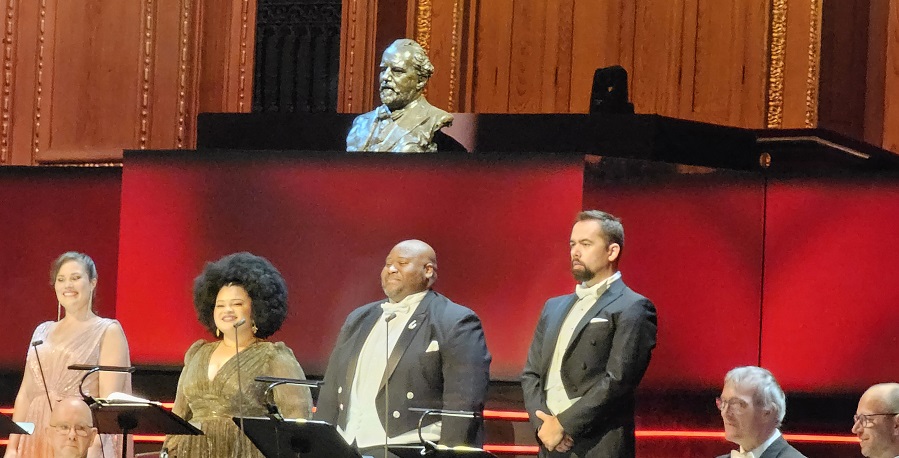
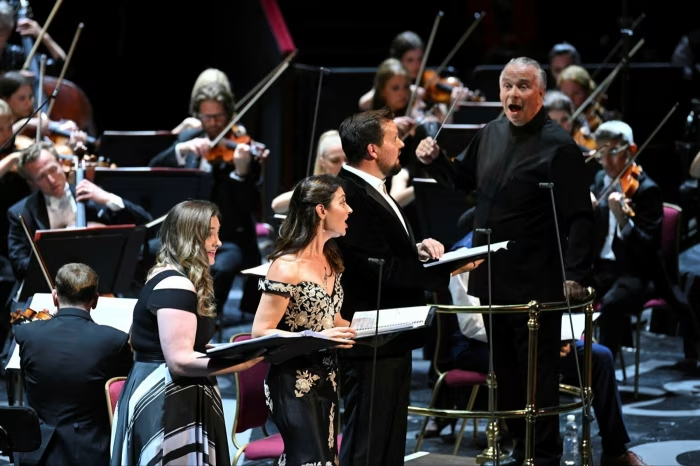
Annika Lõhmus, Yena Choi (sopranos), Toomas Tohert (tenor), Geir Luht (bass), Estonian Philharmonic Chamber Choir, Kadri Toomoja (organ) / Tõnu Kaljuste

Arvo Pärt Da pacem Domine (2004/6); Veni creator (2006); Magnificat (1989); The Deer’s Cry (2007); Für Jan van Eyck (2020) (UK premiere)
Galina Grigorjeva Svyatki – ‘Spring is Coming’ (2004)
Rachmaninov All Night Vigil (Vespers) Op.37 (1915): Slava v vyshnikh Bogu; Bogoroditse Devo
J.S. Bach Motet: Ich lasse dich nicht, BWV Anh.159 (1713)
Arvo Pärt Peace upon you, Jerusalem (2002); De profundis (1980)
Tormis Curse upon Iron (1972, rev. 1991)
Arvo Pärt Vater unser (2005/11); encore: Estonian Lullaby (2002)

Royal Albert Hall, London
Thursday 31 July 2025 (late night)

Reviewed by Ben Hogwood Photos (c) BBC / Chris Christodoulou

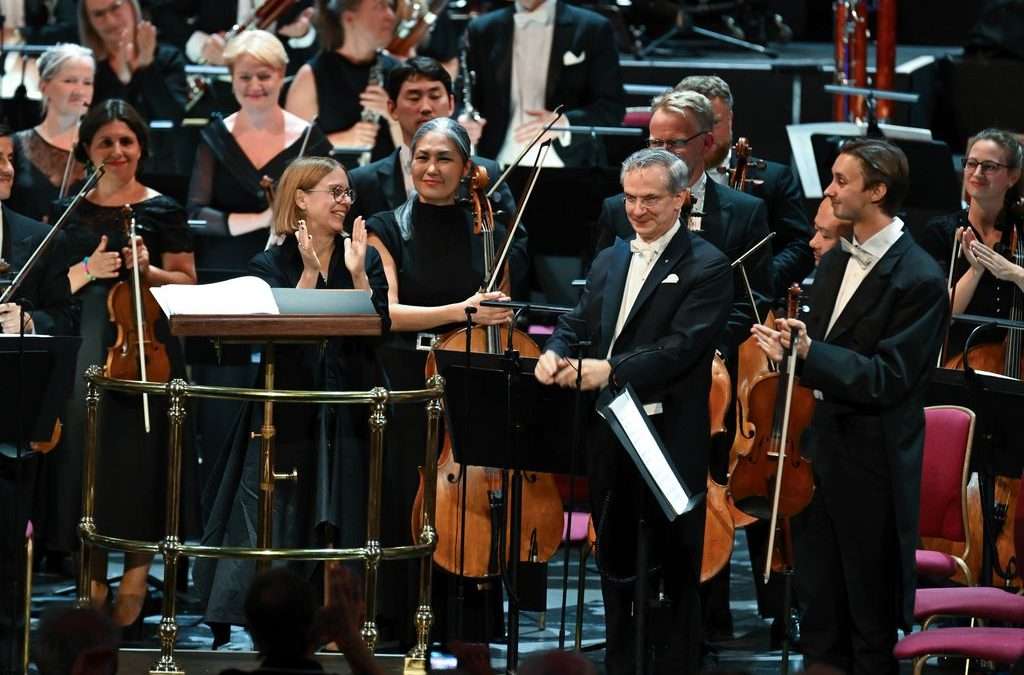
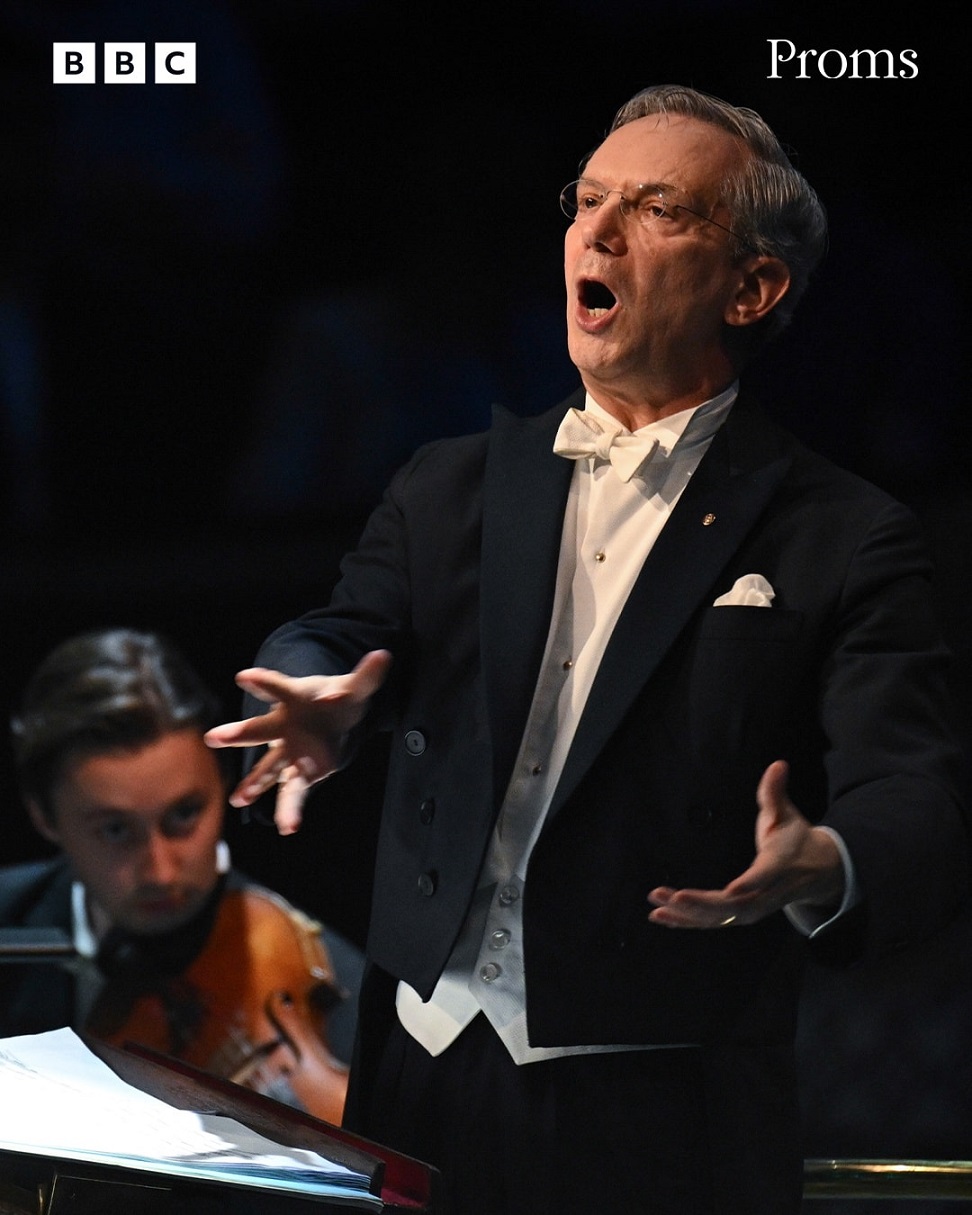
The music of Arvo Pärt is ideal for the special atmosphere of a late-night Prom. Yet this was no ordinary concert, being a celebration of the Estonian composer’s forthcoming 90th birthday in September, given by his close friend and collaborator Tõnu Kaljuste, conducting the Estonian Philharmonic Chamber Choir.

This combination of performers have been mainstays of the Pärt discography, forming a celebrated partnership with the ECM label that began with the landmark Tabula Rasa album of 1984, a cornerstone for Pärt’s critical and commercial success.

Pärt is often referred to as a ‘holy minimalist’, to which the response should be that his music is not ‘wholly minimal’. The substantial orchestral works attest to that, though here we heard much slighter but equally meaningful pieces for choir, most given unaccompanied by the 25-strong Estonian ensemble. The Proms audience were commendably quiet, leaning in to appreciate both the delicacy and crystal purity of the voices. The program was well-thought, realising the expressive potential of Pärt’s music alongside that of Bach, Rachmaninov and fellow Estonians, Veljo Tormis and Galina Grigorjeva.

The solemn Da pacem Domine and open-air Veni creator made an ideal opening couplet, the choir projecting with striking clarity rather than volume. For silence, too, plays a critical role in Pärt’s music, and Kaljuste ensured the spaces between the notes were every bit as expressive.

The Magnificat revealed its hidden power, while The Deer’s Cry was perfectly phrased, Pärt’s lilting cadences casting a spell. Für Jan Van Eyck, setting the text of the Agnus Dei, found the ideal balance between the reduced choir and Royal Albert Hall organ, where Kadri Toomoja had the ideal registration. Peace Upon You, Jerusalem, for female voices, contrasted silence with brightly voiced choral statements, while the solemn De profundis, for male voices, began from a small cell, maintaining rapt concentration while punctuated by organ and percussion.

Galina Grigorjeva’s Svyatki was a beautiful meditation, led by the heavenly voice of soprano Yena Choi, her voice with a remarkable bell-like clarity. Bach’s motet, previously attributed to his son Johann Christian, was impeccably voiced and phrased, but while the two excerpts from Rachmaninov’s All-Night Vigil were arguably less successful, they reflected a familiarity with listening to big choirs perform this music, rather than the subtleties of a chamber choir. Purity proved ample compensation for volume here.

This was emphatically not the case in Curse upon Iron, a remarkable setting from Veljo Tormis, of words from the Finnish national epic, the Kalevala, translated into Estonian. Describing the horrors of war, it sends a chill down the spine right from the primal call to arms of the shaman drum, struck by Kaljuste himself, then from the restrained urgency of the choir, like a coiled spring. While listening it was impossible not to think of the current plight of Ukraine and by extension in fear for the Baltic states, especially as Tormis’ writing was brought to a horrific climax. This was realised through the elemental power of tenor Toomas Tohert, bass Geir Luht and the choir, turning from side to side with watchful dread but then erupting in barely concealed anger. It was a remarkable performance, which will live long in the memory.

After this emotionally shattering encounter, the balm of Vater unser, Pärt’s German setting of The Lord’s Prayer for Pope Benedict, was just what was needed, its simplicity all the more affecting for what went before. As an encore, Kaljuste found just the right complement in the choir and piano version of Estonian Lullaby, its pauses near the end the musical equivalent of drooping eyelids. It was a most effective end to a special concert, Arvo Pärt’s musical essence distilled for a most appreciative audience.

You can listen back to this Prom concert on BBC Sounds until Sunday 12 October.

Click to read more about the BBC Proms

Published post no.2,608 – Sunday 27 July 2025

In concert – BBC Scottish SO / Ryan Wigglesworth @ BBC Proms: Birtwistle Earth Dances & Beethoven ‘Eroica’ Symphony

BBC Scottish Symphony Orchestra / Ryan Wigglesworth (above)

Birtwistle Earth Dances (1985-6)
Beethoven Symphony no.3 in E flat major Op.55 ‘Eroica’ (1802-4)

Royal Albert Hall, London
Monday 28 July 2025

Reviewed by Richard Whitehouse Photos (c) BBC / Mark Allan

The emphasis on Ryan Wigglesworth’s activities may have changed during recent years, but this is certainly no hardship when his conducting of so broad a repertoire is as convincing as in his brace of concerts from this year’s Proms with the BBC Scottish Symphony Orchestra.

Performed three times at the Proms during its first decade of existence, Sir Harrison Birtwistle’s Earth Dances tonight reappeared after 31 years. Much may have changed over that time (not least the passing of the composer), though this piece remains a sure highpoint of his output as of British music from the period. Premiered by the late Peter Eötvös before being taken up by Christoph von Dohnányi, Peter Boulez and Simon Rattle, it has now found an ideal advocate in Wigglesworth who surely gets to the heart of this particular matter like no-one before him.

Essentially this is about finding a balance between the facets of its title – those often densely arrayed yet always sharply differentiated strata of the orchestral texture, allied to a rhythmic fluidity which keeps the music moving forward even during its most intricate passages. Not an easy task such as previous exponents have conveyed with varying degrees of success, but Wigglesworth had the work’s measure from the beginning. Rather than a set of more or less complex episodes that follow on sequentially, what came across was a series of interrelated layers fused in an audible process of continual variation – one, moreover, in constant motion to a point at which it did not so much end as disperse into silence. Almost four decades after its premiere, Earth Dances has now emerged as that multi-faceted masterpiece it always was.

It likely took at least as long for the Eroica to be rendered, rather than merely recognized, as such – which could be a factor with their being juxtaposed in the same concert. Whatever the case, it made for judicious programming with Wigglesworth and the BBCSSO rising to their comparable challenges. First performed at these concerts 129 years ago then subsequently in almost every season, Beethoven’s Third Symphony is a testing assignment conceptually and interpretatively – as was not shirked by this involving though often understated performance.

An understatement evident in the opening Allegro, with its subtly modified exposition repeat, the more involving for rendering this movement as an unbroken while cumulative continuity through to an affirmative if not wantonly triumphal coda. Even finer was the Marcia funèbre, its steady undertow flexible enough to accommodate the lilting counter-theme as well as the intensifying fugato at its centre on route to a conclusion the more affecting for its emotional deftness. Nor was this latter quality absent from a Scherzo whose shimmering outer sections found ideal contrast in the trio, its incisive part-writing for three horns buoyantly articulated. The Finale was all of a piece with what went before, its variations on the ‘Prometheus’ theme enticingly characterized but with a keen underlying momentum toward the joyous apotheosis. While no single account of so trail-blazing a work could possibly convey all the answers, this was impressive in its formal focus and expressive balance as saw the symphony whole. Make no mistake, Ryan Wigglesworth now numbers among the finest conductors of his generation.

You can listen back to this Prom concert on BBC Sounds until Sunday 12 October – or listen to recommended recordings of the two works from the Cleveland Orchestra on Tidal here

Click on the artist names to read more about the BBC Scottish Symphony Orchestra and their chief conductor Ryan Wigglesworth. Click also for more on the BBC Proms

Published post no.2,613 – Friday 1 August 2025

In appreciation – Amelia Freedman

by Ben Hogwood Photo (c) The Nash Ensemble

Earlier this week we learned of the sad news of the death of Amelia Freedman. In a post on their website, the Nash Ensemble describe Amelia as their “creator and guiding light”, with “an extraordinary gift for creative programming that was appealing as well as broadening musical horizons”. In their obituary of Amelia, the Daily Telegraph described her as “the most influential British classical music impresario of the late 20th century”.

Her work bore fruit both in the concert hall, through the Nash Ensemble’s long relationship with Wigmore Hall that began in 1967, and a long recording career that is noted for its inventiveness and high performing standards.

The discography below is just a hint of what the Nash Ensemble have achieved on record, including a work by Amelia’s good friend, the late Sir Harrison Birtwistle, as well as the String Trio by David Matthews, which he dedicated to Freedman. Also included are a recent recording of Debussy’s Sonata for Flute, Viola and Harp, a pioneering recording of the attractive Nonet by Sir Arnold Bax, and the vibrant Piano Quartet in B flat major by Saint-Saëns:

Published post no.2,588 – Monday 7 July 2025

On Record – Gwenno: Utopia (Heavenly Recordings)

by Ben Hogwood

What’s the story?

There is a strong feeling around Utopia that this is the record Gwenno has been leading towards in her previous three solo albums.

As if to emphasise the fact she has recorded much of the album in English, a departure from the Cornish and Welsh songs she has been writing to date – as though she needs to communicate her message and feelings more immediately and with greater bandwith.

She regards her first three albums as ‘childhood records’, while Utopia is set to capture ‘a time of self-determination and experimentation’.

What’s the music like?

In a subtle way, Gwenno’s music on Utopia is deeply expressive. As always, her winsome voice is a big draw, but here the sense is that she is going emotionally deeper. War is a great example, a darker song with a lower vocal that leaves a lasting effect. 73, too, gets more emotional, while St Ives New School feels like a meditation on motherhood, with a coda of real substance.

Dancing On Volcanoes is a great pop single, while Ghost Of You is beautifully song. The Devil may be serious and relatively dark in lyrical content but again it has a dreamy side. Y Gath, a collaboration with Cate Le Bon and H. Hawkline, feels multilayered, a song to return to for full discovery. Finally Hireth is a spectral beauty, its cascading guitars complementing another excellent vocal.

Does it all work?

It does – the more personal side reaping rewards in longer songs that are as expressive as they are colourful.

Is it recommended?

It is, enthusiastically. Gwenno writes great pop songs, for sure, and has the voice to communicate them well, but intensive listening ensures the compositions are bound together, both in message and music. Gwenno’s best album yet.

For fans of… Cocteau Twins, Cate Le Bon, Gruff Rhys, Wolf Alice

Listen / Buy

Published post no.2,604 – Wednesday 30 July 2025

On Record – Sebastian Reynolds: New Beginnings (PinDrop)

by Ben Hogwood

What’s the story?

Oxford producer Sebastian Reynolds follows up his September 2023 debut album, Canary, with this set of reworks bringing together source material from collaborations with his previous bands, namely Flights Of Helios and The Epstein.

The collaborative album also welcomes Irish artists Bróna McVittie, Rezo and The Mining Co. as well as West Country group Will Lawton & The Alchemists and New York duo Kritters. The album complements his atmospheric writing with Neon Dance, and his self-termed “athletics themed bangers”, produced with Dubwiser and darqwud.

What’s the music like?

The heat haze of summer courses through Reynolds’ music. He is a gifted and versatile writer, bringing a wide range of beats and textures to make an album that runs fluently.

The songwriting is on point, too – IYSCM especially, a reimagining of If You Could See Me, where breathy vocal interjections are complemented by guitarist Myles Cochran. The destination here is unmistakably poolside, with a lovely Balearic disco feel.

The warmth is a feature of the album, which unwinds with a reworking of Dubwiser’s The Jackal), a loping broken beat number with UNKLE leanings (Molotov, with Rezo), and the breezy Fossils Of The Mind, a collaboration with Will Lawton & The Alchemists. Also making its mark is the attractive indie-baggy hybrid Broken, with Bróna McVittie, and One Year To Go, a Michael Patrick Gallagher co-write with more than a hint of Andrew Weatherall. Finally Make This Our Drone removes the beats but turns everything up to 11, a richly coloured wall of sound.

Does it all work?

It does – and if anything some of the reworks later in the album could be longer, for good vibes abound in their rich melodic content.

Is it recommended?

Enthusiastically. The carefree mood created by New Beginnings is perfect for summer listening, a blissful set of sounds that cover a surprisingly large number of bases. Sebastian Reynolds is a talented producer and songwriter, who deserves to expand his audience considerably with this welcome dose of musical warmth.

For fans of… UNKLE, Ian Brown, Andrew Weatherall, Gorillaz

Listen / Buy

Published post no.2,603 – Tuesday 29 July 2025