Proms premiere – Luca Francesconi: Duende

luca-francesconi

Luca Francesconi

Leila Josefowicz (violin), BBC Symphony Orchestra / Susanna Mälkki (Prom 13)

Duration: 20 minutes

BBC iPlayer link

http://www.bbc.co.uk/iplayer/episode/p02wv00w/bbc-proms-2015-season-luca-francesconi-duende-the-dark-notes

What’s the story behind the piece?

leila-josefowicz
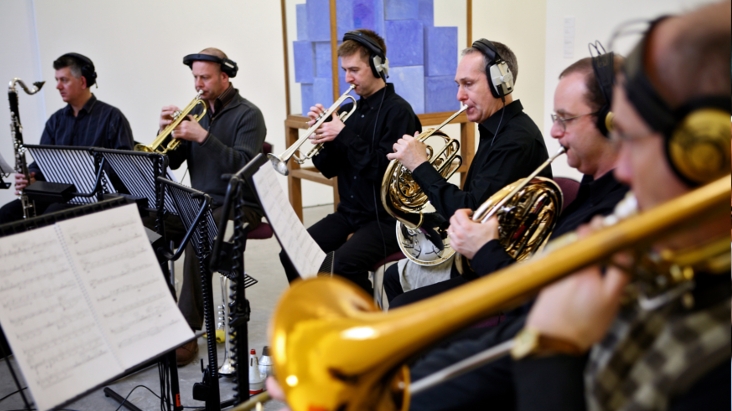
Leila Josefowicz playing Duende Photo (c) Chris Christodoulou

“Historically”,– says Luca Francesconi, “duende is the demon of flamenco. As Federico Garcìa Lorca explains, it is a subterranean force of unheard-of power that escapes rational control. To recover a primitive force in the instrument that perhaps most embodies the history of the West it is necessary to make a perilous descent into the underworld of dark notes, or a flight beyond the orbit of the earth. Which amounts to the same thing. Extremely difficult. But without duende we remain bolted to the ground.”

The work, for violin and orchestra, is a joint commission from the Swedish Radio Symphony Orchestra, the Orchestra Sinfonica Nazionale della RAI and the BBC Symphony Orchestra.

Leila Josefowicz, the violin soloist, has expanded on ‘duende’. “We acknowledged that we both have Duende, which cannot be learned…this is something we knew we could share with the world, he with his composition and me being the interpreter and musical messenger. I appreciate his incredible musical imagination, his scores bursting with colour and drama”.

Did you know?

Francesconi, born in 1956, has studied with both Karlheinz Stockhausen and Luciano Berio. His chamber opera Quartett, about the end of the world, was heard at the Royal Opera House in 2014.

Initial verdict

This is a striking piece, right from the start, where the violin begins with some feather light string crossing at a very high pitch, seemingly evoking night time insects or other sounds. There are some incredibly taxing passages for the instrument early on, which Josefowicz is completely equal to.

There is some frenetic activity both from violin and orchestra, but at around 7 minutes in the violin really soars, making a rather beautiful sound easily audible even above the glinting, treble-heavy accompaniment.

Around 13’10” there is a notable gear change, the violin digging in for some seriously virtuosic and demonic passages. Then at around 17” a slow, nocturnal atmosphere asserts itself, with various whistles and clicks from the violin to long-held notes from the orchestra.

I found it a little more difficult to hold attention with the piece in the closing stages, but it is doubtful that is the fault of the composer. A second hearing will confirm!

Second hearing

tbc!

Where can I hear more?

You can watch a performance of the Piano Concerto no.2, completed in 2013, below:

Under the Surface at the Proms – John Foulds’ Three Mantras

Prom 38, 13 August 2015 – London Symphony Chorus Womens’ Voices, BBC Philharmonic Orchestra / Juanjo Mena at the Royal Albert Hall

john-foulds

John Foulds Three Mantras (1919-1930)

http://www.bbc.co.uk/events/exq5v2#b064y5hj

We definitely undervalue the BBC orchestras when the Proms take centre stage. I say that because this was one of the most colourful orchestral Proms it has been my pleasure to witness, and much of the credit for that should go to the BBC Philharmonic Orchestra, a riot of bright shades under Juanjo Mena in Messiaen’s Turangalîla-Symphony. Yet while that performance will inevitably take centre stage, it was another work that stole the show.

John Foulds has spent a long time languishing in the musical wilderness, but in the last ten years he has begun to reach a bigger audience. A good deal of thanks for this should go to conductor of the BBC Symphony Orchestra, Sakari Oramo, who recorded two discs of his orchestral works with the City of Birmingham Symphony Orchestra. They enchanted us with Foulds’ inventiveness, and most importantly his eagerness to incorporate Eastern cultures within an extremely Western art form. In this respect he was in line with Gustav Holst.

One of the finest works in this respect is the 3 Mantras, thought to be part of a massive Sanskrit opera, Avatara. Very sadly that never came to be, and 300 pages are lost from the score, but the 3 Mantras survive and make a very accomplished and unusual orchestral piece. The colours are simply beautiful, achieved through a wide variety of percussion, harps and shimmering strings, all of which Mena marshalled to show the detail of Foulds’ inventive orchestration.

It is the second piece, the Mantra of Bliss (starting at 8:13 on the link above) that is the most striking, a meditation of radiant orchestral beauty, where Foulds uses a wordless female chorus to enchanting effect. Holst had done this before, in Neptune from The Planets, but rather than that cold emptiness Foulds creates exotic warmth.

The outer two mantras are very different; the first a bustle of activity that slows for a moving slower melody; the third an almost barbaric dance that wheels out of control and wields a fearsome set of percussion at the end. This was a terrific performance from the BBC Philharmonic, showing off Foulds’ gifts to a new audience that will hopefully look to discover more of the music of this remarkable composer.

Want to hear more

You can hear a playlist from BBC Radio 3’s CD Review, where Andrew McGregor explores recordings of John Foulds’ music, by clicking here

There will be more Under the Surface features as the Proms progress, exploring lesser known pieces and composers at the festival

Proms premieres – Birmingham Contemporary Music Group

bcmg

Birmingham Contemporary Music Group

Proms premieres – Johannes Schöllhorn, Shiori Usui, Betsy Jolas and Joanna Lee
Ulrich Heinen (cello), Hilary Summers (contralto), Birmingham Contemporary Music Group / Franck Ollu (Proms Saturday Matinee 1)

BBC iPlayer link

http://www.bbc.co.uk/events/e9h9rz#b063d52d

What’s the story behind the pieces?

Four Proms premieres in one concert here, given by the ever-enterprising Birmingham Contemporary Music Group. They begin with Johannes Schöllhorn’s arrangements of three Boulez Notations, plus a transcription for ensemble of a fragment from each of the thirteen originals – one bar from each, in fact! The arrangements are Notations 2, 11 & 10, while the collage is La treizième.

Shiori Usui’s piece has an extremely macabre background, and is not for the faint-hearted! Ophiocordyceps unilateralis s.l. is a nasty little fungus – as in an infectious fungus that completely eats up the ants that are unfortunate enough to capture it. Usui was struck by an image of one in a nature magazine, and this gave her the sounds she wanted to create.

Betsy Jolas, meanwhile, says of Wanderlied in an onstage interview that “I was trying to make the listeners imagine an old woman going from town to town as a storyteller”. The old woman in this case is a cello, accompanied by the instrumental ensemble – and we are warned of a ‘surprise’ at the end.

Finally Joanna Lee’s Hammer of Solitude, for singer and ensemble. This was written with Boulez in mind, and when she looked at individual movement titles of his she was taken to writing about the poet and novelist Sylvia Plath, and her life, using text by Rory Malarkey. This is a bleak piece indeed, for Lee chooses to devote the last of the three songs to Plath’s suicide.

Did you know?

The Birmingham Contemporary Music Group has premiered over 160 works in its 27-year existence. It was born from the City of Birmingham Symphony Orchestra in 1987.

Initial verdict

Johannes Schöllhorn – Notations 2, 11 & 10; La treizième

johannes-schollhorn

An energetic set of pieces, benefiting from incredibly well drilled performances. With sharp phrases, these brief thoughts are distilled into really short paragraphs, with only the briefest period of relaxation. There is a wonderful rumble on the bass drum to finish La treizième, which is a great concept if rather difficult to follow!

Shiori Usui – Ophiocordyceps unilateralis s.l.

shiori-usui

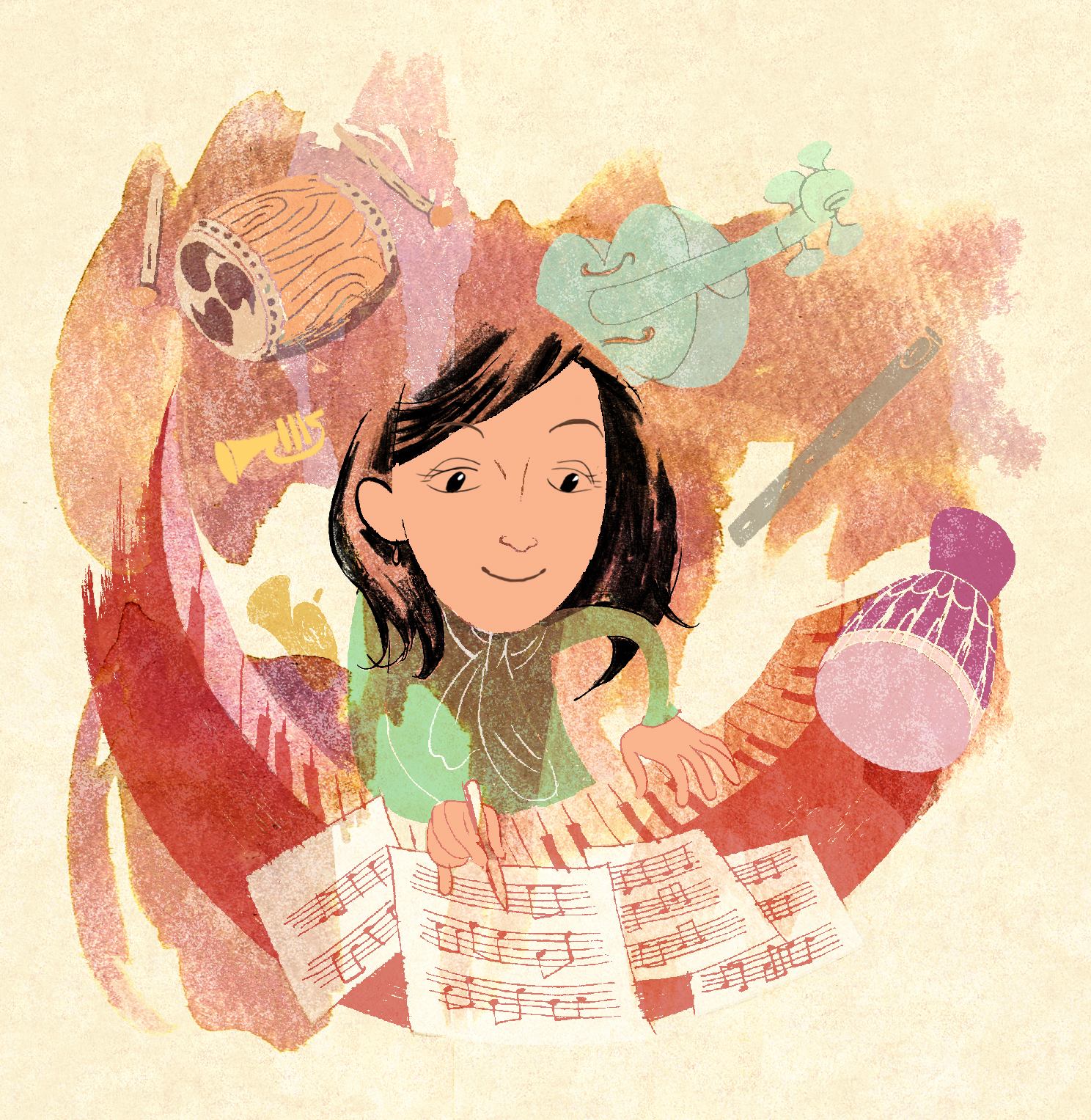
Drawing by Fumio Obata

Usui has certainly picked a grisly but rather captivating subject for a new composition, and given the scenario the music is very vivid – uncomfortably so in fact!

There is a striking, bluesy clarinet solo midway through, but, but by this time the ant appears to be giving up the ghost.

Then we hear some very ominous loud brass with a thumping bass drum, before macabre sounds signal the beginning of the end for the ant. Usui captures the forest and its clicks and murmurs with some imaginative scoring, while also conveying the really grotesque side of Mother Nature.

Betsy Jolas – Wanderlied (from 21:28)

betsy-jolas

The cello feels restless from the beginning of this piece, while the rest of the ensemble appear to be painting the picture of a wider expanse, through which the old woman is travelling.

Not surprisingly the old woman takes the lead in the conversation throughout, and is very expressive. Its tone of speech is very much in the human range

The ‘surprise’ appears to be a form of hidden track, where the audience think the music has stopped, and begin to applaud, and then find that it hasn’t.

Joanna Lee – Hammer of Solitude

joanna-lee

The first song, Hammer Alone In The House, features a very distinctive half spoken / half sung vocal from the alto, above some atmospheric orchestral colouring. The Love Song has a little more tenderness, but The Suicide is much less forgiving. It is surely very difficult to portray such a bleak and decisive moment in music, but Lee does so powerfully.

Second hearing

Tbc!

Where can I hear more?

Right here! Embedded are sound clips for each composer’s work:

Johannes Schöllhorn

Shiori Usui

Betsy Jolas

Joanna Lee

The 6Music Prom – Nils Frahm and A Winged Victory For The Sullen

Prom 27: Late Night With … BBC 6 Music: Nils Frahm and A Winged Victory For The Sullen

a-winged-victory-for-the-sullen
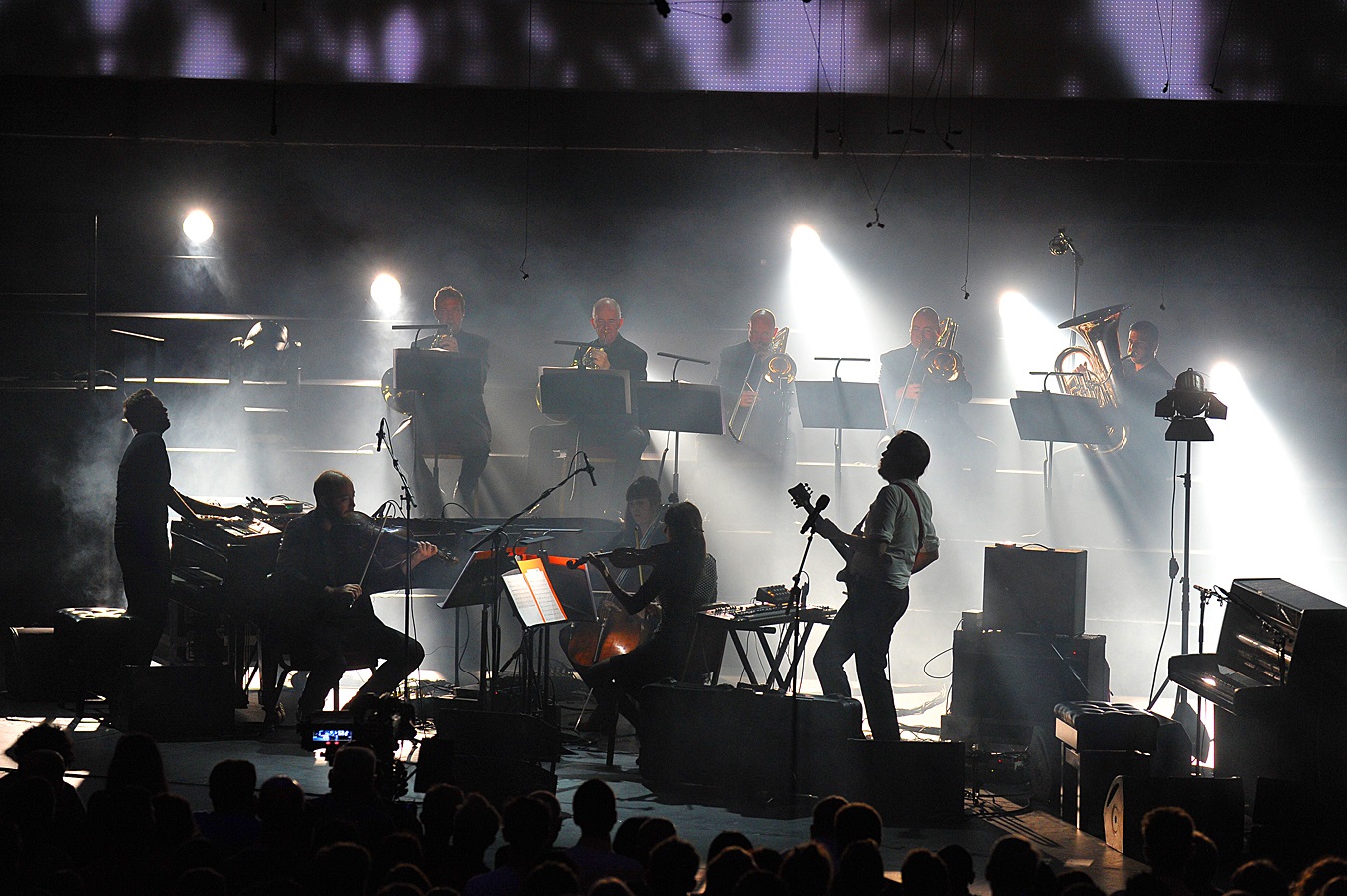
A Winged Victory For The Sullen at the 6Music Prom Picture (c) Chris Christodoulou

Watch here:

http://www.bbc.co.uk/events/empxj5#b0640mhj

The story behind the second BBC 6 Music Prom was a gratifying one, built on a desire for classical music to make itself more available. Mary Anne Hobbs was the catalyst, playing music by Nils Frahm to enthusiastic listeners worldwide. Their response encouraged her to introduce them to his Erased Tapes label mates, A Winged Victory For The Sullen, a duo comprising Dustin O’Halloran and Adam Wiltzie.

Both acts were part of an extended mix for this late night event, aided by atmospheric lighting and smoke to turn the Royal Albert Hall into an after-hours club. Into this already heady environment came A Winged Victory, playing much of their second album ATOMOS. They were joined by an unnamed string trio and London Brass, their task to provide sonorous colour and slow but far-reaching melodies. O’Halloran and Wiltzie were on keyboard duties, drawing out chord patterns and soundscapes to give the listener an airborne sensation. This was further enhanced by members of the Random Dance Company, whose chief Wayne McGregor provided the stimulus for ATOMOS. Their relaxed interpretations of the music belied the effort required to contort their limbs!

The music was expansive, like a slowly changing cloud formation, and crucially had beauty of timbre to match. From the simplest of melodic cells came music of primitive meaning, evoking memories of pop music’s ambient craze twenty years ago but without any vocal samples. Here music was stripped back to its basics, and was all the more moving for the lack of incident and chatter. The crowd was thoroughly absorbed, most stock still but some perceiving the latent energy running through the music.

In truth London Brass could have been used more, their potential to add brightness only sparingly glimpsed. The string trio were more gainfully employed, the cello particularly beautiful when raised above the textures. As their set came to an end so Nils Frahm joined the stage, the two acts uniting in an improvised piece that brought more rhythmic definition – a sign of what was to come from the German pianist.

nils-frahm
Nils Frahm at the 6Music Prom. Picture (c) Chris Christodoulou

Frahm used a team of keyboard instruments, including two ‘prepared’ pianos – that is, with keyboards, hammers and strings all modified to secure the all-important timbres required. Frahm’s music is more obviously derived from classical music, with Beethoven’s Moonlight Sonata, Chopin and Debussy all discernible influences. It has more obvious kinetic energy, moving quickly during Hammers to imply a strong beat, even before the introduction of an incredibly warm bass note to rattle the ribcage.

Frahm was a hyperactive presence, rushing urgently between his pianos and synthesizer, occasionally looping small clumps of chords in the manner of Steve Reich or even Dave Brubeck, but always intent on carrying his music forward. It was largely successful, though the introduction of two toilet brushes for the closing number felt like a gimmick.

What really carried, though, was the intense desire for discovery on the part of the audience. 6 Music had been playing classical music in the lead-up to this Prom, sensitively chosen with the pop music lover in mind, hoping to arouse curiosity – and that is exactly what this sort of Prom should be doing, bringing in people who find classical music and its terminology a daunting proposition.

It was a handsome success, Hobbs having found a way of communicating its appeal while showing how electronic and classical styles are on a fruitful collision course. We should not just be limited to Erased Tapes, though, as Warp, Glacial Movements, Bella Union and One Little Indian are just four more labels excelling in this area.

It is to be hoped that at the very least we will have a sequel. Tom Service presents a program along these lines on 6 Music this Sunday, showing how the two stations do on occasion overlap. Both have open musical policies, and in their current state show the BBC at its best, providing musical stimulation for a clearly hungry crowd.

Under the Surface at the Proms – British composers

Prom 26, 5 August 2015 – BBC National Orchestra of Wales / Tadaaki Otaka at the Royal Albert Hall

ailish-tynan-tadaaki-otaka

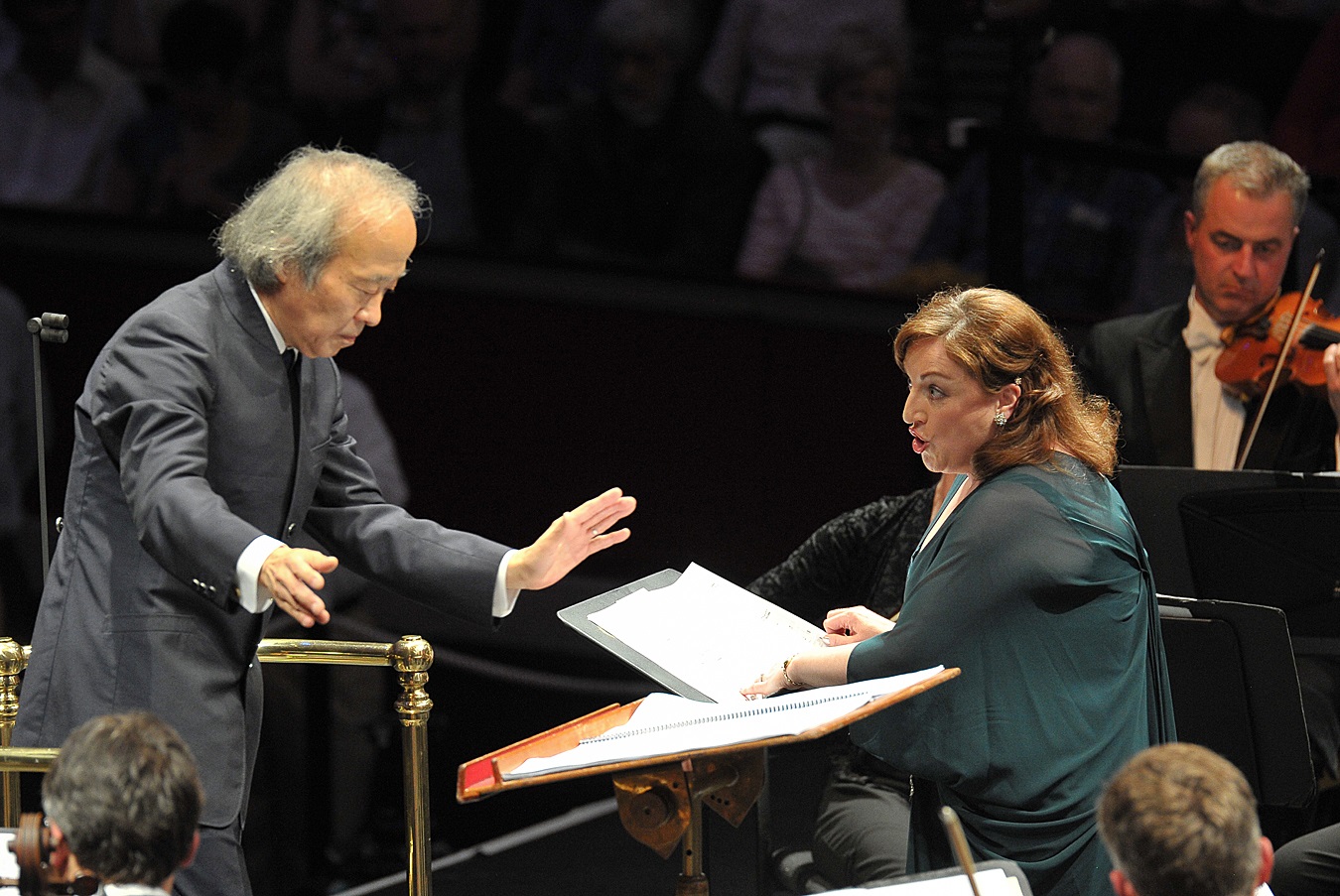
Ailish Tynan and Tadaaki Otaka performing Grace Williams’ Fairest of Stars at the BBC Proms Picture (c) Chris Christodoulou

Only the BBC Proms could come up with a night like this, a programme of partially or wholly neglected British music flattering not only the composers but the BBC National Orchestra of Wales, who had clearly invested a lot of rehearsal time.

Their greatest triumph came last, the Symphony no.2 of William Walton, written in 1957 but receiving only its fourth ever performance at the festival and its first since 1996. Walton’s First gets all the glory in his symphonic output, and understandably so – it’s bold, has strength of character, some terrific tunes and bright orchestral colours. Yet the Second deserves far more, as conductor Tadaaki Otaka showed us here:

http://www.bbc.co.uk/programmes/p02yxs45/player

Although it is a much more anxious and questioning piece it is tightly structured, its melodies unusual but somehow memorable too. The first movement tune has a steep incline to its melody but remains in the head, and certainly did so after this performance, beautifully coloured as it was with orchestral piano and glockenspiel. The second movement had softer colours but was equally worrisome, while Walton, thumbing his nose at ‘serial’ composers who had opted out of tonality, uses all twelve tones in his theme for the finale, in a tuneful sense. Here they were hammered home in orchestral unison, and the climax of the work was hugely impressive.

Earlier we heard some better known works from Walton – a bracing Spitfire Prelude and Fugue – and Elgar, his first orchestral work the Froissart Overture, played with a smile on its face.

Then it was over to do two very different Williams. Ralph Vaughan Williams completed his Concerto accademico, for violin and string orchestra, in 1925. It pays explicit homage to Bach but not in the way Stravinsky and co liked to do at the time. The composer saw this as a much more tuneful exercise, using folk-based material in the process. Listen here:

http://www.bbc.co.uk/programmes/p02yxlqh/player

Despite a good performance the piece remains a curiosity. The first movement was dogged and rather foursquare, the music pressing on rather grimly, so it was left to the second movement to bring what felt like more genuine emotion, bringing to mind the slow movement of Bach’s Brandenburg Concerto no.1 as it did so. Chloë Hanslip, the excellent soloist, was rich in tone both here and in the finale, which reverted to brisk music but in a much more accessible way this time, with a soft-hearted closing section. This was, for me, not the composer’s best.

Grace Williams, a Welsh composer who was a pupil of Vaughan Williams, is not heard much in the concert hall – but Fairest of Stars, for soprano voice and orchestra, suggested she should be. Her writing for the voice was elevated by Ailish Tynan, who looked ready to burst into song as soon as she appeared on stage. Tynan’s voice was the perfect foil for this music, soaring above the clouds brought by the orchestra, and although the words were not always abundantly clear because of the thicker scoring, very much in the Richard Strauss vein, their sentiment was. The top ‘C’ Tynan hit before the end had to be heard to be believed, the crowning glory of the concert’s first half. Listen to the piece here:

http://www.bbc.co.uk/programmes/p02yxqzy/player

The last few years have seen the Proms bring a number of major but neglected British works in from the cold – we have had music by Moeran, Alwyn, Havergal Brian and Howells to name just a few – and it is heartening to see them continuing that tradition. This night was a great success; let’s hope many more will follow.

There will be more Under the Surface features as the Proms progress, exploring lesser known pieces and composers at the festival