Proms Interview: Tansy Davies – Re-greening

tansy-davies
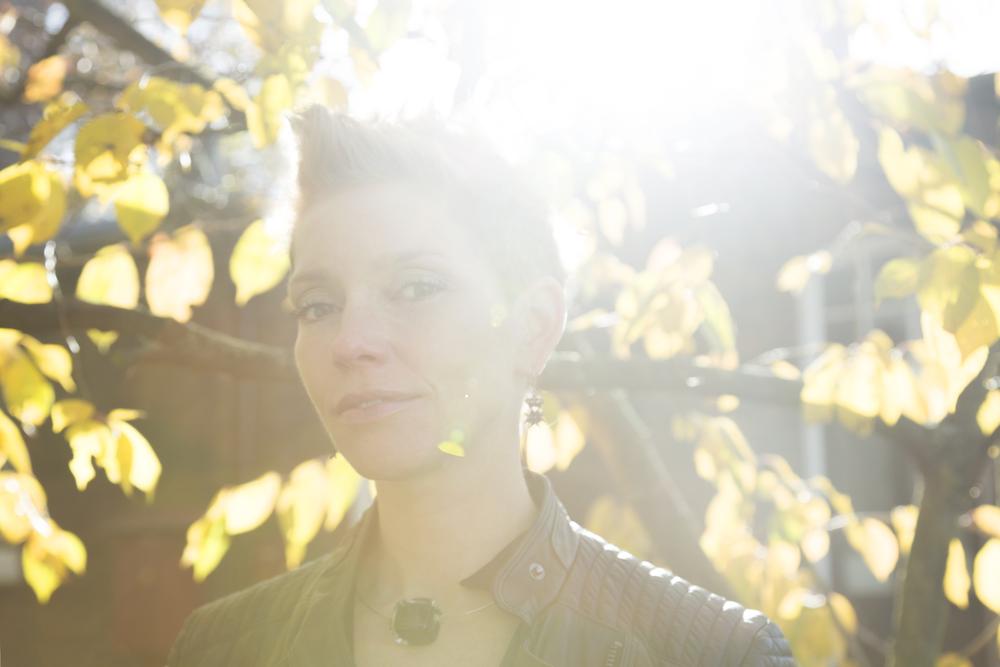
Tansy Davies Photography by Rikard Österlund

For the annual appearance of the National Youth Orchestra of Great Britain at the BBC Proms, listeners will be treated to a performance of Mahler’s farewell to life, the Symphony no.9.

Prior to this, however, they will hear a new piece of music all about bringing new life to proceedings. Re-greening was written by composer Tansy Davies as a complementary piece to the Mahler, and in a short notice and generously arranged interview with Arcana the composer gave a guide to her new work and her Proms history:

Do you remember your first encounter with the Proms?

I must have been aged around 15. I just turned up with a couple of friends, not having planned or looked at what was on. We prommed of course, and I know that the programme included Debussy’s Prélude à l’après-midi d’un faune. The atmosphere was palpable, and I loved every second.

What was your first Prom as a composer?

In 2010, when I wrote Wild Card for the BBC Symphony Orchestra.

Have you written for the National Youth Orchestra before?

No.

Where did the idea for Re-Greening come from?

The concept emerged out of a collaboration between the NYO, Sir Mark Elder and myself. It’s a celebration of youthful exuberance and Spring. The commission brief, which was flexible, included the following ideals: references to old English melodies, singing in the orchestra, no conductor, and the orchestra would consist of upwards of 165 musicians. And it should create a feeling of freedom within the orchestra, before Mark Elder enters the stage as the voice of experience, to lead them through Mahler 9.

Did you have a particular location in mind when writing it?

I see the piece as being rather like a journey around a forest. The place I was thinking of is Earth (Re-greening the Earth…); and an old English forest.

What is it about an old English forest that you have represented in the piece, or were you looking to capture the overall atmosphere more?

That was really just part of my inspiration; drawing on ideas about reaching back to our roots as humans with a deep connection with nature (the structure is loosely based on a shamanic wheel of the year). But I think the way the music is layered to me suggests a forest like quality; interweaving arpeggio-type figures bubbling or erupting up from the cold earth in winter, and scales or lines reaching up to the light.

As you are writing a piece to complement Mahler’s Ninth Symphony, was it important to write a piece with a lot of opposite elements?

It was important to find something unique, performable and right for the group and the occasion, within the given constraints.

What do you like about Mahler as a composer?

The epic film-like quality of his vision.

How do you portray the colour ‘green’ in classical music?

That’s not something I’ve tried to do, although green is the colour of the heart-chakra, and my music mostly comes out of this part of me.

Neon for chamber ensemble of 7 players

Is it fair to say that through your career as a published composer you have tended to work with smaller ensembles, working gradually up to orchestral composition?

No – I think it has been more haphazard than that! It’s true that I wrote for smaller groups in most of my early music, but I’ve actually written quite a lot of orchestral music over the years. You can include chamber orchestra music in that, and my Requiem As with Voices and with Tears, which is for chorus, string orchestra and electronics.

Were you pleased with the production of your opera Between Worlds, and the reception it got?

Over the moon!

Tansy Davies and Deborah Warner talk about their operatic collaboration, Between Worlds, staged at the Barbican Centre recently

What else are you working on at the moment?

My next piece is for symphony orchestra, I’m very excited about it, but I can’t say any more just yet. I’m thrilled to have had so many opportunities to write for orchestra; I never planned it that way, but I absolutely love getting a feel for how to work with the medium.

If you could see one other Prom this season, which one would it be?

There are many and some wonderful things that I sadly can’t get to. But I hope to attend the BBC Scottish Symphony playing Sibelius and Michael Finnissy (16 Aug), and then Esa-Pekka Salonen and the Philharmonia in Bartók and Shostakovich (24 Aug). After that I am also attending the next two Proms – the BBC Symphony Orchestra and Edward Gardner (Prom 54, Nielsen Flute Concerto and Janáček Sinfonietta) and the SWR Symphony Orchestra with François-Xavier Roth (Prom 55, Bartók Concerto for Orchestra and Boulez …explosante fixe…

Tansy Davies’ Re-greening will be performed at the Proms by the National Youth Orchestra of Great Britain under their conductor Sir Mark Elder, on 8 August 2015. For more information about the composer head to her website, where you can hear http://www.tansydavies.com/works/ excerpts from her catalogue of works.

Radio 1 Ibiza Prom with Pete Tong

Prom 16: Late Night With … BBC Radio 1: The Ibiza Prom with Pete Tong

pete-tong

Pete Tong

The choice of Pete Tong to present an Ibiza-themed Prom created a fair bit of controversy in the last few weeks, but the decision paid off handsomely in what was effectively a Proms Essential Mix, with almost all the parts played by live instruments.

[Watch here: http://bbc.in/1JxeD63]

Keen listeners to dance and classical music – and there are a number! – will know the gap between the two is not as great as it might seem. A tune like Derrick May’s Strings of Life, for instance, could comfortably sit alongside a piece of Steve Reich – while Moby’s Porcelain would not be out of place if followed by a piece by Erik Satie.

Both songs were part of this set, a cleverly designed montage of 23 tracks that majored on arrangements made by Jules Buckley for the Heritage Orchestra. These were not ordinary arrangements either, including a sousaphone and a bass flute in the mix! They were not wholly successful in the hall itself, either, but have a lot more detail when heard on the radio – the Royal Albert Hall not being built for club music! Naturally the bass dominated – as it probably should in dance music – and some of the mid-range detail, on which Buckley had clearly laboured – was difficult to pick up.

jules-buckley
Jules Buckley at the Ibiza Prom. Picture (c) Chris Christodoulou

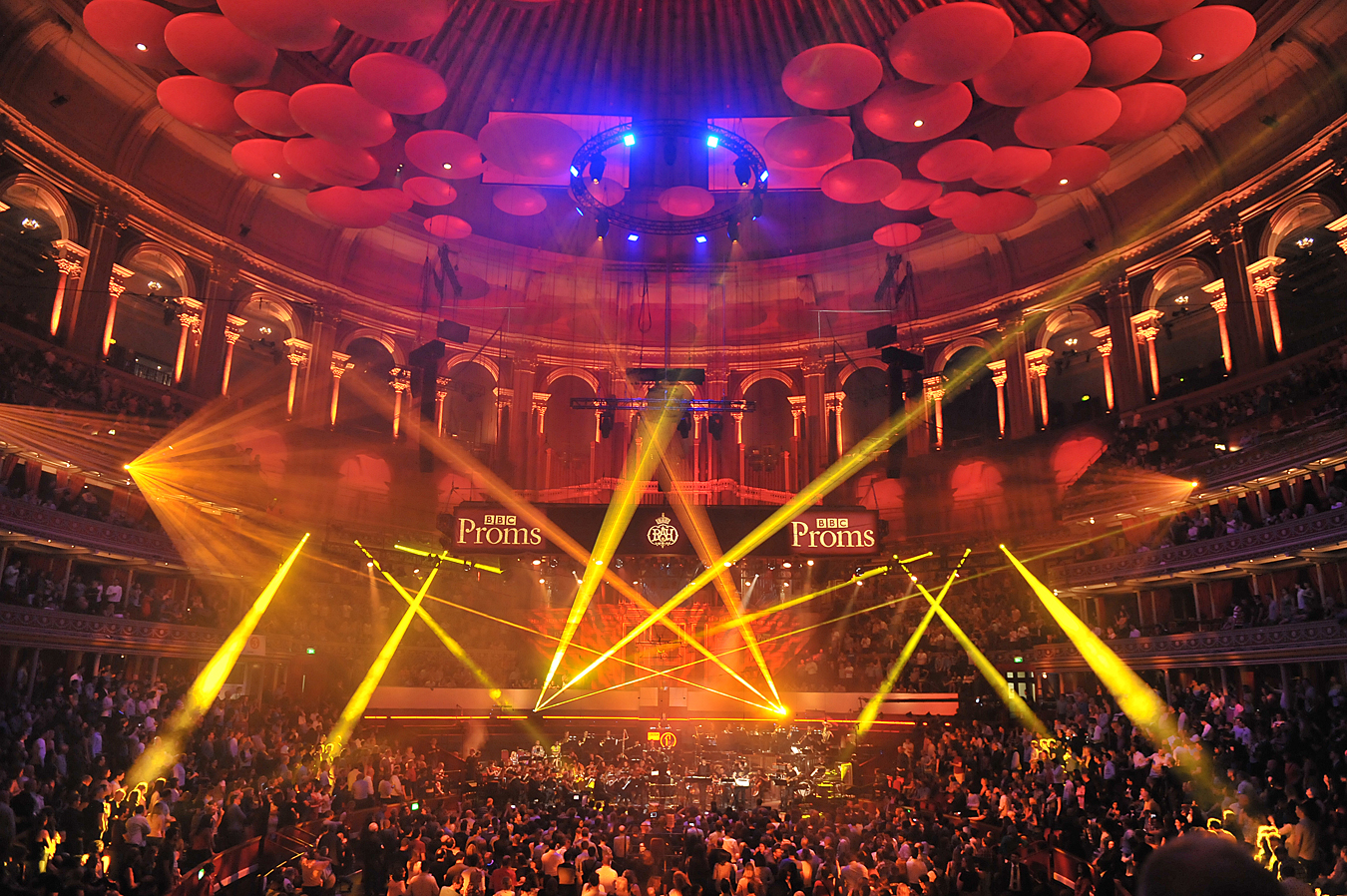
This was not a deal breaker, mind, for a high spirited beginning with Fatboy Slim’s Right Here, Right Now was perfectly judged, and set the tone. The only problem – for me at any rate – was trying to tell my brain that this was a Prom where dancing was not only permitted but actively encouraged, as the below picture shows!

ibiza-prom
The Royal Albert Hall in the Ibiza Prom Picture (c) Chris Christodoulou

The set moved between orchestra-dominated action and guest appearances from Ella Eyre and John Newman, who both acquitted themselves admirably. Eyre has a terrific voice, which she lent to Inner City’s Good Life and her own hit with Rudimental, Waiting All Night. Newman also has past with Rudimental, and his Feel The Love was warmly felt, before a closing cover of The Source feat. Candi Staton’s You Got The Love.

My only two personal regrets were that someone had not tried to arrange Josh Wink’s Higher State of Consciousness – a true Ibiza classic – or, from the blissful end of the spectrum, Groove Armada’s At The River. Those are quibbles, though, for the night was a roaring success, climaxing with the brilliant Café del Mar by Energy 52.

Over the next few days I will publish some links to songs played in the course of the Prom, linking them to classical music – so that you can hopefully see how connections can be drawn between the forms. Safe to say, though, that this particular Prom crossed a few bridges and opened several doors!


Proms guide and review: Prokofiev Piano Concertos

Prom 14, 28 July 2015 – BBC Symphony Orchestra / Sir Andrew Davis at the Royal Albert Hall

prokofiev-piano-concertos

Pianists Sergei Babayan, Alexei Volodin and Daniil Trifonov take a bow alongside conductor Valery Gergiev after their performance of all five Prokofiev Piano Concertos with the London Symphony Orchestra at the Royal Albert Hall on Tuesday 28 July. Photo: Chris Christodoulou

With Leif Ove Andsnes finishing his cycle of Beethoven’s five piano concertos the previous night, it seemed an odd decision by the Proms to embark on another cycle of five from one composer, all in a single night. Yet Valery Gergiev, the London Symphony Orchestra and a trio of fiendishly talented Russian pianists proved us doubters couldn’t have been more wrong.

Prokofiev’s piano concertos vary greatly in popularity, so much so that nos. 4 & 5 were receiving their first Proms performances – incredible for works now 83 years old! They embody the composer’s relative economy, his refusal to take himself too seriously and his use of the piano not just as a purveyor of bittersweet melody but as a percussive instrument too.

We began with the impudent Piano Concerto no.1, an often outrageous piece prone to bouts of cheeky sarcasm and unexpected charm:

http://www.bbc.co.uk/programmes/p02y9wqh/player
Prokofiev: Piano Concerto no.1 in D flat major, Op.10 (1912) 16 minutes

Daniil Trifonov played this piece superbly, exaggerating Prokofiev’s mischievous nature in a way the composer would surely have enjoyed. Gergiev too reminded us why he remains a peerless conductor in this repertoire, coaxing previously unheard detail and colour from the orchestra. If you listen to the clip above, you will agree it is a relative riot from start to finish!

http://www.bbc.co.uk/programmes/p02y9x3n/player
Prokofiev: Piano Concerto no.2 in G minor, Op.16 (1913) 31 minutes

This detail could be heard again in the cool, luminous slow sections of the Piano Concerto no.2, where Sergei Babayan lulled us into a false sense of security with a sombre opening section. Gradually – like Rachmaninov in his Piano Concerto no.2 before him – Prokofiev moved through the gears, the climax a titanic cadenza (a showy solo episode, cue to follow) that Babayan – Trifonov’s teacher, incidentally – played majestically, bringing goose bumps when the bright lights of the orchestra returned.

The Second is a contrary piece, following these bold romantic gestures with a grotesque second movement march owing much to Musorsgky (cue to follow), before a more elegiac third movement and a finale that gathers itself for showy virtuosity again, shown in the terrific closing pages. The house was brought down once again!

http://www.bbc.co.uk/programmes/p02y9xf1/player
Prokofiev: Piano Concerto no.3 in C major, Op.26 (1921) 30 minutes

Trifonov returned to make it three cracking performances out of three with a sparkling account of the Third, revelling in the different characters Prokofiev uses for the central Theme & Variations (cue to follow). The sleights of hand in the outer movements were dizzying, the pianist a study of concentration as his quick fingers deceived the eye. Gergiev again found insight to the colours of the second movement that normally evade the ear.

http://www.bbc.co.uk/programmes/p02y9xyz/player
Prokofiev: Piano Concerto no.4 in B flat major, Op.53 (1931) 22 minutes

And so into the relative unknown for the Fourth, a work commissioned by the fearsome left handed pianist Paul Wittgenstein – and ultimately rejected. His dissatisfaction relegated the piece to an also ran in Prokofiev’s output, but as Alexei Volodin proved here, that tag is undeserved.

This holds especially for the slow movement, which points towards the composer’s ballets, particularly Romeo and Juliet, which was close at hand in 1931. Indeed a forebear of the music for Juliet the Young Girl can be heard in the fourth movement, which scampered off the leash in this performance before disappearing in a puff of air.

http://www.bbc.co.uk/programmes/p02y9yd5/player
Prokofiev: Piano Concerto no.5 in G major, Op.55 (1932) 22 minutes

Sergei Babayan returned for an imposing performance of the Fifth and final concerto, a convincing account that made a mockery of the work’s non-appearance at the Royal Albert Hall. With melodic lines that dipped low before leaping up high he was never still, rising to the technical challenges while applying a lightness of touch needed to dilute the heavier, percussive moments.

Once again Gergiev and the London Symphony Orchestra, whose stamina was especially praiseworthy, propelled the third movement like a machine testing its upper speed limit, while again the slow movement – this time placed four of five – drew a lump to the throat before Prokofiev characteristically girded himself for an emphatic finish.

On the face of it this could have been an ill-judged experiment, especially with the two least-known works placed last. But the audience and social media reaction proved it to be anything but, for the listeners thoroughly enjoyed this colourful and often theatrical riot of ever-changing moods. While the piano will no doubt have needed some tender loving care at the end of it, Prokofiev’s invigorating music emerged defiant.

Proms premiere – Hugh Wood: Epithalamion

hugh-wood

Hugh Wood

Rebecca Bottone (soprano), BBC Symphony Chorus and Orchestra / Sir Andrew Davis (Prom 7)

Duration: 20 minutes

BBC iPlayer link

http://www.bbc.co.uk/programmes/p02xv5wc/player

This piece will shortly be broadcast on BBC4 on July 30, at which point I will provide a new link.

What’s the story behind the piece?

epithalamion
Procession for the wedding of Elizabeth to Frederick VAn engraving by Abraham Hogenberg, c. 1613, used courtesy of the History Today website

Epithalamion, though not one of Hugh Wood’s biggest works, was a mere sixty years in the writing. Wood first started work on it in 1955, only to abandon it, returning to the piece last year.

Epithalamion – an old word for ‘marriage song’ – celebrates the wedding of Princess Elizabeth Stuart, daughter of King James I, and Frederick, Count Palatine, on St Valentine’s Day 1613. The text was written specially for the occasion by John Donne, who used Valentine’s Day as his inspiration for the text.

Wood writes mainly for chorus and orchestra, with soprano and bass soloists (Rebecca Bottone and Nicholas Epton) listed in the Proms programme.

The story takes us through the wedding, as the couple strive to be alone together, to the bliss of the next morning.

Did you know?

Wood writes in largely traditional forms, so as well as a large-scale Symphony he has completed concertos for piano, violin and cello – as well as five celebrated string quartets.

Initial verdict

The celebrations begin with a great swell, the orchestra and choir making a joyful and expansive noise. Yet on first listen from the arena something about Wood’s music did not quite take off in this performance.

That is not a reflection on the quality of the choral writing, nor the brassy fanfares, both of which carry strong echoes of William Walton – who was of course still very active in 1955.

Yet the celebrations did not come through as consistently joyous – perhaps because of the couple striving to get away together – and it was disappointing the soloists were not used more, especially with the quality of Rebecca Bottone’s soprano well in evidence. She comes across fine on the radio but was awkwardly placed in the Hall itself, positioned top left by the percussion. Nicholas Epton, who I assumed to be taking Frederick’s part, had just one tiny cameo.

Wood’s musical language is appealing, with fulsome harmonies and appealing melodies with an upward curve, but although Sir Andrew Davis – to whom the piece is dedicated – gave it maximum input, Epithalamion fell a bit flat. Hopefully the radio broadcast will redress that!

Second hearing

tbc!

Where can I hear more?

You can read more about Hugh Wood at Music Sales, one of his two publishers, – where you can also listen to a short playlist of his compositions.

Meanwhile, here is a performance of his String Quartet no.4 from the Escher Quartet:

Encore: Hugh Wood – String Quartet No. 4 from Royal Philharmonic Society on Vimeo.

As part of the Royal Philharmonic Society's Encore Scheme, this short film opens up the music of British composer Hugh Wood.

Hugh Wood's Fourth String Quartet was selected as one of the works on the current scheme, which focuses on chamber music.

It was performed for Encore by the Escher String Quartet.

Encore is a scheme in partnership with BBC Radio 3. Encore is supported by the PRS for Music Foundation, The Mercers’ Company, The D’Oyly Carte Charitable Trust and the Idlewild Trust.

Under the Surface at the Proms – Nielsen: Wind Quintet

Proms Chamber Music 2, 27 July 2015 – Royal Northern Sinfonia Winds at the Cadogan Hall

royal-northern-sinfonia-winds

Three of the five Royal Northern Sinfonia Winds taking part in the Cadogan Hall concert – Timothy Orpen (clarinet), Juliette Bausor (flute) and Steven Hudson (oboe). They were joined by Peter Francomb (horn) and Stephen Reay (bassoon)

Nielsen Wind Quintet (1922)

Composers and their anniversaries have long been a prominent feature of the BBC Proms, and this year is no exception.

Happily the BBC have taken the opportunity to celebrate the 150th anniversary of the birth of Carl Nielsen with both hands. The seeds were sown with Sakari Oramo and the BBC Symphony Orchestra, and their cycle of the composer’s six symphonies that fitted snugly into their 2015-16 Barbican Season.

Now at the Royal Albert Hall we have the chance to enjoy the composer’s three concertos, for clarinet, flute and violin respectively – and here, in the second Proms Chamber Music concert of the season at Cadogan Hall, the opportunity to hear the composer’s most popular chamber work.

Audio

http://www.bbc.co.uk/events/ez3zc8#b063dgkd

(Nielsen from 2:25)

The Wind Quintet is a charmer. Written in 1922 after Nielsen was captivated by the Copenhagen Wind Quintet, it celebrates the sonorities a combination of flute, oboe, clarinet, horn and bassoon can offer – and Nielsen cheats a bit by alternating between oboe and its very close relative, the slightly deeper cor anglais (English horn).

The first movement celebrates the sound of the five instruments together and also on their own – while the second spins a lovely melody from the clarinet and uses it as the base for a sunlit movement. The third starts with improvisatory bursts from solo instruments – oboe and clarinet – before a solemn hymn deceives us into thinking the composer has gone all serious – before he enjoys a set of variations on that theme, pairing instruments off and exploring different combinations.

It is a lovely piece to listen to, and the Royal Northern Sinfonia Winds did it full justice, clearly enjoying the interplay. They were equally good with Mozart’s Quintet for piano and wind, where they were joined by the stylish piano playing of Christian Blackshaw, who led what is effectively a concerto reduction.

It was Mozart that Nielsen heard the Copenhagen ensemble playing – and the Wind Quintet in turn led to the Clarinet and Flute Concertos. So Nielsen, in the final decade of his life, proved an accomplished writer for wind instruments – and the Proms’ exploration of his achievements is already proving an enjoyable aspect of the festival.

There will be more Under the Surface features as the Proms progress, exploring lesser known pieces and composers at the festival