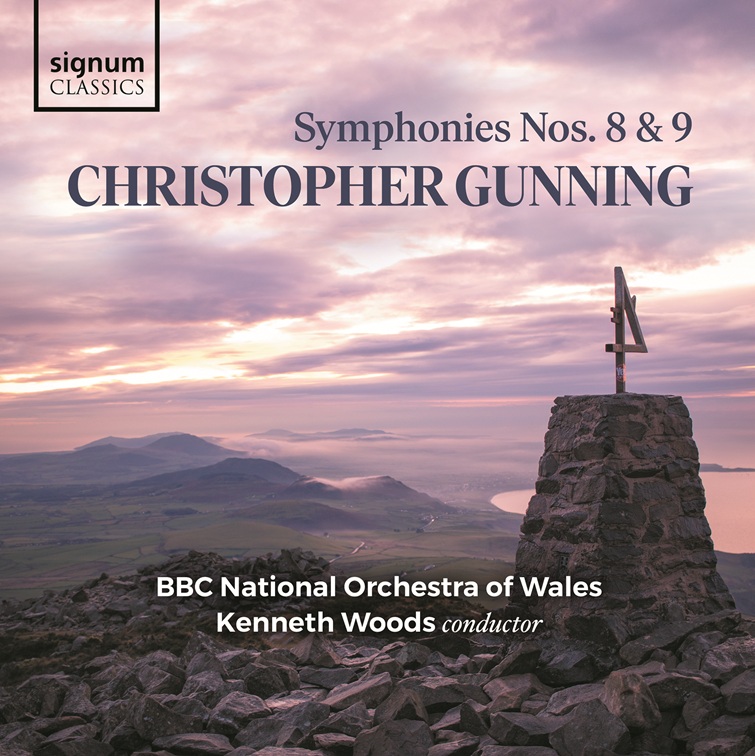
On Record – BBC National Orchestra of Wales / Kenneth Woods – Christopher Gunning: Symphonies nos. 8 & 9 (Signum Classics)

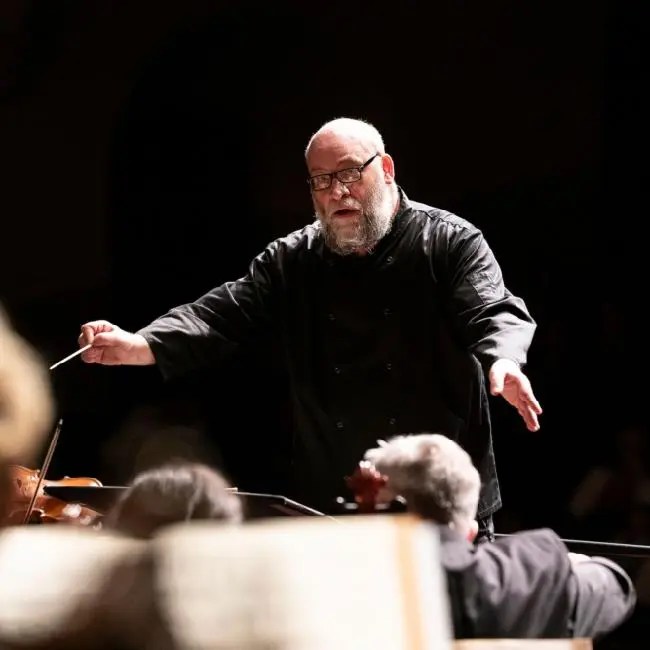
BBC National Orchestra of Wales / Kenneth Woods

Christopher Gunning
Symphony no.8 (2015)
Symphony no.9 (2016)

Signum Classics SIGCD949 [67’33”]
Producer Phil Rowlands Engineer Mike Hatch

Recorded 11-13 March 2024, Hoddinott Hall, Wales Millennium Centre, Cardiff

Reviewed by Richard Whitehouse

What’s the story?

Signum Classics continues its coverage of the late Christopher Gunning with this coupling of two symphonies, a genre that dominated the composer’s thinking in later years, and which get the advocacy they deserve from the BBC National Orchestra of Wales with Kenneth Woods.

What’s the music like?

Although he studied at London’s Guildhall School of Music and Drama with early ambitions as a symphonist, Gunning’s subsequent career was centred on scores for film and television with successful excursions into popular music. Not until 2001, when he was nearing 58, did he complete his First Symphony that was followed by a further 12 over the next two decades, along with several concertos and other orchestral pieces, in what is among the more notable instances of a composer moving between very different disciplines with comparable success.

Written for modest and what might be called ‘late-Classical’ forces, both symphonies are as integrated formally as they are resourceful motivically while, in both instances, movements are merely numbered rather than designated by tempo or expression. The Eighth Symphony consists of three movements unfolding from a sonata design of deft formal proportions with a slower introduction, via a slow movement whose ruminative cast is enhanced by plaintive contributions from flute and cor anglais, to a finale whose scherzo inclinations afford it an impetus and lightness maintained through to the decisive close. An earlier era of American symphonism (ostensibly that of Walter Piston or Randall Thompson) can be detected in its harmonic colouring and melodic contours, but Gunning’s personality is audible throughout.

Scored for slightly larger forces and with four movements, the Ninth Symphony feels no less focussed formally while admitting a wider range of or, at least, of more ambivalent emotions. Thus the opening movement again adheres to sonata design, with a more discursive (though never rhapsodic) take on its primary ideas. This is followed by a speculative or even fugitive scherzo, then a slow movement whose sustained eloquence arguably makes for the highlight of either symphony. It only remains for the finale, its progress as purposeful as it is eventful, to afford a conclusiveness that feels not at all premeditated, let alone predictable. If, in both these works, there is a tangible inner drama which is being played out, Gunning is first and foremost a symphonist for whom abstract concerns override any more subjective tendencies.

Does it all work?

It does indeed – thanks, above all, to Gunning’s unstinting focus on what symphonic form is and can be. Those familiar with any of his other symphonies will know that there is nothing anecdotal or half-baked about his handling of the genre, which emerges as the self-sufficient concept it ideally should be. It helps, of course, that Woods renders both these works with the insight expected from a conductor whose 21st Century Symphony Project has been crucial in rehabilitating the symphony in the UK, and who secures committed playing from BBCNOW.

Is it recommended?

Very much so. Recorded with all the necessary definition, and informatively annotated, this is well worth acquiring by those who are not yet acquainted with Gunning’s symphonic odyssey. Only recordings of the 11th, 13th and the revised First remain to complete an important cycle.

Listen / Buy

You can hear excerpts from the album and explore purchase options at the Signum Classics website, or you can listen to the symphonies on Tidal. Click on the names to read more about composer Christopher Gunning, the BBC National Orchestra of Wales and conductor Kenneth Woods

Published post no.2,782 – Thursday 29 January 2026

In Concert – Stewart Goodyear, CBSO / Kazuki Yamada: Gershwin, Ives, Simon & Mazzoli

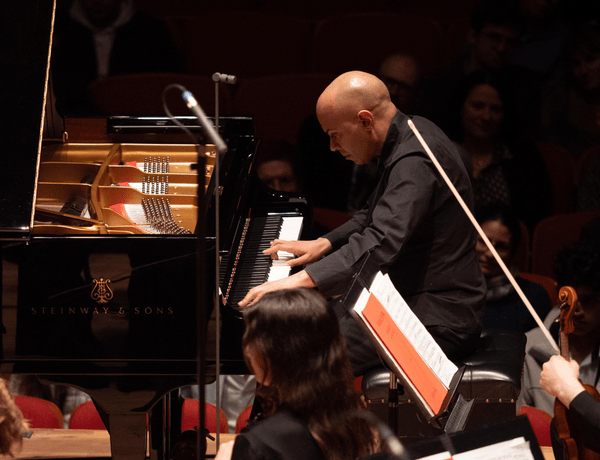
Stewart Goodyear (piano, above), City of Birmingham Symphony Orchestra / Kazuki Yamada

Simon Hellfighters’ Blues (2024)
Mazzoli Sinfonia (for Orbiting Spheres) (2014)
Gershwin Rhapsody in Blue (1924)
Ives ed. Sinclair Three Places in New England (1911-14)
Gershwin
An American in Paris (1928)

Symphony Hall, Birmingham
Wednesday 21 January 2026

Reviewed by Richard Whitehouse

The heady interplay of jazz and blues idioms (with a little help from pioneer W. C. Handy) of Carlos Simon’s Hellfighter’s Blues launched in exhilarating fashion this City of Birmingham Symphony Orchestra concert, pertinent as the 250th anniversary of American Independence approaches.

Missy Mazzoli’sSinfonia (for Orbiting Spheres) could not have been further removed with its formal parallel to that of the solar system; an abstraction offset by the ‘sinfonia’ connotations of a Medieval hurdy-gurdy whose modal drone, recreated here with harmonicas played by the horns and woodwind, underlies the piece’s increasing velocity. That this suggested a tangible connection with the past and, at the same time, absorbed accrued influences into an idiom of today said much about the effectiveness of Mazzoli’s modus operandi these past two decades.

It could have been a conceptual leap too far from here to Gershwin’s galvanizing of the ‘jazz age’ aesthetic almost a century earlier yet Rhapsody in Blue has lost but little of its edge in the interim, especially as Stewart Goodyear rendered its solo part with almost reckless enjoyment. With almost every focal point either underlined or rendered in inverted commas, this was not the subtlest of performance, but Kazuki Yamada was at one with his pianist in conveying the breezy excitement of this music, with the final stages emerging as a high-octane apotheosis. Goodyear is evidently a pianist with whom to reckon – maybe his next appearance will find him tackling Gershwin’s Piano Concerto in F? For the present, he gave the slow movement of his own Piano Sonata (1996), poised midway between Copland and Piston, as plaintive encore.

Whatever his radical tendencies, Charles Ives embodies the ethos of an earlier age (Michael Tilson Thomas aptly described him as America’s greatest late-Romantic composer), such as felt uppermost with Yamada’s take on Three Places in New England. So the intensifying of feeling in The ‘St. Gaudens’ at Boston Common was secondary to a distanced recollection of time, while the elaborate march-fantasy that is Putnam’s Camp, Redding, Connecticut was genial rather than boisterous – albeit until its accumulation of activity for an ending of visceral abandon. The Housatonic at Stockbridge yet which left the deepest impression –   its fervent evocation of place from the vantage of marital bliss duly inspiring a welling-up    of emotion which not even Yamada’s slight over-hastiness could rob of its sheer eloquence.

An American in Paris might have been an awkward piece with which to close, but succeeded well on its own terms. Something between tone poem and symphonic rhapsody. Gershwin’s evocation of a compatriot (himself?) a little lost in the French capital received an impulsive yet perceptive reading. There was a start-stop feel to its earlier stages, while Oscar Whight’s rather forced take on the indelible trumpet melody was to its detriment, but what ensued was rarely less than persuasive – not least those final bars with their tangible sense of resolution.

It certainly brought to a resounding close a concert which conveyed much of the sheer variety of American music across little more than a century. Hopefully Yamada will programme more of this repertoire – perhaps an Ives symphony or music by the late, great Christopher Rouse?

To read more about the CBSO’s 2025/26 season, visit the CBSO website. Click on the names for more on pianist Stewart Goodyear, CBSO chief conductor Kazuki Yamada and composers Missy Mazzoli and Carlos Simon

Published post no.2,777 – Saturday 24 January 2026

On this day – Henri Dutilleux

by Ben Hogwood Picture courtesy Wise Music Classical

Today marks the 110th anniversary of the birth of Henri Dutilleux, one of the finest composers of the second half of the 20th century.

Dutilleux wrote distinctive music notable for its colour, clarity and concision, with works for orchestra and piano in particular that have proved both compelling and durable.

You can listen to two of these stand out works below – beginning with Métaboles, an orchestral work completed in 1964 and notable for its original orchestration and intensity:

Meanwhile Timbres, espace, movement, inspired by Vincent van Gogh’s painting La nuit étoilée (The Starry Night), was completed in 1978. The work is remarkably brought to life in this account:

Published post no.2,775 – Thursday 22 January 2026

In Concert – Peter Moore, CBSO / Kazuki Yamada: Dai Fujikura & Mahler

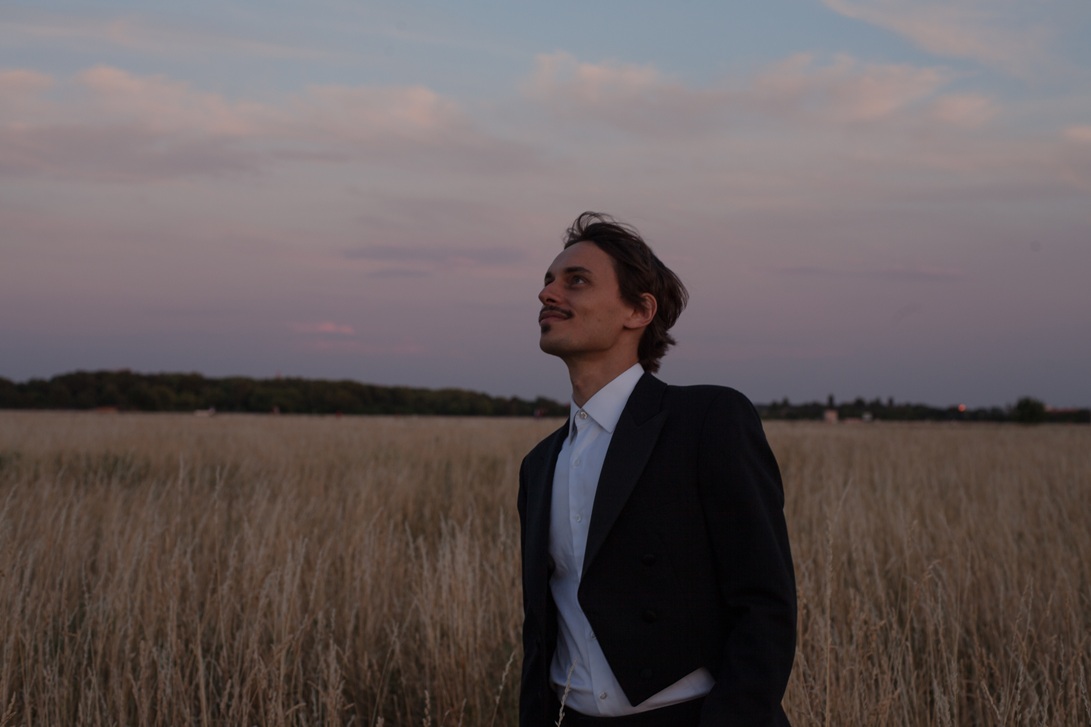
Peter Moore (trombone), City of Birmingham Symphony Orchestra / Kazuki Yamada (above)

Mahler Blumine (1884)
Fujikura Trombone Concerto ‘Vast Ocean II’ (2005/23) [UK Premiere]
Mahler Symphony no.1 in D major (1887-88, rev. 1889-98)

Symphony Hall, Birmingham
Thursday 15 January 2026

Reviewed by Richard Whitehouse Photo (c) Andrew Fox

Mahler has not been absent from the City of Birmingham Symphony Orchestra’s schedule since those halcyon years of Simon Rattle, though even he never undertook a chronological traversal of such as the orchestra’s current music director Kazuki Yamada duly commenced this evening.

Although the First Symphony was heard in its customary four-movement version as finalized for a Vienna performance in 1898, the so-called Blumine taken over from earlier incidental music and included as second movement in the earliest performances was given as an entrée to this concert. With its lilting trumpet melody – effortlessly unfolded by Holly Clark – and its aura of rapt inwardness, this elegant intermezzo was audibly out of place given the transition from symphonic poem to symphony, but it retains an appeal that was winningly evident here.

Two years ago Yamada and the CBSO gave the premiere of Wavering World by Japanese-born composer Dai Fujikura, and it was heartening to see the association continued with this first hearing in the UK for Vast Ocean II. Not so much a reworking as the reconceiving of a piece from 18 years earlier, this trombone concerto unfolded within the context of an orchestra rich in alluring sonorities yet streamlined in texture. This latter entered gradually while remaining focussed on (if never beholden to) a soloist whose role is almost that of a ‘cantus firmus’ that guides the music, through waves of increasing activity, towards a fervent culmination before a suspenseful closing evanescence. It helped to have in Peter Moore a soloist who manifestly believed in the music and contributed greatly to the impact of this memorable performance.

And so to Mahler’s First Symphony that, following on from Yamada’s accounts of the Fourth and Ninth in recent seasons, drew a suitably visceral response from conductor and orchestra. Not that this traversal was without failings: the ‘coming of spring’ in the opening pages was unerringly judged, as too the transition into its genial main theme, though this first movement rather lost focus in the mounting intensity of its final stages which felt rather rushed through. There were no provisos about a scherzo whose impetuous outer sections found ideal contrast with its ländler-informed trio of winning poise. The ensuing funeral march was equally well judged, bassist Anthony Alcock setting in motion this unlikely processional whose pathos is tinged by irony and even ambivalence before its jaunty climax then withdrawal into silence.

Launched with piercing clamour, the finale may ultimately have been no more than the sum of its parts, but the best were indeed memorable. So if the expressive second theme sounded overly generic, the approach to the central peroration was astutely handled, with the hushed recollection of earlier ideas never less than spellbinding. Nor was the stealthy build-up to the apotheosis lacking purpose, even if this latter emerged as less than majestic given Yamada’s headlong rush to those brusque closing chords. Audience response was accordingly effusive.

One person who would no doubt have wanted to be present was Andrew Clements, who died just four days earlier. A regular CBSO reviewer for the Guardian, his laconic while considered observations were always centred on the premise that music, whether in or of itself, mattered.

To read more about the CBSO’s 2025/26 season, visit the CBSO website. Click on the names for more on trombonist Peter Moore, CBSO chief conductor Kazuki Yamada and composer Dai Fujikura

Published post no.2,770 – Saturday 17 January 2026

In Concert – BBC Symphony Orchestra / Martyn Brabbins @ Maida Vale Studios: Liadov & Tchaikovsky

BBC Symphony Orchestra / Martyn Brabbins (above)

Liadov Ballade: About Olden Times Op.21b (1889)
Tchaikovsky Symphony no.1 in G minor Op.13 ‘Winter Daydreams’ (1866)

Studio 1, BBC Maida Vale Studios, London
Tuesday 13 January 2026 (2:30pm)

Reviewed by Ben Hogwood

The BBC Symphony Orchestra and Martyn Brabbins provided the ideal antidote for a dark and wet January afternoon with this winsome hour of music at the BBC Studios in Maida Vale.

They began with a rarity. It is a regret that the 19th century Russian composer Anatoly Liadov did not write more large-scale orchestral works, for his short form pieces are both evocative and colourful. The ballade About Olden Times appears to be an orchestration of a piano piece with the same name, and it captured the sentimental and soulful qualities of old Russian folksong without overdoing a heart-on-sleeve approach. The influence of Liadov’s teacher, Rimsky-Korsakov, was evident in the imaginative orchestration, and the cello section bore the palm for their rendering of the particularly beautiful opening tune.

About Olden Times was written two years after Liadov met Tchaikovsky, who by then was well-established as a symphonist and a composer for the stage. There are strong hints of this potential in Tchaikovsky’s Symphony no.1, written just after the composer graduated from St Petersburg Conservatory. Carrying the subtitle Winter Daydreams, it is an accomplished piece combining youthful vigour and freshness with impressive craftsmanship; displaying also the scene-setting abilities that would serve Tchaikovsky well in his symphonic poems.

Often interpretations of this piece look backwards towards Mendelssohn and Schumann, but Martyn Brabbins saw the work as a springboard to Tchaikovsky’s future success in opera and ballet, as well as that of a red-blooded, symphonic thinker. The first movement, Dreams of a Winter Journey, was beautifully shaded and led with poise and purpose by the BBC SO winds. There was a particularly beautiful oboe solo (thought to be from Alison Teale) for the Adagio, subtitled Land of Desolation, Land of Mists, its theme taken up with heart-melting emotion by the strings.

The untitled Scherzo was coolly played but fresh to the ear, the music warming appreciably for the Trio section where a charming waltz tune unfolded. The finale was terrific, Brabbins accentuating the contrast between its downcast introduction and the rush of positivity as Tchaikovsky transforms from minor to major key for an exultant, homeward-bound theme. The winter journey was over, with spring now in the air as Brabbins paced the final acceleration to perfection, the symphony’s bracing closing bars capping a thoroughly enjoyable hour of music.

Listen

You can hear this concert as part of Classical Live, to be broadcast on BBC Radio 3 on Monday 26 January, and available on BBC Sounds.

Published post no.2,767 – Wednesday 14 January 2026