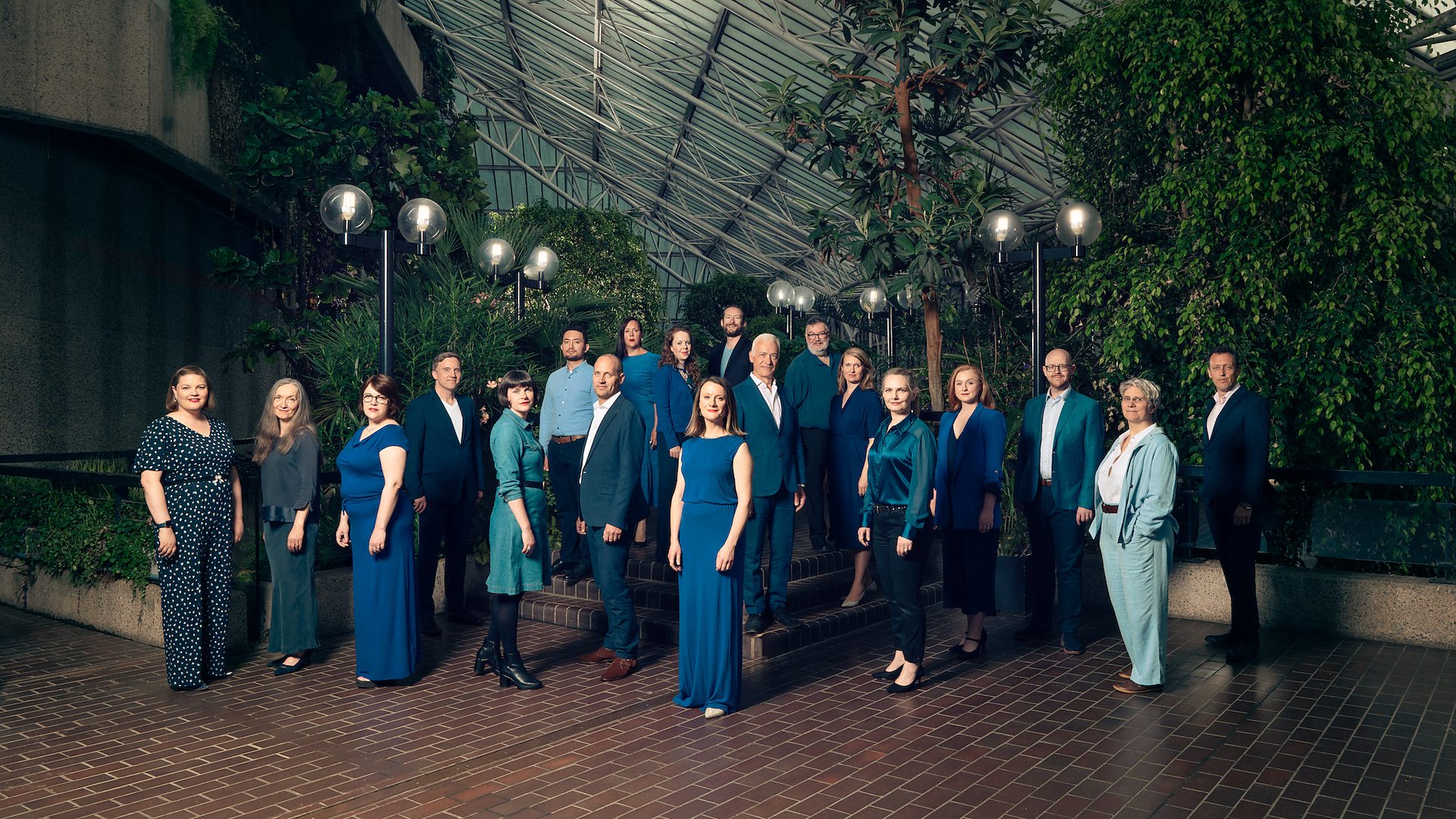
In concert – BBC Singers / Martyn Brabbins @ St Paul’s Knightsbridge – Holst, Britten, Garrard, Elgar & Pickard

BBC Singers, Elizabeth Bass (harp), Richard Pearce (piano), Andrew Barclay (percussion) / Martyn Brabbins

Holst Choral Hymns from the Rig Veda – Group 3, H90 (1910)
Britten The Ballad of Little Musgrave and Lady Barnard (1943)
Garrard Missa Brevis (2017-18)
Elgar Five Part-Songs from the Greek Anthology Op.45 (1902)
Pickard Elemental (2024-25) (BBC commission: World premiere)

St Paul’s, Knightsbridge, London
Friday 19 September 2025

Reviewed by Richard Whitehouse

The upsurge of interest in and performances by the BBC Singers in the wake of its intended demise shows little sign of abating, and there could be few vocal ensembles able to put on a programme as stylistically inclusive or as technically demanding as that heard this afternoon.

Nowhere more so than Elemental by John Pickard, its first performance occupying the second half. Never absent from the composer’s output, choral music came into own with the powerful Mass in Troubles Times (premiered nearby at St Peter’s, Eaton Square in 2019) and the present work can be heard as a continuation in terms of its underlying concept. A further collaboration with author and theologian Gavin D’Costa, its form is of a journey through the elements such as Pickard had favoured earlier in his output but here with its emphasis firmly on the spiritual arising out of human concerns. Whether individually or collectively, the writing for 18 voices could hardly be more varied and imaginative, while the obbligato roles for harp plus a single percussionist playing across the spectrum of instruments enhances these settings accordingly.

After the evocative Prologue with its Paracelsian take on living matter, Earth draws on the recollections of those in the Tham Luang Cave Rescue – notably teenagers of the Wild Boars football team – in music whose initial bravado gradually assumes a near metaphysical import. Fire integrates its Shakespeare quotations into consideration of this most transformative and cathartic of elements. Air centres on Bessie Coleman with her ambition, racially rather than personally motivated, to become the first professional pilot from African-American ancestry – her combative and ultimately ill-fated career depicted with often graphic immediacy. Water then illustrates the Biblical flood narrative from an oblique and even ambivalent perspective, before Epilogue returns to evocation of the numinous as it builds with a frisson of emotion.

Not that the first half was any mere preparation. Most intimate and alluring of four such sets, the third group of Holst’s Choral Hymns from the Rig Veda traverses the ethereal, the limpid, the hieratic then the questing in the company of female voices and harp. The former were no less attuned to the greater astringency of Sara Garrard’s Missa Brevis – its bracing inclusion of traditional Estonian music offset by the greater introspection elsewhere; these contrasted aspects finding at least a degree of release with the emotional immediacy of the Agnus Dei.

Heard in alternation, the male voices duly came into their own with Britten’s The Ballad of Little Musgrave and Lady Barnard – its folk melody (Matty Groves) stretched through this plangent wartime setting with piano of illicit love, innocent betrayal, desperate revenge and stark lament. Facets that barely feature in Elgar’s Five Part-Songs from the Greek Anthology yet these brief if characterful treatments of translations by Alma Strettell, no less typical than his major choral and orchestral works from this period, were dispatched here with due relish.

Whatever else, this showcase with substance was conducted with unfailing insight by Martyn Brabbins, whose prowess in choral repertoire needs hardly more reiterating than his advocacy of Pickard, and is absolutely worth hearing when broadcast by BBC Radio 3 this Wednesday.

You can hear the BBC Radio 3 broadcast on Wednesday 24 September by clicking here

For more information on the artists, click on the names: BBC Singers, Martyn Brabbins, Elizabeth Bass, Richard Pearce and Andrew Barclay, and composers John Pickard and Sara Garrard

Published post no.2,664 – Sunday 21 September 2025
In concert – The London Chorus and New London Orchestra / Adrian Brown: VE Day 80th Anniversary Concert @ Holy Trinity Church, Sloane Square

Petroc Trelawny (orator), The London Chorus, New London Orchestra / Adrian Brown

Vaughan Williams Six Choral Songs (1940)
Martinů Memorial to Lidice (1943)
Walton Spitfire Prelude and Fugue (1942)
Bliss Morning Heroes (1929-30)
Holst/Rice I Vow to Thee My Country (1921)

Holy Trinity Church, Sloane Square, London
Thursday 9 May 2025

Reviewed by Richard Whitehouse

The London Chorus and New London Orchestra have put on notable concerts in recent years, few more ambitious than this programme to mark not merely the 80th anniversary of Victory in Europe Day but also the 50th anniversary of Sir Arthur Bliss’s death in appropriate manner.

The first half comprised an unlikely but effective sequence of pieces written at the start of or during the Second World War. Rarely revived as such, Vaughan Williams’s Six Choral Songs to be Sung in Time of War works well as a whole: settings of Shelley that touch on aspects of courage, liberty, healing, victory, then pity, peace and war – before A Song to the New Age characterizes its utopian leanings in subdued and even ambivalent terms which seem typical of its composer. Suffice to add that the London Chorus had the full measure of its aspiration.

Two succinct if otherwise entirely different pieces brought out the best from the New London Orchestra. Rarely so overt in emotion, Martinů was well-nigh explicit when commemorating Nazi atrocities in music of plangent harmonies and chorale-like fervency both evocative and affecting. Derived from his score to the film The First of the Few, Walton had come up with a showpiece whose ceremonial prelude is vividly countered by its incisive fugue – making way for a brief if poignant interlude before matters are brought to a head in the rousing peroration.

Although intimately bound up with the First World War, Morning Heroes is wholly apposite for the present context. Conceived as the exorcism of his wartime experiences, Bliss’s choral symphony elides deftly between a distant past and its present; the first of its five movements featuring an orchestral introduction to set out the underlying mood and salient motifs, before Hector’s Farewell to Adromache had Petroc Trelawny eloquently evoking that scene on the ramparts of Troy without excess rhetoric. Adrian Brown’s understated direction meaningfully pointed up the expressive contrast between this and The City Arming – the setting of Walt Whitman whose interaction of chorus and orchestra was powerfully sustained right through   to the simmering unease at its close, with the onset of hostilities in the American Civil War.

The two parts of the central movement saw each section of the London Chorus come into its own: the women in Vigil, a confiding take on lines by Li-Tai-Po (Li Bai) such as relates the emotions of those left behind; and the men in The Bivouac’s Flame, plangently evoking life at the front with further lines from Whitman’s Drum Taps. Choral forces reunite in Achilles Goes Forth to Battle, a setting from later in The Iliad which brings about the work’s climax via The Heroes – a rollcall commemorating those of Antiquity. After this, the starkness of Wilfred Owen’s Spring Offensive is the greater for its sparse accompaniment – Trelawny’s oration a model of understatement as this segued into the setting of Robert Nichols’s Dawn on the Somme with those ‘morning heroes’ themselves evoked affirmatively if fatalistically.

A concert which ended in fine style with Holst’s stirring anthem had begun in subdued fashion with Dawn on the SommeRonald Corp’s elegy, given hours after his death was announced. Someone who had always given his all to this chorus and orchestra, he will be greatly missed.

Ronald Corp OBE (1951-2025)

Published post no.2,530 – Sunday 11 May 2025

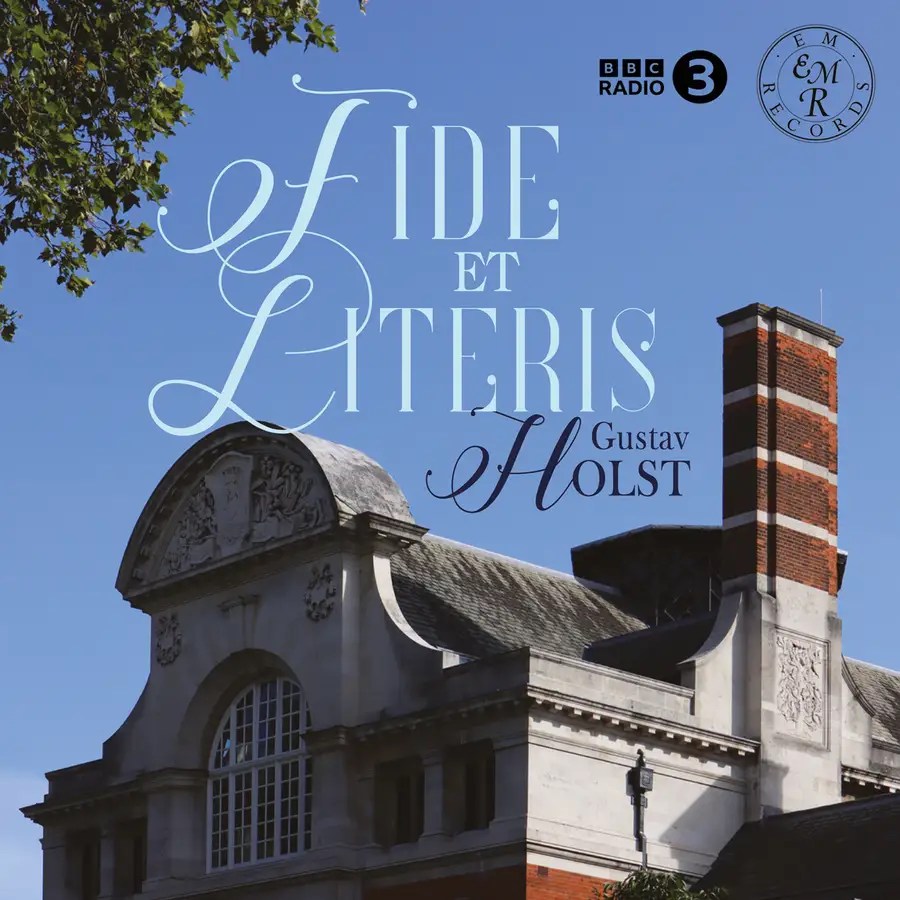
On Record – Em Marshall-Luck, Paulina Voices, BBC Concert Orchestra / Leigh O’Hara: Fide et Literis – Gustav Holst

Holst
St Paul’s Suite H118 (1912-13)
Brook Green Suite H190 (1933)
Gavotte H190a (1933)
Seven Choruses from the Alcestis of Euripides, H146 (1920)
Playground Song H118a (1911)
The Vision of Dame Christian, H101 (1909)

Em Marshall-Luck (reciter), Paulina Voices / Heidi Pegler, BBC Concert Orchestra / Leigh O’Hara

EM Records EMRCD090 [69’48”]
Producer Neil Varley Engineer Christopher Rouse

Recorded 4-5 November 2023 in the Great Hall, St. Paul’s Girls’ School, Brook Green, London

Reviewed by Richard Whitehouse

What’s the story?

EM Records further extends the Holst discography in the 150th anniversary year of his birth (and 90th anniversary year of his death) with this collection of works written at and intended for pupils of St Paul’s Girls’ School, where the composer taught for 29 years until his death.

What’s the music like?

For all his interest in matters spiritual and arcane, Gustav Holst was an eminently practical musician whose educational pieces were tailored to the situation at hand. Not least his Seven Choruses from the Alcestis of Euripides, written for a production of this drama at St Paul’s. Its scoring for unison female voices, three flutes and harp recalls those diaphanous settings in the Third Group of Choral Hymns from the Rig Veda – not least its sixth chorus ‘I have sojourned in the Muse’s Land’ that, in its fusion of yearning with sensuousness, is ideal for such a text as this.

Most substantial here is The Vision of Dame Christian – aka The Masque – written for the play by Frances Gray, who was the first headmistress (then High Mistress) at St Paul’s. The ‘Dame Christian’ in question is Christian Colet, mother of John Colet who had founded the original St Paul’s School 400 years before. Set in 1523, the sequence comprises three choruses with a prelude, interlude and finale – the scoring, for female voices with small orchestra, conveying a pathos devoid of sentimentality which is typical of Holst’s music for this school. Revived at decade-long intervals until 1958, it was heard again in 1973 (and issued privately on LP) then given a full production in 2013, but this first professional recording captures its deftness and eloquence in ample measure. Perhaps future performances would be feasible in other venues?

The two suites for strings long ago took their place within a lineage of compositions for this medium to which British artists have contributed so extensively throughout some 150 years. Certainly, the St Paul’s Suite is a classic of its genre – what with its rumbustious initial Jig, its animated Ostinato, its alternately soulful then playful Intermezzo, or a Finale which revisits Holst’s Second Suite for Military Band by combining traditional tunes The Dargason and Greensleeves in a fantasia ingenious and affecting. The Brook Green Suite is simpler in design – which is not to deny the appeal of its homely Prelude, its wistful Air or its lively Dance. Recorded for the first time is the Gavotte which Holst omitted at the premiere, its brusque charm enhancing the whole when heard in its original context as second movement.

Does it all work?

It does. This project was evidently a labour of love for St Paul’s Girls’ School, whose Paulina Voices duly rise to the challenge of continuing their venerable tradition under the admirable direction of Heidi Pegler, not least in the Playground Song with its ‘Henry Newbolt meets St Trinian’s’ text. The passages of recitation are rendered with clarity and elegance by Em Marshall-Luck (herself a Paulinian), while Leigh O’Hara secures a spirited response from the BBC Concert Orchestra in music whose sheer directness and accessibility are never for a moment naïve or simplistic.

Is it recommended?

It is. The presentation is well up to EMR’s customary standards, with detailed annotations by Em Marshall-Luck and school archivist Howard Bailes. Clearly the Great Hall of St Pauls’ Girls’ School is as ideal for recording as ‘Mr Holst’s Room’ in the Music Wing proved to be for his composing.

Listen & Buy

For further information visit the EM Records website, and for purchase information visit the Presto website. Click on the names for more on conductor Leigh O’Hara, Paulina Voices, the BBC Concert Orchestra and for more on The Holst Society

Published post no.2,382 – Wednesday 4 December 2024

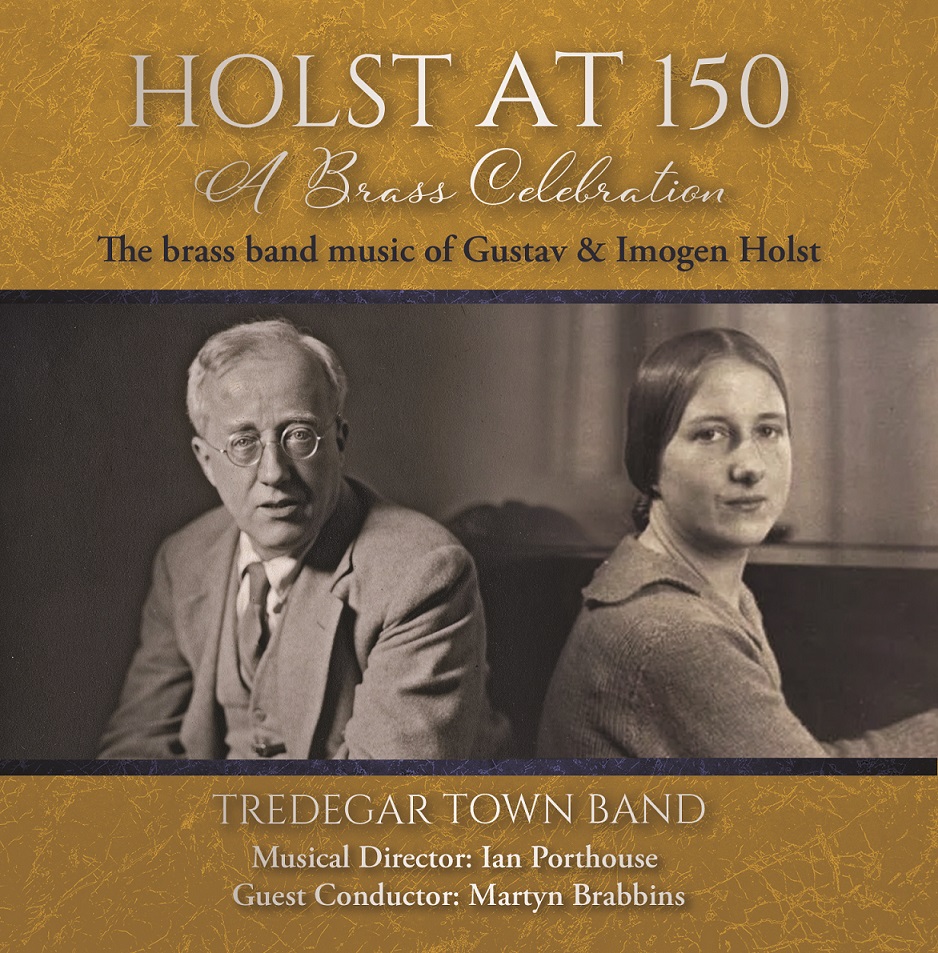
On Record – Tredegar Town Band / Ian Porterhouse, Martyn Brabbins – Holst at 150: A Brass Celebration (Doyen)

Gustav Holst
Suites for Military Band Op.28:
no.1 in E flat major (1909)
no.2 in F major (1911)
The Perfect Fool Op.39 (1918-22) – Ballet Music (all arr. Littlemore).
A Fugal Overture Op.40 no.1 (1922; arr. Wheeler)
Mr Shilkret’s Maggot (1932; arr. Hindmarsh)
A Moorside Suite (1928)
Imogen Holst
The Unfortunate Traveller (1929; ed. Hindmarsh)
Glory of the West (1969)

Tredegar Town Band / Ian Porthouse and Martyn Brabbins (A Moorside Suite)

Doyen DOYCD435 [74’37’’]
Producer Adam Goldsmith Engineer Daniel Lock
Recorded 18-19 May 2024 at Jack Williams VC Hall, The Works, Ebbw Vale

Reviewed by Richard Whitehouse

What’s the story?

The 150th anniversary of his birth, and 50th anniversary of his death, is an ideal opportunity to reassess the legacy of Holst in all its variety; not least with this anthology of his music for brass band that also finds space for her contribution to the medium by his daughter Imogen.

What’s the music like?

Typical and inimitable Holst – but, as he only wrote one work for the medium, much of this release consists of arrangements. The two Suites for Military Band were obvious candidates: the First Suite’s Chaconne emerges with renewed pathos, as too its whimsical Intermezzo or rumbustious March; no less idiomatic is the Second Suite with its recourse to traditional tunes in such as the effervescent initial March, then the final Fantasia with its memorable rendering of the Dargason. Philip Littlemore is an expert arranger here as of the Ballet Music from the opera The Perfect Fool – the sections that evoke ‘earth’ and fire’ lacking a degree of panache, but that of ‘water’ hardly less magical in this guise. Alastair Wheeler proves no less adept in capturing the impetus of A Fugal Overture, while Paul Hindmarsh gives what ought to be a new lease of life to the ‘jazz-band piece’ designated Mr Shilkret’s Maggot praised but never played by its commissioner. Imogen Holst’s 1967 orchestral arrangement as Capriccio rescued it from oblivion, but this new incarnation makes even more of its recalcitrant humour.

Mention of Imogen leads one to her pieces for brass band, both included here. Compact and characterful, her suite The Unfortunate Traveller was initially more successful as transcribed for strings, though Hindmarsh’s edition adds percussion and clarifies the brass texture as was doubtless intended. Its sure highlight is the winsome Interlude, conjuring a discreet though tangible profundity subsequently glimpsed with The Glory of the West – seven variations on said Morris Dance which confirms music written for amateurs need not involve compromise.

This just leaves A Moorside Suite, a work such as transformed the standing of test-pieces for brass band with that understated acuity surely unique to this composer. Whether in its gently satirical Scherzo, wistful Nocturne whose gradual building to a soulful culmination makes for the highlight of this collection, then a March which fuses energy and eloquence to round off the sequence with irresistible elan – this is Holst at his most engaging and communicative. Music, moreover, Martyn Brabbins clearly relished the chance to conduct for this recording.

Does it all work?

Absolutely, both in this piece and elsewhere, as long-standing music director Ian Porthouse puts the Tredegar Town Band exactingly and admirably through its collective paces. At the forefront of the modern brass-band movement, the latter is ideally placed to find this music an audience outside of its customary domain. That it succeeds is clear from the fact that one listens to this programme without thought of the medium or its context; rather, the emphasis is on those qualities of inspiration and substance as are hallmarks of any worthwhile music.

Is it recommended?

Indeed. Recorded with requisite clarity and definition, and featuring informative annotations by Hindmarsh and Littlemore, this is a significant release in Holst’s anniversary year and an evident first choice for acquiring a representative cross-section of his music in this medium.

Listen & Buy

You can listen to samples and explore purchase options on the World of Brass website Click on the names for more on conductors Ian Porthouse and Martyn Brabbins, the Tredegar Town Band, and for more on the composers Gustav Holst and daughter Imogen Holst

Published post no.2,307 – Friday 20 September 2024

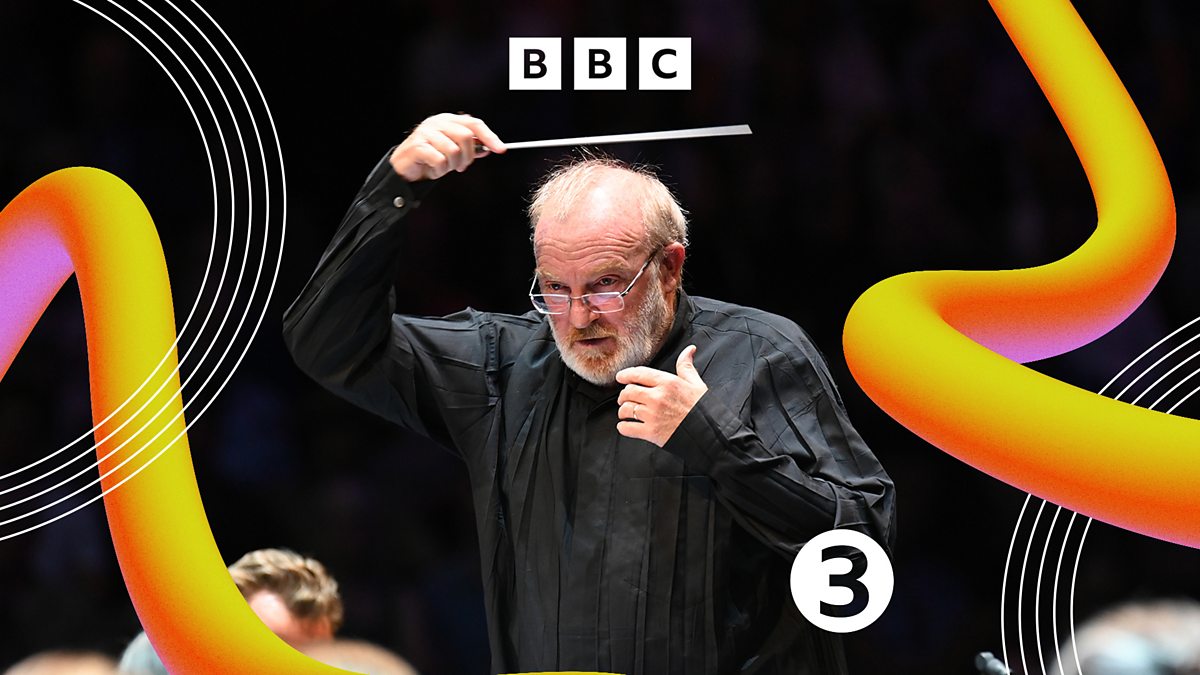
Arcana at the Proms – Prom 33: Christopher Maltman, BBC Symphony Orchestra / Martyn Brabbins – Elgar, Holst, Stanford & Vaughan Williams London Symphony

Elgar Overture ‘Cockaigne’ (In London Town) Op.40 (1901)
Holst Hammersmith (Prelude and Scherzo) Op.52 (1930)
Stanford Songs of Faith Op. 97 (1906): no.4 (To the Soul), no.5 (Tears), no.6 (Joy, ship-mate, joy); An Irish Idyll in Six Miniatures Op.72 (1901): no.2 (The Fairy Lough)
Vaughan Williams A London Symphony (Symphony no.2) (1912-13, rev. 1918-20)

Christopher Maltman (baritone), BBC Symphony Orchestra / Martyn Brabbins

Royal Albert Hall, London
Friday 9 August 2024, 6pm

reviewed by Richard Whitehouse

Concerts devoted to British music are by no means an unknown quantity at the Proms, but to have one as judiciously planned as that featuring Martyn Brabbins with the BBC Symphony Orchestra, on the conductor’s 65th birthday, was as unexpected as its realization ‘on the night’ proved consistently impressive.

Whether or not this account of Elgar’s Cockaigne ranked among the best of the previous 70 or so hearings at these concerts, it assuredly did the piece justice. Not its least attraction was Brabbins integrating this evocation of London on the cusp of Victorian and Edwardian eras with due perception of its ingenious sonata design, resulting in a reading as characterful as it was cohesive. Such as the emergence of the marching band at its centre and final peroration (Richard Pearce making his presence felt at the organ console) were the highpoints intended.

Whereas Elgar conveys London in its midst, Holst renders Hammersmith at a remove – his Prelude and Scherzo evoking those sights and sounds where the latter long made his home with a poise and precision no less involving for its objectivity. The orchestral version might be less often revived than its wind-band original but it yields little, if anything, in terms of expressive immediacy; not least with Brabbins mindful to underline how its two sections do not just succeed each other but are juxtaposed, even superimposed, prior to the rapt ending.

In the centenary of Stanford’s death, this selection of songs provided a welcome reminder of its composer’s prowess in the genre. The final three Songs of Faith denote an appreciation of Walt Whitman comparable to that of the next generation – whether in the eloquent musing of To the Soul, surging anguish of Tears or effervescence of Joy, shipmate, joy. Christopher Maltman then brought his burnished tone and clarity of diction to an affecting take on Moira O’Neill’s The Fairy Lough – proof Stanford could do ‘lightness of touch’ where necessary.

Whereas Stanford’s songs have barely featured here for almost a century, Vaughan Williams’s A London Symphony has accrued 36 performances, but what might be thought its ‘intermediate version’ had not been heard in nine decades. Actually, this is much closer formally to the final version of 1933 than the original – its main differences centring on those more extensive codas in the Lento and finale which, by aligning them more audibly with the introduction to the first movement, arguably ensures a more thematically close-knit trajectory across the work overall.

The performance was very much in accord with Brabbins’ recording (Hyperion). An unforced traversal of the opening Allegro, impetuous in its outer sections and affecting in that rapturous passage for solo strings at its centre, then a slow movement whose brooding introspection did not omit a sustained fervency at its climax. Nor did the Scherzo lack those ambivalent asides that find focus in its sombre close, while the nominally discursive finale built purposefully to a seismic culmination then an epilogue which drew solace from the aftermath of catastrophe.

‘‘The river passes – London passes – England passes’’. Whether the closing words from H.G. Wells’ Tono-Bungay determined or even influenced it, a sense of renewal was palpable as the music faded towards silence at the end of this persuasive performance and memorable concert.

For more on this year’s festival, visit the BBC Proms website – and to read more on the artists involved, click on the names: baritone Christopher Maltman, conductor Martyn Brabbins and the BBC Symphony Orchestra. Click on the name for more on The Stanford Society

Published post no.2,270 – Wednesday 14 August 2024