In concert – Sean Shibe, BBC Philharmonic Orchestra / Anja Bihlmaier @ BBC Proms: Richard Strauss, Mark Simpson ‘ZEBRA’ & Berlioz

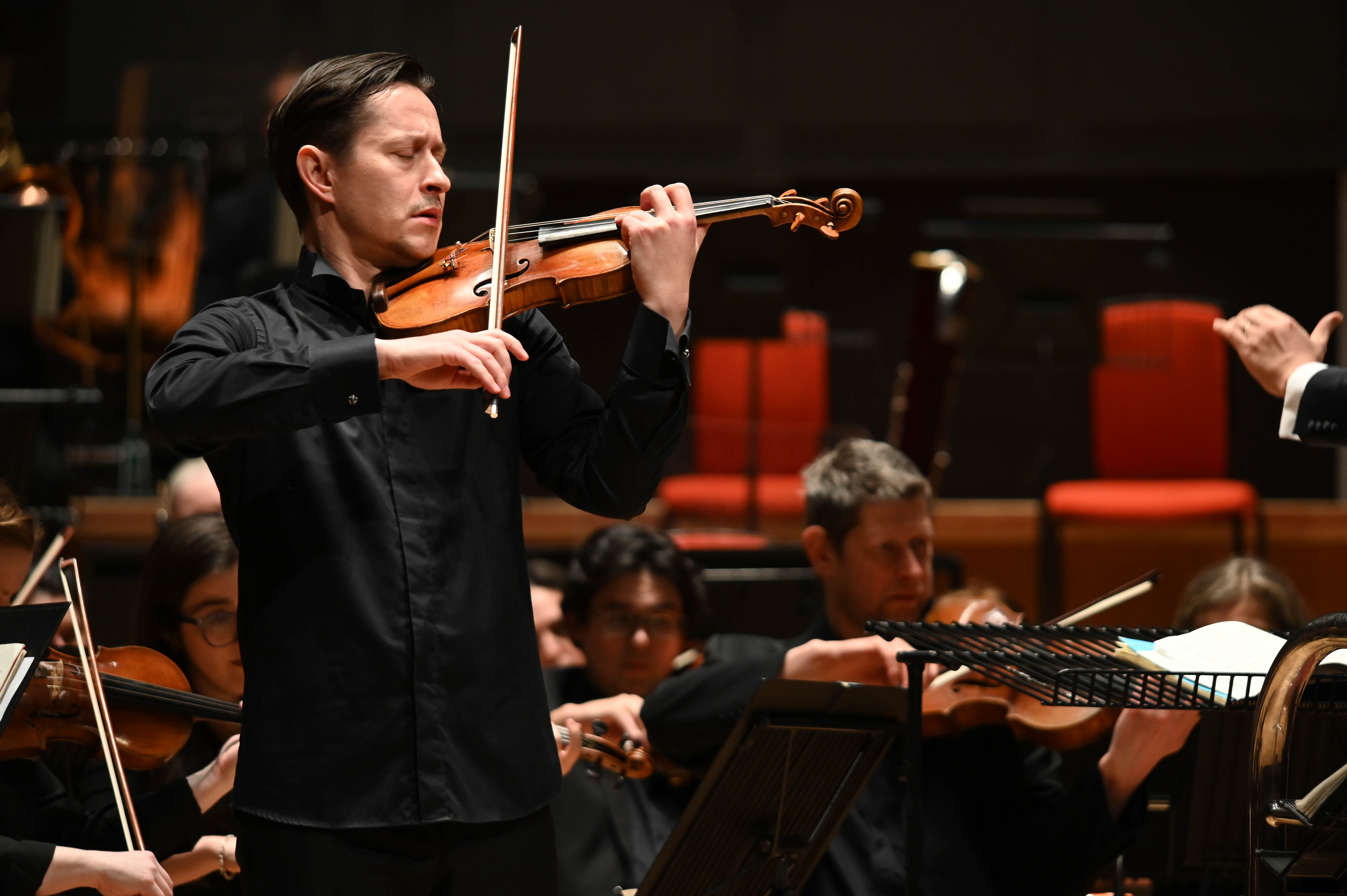
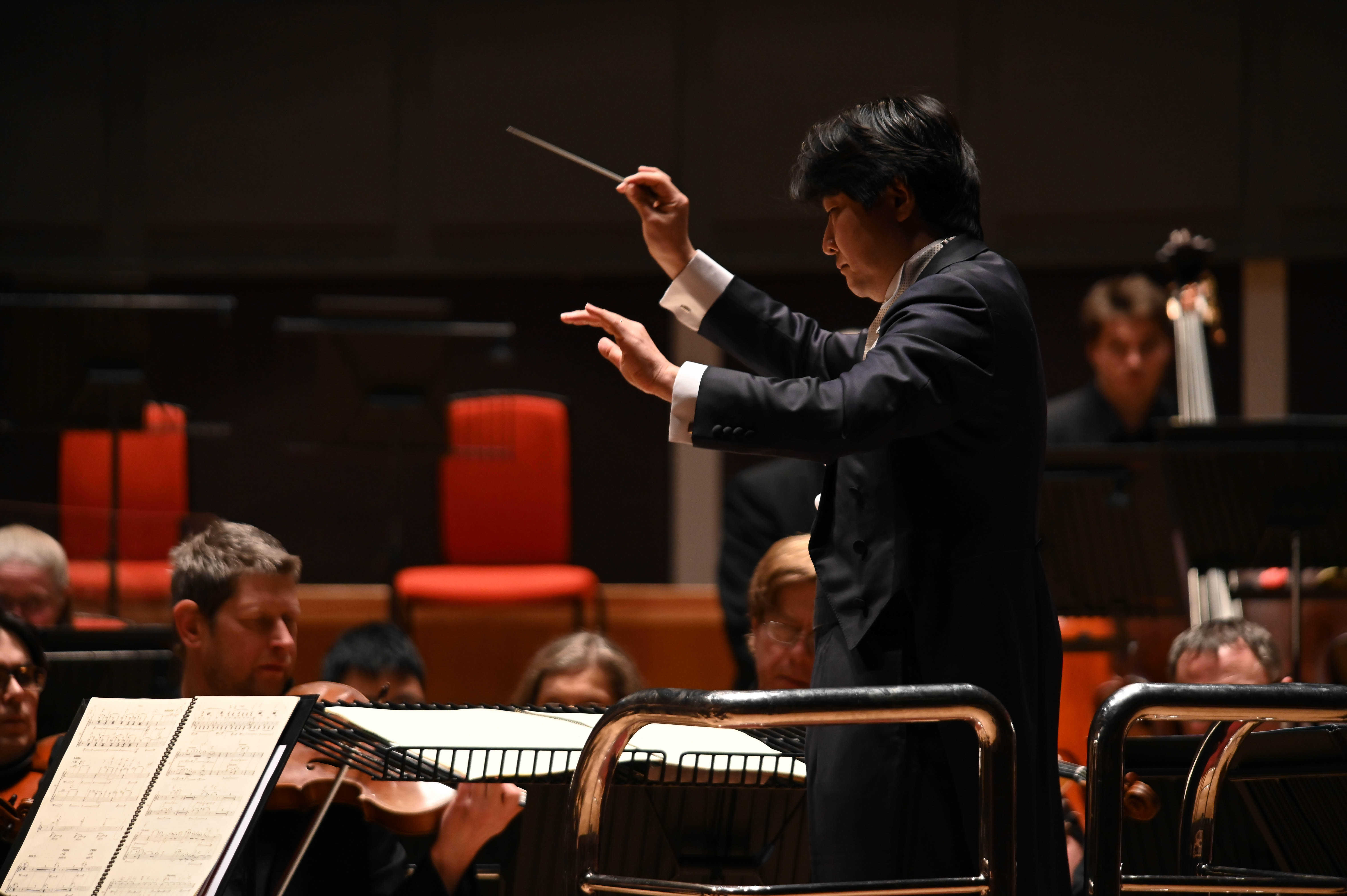
Sean Shibe (guitar), BBC Philharmonic Orchestra / Anja Bihlmaier

Richard Strauss Tod und Verklärung Op.24 (1888-89)
Simpson ZEBRA (or, 2-3-74: The Divine Invasion of Philip K. Dick) (2025) [BBC commission: World premiere]
Berlioz Symphonie fantastique Op.14 (1829-30)

Royal Albert Hall, London
Tuesday 22nd July 2025

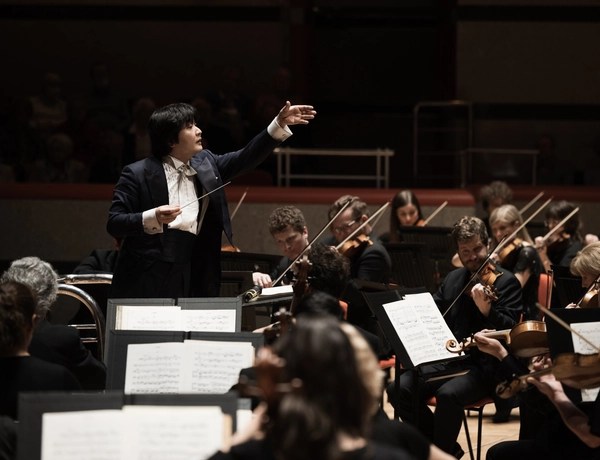
Reviewed by Richard Whitehouse Photos (c) BBC / Mark Allan

The current BBC Proms season features several high-profile premieres, not the least of them being tonight’s from Liverpool-born clarinettist and composer Mark Simpson, remembered at these concerts for his orchestral fanfare sparks launching 2012’s Last Night in no uncertain terms.

On one level, ZEBRA (or, 2-3-74: The Divine Invasion of Philip K. Dick) is a straightforward three-movement concerto following the customary formal trajectory. No work that draws its inspiration from one of Sci-Fi’s most distinctive authors could be deemed predictable and so it proved with this musical representation of an epiphany which, experienced in his mid-40s, pervaded his thinking until his untimely death. Whether or not possessing divine overtones, it duly provided an imaginative context for the present work as it unfolds from a combative and even assaultive opening movement, through a mostly ruminative yet sometimes restive elegy, into a finale whose rapidly accruing energy surges towards an apotheosis of theatrical overkill – the ‘Zebra’ of the title as demonstrative as it remained elusive a presence during Dick’s life.

Music whose virtuosity summoned an orchestral response to match – the BBC Philharmonic Orchestra responding with alacrity to Simpson’s often febrile textures and translucent sonorities under the assured guidance of Anja Bihlmaier. Ultimately, of course, this was Sean Shibe’s show – his magnetic presence and mastery of electric guitar making it a notable addition to a genre still lacking in worthwhile contributions. His encore of a dreamily disembodied soundscape might even have been paying oblique homage to the great, happily not so late Robert Fripp.

On another level, Simpson’s concerto chimed ideally with the likely concept of this concert. One that commenced with an unexceptionally fine account of Richard Strauss’s Tod und Verklärung, Bihlmaier characterizing its more inward episodes with affecting poignancy as compensated for a lack of implacability in its early stages or a slightly underwhelming affirmation toward its close. Rarely in doubt was the direction in which this composer’s metaphysical musings were headed, even if the outcome was a performance no more than the sum of its best parts.

Berlioz pursued a rather less elevated ‘death and transfiguration’ in his Symphonie fantastique, but an approach with which Bihlmaier seemed more fully in accord. The lengthy introduction of Rêveries – Passions was eloquently delineated, and if the main portion of this movement (without exposition repeat) was overly self-contained, it elided naturally into Un bal with its ingratiating waltz offset by passages of despondency and elation. The highlight was a Scène aux champs which unfolded seamlessly from its plangent cor anglais solo, through mounting agitation, near catastrophe then uneasy resignation, to its mesmeric ending made more so by undulating timpani chords. After this, Marche au supplice (with first-half repeat) built with ominous tread to a climax almost graphic in its depiction of the ‘hero’ condemned to death.

An outburst of applause suggested many had not anticipated the orgy to come, but Bihlmaier responded with a Songe d’une nuit du Sabbat that, if lacking the ultimate drama, set the seal on an engaging performance with the BBC Philharmonic at something like its collective best.

You can listen back to this Prom concert on BBC Sounds until Sunday 12 October.

Click on the artist names to read more about Sean Shibe, Anja Bihlmaier, the BBC Philharmonic Orchestra and composer Mark Simpson – and for more on the BBC Proms

Published post no.2,605 – Thursday 24 July 2025

In concert – Ruby Hughes, Natalie Clein & Julius Drake: Schubert and Other Folksongs @ Queen Elizabeth Hall

Ruby Hughes (soprano), Natalie Clein (cello), Julius Drake (piano)

Schubert arr. Jones Der Hirt auf dem Felsen (The Shepherd on the Rock) D965 (1828)
Kodály Sonatina for cello & piano (1922)
Tavener Akhmatova Songs: Dante, Boris Pasternak, Dvustishie (Couplet) (1993)
Brahms 2 Songs Op.91 (1884)
Trad arr. Britten I wonder as I wander (1940-41), At the mid hour of night (Molly, my dear), How sweet the answer (The Wren) (both 1957)
Deborah Pritchard Storm Song (2017)
Janáček Pohádka (Fairy tale) (1910, revised 1923)
Ravel Kaddisch from 2 Mélodies hébraïques (1914)
Bloch From Jewish Life (1924)
Schubert Auf dem Strom (On the river) D943 (1828)
(Encore) Berlioz La Captive

Queen Elizabeth Hall, London, 27 June 2025

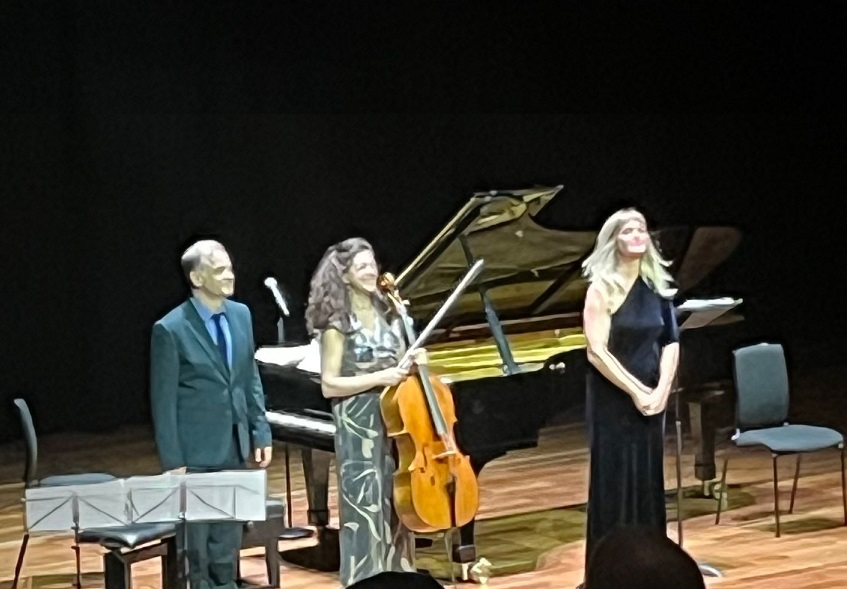
by John Earls. Photo credits (c) Philip Sharp (above), John Earls (below)

Two of the most affecting sections of Ruby Hughes’ excellent 2024 album with the Manchester Collective End of My Days are three of John Tavener’s Akhmatova Songs (Dante, Boris Pasternak and  Couplet) and Maurice Ravel’s Kaddish (from 2 Mélodies hébraïques).

These also featured to dramatic effect in this fascinating concert programme of Schubert and Other Folksongs spanning two centuries, where Hughes was joined by Natalie Clein (cello) and Julius Drake (piano).

In this performance the Tavener song miniatures were performed for voice and cello and were at turns powerful, beautiful and urgent across their nine-minute duration. The prolonged silence from the audience afterwards was noticeable. Ravel’s lament-like Kaddish, this time for voice and (sparse) piano, was similarly respectfully performed and observed.

There were non-vocal pieces for cello and piano where Clein and Drake displayed what a well matched duo they are. Zoltán Kodály’s Sonatina was luminescent, Leoš Janáček’s Pohádka absorbing (not least the cello bowing and pizzicato) and Ernest Bloch’s From Jewish Life was both lovely and mournful.

But this was a concert where Ruby Hughes’ amazing voice was to the fore but often in an understated, but no less impactful way. The captivating trio of Benjamin Britten folksong arrangements with their minimal piano trills were a case in point.

The trio performances were also impressive in their delivery and range. Brahms2 Songs (Op.91) were both gorgeous, while Deborah Pritchard’s Storm Song (from 2017, the most recently written piece) was powerfully unnerving between its haunting start and end (the composer was in the audience to take a well deserved bow).

The concert was bookended by two songs written by Franz Schubert shortly before his death in 1828 at the age of just 31. As David Kettle remarks in his excellent programme notes, to call them simply songs is to do them a disservice. Der Hirt auf dem Felsen (The Shepherd on the rock), arranged by Peter Jones for voice, cello (replacing the clarinet) and piano, traversed a journey of yearning and joy that was both delicate and impassioned. The closing Auf dem Strom (On the river) saw Hughes capturing the drama convincingly throughout.

An encore of Berlioz’s La Captive concluded this concert that combined fascinating and thoughtful programming with performances of beautifully judged expression.

John Earls is Director of Research at Unite the Union and posts at @johnearls.bsky.social on Bluesky and @john_earls on X. You can subscribe (free) to his Hanging Out a Window Substack column here: https://johnearls.substack.com/

Published post no.2,579 – Sunday 29 June 2025

In concert – Marie-Christine Zupancic, Sebastian Heindl, CBSO / Kazuki Yamada: Saint-Saëns, Respighi, Takemitsu & Berlioz

Marie-Christine Zupancic (flute), Sebastian Heindl (organ), City of Birmingham Symphony Orchestra / Kazuki Yamada

Berlioz Le Corsaire Op.21 (1844)
Takemitsu I Hear the Water Dreaming (1987)
Respighi I Fontane di Roma P106 (1916)
Saint-Saëns Symphony no.3 in C minor Op.78 ‘Organ’ (1886)

Symphony Hall, Birmingham
Wednesday 4 June 2025

Reviewed by Richard Whitehouse Picture of Kazuki Yamada (c) Benjamin Ealovega

The dashing upsurge at the start of The Corsair launched this evening’s concert by the City of Birmingham Symphony Orchestra under its music director Kazuki Yamada in fine style. Nor was the pathos in this last of Berlioz’s concert overtures downplayed, and if the main portion lacked the pizzazz of illustrious predecessors, Yamada’s handling of the apotheosis proved an object-lesson in controlled spontaneity – setting the seal on a fine account of a piece that long -standing attendees will recall as a favourite of one-time principal conductor Louis Frémaux.

The music of Tōru Takemitsu was often heard in the era of Simon Rattle, but not I Hear the Water Dreaming. Taking its cue (along with other works of this period) from the ‘Dreamtime’ tradition of Aboriginal art, here a painting from the Papunya region of Western Australia, this short though eventful piece typifies its composer’s final creative phase – the formerly radical tendencies from previous years not so much disowned as finding an accommodation with the impressionist leanings of his earliest maturity. A sonic canvas, moreover, against which solo flute pursues its capricious course, with only a hint of something more confrontational either side of the cadenza-like passage towards its close. Certainly, this was music to which Marie-Christine Zupancic (taking time out as the CBSO’s first flute) sounded unerringly attuned.

CBSO regulars will recall Yamada presenting the whole of Respighi’s ‘Roman Triptych’ at a memorable concert four years ago. Tonight, Fountains of Rome rounded off the first half in a performance at its best in the effervescence of Triton at Morning or the dazzling majesty of Trevi at Midday, fading as if suspended in the Symphony Hall ambience. If Valle Giulia at Dawn felt a little passive in its allure, the enfolding serenity of Villa Medici at Sunset was fully sustained – the delicacy and suppleness of its entwining melodic lines accorded full rein.

The CBSO has been identified with Saint-Saëns’s Organ Symphony since Frémaux’s lauded recording of half-a-century ago, and it remains a work in which this orchestra excels. Yamada was (rightly) intent on stressing its symphonic cohesion, drawing ominous expectancy from the first part’s introduction and building no mean momentum in its ensuing Allegro. Sebastian Heindl’s hushed entry duly set the tone for a raptly eloquent slow movement, measured while never sluggish as it headed toward its heartfelt climax then on to a coda of bittersweet repose.

There was no lack of incisiveness or humour in the scherzo which opens the second part – its scintillating passagework for piano duet artfully integrated into the orchestral texture, with an ideally paced link into the finale with its indelible main melody and methodical build-up to a majestic peroration. Those thunderous initial chords aside, Heindl made less of an impact than might have been expected, but his always resourceful choice of registrations underlined the extent to which both he and Yamada continually had the ‘bigger picture’ uppermost in mind.

Overall, then, a concert which manifestly played to this orchestra’s collective strengths. The CBSO is back next week with its former music director Mirga Gražinytė-Tyla for what will be only a second UK performance, 63 years after the first, for Weinberg’s Fifth Symphony.

For details on the 2024-25 season A Season of Joy, head to the City of Birmingham Symphony Orchestra website. Click on the names to read more about soloists Marie-Christine Zupancic and Sebastian Heindl, and conductor Kazuki Yamada

Published post no.2,496 – Sunday 6 April 2025

In concert – Mary Bevan, CBSO / Edward Gardner: Schubert – Symphony no.9 & Songs

Mary Bevan (soprano), City of Birmingham Symphony Orchestra / Edward Gardner

Schubert
Rosamunde D797 – No. 3b, Romanze (1823)
Der Erlkönig D328 (1815, orch. Berlioz 1860)
Die Forelle D550 (1816, orch. Britten 1942)
Im Abendrot D799 (1825, orch. Reger 1914)
Geheimes D719 (1821, orch. Brahms, 1862)
Symphony no.9 in C major D944 ‘Great’ (1825-6, rev. 1828)

Symphony Hall, Birmingham
Wednesday 17 May 2024

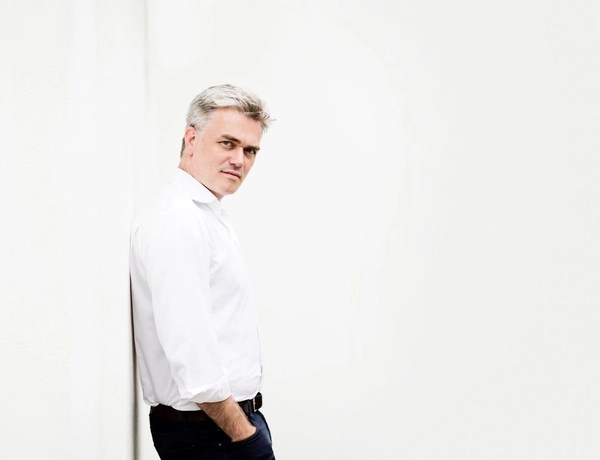
Reviewed by Richard Whitehouse Pictures by Benjamin Ealovega (Ed Gardner), Victoria Cadisch (Mary Bevan)

July concerts no longer a consistent fixture in the City of Birmingham Symphony Orchestra’s schedule, it made sense to end the current season with the intended programme for the fourth and final volume of this orchestra’s Schubert cycle with former chief guest conductor Edward Gardner.

If not his final such project, the ‘Great’ was the final symphony that Schubert finished and the culminating orchestral work of his last decade. Now, as almost two centuries ago, it is not an easy work to being off – but this account hit the ground running with a flowing yet purposeful introduction that elided seamlessly with the initial Allegro. Gardner kept momentum on a sure yet flexible rein over those impetuous and capricious themes of its exposition; underlining the subtly eddying tension of its development and a propulsive coda whose link-up with the tempo of that introduction was marred only by the too emphatic final gesture. Respectively plaintive or consoling, the Andante’s alternate episodes were brought into eloquent accord – the fanfare -riven anguish at its climax then the stark fatalism towards its close being especial highlights.

The essential link between the scherzos of Beethoven and Bruckner, the third movement had the right buoyancy but also a suavity in keeping with the Viennese character of its dance-like themes, and complemented by those of its trio whose lilting elegance were tinged by wistful regret. Launched with a commanding call-to-attention, the Finale did not lack for vigour but, unlike so many performances, Gardner was mindful not to rush either here or in the capering second theme whose relentless string accompaniment was vividly rendered. The development more than fulfilled its purpose as an extended transition into the reprise, then the coda opened with a frisson of anticipation such as underpinned the closing pages as they powered towards the decisive but never headlong close to what was a convincing and engrossing performance.

Regarding repeats, Gardner observed that of the first movement’s exposition but not those in the second half during either scherzo or trio, and that of the finale’s exposition. This at least made matters easier for the players, and left options open for their inclusion in the recording.

That forthcoming release on Chandos will hopefully find room for the five songs that formed the first half of this concert, with each of them arranged by a different composer. The pensive Romanze from Schubert’s incidental music to Rosamunde was heard in the composer’s own orchestration, with the compact psychodrama of Der Erlkōnig in a resourceful and nowadays overlooked orchestration by Berlioz. The looping but not always ingratiating playfulness of Die Forelle was expertly attended to by Britten, while the pensive soulfulness of Im Abendrot summoned an appropriate response from Reger; the sombre resignation of Geheimnis making for a welcome encore in its orchestration by Brahms. Throughout the selection, Mary Bevan’s veracity of emotional response and her clarity of enunciation were qualities worth savouring.

This programme may have concluded the Schubert cycle by Gardner and the CBSO, though hopefully it will not see of this partnership in recorded terms – the symphonies of Schumann, and maybe Brahms, being well worth considering as additions to the orchestra’s discography.

For details on the 2024-25 season A Season of Joy, head to the City of Birmingham Symphony Orchestra website. Click on the names to read more about soprano Mary Bevan and conductor Edward Gardner

Published post no.2,243 – Thursday 18 July 2024

In concert – Eugene Tzikindelean, CBSO / Kazuki Yamada: Dai Fujikura, Walton & Berlioz

Eugene Tzikindelean (violin), City of Birmingham Symphony Orchestra / Kazuki Yamada

Fujikura Wavering World (2022) [CBSO co-commission: UK premiere]
Walton Violin Concerto in B minor (1938-9, rev. 1943)
Berlioz Symphonie Fantastique, Op. 14 (1830)

Symphony Hall, Birmingham
Wednesday 17th January 2024

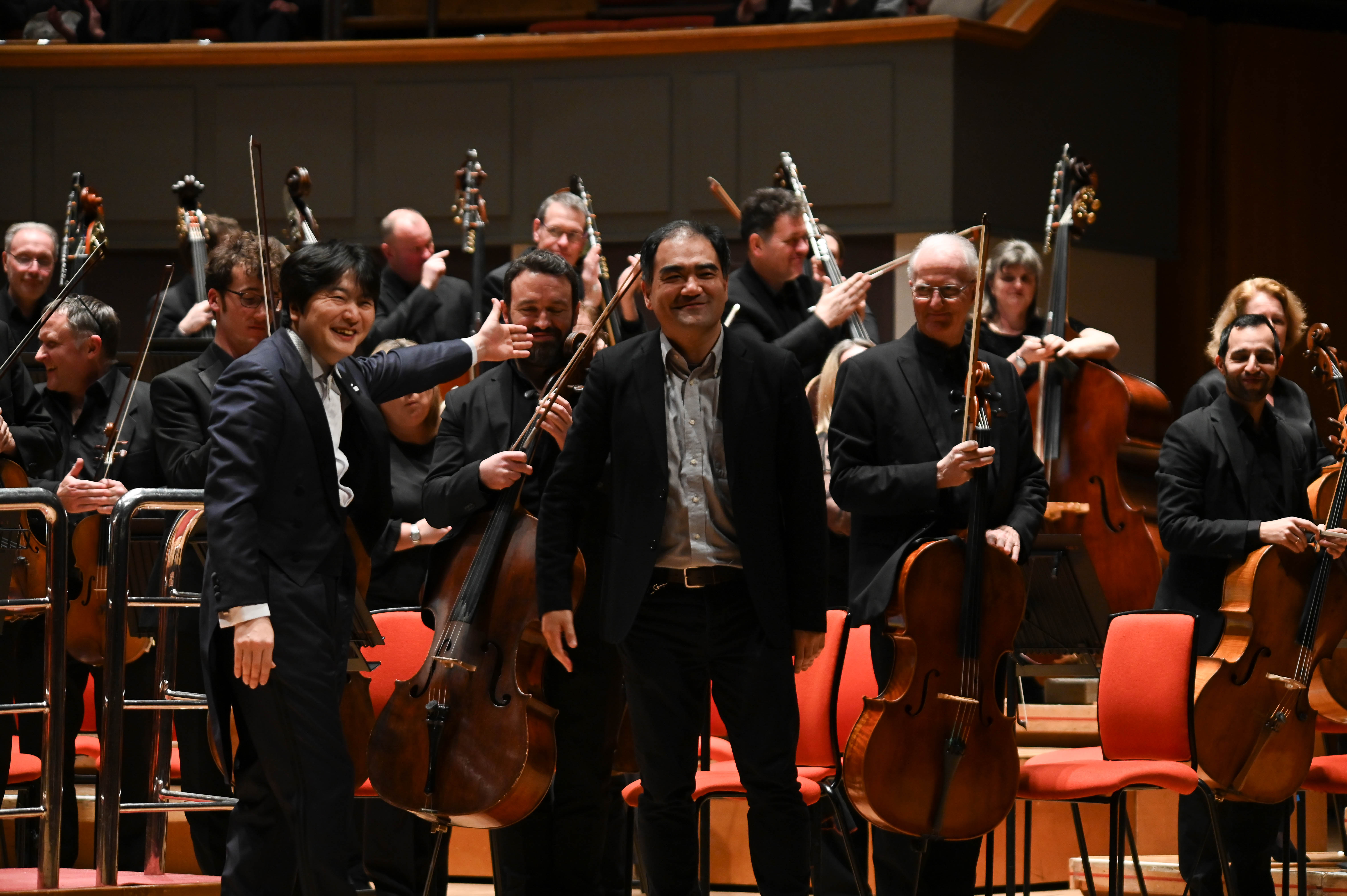
Reviewed by Richard Whitehouse. Photos (c) Beki Smith

Tonight’s concert by the City of Birmingham Symphony Orchestra brought a varied trilogy of works, one which started with a first UK hearing (following its premiere in Seattle almost two years ago) of Wavering World by the Japanese-born and British-based composer Dai Fujikura.

In his programme note, Fujikura remarks on how little he knew of his traditional culture until having left Japan, and this piece draws upon the myth surrounding creation for an eventful if always cohesive journey through the emergence of the heavenly world, the human world and the underworld. This is achieved by separating the orchestra into stratified layers that do not succeed each other as merge into diverse and intricate textures where these sizable forces are imaginatively deployed; the music gradually moving away from its earlier austerity toward a luxuriance whose salient motifs are recognizable despite their transformation. Directing with unerring focus, Kazuki Yamada secured a vivid rendition which also served as a reminder that Fujikura is less often heard than might be in his country of residence these past three decades.

The fortunes of Walton’s Violin Concerto have lessened this past quarter-century, so Eugene Tzikindelean’s advocacy was its own justification. He had the measure of the initial Andante’s alternation between languor and agitation, ingenuity of thematic transformation offsetting any lack of originality in its themes, then gave of his best during a central Presto whose technical fireworks are tellingly balanced by yearning lyricism. If the final Vivace was less convincing, this might have reflected on the actual music – Walton putting his ideas through their audibly Prokofievian paces before evoking Elgar in a lengthy accompanied cadenza then gratuitously affirmative coda. The CBSO gave stalwart support, just over 50 years since it accompanied Yehudi Menuhin and the composer in a performance commemorating Walton’s 70th birthday.

After the interval, Yamada (above) presided over a ‘no holds barred’ reading of Berlioz’s Fantastic Symphony. The latter-day tendency is to stress its symphonic cogency, but there was little of this in a Daydreams and Passions veering impulsively, even recklessly, between despondency and elation. The waltz element of A Ball was nudged out of shape, but its darker undertones were well judged, with the lengthy build-up then lingering subsidence of Scene in the Fields enhanced by Rachael Pankhurst’s plangent cor anglais and ominous timpani toward the close.

This was hardly the first performance to head off seemingly at a tangent, but March to the Scaffold (shorn of its first-half repeat, as had been the opening movement) quickly became   a parade-ground romp in which the fateful fall of the guillotine went for relatively little. Nor was Dream of a Witches’ Sabbath without its Disney-like element of overkill, though here Yamada ensured a stealthy accumulation through its reiterations of the Dies irae plainchant and fugal episode to a peroration whose thunderous power seemed nothing if not conclusive.

An Episode in the life of an Artist, indeed, as demonstrably left its mark on the enthusiastic audience. Yamada and the CBSO will be doing it all again on April 10th, but next week sees the more Classical appeal of Mozart and Beethoven in the company of Maxim Emelyanychev.

Click on the link to read more on the current CBSO concert season, and on the names for more on violinist Eugene Tzikindelean, conductor Kazuki Yamada and composer Dai Fujikara

Published post no.2,063 – Sunday 21 January 2024