In concert – BBC Singers / Martyn Brabbins @ St Paul’s Knightsbridge – Holst, Britten, Garrard, Elgar & Pickard

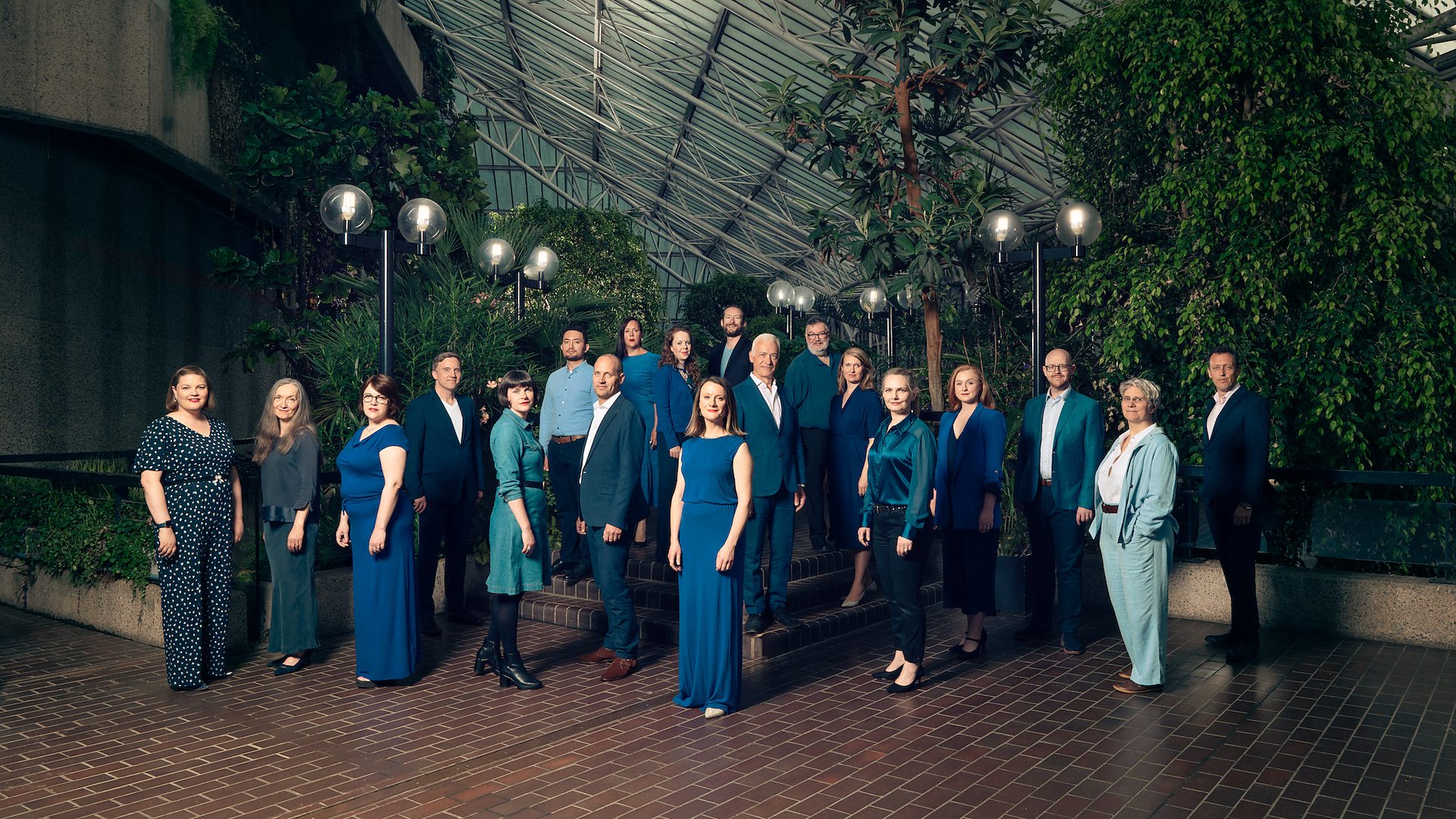
BBC Singers, Elizabeth Bass (harp), Richard Pearce (piano), Andrew Barclay (percussion) / Martyn Brabbins

Holst Choral Hymns from the Rig Veda – Group 3, H90 (1910)
Britten The Ballad of Little Musgrave and Lady Barnard (1943)
Garrard Missa Brevis (2017-18)
Elgar Five Part-Songs from the Greek Anthology Op.45 (1902)
Pickard Elemental (2024-25) (BBC commission: World premiere)

St Paul’s, Knightsbridge, London
Friday 19 September 2025

Reviewed by Richard Whitehouse

The upsurge of interest in and performances by the BBC Singers in the wake of its intended demise shows little sign of abating, and there could be few vocal ensembles able to put on a programme as stylistically inclusive or as technically demanding as that heard this afternoon.

Nowhere more so than Elemental by John Pickard, its first performance occupying the second half. Never absent from the composer’s output, choral music came into own with the powerful Mass in Troubles Times (premiered nearby at St Peter’s, Eaton Square in 2019) and the present work can be heard as a continuation in terms of its underlying concept. A further collaboration with author and theologian Gavin D’Costa, its form is of a journey through the elements such as Pickard had favoured earlier in his output but here with its emphasis firmly on the spiritual arising out of human concerns. Whether individually or collectively, the writing for 18 voices could hardly be more varied and imaginative, while the obbligato roles for harp plus a single percussionist playing across the spectrum of instruments enhances these settings accordingly.

After the evocative Prologue with its Paracelsian take on living matter, Earth draws on the recollections of those in the Tham Luang Cave Rescue – notably teenagers of the Wild Boars football team – in music whose initial bravado gradually assumes a near metaphysical import. Fire integrates its Shakespeare quotations into consideration of this most transformative and cathartic of elements. Air centres on Bessie Coleman with her ambition, racially rather than personally motivated, to become the first professional pilot from African-American ancestry – her combative and ultimately ill-fated career depicted with often graphic immediacy. Water then illustrates the Biblical flood narrative from an oblique and even ambivalent perspective, before Epilogue returns to evocation of the numinous as it builds with a frisson of emotion.

Not that the first half was any mere preparation. Most intimate and alluring of four such sets, the third group of Holst’s Choral Hymns from the Rig Veda traverses the ethereal, the limpid, the hieratic then the questing in the company of female voices and harp. The former were no less attuned to the greater astringency of Sara Garrard’s Missa Brevis – its bracing inclusion of traditional Estonian music offset by the greater introspection elsewhere; these contrasted aspects finding at least a degree of release with the emotional immediacy of the Agnus Dei.

Heard in alternation, the male voices duly came into their own with Britten’s The Ballad of Little Musgrave and Lady Barnard – its folk melody (Matty Groves) stretched through this plangent wartime setting with piano of illicit love, innocent betrayal, desperate revenge and stark lament. Facets that barely feature in Elgar’s Five Part-Songs from the Greek Anthology yet these brief if characterful treatments of translations by Alma Strettell, no less typical than his major choral and orchestral works from this period, were dispatched here with due relish.

Whatever else, this showcase with substance was conducted with unfailing insight by Martyn Brabbins, whose prowess in choral repertoire needs hardly more reiterating than his advocacy of Pickard, and is absolutely worth hearing when broadcast by BBC Radio 3 this Wednesday.

You can hear the BBC Radio 3 broadcast on Wednesday 24 September by clicking here

For more information on the artists, click on the names: BBC Singers, Martyn Brabbins, Elizabeth Bass, Richard Pearce and Andrew Barclay, and composers John Pickard and Sara Garrard

Published post no.2,664 – Sunday 21 September 2025
In concert – Ryedale Festival: Timothy Ridout, Orchestra of Opera North / Tom Fetherstonhaugh – Bliss: Viola Concerto first performance; Vaughan Williams, Coleridge-Taylor & Elgar

Timothy Ridout (viola), Orchestra of Opera North / Tom Fetherstonhaugh

Vaughan Williams The Wasps – Overture (1909)
Bliss (orch. Wilby) Viola Concerto, B68a (1933, orch. 2023)
Coleridge-Taylor Solemn Prelude in B minor, Op. 40 (1899)
Elgar Variations on an Original Theme, Op. 36 ‘Enigma’ (1898-99)

Ripon Cathedral
Saturday 19 July 2025

Reviewed by Richard Whitehouse Photos (c) Jonas Cradock

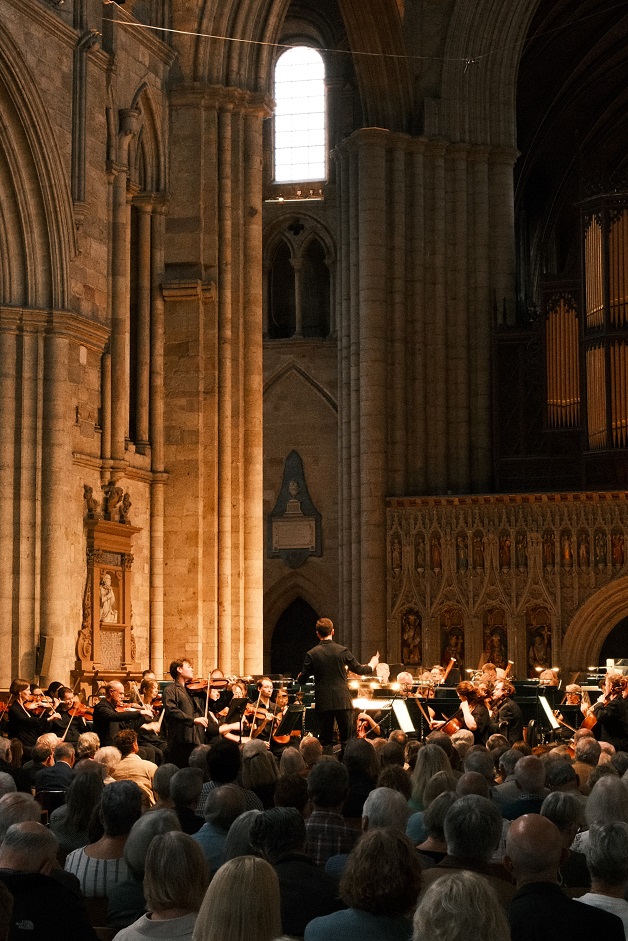
With a variety of activities throughout its region, the Ryedale Festival is now well established among the most wide-ranging of such events 45 years since its inauguration and this evening’s concert showcased the Orchestra of Opera North in the impressive setting of Ripon Cathedral.

The all-British programme centred on the first hearing for a Viola Concerto that Arthur Bliss had always intended to create out of his sonata for that instrument, but has only recently been carried out by Philip Wilby. A former professor of composition at Leeds University, Wilby is best known for his choral and organ music but as was duly confirmed, is an able orchestrator with a keen appreciation of Bliss’ idiom. Hence the successful launch of a piece that deserves to assume its place within the still-limited repertoire of concertante works for this instrument.

That it exists at all was no doubt through the prompting of Lionel Tertis, for whom Bliss wrote his Viola Sonata some 20 years after a single-movement Violin Sonata (never played publicly during his lifetime) as was his only other such duo. Formally it is among his most innovative pieces, the skewed sonata design of its initial Moderato exuding a restive and even impulsive eloquence as responded well to an orchestration which resembles more the intimacy of Bliss’ late Cello Concerto than the full-blooded fervour of his earlier such works for piano or violin.

The ensuing Andante is Bliss at his most personal – its darkly ruminative progress building to an anguished culmination made the more so in this context, before subsiding into the fugitive unease from which it had emerged. There follows a propulsive Molto allegro modelled on the rhythmic syncopation of the Furiant, a scherzo-cum-finale climaxing with a powerful cadenza here forcefully partnered by timpani. After which, the Coda poignantly surveys all that went before in a sustained Andante maestoso as brings about an apotheosis of plangent resignation.

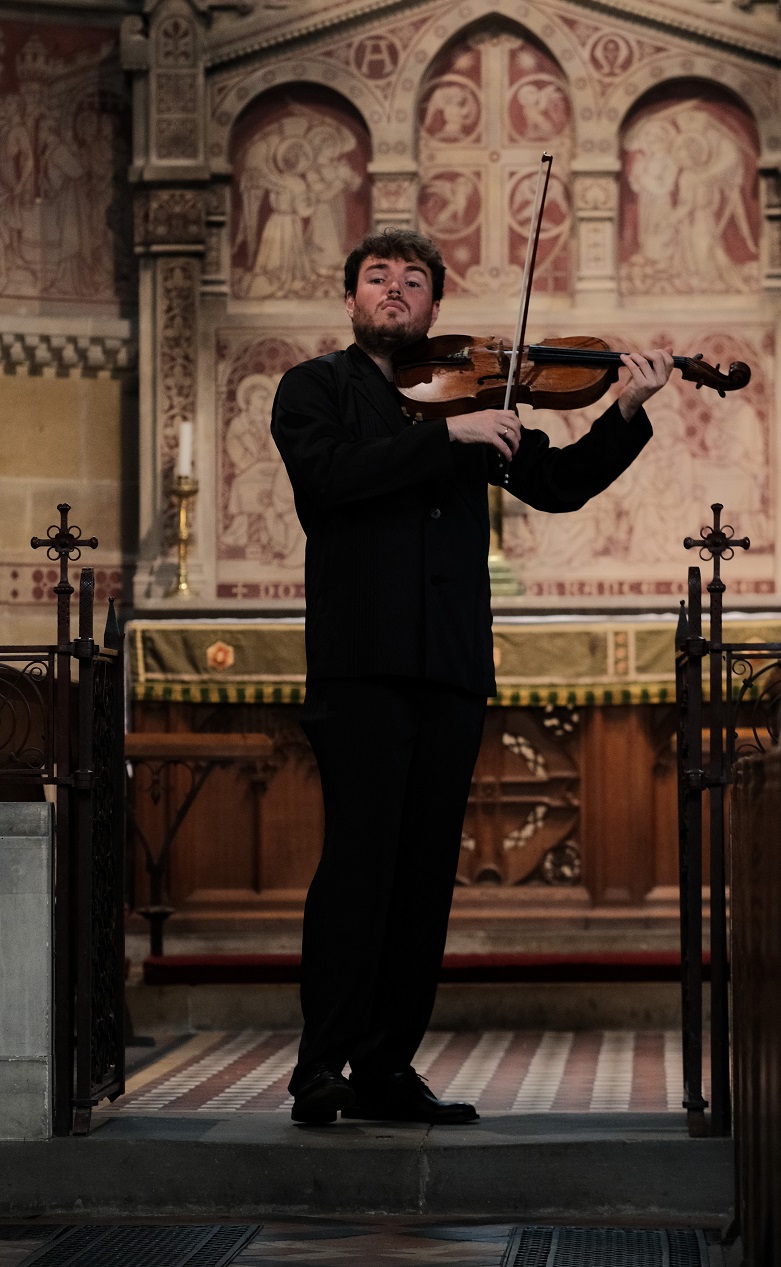
At around 27 minutes, Bliss’s Viola Concerto is equal in its scale as in its expressive reach to comparable works by Hindemith and Walton, so credit to Timothy Ridout (above, among the leading younger violists) that its essence was so tangibly conveyed. Nor was the OON found wanting under the assured direction of Tom Fetherstonhaugh, heard here in an ambience where detail lacked only the final degree of definition. Hopefully a recording will follow of what is likely to be the most important performance scheduled in this 50th anniversary-year of Bliss’ death.

The first half had begun in sparking fashion with the overture Vaughan Williams wrote as part of incidental music for a Cambridge University production of Aristophanes’ satire The Wasps, its incisiveness not precluding an open-hearted response to the ineffable melody at its centre.

A very different proposition duly launched the second half. Solemn Prelude is a characteristic statement by Samuel Coleridge-Taylor that did not merit the total neglect after its premiere at Worcester Cathedral; further hearings only made possible with the score’s belated relocation at the British Library so new parts could be made. Fusing Elgarian nobility with Brucknerian grandeur, any risk of portentousness was countered with an expressive immediacy abetted by Fetherstonhaugh’s flexible control over pace so that a welcome spontaneity came to the fore.

It certainly made an ideal entrée into the ‘Enigma’ Variations. Performances of Elgar’s earliest masterpiece now seem more frequent than ever, and tonight’s had much to commend it. Never fazed by the expansiveness of this acoustic, Fetherstonhaugh opted for mainly swift tempi as might easily have caused blurring in those faster variations had it not been for his scrupulous balance of detail. Elsewhere there was no lack of emotional input, not least during variations VIII-X with the wistfulness of ‘W.N.’ then deftness of ‘Dorabella’ framing a ‘Nimrod’ whose fervour was the greater for its relative urgency. Nor was the ‘E.D.U.’ finale lacking in panache as it brought the whole sequence to a conclusion of ringing affirmation, though it was maybe a pity that this building’s impressive organ could not have been utilized for the closing bars.

What was hardly in doubt was the response that this account received from the near-capacity audience, making one anticipate more such events at Ripon Cathedral in future editions of the Ryedale Festival, as it continues assiduously to promote the cultural life of North Yorkshire.

For more on the festival, visit the Ryedale Festival website, and click on the artist names to read more about violist Timothy Ridout, the Orchestra of Opera North and their conductor Tom Fetherstonhaugh. Meanwhile click to read more on the Arthur Bliss Society and the Samuel Coleridge-Taylor Foundation

Published post no.2,602 – Monday 21 July 2025

In concert – Sheku Kanneh-Mason, CBSO / Kazuki Yamada: Elgar Cello Concerto & Tchaikovsky Symphony no.5

Sheku Kanneh-Mason (cello), City of Birmingham Symphony Orchestra / Kazuki Yamada

Elgar Cello Concerto in E minor Op.85 (1919)
Tchaikovsky Symphony no.5 in E minor Op.64 (1888)

Symphony Hall, Birmingham
Thursday 19 June 2025 2:15pm

Reviewed by Richard Whitehouse Picture of Sheku Kanneh-Mason (c) Andrew Fox

The City of Birmingham Symphony Orchestra’s ‘Season of Joy’ ended (at least at its home base) this afternoon with this concert in E minor, featuring major works by two composers whose wresting triumph from out of adversity was by no means always their strongest suit.

It is all too prevalent these days to talk of Elgar’s Cello Concerto as being the ‘end of an era’ statement, so credit to Sheku Kanneh-Mason for leavening any overt fatalism with a lyrical intensity which paid dividends in the musing restiveness of the first movement – its indelible opening gesture rendered with an understated defiance that set the course for what followed. Nor was the Scherzo’s glancing irony at all undersold, its tensile energy seamlessly absorbing the mock nobility of its secondary theme on the way to a conclusion of throwaway deftness.

Others may have summoned greater fervency from the Adagio, yet Kanneh-Mason’s unforced poise in this ‘song without words’ was its own justification and an ideal entrée into the more complex finale. Especially impressive was his methodical while never calculated building of tension towards a climax of tangible emotional intensity, capped with the terse stoicism of its coda. Kazuki Yamada and the CBSO were unfailingly responsive in support. Kanneh-Mason returned with the 18th (Sarabande) of Mieczysław Weinberg’s 24 Preludes (1969) as a sombre encore.

If to imply that by being his most ‘classical’ such piece, Tchaikovsky’s Fifth Symphony may also be his most predictable, Yamada evidently had other ideas. Certainly, there was nothing passive about the first movement’s scene-setting Andante, Oliver Janes palpably ominous in its ruminative clarinet theme. A smattering of over-emphases in phrasing just occasionally impeded the Allegro’s rhythmic flow but was outweighed by the gripping spontaneity of the whole. Even finer was the Andante cantabile, as undulating lower strings launched french horn player Elspeth Dutch’s eloquent take on its ineffable main melody. The eventual climax was curtailed by a brutal intrusion of the ‘fate’ motto, before the music subsided into its calmly regretful close. Whether or not Tchaikovsky’s greatest slow movement, Yamada’s reading made it seem so.

Interesting this conductor made an attacca to the ensuing Valse, which proved effective even if one between the first two movements would have been even more so. Whatever its laissez-faire elegance, this cannily structured movement is more than a mere interlude – not least for the way the motto steals in at its close. Yamada ensured it connected directly into the Finale’s slow introduction, its fervency reined-in so as not to pre-empt the energy of the main Allegro as it surged toward one of the most theatrical ‘grand pauses’ in music. Taking this confidently in its stride, the CBSO was equally in control of an apotheosis whose grandiloquence never risked overkill. The charge of insincerity that its composer found hard to refute might never have gone away, yet heard as an inevitable outcome, this was pretty convincing all the same.

It found the CBSO in formidable shape as it embarks on a two-week tour of Japan under its music director. A handful of UK concerts (including an annual appearance at the Proms) then precedes next season which begins with more Elgar in the guise of The Dream of Gerontius.

For details on the 2025-26 season, Orchestral music that’s right up your street!, head to the City of Birmingham Symphony Orchestra website. Click on the names to read more about soloist Sheku Kanneh-Mason and conductor Kazuki Yamada

Published post no.2,571 – Saturday 21 June 2025

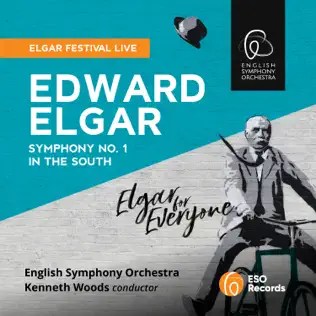
On Record – English Symphony Orchestra / Kenneth Woods: Elgar Festival Live – Symphony no.1 & In The South (ESO Records)

Elgar
Symphony no.1 in A flat major Op.55 (1907-08)
In the South (Alassio) Op.50 (1903-04)

English Symphony Orchestra / Kenneth Woods

ESO Records ESO2501 (80’10″]
Producer and Engineer Tim Burton

Live performances at Worcester Cathedral on 4 June 2022 (In The South) and 3 June 2023 (Symphony)

Reviewed by Richard Whitehouse

What’s the story?

There could hardly been a more fitting release to launch the English Symphony Orchestra’s own label than these performances drawn from past editions of the Elgar Festival, with both of them a reminder of the ESO’s formidable prowess over the range of symphonic writing.

What are the performances like?

The First Symphony may not have the usual number of strings to complement its triple wind, but due to the resonance of Worcester Cathedral this is not evident as regards internal balance. Not least in an opening movement whose motto-theme is never indulgent, setting the tone for an Allegro where expressive variety goes hand in hand with formal focus. Especially fine is a hushed transition into the reprise, then a coda that distils the equivocal mood as this subsides into ruminative calm. Woods is mindful to invest scherzo and trio with consistency of pulse, so if the former feels reined in on return, the latter has an ideal poise and wistfulness. Nor is the transition other than indicative of the Adagio’s profundity, Woods negotiating its soulful main theme and wistful episodes with unerring rightness through to the ineffable closing bars.

If the finale has any marginal falling-off of inspiration, it is not apparent here. Sombre if shot through with expectancy, its introduction launches an Allegro whose alternating incisiveness and suavity holds good over an impulsive development, then a transformation of the codetta whose pathos intensifies for an apotheosis where the motto-theme carries all before it. Not that the closing pages are bombastic or grandiloquent in import – rather, they set the seal on a work whose affirmation is made the greater for its having been so purposefully attained.

As for In the South, the main issue is in setting a tempo flexible enough to accommodate this concert overture’s extended sonata design without it becoming episodic. Here a surging main theme, its speculative transition and suave second theme emerge seamlessly – the underlying tension carried into a development whose impulsiveness is maintained across the intervening first episode. Amply evoking the grandeur of ‘empires past’, this is astutely handled such that its implacability eschews bathos. If the second ‘canto populare’ episode is just a little reticent, its expressive raptness – and Carl Hill’s eloquent playing of its indelible viola melody – more than compensates. Nor is there any loss of continuity during the reprise, Woods’s building of momentum near the start of the coda ensuring an irresistible yet never overbearing peroration.

Does it all work?

Almost always. ESO concerts at the Elgar Festival have yielded numerous performances of note, with In the South among the finest yet in vindicating a work that can all too easily fall victim to its seeming indulgencies. Nor is that of the First Symphony far behind in revealing the formal intricacy and expressive variety of music as personal as is any of this composer’s major works. Anyone who may have harboured doubts about either piece is likely to be won over, confirming an empathy as augers well for the Second Symphony at this year’s festival.

Is it recommended?

Absolutely. These readings are far more than mementos of their concerts, this being ‘Volume 1’ suggests that further performances from the Elgar Festival will be made available. Note too the first instalment of a Sibelius cycle is downloadable as the second release on ESO Records.

Listen / Buy

You can read more about this release and explore purchase options at the ESO website Click to read more about the English Symphony Orchestra, conductor Kenneth Woods and the Elgar Festival 2025

Published post no.2,536 – Sunday 18 May 2025

In concert – Peter Donohoe, RPO / Brabbins: Elgar ‘Enigma’ Variations; Bliss Piano Concerto; Vaughan Williams @ Cadogan Hall

Peter Donohoe (piano, above), Royal Philharmonic Orchestra / Martyn Brabbins (below)

Vaughan Williams Five Variants of Dives and Lazarus (1939)
Bliss Piano Concerto in B flat major Op.58 (1938-9)
Elgar Variations on an Original Theme Op.36 ‘Enigma’ (1898-9)

Cadogan Hall, London
Wednesday 16 April 2025

Reviewed by Richard Whitehouse Pictures (c) Andy Paradise

June 1939 saw one of the more memorable occasions for British music with several premieres at the World’s Fair of New York, this multi-day festival with its theme of ‘Building the World of Tomorrow’ thrown into ironic relief given the outbreak of war in Europe three months later.

The first half of tonight’s concert by the Royal Philharmonic Orchestra duly replicated that on June 10th, beginning with Five Variants of Dives and Lazarus which Vaughan Williams wrote for the event. One of the few non-symphonic orchestral works from his later years, its scoring for divided strings and harp gives a warmly evocative context to this succession of paraphrases whose steadily unforced evolution is rounded off by one of its composer’s most radiant codas. Various solo passages provided the RPO’s section-leaders with their moment in the spotlight.

That concert 85 years ago continued with the Piano Concerto that Arthur Bliss had written for Solomon which enjoyed frequent revival over the next quarter-century. This 50th anniversary of its composer’s death provided an ideal opportunity to reassess a work conceived within the late-Romantic lineage, notably an opening movement whose thunderous initial gestures set in motion this large-scale sonata design whose overt rhetoric is tempered by an expressive poise and more ambivalent asides which make it anything but the epigone of an already bygone era.

Among a few present-day pianists to have this piece in his repertoire, Peter Donohoe tackled its many technical challenges head-on; the RPO and Martyn Brabbins (who had never before conducted it) overcoming some occasional moments of mis-coordination so as to present it to best advantage. He brought a lighter touch and no little emotional poise to bear on the central Adagietto, its inwardness carried over into a finale whose probing introduction was a perfect foil to the bravura that followed. Whatever qualms Bliss may have had regarding the ‘world situation’, there was little sense of doubt as the music surged to its emphatic and affirmative close – thereby setting the seal on this memorable performance and a work which, whatever it lacks in distinctive invention, vindicates Bliss’s overall ambition to an impressive degree.

A pity that logistics (and economics!) made revival of Bax’s Seventh Symphony, which had originally featured in those New York concerts, impracticable but hearing Brabbins direct so perceptive an account of Elgar’s Enigma Variations was no hardship. Perhaps because of the immediacy of the Cadogan Hall acoustic, it was also one in which the relatively brief livelier variations came into their own – hence the unbridled impetus of the fourth (W.M.B), seventh (Troyte) or 11th (G.R.S) variations, though there was no lack of eloquence in the first (C.A.E) and fifth (R.P.A) variations, or suffused fervour in the ninth (Nimrod). The 10th (Dorabella) variation was made into an intermezzo halting if whimsical, and the 13th became a romanza such as opened out this work’s expressive remit onto an altogether more metaphysical plane.

Those having heard Brabbins conduct this work in the Royal Albert Hall quite likely missed that organ-reinforced opulence afforded the 14th (E.D.U) variation yet, as this finale built to its triumphal conclusion, the unfailing conviction of this performance could hardly be denied.

For details on their 2024-25 season, head to the Royal Philharmonic Orchestra website. Click on the artist names to read more about pianist Peter Donohoe and conductor Martyn Brabbins, and also to discover more on The Arthur Bliss Society

Published post no.2,509 – Monday 21 April 2025