Wigmore Mondays – Dreams in the night with Sandrine Piau and Susan Manoff

sandrine-piau

Sandrine Piau (soprano), Susan Manoff (piano) – Wigmore Hall, London, live on BBC Radio 3, 5 October 2015

Listening link (open in a new window):

http://www.bbc.co.uk/programmes/b06fljk4

on the iPlayer until 4 November

Spotify

In case you cannot hear the broadcast, here is a playlist of the music in this concert, from available versions on Spotify. Where possible the versions used are those recorded by Sandrine and Susan themselves.

https://open.spotify.com/user/arcana.fm/playlist/4cTJZxw7IZDoP2W2Mrs3H5

What’s the music?

Mendelssohn: Neue Liebe (1834); Nachtlied (1847); Hexenlied (1827) (8 minutes)

Vincent Bouchot: Galgenlieder (1991-92) (9 minutes)

Richard Strauss: Die Nacht (1885); Morgen! (1894); Ständchen (1888) (10 minutes)

Debussy: Chansons de Bilitis (1898) (9 minutes)

Trad, arr. Britten: The Salley Gardens (1940); There’s none to soothe (1945); I wonder as I wander (c1940-41) (9 minutes)

What about the music?

Sandrine Piau and Susan Manoff begin with songs by Mendelssohn, an area of his output that doesn’t get a great deal of exposure in the concert hall, especially when you consider he wrote dozens of them! However the first song, Neue Liebe, shows an instance where the poetry of Heinrich Heine bought out the best in him.

Equally intriguing is the inclusion of music by Vincent Bouchot. Galgenlieder means ‘gallows songs’, dedicated to ‘the child that is within the man’, and Bouchot here uses some curious poems by Christian Morgentern, who appears to be writing about visions of hanged kings. They are strange and expressionist in nature, on occasion sounding like something the Second Viennese School of composers (especially Schoenberg) might write.

Debussy’s Chansons Bilitis are a relatively early work, setting the Sapphic poetry of Pierre Louys, who claimed these texts were adapted from the Greek – but Debussy knew otherwise. The flute of Pan was a topic that was particularly close to the composer at this time, and he used it as a basis for the famous orchestral piece Prélude a l’après-midi d’un faune.

Like Mendelssohn, Richard Strauss wrote a good number of songs, but apart from a few celebrated examples many of them lie undeservedly in the doldrums where the concert hall is concerned. Happily the recent celebrations of 150 years since the composer’s birth have brought many of the songs, which are highly original in form, back into the spotlight. Piau and Manoff give three of the most popular examples here, tending towards Strauss’s earlier work.

Britten amassed some 65 folksong arrangements for voice and piano so that he could perform them with his partner Sir Peter Pears. Often the piano parts are reinvented, casting the original melody into a very different light. The three examples in this concert are some of the very best.

Performance verdict

A note first of all to say Arcana arrived late due to a prior engagement, and so took in the Mendelssohn and Bouchot from the BBC iPlayer link above.

However even in half a concert Sandrine Piau showed just why she is one of the finest sopranos around today. While we often hear her in 18th century repertoire (Baroque operas, mostly) she has a voice perfectly suited to the recital hall.

What really shone through about this concert was that she had clearly taken time to get to know the resonance of the Wigmore Hall, for in Britten’s setting of I wonder as I wander, where she is largely unaccompanied, the high notes found an echo from the roof perfectly. This completed a spellbinding trio of Britten folksong arrangements, Piau sitting at the piano with Susan Manoff for There’s none to soothe.

Manoff, despite apparently not feeling her best, clearly enjoyed the Richard Strauss selection, where her full bodied piano parts were beautifully shaded in their portrayal of nocturnal scenes. The Debussy Chansons de Bilitis were heady, perfumed songs that spoke of sultry nights of passion.

Beginning the concert were the Mendelssohn songs, showing a natural writer at work and enjoying the unhinged Hexenlied especially. The Bouchard was intriguing, for although the text was very strange indeed at times, there was much to commend the musical language of this little known composer. Piau and Manoff brought out the expressive elements of his work.

What should I listen out for?

Mendelssohn

1:53 – a challenging start for any singer, Neue Liebe is full of big leaps, high notes and jumpy chords from the piano.

4:15 – a much calmer scene is set for Nachtlied, though this reaches a peak of intensity and a rapturous high note, as the singer beckons the Nightingale to strike up.

7:09 – there is no mistaking the devilish edge to Hexenlied (Witches’ Song) as the piano begins with an urgent figure that the singer takes up. Hers is an unhinged vocal, while the piano depicts the lightning and wind that whisk the witch away ‘through the howling gale to the Brocken’.

Bouchot

10:06 Mondendinge (Moon things) – quite a spooky intro from the piano, and an otherworldly atmosphere even when the singer comes in.

12:20 – Der Hecht (The Pike) – another surreal story, one that finds the singer leaping about like a distressed fish at the start. Seemingly random movements but an effective finish

13:40 – Die Mitternachtsmaus (The Midnightmouse) – another eerie song of the night time, the scene set by the higher right hand of the piano, which seems to be enacting the midnight chimes. The singer’s voice is also high and quite tense.

16:45 – Das Wasser (Water) – Bouchot’s style is loosely tonal, and even here where the rippling textures of the piano obscure pure harmony there is a clear centre. Again the soprano voice is high and pretty tense, but it is arguably the piano that is the more descriptive of the two here.

17:51 – Galgenkindes Wiegenlied (Gallows child’s lullaby) – this is a song with much less movement, but the piano part still suggests the darkness of the night with the odd beam of moonlight.

Richard Strauss

22:34 – Die Nacht – Strauss immediately captures the rarefied atmosphere of the night. At 24:22 the mood darkens as Strauss turns the music towards the minor key – though this mood does not prevail, with soaring notes from the soprano before a soft close from the piano.

25:44 – Morgen! – Possibly Strauss’s most famous song, this begins with an extended prelude. Here the twilight hours are exquisitely rendered by the piano, before the hushed voice enters at 26:56. The song is totally unrushed, reaching the utmost serenity when the piano adds a postlude from 29:02, fading into stillness.

29:48 – Ständchen – here the piano is much more active, portraying the rustling wind Highest note reached at 31:42 before a jubilant postlude.

Debussy

32:51 – La flûte de Pan – the piano immediately casts the spell of this poem through an enchanted and elaborate melody in the right hand. It is a beautiful intro and the mystery deepens with the soprano’s entry.

35:21 – La Chevelure – a sensual and heady poem, and the music wanders in a distracted state, almost falling under its own spell as the senses take hold.

38:39 – Le Tombeau des naiads – whereas the previous song was all about the sensuality of long hair, this song has icy tendrils and spreads a wintry chill, thanks to Debussy’s piano writing. There is however a more optimistic upturn near the end.

Trad, arr Britten

42:44 – The Salley Gardens – the first and one of the most popular of Britten’s folksong settings, The Salley Gardens has a powerful pull through its harmonies, which lie at the heart of the song, sitting underneath the simple melody.

45:18 – There’s none to soothe – Britten is one of the masters of economy, and that is clear in this simple yet deeply affecting setting, set in triple time but with an unusual stress on the second beat of the three. Piau’s voice soars beautifully above.

46:51 – I wonder as I wander – talking of economy, Britten splits the voice and piano for this incredibly powerful setting, keeping the purity of the melody on its own without accompaniment. You may be able to hear on headphones how Sandrine Piau moves around the stage while singing it, delivering the last verse with her back to the audience.

Encores

53:10 – Fantoches by Debussy, from the first book of Fêtes galantes. A lively, blustery encore lasting just a minute and a half.

55:47 – Le secret by Fauré, a lovely song whose two minutes are both intimate and serene.

Further listening

With such a variety of music in the concert it is difficult to know what to suggest next. Perhaps a good next move is to hear Sandrine in her ‘day job’, as a soprano of real class in earlier music. Even the music of Mozart is quite late for her – but here is a link to her Desperate Heroines release, featuring high voice arias by the composer:

https://open.spotify.com/album/3beRQIuFsm82SecRUz8GyY

To go back a little further, here she is in an album from 2012 of music by J.S. Bach:

https://open.spotify.com/album/1eqvWZu0VVPszG1PGXXQoC


Wigmore Mondays – Marwood, Power and Crawford-Phillips play Brahms

Anthony Marwood (violin), Lawrence Power (viola) and Simon Crawford-Phillips (piano) perform music by Rebecca Clarke, Martinů and Brahms

Wigmore Hall, London, live on BBC Radio 3, 28 September 2015

Listening link (open in a new window):

http://www.bbc.co.uk/programmes/b06dbdk3

on the iPlayer until 27 October

Spotify

In case you cannot hear the broadcast, here is a Spotify playlist of the music in this concert, from available versions on Spotify. The Horn Trio is very rarely heard in the version for violin, viola and piano, but a recent recording from Maxim Rysanov and friends is included:

What’s the music?

Rebecca Clarke: Dumka for Violin, Viola and Piano (1941) (8 minutes)

Martinů: Three Madrigals for Violin and Viola (1947) (16 minutes)

Brahms: Trio for Violin, Viola and Piano (1884) (28 minutes)

What about the music?

rebecca-clarke

The music of Rebecca Clarke has taken a long while to reach our concert halls, but thankfully it is not the rarity it once was. A viola player of some distinction, she wrote a wonderful competition-winning Sonata for viola and piano in 1919. This Dumka comes towards the end of her career as a composer, though she lived for nearly 40 more years without consistent inspiration to compose. The piece alternates slow, melancholic figures with an attractive and dramatic dance.

Like Clarke, Czech composer Bohuslav Martinů had relocated to New York, and his Three Madrigals for violin and viola, essentially a late wartime work, were inspired by hearing the English Singers in concert in Prague. They were written for the brother and sister duo of Joseph and Lilian Fuchs. Though instrumental the pieces are clearly written with voices in mind, and through clever use of double stopping techniques (where the instruments play more than one string at once) it often feels as though more instruments are in the room.

Brahms wrote his Horn Trio, for horn, violin and piano, in memory of his recently-departed mother. A profound work, it contains a passionate and often stormy pair of slow movement, placed first and third, and two faster movements – a triple time Scherzo of more lyrical design and then a finale tailor made for the horn, sending the audience away with a vision of adversity conquered by strength.

Performance verdict

This was a very well-chosen program by the three friends, and it was especially rewarding to hear the music of Rebecca Clarke, a composer who is gradually feeling her way back to the exposure she deserves.

The Dumka performance was deeply felt, the slower music elegiac in tone through Marwood and Power’s closer harmonies.

These two excelled in Martinů’s Three Madrigals, which were surprisingly vigorous in content. The central madrigal was the charmer, its trills like autumn leaves in the breeze, calm but yet strangely restless.

The Brahms is an emotional work that tugs at the heart strings in the third movement Adagio, where the trio found the depth of the composer’s feeling. Yet the horn, for which this piece was ultimately written, was conspicuous by its absence and the viola – nicely played as it was by Lawrence Power – could not hope to fully deputise. Without the horn the fast music felt too polite, with no brassy rasp to enjoy in the Scherzo, nor fullness of tone towards the climax of the first movement. The finale was too fast, and although it is great ‘chase music’ this was a helter-skelter dash, the strings skating swiftly over thin ice rather than ducking and diving.

What should I listen out for?

Rebecca Clarke

2:13 – the stringed instruments are in close unison at the start, with a gentle melancholy running through their musical thoughts.

4:03 – the pace quickens and now the music dances, the stringed parts moving more independently of each other but still in close musical discussion. Their destination is less certain, as though dancing around the room unpredictably, and the mood becomes fractious.

7:58 – after the music reaches an emotional high – though not wholly positive – we return to the relative calm of the opening music, violin and viola back in close harmony.

Martinů

13:10 – the first madrigal is typical of Martinů, bustling into action with busy figurations from both instruments. There is energy aplenty, and it sounds as though both instruments are engaged in deep and earnest conversation. Martinů throws in some unexpected harmonic diversions to keep the listener on their toes. There is no let up, the music rushing towards a bright conclusion at 17:03.

17:27 – a complete change of mood for the second madrigal, a mysterious and enchanting piece that often sounds like the rustle of wind in branches. Martinů uses double stopping and trills here to give a fuller sound. Gradually the music becomes more positive and full in texture, Martinů working around to the same key of the first madrigal. The close harmony mirrors the brother-sister relationship of the dedicatees. The trills return at the end but are now settled.

23:51 – the third and final madrigal, an open-air burst of positivity! Again the music is busy, and here as elsewhere Martinů seems to be thinking of the dances of his home country. The trills return briefly at 27:41, before Martinů launches back into his main idea. In this performance the tempo is quick!

Brahms

32:33 – the first movement begins, marked Andante (at a walking pace). This is a slow walk at the beginning, with serious thoughts at a subdued volume. Soon the music becomes more animated, supported by a characteristically full-bodied and flowing piano part. In this version the violin and viola are close in harmony and dynamic; when the horn is involved it takes a greater lead. At 36:14 the viola introduces a halting second idea.

Around 37:00 the tone darkens, anticipating the sombre mood of the third movement, but this does not last too long – and at 39:02 Brahms can be heard at his most passionate before the movement ends.

40:09 – the second movement, a Scherzo. The restless piano establishes the triple time while the strings pull against the rhythm with syncopations – all typical Brahms qualities. The theme appears again at 41:41, then receives a stern development. At 42:45 Brahms effects a transition into the Trio section, which is slower, darker and reflective – and then at 44:26 the Scherzo returns.

47:29 – the mood darkens considerably for one of Brahms’s most profound utterances. This is the only instance in his music where Brahms uses the term Adagio mesto (slow and sad), and the heavy tread of the piano, and the instance at 49:19 where the stringed instruments are alone, are both instances that tell of the grief felt at losing his mother. It is not all doom and gloom however, for there are shafts of light at 52:08 – before the heavy heart is laid bare again towards the end.

54:26 – in which Brahms swiftly clears away his grief to write a wonderfully positive finale with a spring in its step, the three instruments seemingly chasing each other in flight. Nothing more to be said, except enjoy the wonderful music!

Further listening

There are not many opportunities to hear horn, violin and piano together – and since that combination is the original trio Brahms wrote for, the recommendation is for that version in a recording made for the Swedish record company BIS, by Marie-Luise Neunecker, Antje Weithaas and Silke Avenhaus.

Also on that recording is the trio for the same combination by Ligeti, which makes a vivid and intriguing contrast – titled as it is Hommage a Brahms:

Wigmore Mondays – Kathryn Stott

kathryn-stott
Photo (c) Nikolaj Lund

Kathryn Stott (piano) performs piano music by Fauré, Franck, Ravel and Graham Fitkin

Wigmore Hall, London, live on BBC Radio 3, 14 September 2015

Listening link (open in a new window):

http://www.bbc.co.uk/programmes/b06c9nwj

on the iPlayer until 20 October

Spotify

In case you cannot hear the broadcast, here is a Spotify playlist of the music in this concert – most of which Kathryn Stott has recorded.

https://open.spotify.com/user/arcana.fm/playlist/14B8Ld3EVlXF6jlyZUeA9y

What’s the music?

Fauré: Nocturne no.4 (1884) (8 minutes)

Franck: Prélude, Chorale et Fugue (1884) (20 minutes)

Ravel: Sonatine (1905) (12 minutes)

Fitkin: Relent (1998) (10 minutes)

What about the music?

Fauré wrote a good deal of extremely attractive piano music, ranging from dreamy Barcarolles and Impromptus to the Nocturnes, which tend to be more moody. Kathryn Stott’s choice for this concert, the fourth of thirteen such works Fauré completed, is one of the lighter coloured examples.

César Franck, treated as French although he was born in Liège, which is now Belgium, wrote a lot of organ music – but is not often regarded as a composer of piano music. This is a shame, because in the Prélude, chorale et Fugue he shows off a distinctive style and an adventurous harmonic approach, while also acknowledging a debt to J.S. Bach in the form and construction of the piece. This reaches its apex in the central chorale, a kind of hymn tune that is first heard in a solemn intonation but which then rings out in glorious technicolour.

Ravel completes the triptych of French piano works, his Sonatine a model of economy and precision – but also an intimate piece of three movements that is quite beautifully written for the piano. The word Sonatine refers to the short length of the piece rather than anything else that might be modest – for this is one of Ravel’s finest piano works.

Kathryn Stott ends her recital with Graham Fitkin’s Relent, completed in 1998 and written for Stott herself. On the composer’s website, Fitkin writes of how “This piece is about time. It is about my perception of time, its various manifestations and ultimate inevitability. I think about the way I use my time, how much I need and just how long it feels like. I think about continuous time, circular time and our society’s preoccupation with marking the passage of time. And then I think about the relentless addition of time and how for me some day it will just stop.”

Performance verdict

Initially this concert was to be given by Tine Thing Helseth, with Kathryn Stott in support at the piano, but the Norwegian trumpeter sadly had to withdraw through illness.

In her place Stott constructed a fine recital, moving naturally from the nocturnal thoughts of Fauré through a passionate performance of the Franck, beautifully played and extremely well voiced so that the themes could be clearly heard.

Stott is a modest performer – by which I mean she has a gracious air when performing – and that suited her performance of the Ravel and Fauré especially. However when she needs the power it is easily found, and the performance of Fitkin’s Relent brought out the kinetic energy of the piece perfectly.

What should I listen out for?

Fauré

1:22 – a relatively gentle beginning to the piece, which is deceptively simple in its execution, harking back a little to Chopin. The theme comes back at 2’29, this time in ‘octaves’ – that is, the tune is doubled by another finger in the right hand playing an octave higher on the keyboard.

The mood then darkens as we head into the minor key. As Stott herself was quoted in Fiona Talkington’s introduction on Radio 3, Fauré’s “harmonic language is fascinating, and I’m never bored by it”. Greater turbulence can be felt in the music – but an inner radiance returns with the theme at 6:41. The piece finishes in serene mood at 8’53”.

Franck

10:51 – the Prélude suggests a relatively relaxed approach and is almost improvisatory at first, before we hear the main theme in octaves. Despite being based on an older form this to me is a forward looking piece, using some spicy harmony and strong romantic leanings.

16:18 – the Chorale section begins (chorale essentially another word for hymn), and we first here the Chorale itself in subdued form at 17:21. At 18:37 we hear it in another key, the mood of contemplation starting to give way to more passionate thoughts – and when we hear it once more at 20:20, the effect is like a peal of bells.

21:30 – the fugue section begins, though the fugue itself doesn’t start until 22:56, initially retreating into quiet thoughts but then gathering momentum. Once again it softens though, the choral theme peeping through the rippling piano textures at 27:58. At 30:06 the final peal of bells rings out, ending with an emphatic double ‘B’ from the left hand.

Ravel

32:24 – this piece is notable for its clean lines and immaculate structure but also for the intimate atmosphere that Ravel immediately conjures within seconds of this first movement beginning. It has a slightly melancholic feel but is essentially positive. Some of the quieter music is beautiful and dreamy, especially at the end.

37:05 – Ravel leads more or less straight into the second movement, a Minuet (a dance in triple time). This has a persuasive lilt, as well as the same feel of intimacy carried over from the first movement.

40:07 – the third movement, a much more forthright piece of music marked Animé (Animated).The textures of the piano here suggest rippling water. The piece moves to a convincing finish at 43:54, Ravel’s structure nigh-on perfect.

Fitkin

44:57 – immediately Fitkin’s use of the piano suggests mechanical movements. The writing is incredibly bold, from the big, beefy sound of the lower register of the piano – often dealt out in octaves – to the syncopated lines from the right hand. These suggest a strong jazz influence, but possibly even the sound of a gamelan.

As the piece progresses so its mechanical nature continues, with a terrific amount of energy generated in its ten minute duration.

Encore

55:57 – ChopinPrelude for piano in E minor (3 minutes) – an encore of suitable stillness to follow the Fitkin, Chopin’s E minor prelude is one of his most popular, and one of his most sorrowful too.

Further listening

There are plenty of options available for further listening after this varied concert. Those enjoying the Ravel would be urged to seek out more of the composer’s piano music, in particular Gaspard de la nuit. The Franck may have its roots in the past a bit more but has some pretty exotic harmonies – and anyone enjoying it might want to head for Debussy’s suite Pour Le Piano, another look back to the past with an especially beautiful Sarabande at its heart.

Meanwhile for lovers of the Fauré the composer’s piano music has a particular late night beauty, as this selection of Barcarolles and Impromptus suggests. All are tagged onto the end of the original playlist here:

https://open.spotify.com/user/arcana.fm/playlist/14B8Ld3EVlXF6jlyZUeA9y


Wigmore Mondays – Anna Caterina Antonacci & Donald Sulzen

antonacci

Anna Caterina Antonacci (soprano), Donald Sulzen (piano) perform Poulenc melodramas

Wigmore Hall, London, live on BBC Radio 3, 14 September 2015

Listening link (open in a new window):

http://www.bbc.co.uk/programmes/b069x6kh

on the iPlayer until 13 October

Spotify

In case you cannot hear the broadcast, here is a Spotify playlist of the music in this concert – none of which Anna Caterina Antonacci or Donald Sulzen have yet recorded. Poulenc wrote these pieces either for voice and piano or voice and orchestra, and the playlist opts for the latter as Felicity Lott is the vocalist.

https://open.spotify.com/user/arcana.fm/playlist/2Xn85iACUoZurViTV2qiFs

A voice and piano version can be heard from Denia Mazzola Gavazzeni and Eric Hull here:

https://open.spotify.com/album/0CM2nBzQxiGys75arYMAki

What’s the music?

Poulenc: La dame de Monte Carlo (1961) (7 minutes)

Poulenc: La voix humaine (1958) (36 minutes)

What about the music?

poulenc-cocteau

A brave program to start the Wigmore Hall’s new lunchtime season! Francis Poulenc (left picture above) is a composer loved for his humour and witty tunes, but these two melodramas bring out his darker side. The humour remains at a much-reduced level, as does the melodic interest which tends to be assigned more to the piano.

La dame de Monte Carlo, written to words by Jean Cocteau (right picture above), describes a suicidal woman who goes to the principality for a bout of gambling before ending her life in the Mediterranean.

La voix humaine is a much more substantial piece, written three years earlier. It was found by Poulenc and Cocteau to mimic their own lives, and Poulenc identified himself with the subject, a woman whose lover of five years is about to get married. We don’t meet the lover but the study of the woman, carried out in the form of a telephone call, builds a picture of both parties from her perspective. The woman is starting to come to terms with her lot, and has herself taken an overdose the previous night. Over the course of nearly 40 minutes Poulenc and Cocteau explore a wide range of feelings from earlier in the relationship, but above all they bring out the insecurities and terror of starting again alone without a loved one.

Their innovative script – telephones not being that widespread in 1958 – is well ahead of its time, still very relevant to the present day, and Poulenc portrays the phone ringing with uncanny accuracy through the piano. Not only that, he uses the piano to set the mood, describing not just the woman’s movements but also anticipating what is said on the other end of the line. It is an often uncomfortable but mesmerising experience.

Performance verdict

Anna Caterina Antonacci and Donald Sulzen were superb in this performance of both works, allowing a more light-hearted approach in La dame de Monte Carlo but getting right to the heart of the matter in La voix humaine, which turned into a harrowing experience as Antonacci walked restlessly up and down the stage.

Her text was especially clear, which proved to be a real asset when following the quick moving thoughts of the woman. Donald Sulzen was similarly profound in his communication of the piano part, even taking some elements from Poulenc’s orchestral arrangement to bolster his depiction of the unravelling emotions on stage. It all made for a powerful and unsettling concert – a bold season opener!

What should I listen out for?

La dame de Monte Carlo

Words are here, part of a massive Hyperion set of the complete Poulenc songs. The words can be found on Page 126

Described by the composer as ‘the lamentable story of an old, abandoned, miserable floozy who, instead of suicide, tries her luck at Monte Carlo and finally throws herself into the Mediterranean’.

2:16 – a gentle if quite sorrowful introduction from the piano, followed by the soprano with a downbeat assessment of life. Here Poulenc is describing sadness, and the different verses follow with descriptions of pride (from 4:24), lyricism (5:28), violence (6:37) and finally sarcasm (7:18). The sorrowful tale ends with the subject throwing herself into the sea – described impishly by the piano with a chord that sounds like a small ‘plop’!

La voix humaine

Words are here (no English translation available)

Antonacci played the role with a telephone either in her hand or on the table next to her, walking distractedly around the stage as the part demanded.

12:48 – the piano sets the rather fraught scene as the subject waits for the phone to ring – which it finally does (13:45). However it’s a wrong number, so the tension grows further until…

14:55 – the phone rings for a third time, and finally to her relief it is the woman’s lover. The conversation can begin. Initially she is strong but by 18:00 the façade is beginning to crack, as the husk in Antonacci’s voice shows. The speech is more faltering.

21:30 – the woman begins to panic, and then, as the two are momentarily disconnected at 22:15, her distress gets ever closer to the surface. Her lover does not sound the same – and then comes the confession, from 24:30, that ‘J’évite de me regarder’ (‘I no longer look at my face’)

26:06 – the quality of the line deteriorates, the piano becomes discordant and the operator has to intervene. The tension goes up another couple of notches!

29:37 – now the woman begins her confession, that she is close to ruin and took an overdose the previous night. She becomes agitated and starts to move around the stage, which you can hear as the perspective of the singer changes. The piano matches her mood.

32:22 – the music now reflects the sadness and emptiness of the subject, as the woman details the details of her overdose the previous night. Whenever the phone comes close to dying she becomes nearly hysterical.

35:43 – a tender moment as the woman recalls time with her lover, but the reverie is broken as the piano plays jazzy music, which she can hear over the phone.

38:39 – ‘I love to hear you speaking’, the woman confesses – and then she looks back on the five years they have spent together. Again this bout of nostalgia is rudely interrupted by an interloper on the line (39:31). Gradually the woman begins to imagine them making up – before around 42:00 declaring that ‘a telephone is cold, what we had is lost for ever’.

43:52 – the two become disconnected, and the woman feverishly wishes for her subject to call back. Her very life seems to depend on it.

44:51 – now the woman becomes gradually more resigned to the lovers’ fate, and the drama ends with a final declaration of love at 48:40. Here the waltz theme Poulenc has worked into the piano part returns in a poignant gesture, before a final piano chord.

Further listening

Normally Arcana would recommend a piece or two by the same composer, but in this case a strong recommendation is put forward for a live recording of Antonacci and Sulzen at the Wigmore Hall a few years back, performing a recital including French and Italian songs by Hahn, Tosti, Cilea and Respighi:

https://open.spotify.com/album/4MTzyat9ZtmmgHozyaUFwu

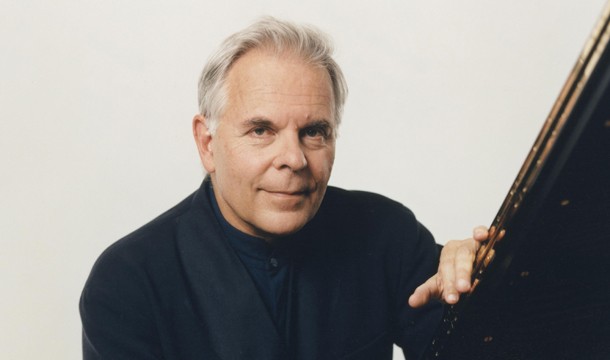
Steven Kovacevich at 75 – Berg and Schubert

Steven Kovacevich celebrates his upcoming 75th birthday with sonatas by Berg and Schubert at the Wigmore Hall

stephen-kovacevich

Steven Kovacevich (piano) – Wigmore Hall, London, live on BBC Radio 3, 13 July 2015

Listening link (opens in a new window):

http://www.bbc.co.uk/programmes/b061fqzz

on the iPlayer until 12 August

Spotify

In case you cannot hear the broadcast, here is a Spotify playlist of the music in this concert. Steven Kovacevich has recorded the Schubert but it does not appear to be available on Spotify, so is included here in a leading recording by Maurizio Pollini. The Berg, which he has not recorded, is performed by Mitsuko Uchida:

What’s the music?

Berg: Piano Sonata, Op.1 (1908) (10 minutes)

Schubert: Piano Sonata in A major, published as D959 (1828) (37 minutes)

What about the music?

Steven Kovacevich describes the Berg Piano Sonata as music ‘drawn toward the distant future but still tied to the immediate past’. When he finished the first movement of what he thought would be a larger work in 1908, his teacher and mentor Schoenberg encouraged him that if he had said all he needed to say musically, there was no need to carry on. It is a landmark piece as music begins to break with conventional tonality.

While the 22-year old Berg was starting out, the 30-year old Schubert was signing off. Aware that he had not long to live, the gravely ill composer completed a trio of three massive piano sonatas, some of the biggest works ever written for the instrument and still to this day some of the most remarkable music you can hear on the piano. The second of the three in A major is a remarkable piece, contrasting passages of serenity and acceptance with sudden outbursts of temper – as in the second movement, initially slow but unable to contain itself fully. These are pieces that keep on giving in their remarkable construction and memorable melodies.

Performance verdict

The insights Steven Kovacevich has given into piano music over the last 50 years cannot be underestimated, and the sheer weight of experience he brings with him is the result of a lifetime spent performing at the very highest level.

It is this experience that shines through, especially in a reading of the Schubert sonata that is not without its problems. I would have to digress for a moment and ask if there are many 75-year olds who could play such a piece without a score, and think there are very few. Small wonder, then, that Kovacevich has what seems to be a memory lapse in the final movement, and there are a number of minor slips elsewhere. These are still very much worth persevering with because his portrayal of the unfolding drama in the Schubert is special indeed – and in the second movement in any case it is as though Schubert writes in a lot of ‘wrong’ notes.

What should I listen out for?

Berg

2:00 – one of the most intriguing beginnings to a composer’s published output is surely the quizzical opening notes of the Berg sonata, which end up in its supposed ‘home key’ of B minor, but only by asking far more questions than they answer. There is an immediate impression of a new world forming, and the harmonic outlook is constantly changing in music of great density.

The opening theme, however – the first three notes, at least – is distinctive enough to be felt in the development it receives afterwards. The music builds to a weighty climax at 7:51, then scales the heights at 10:42. Berg writes in a single paragraph, the music subsiding to the quiet, thoughtful finish.

Schubert

14:30 – the opening of the sonata is thoroughly positive, a call to arms – though Stephen Kovacevich is slightly understated in this performance. There is a serenity and intimacy that sets the tone for much of the piece.

15:57 – Schubert’s second theme, a lovely moment of introspection but also restfulness. Barely a minute later however there is a lot more audible strife, and things become fraught – until the return of this second theme at 17:41. A crunching chord at 18:07 prepares us for…

18:15 – Kovacevich repeats the movement so far (18:11) as instructed by Schubert. This helps balance the structure of the whole first movement.

23:53 – a return to the material that dominated the opening exchanges – and then, after a protracted and angst-ridden piece, the second theme and a peaceful close at 28:40.

28:54 – the slow movement begins. As with Beethoven, time seems to stand still in Schubert’s late sonatas, and his thoughts are almost of another world. The music here is very subdued but not by any means hopeless.

31:01 – the right hand seems to develop a mind of its own, becoming faster and faster. In response the music moves to distant and rather twisted harmonies – as Kovacevich notes, sounding a prophetic note towards the music of Liszt here. Feelings of anger and frustration come to the boil. The music collapses in something of a heap, exhausted at the end.

35:07 – the Scherzo, a piece of music that sounds like a feather being blown around by the wind. The detached delivery from Kovacevich’s right hand is subtly mischievous.

37:14 – the contrasting trio section begins, but is a short diversion from the main theme itself, which returns again in humour at 38:24.

39:28 – Kovacevich runs straight into the fluid finale but stops himself at 41:12. Then he picks up again at 41:26. To listen to this movement in full it is recommended to forward to…

51:16 – where after applause Kovacevich very graciously gives a re-run of the finale. Listening carefully to the full theme, there is a similarity between this and Beethoven’s ‘Ode to Joy’ theme from the Choral Symphony. It is in the main beautifully played, with a magical moment at 57:01 when we hear the theme in F sharp major, a fair way from home! At 1:01:12, however, Schubert arrives at his destination.

Further listening

A natural port of call from the Berg Piano Sonata is Schoenberg’s early piano works, which also dice with removing tonality altogether. These are the quite substantial Three Piano Pieces of 1909 and the tiny sketches that make up the Six Little Piano Pieces. Then to complement the Schubert we have the small but perfectly formed late Allegretto in C minor and three more beefy piano pieces from the last year of the composer’s life, written in a similar vein to the famous Impromptus. Here they are, all played by Maurizio Pollini and tagged on to the end of the concert playlist:

For more concerts click here