On Tour – Cabaret Voltaire

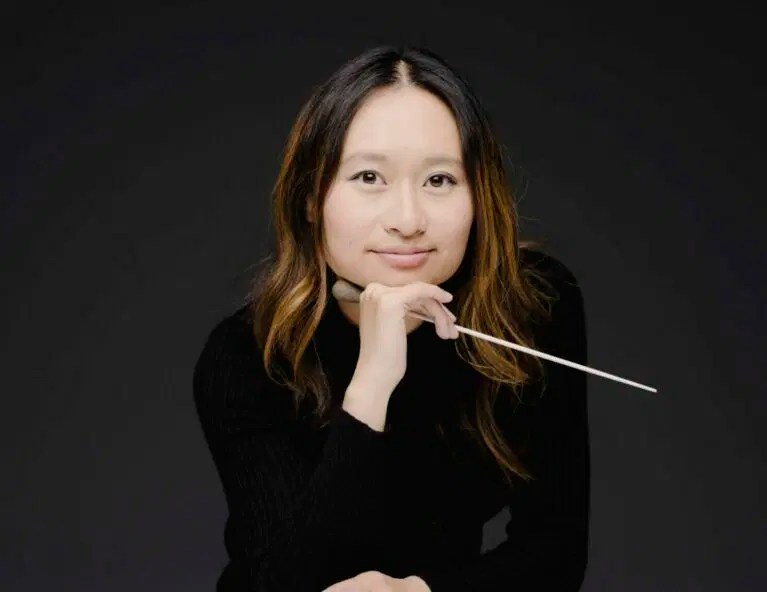
Cabaret Voltaire in rehersal room

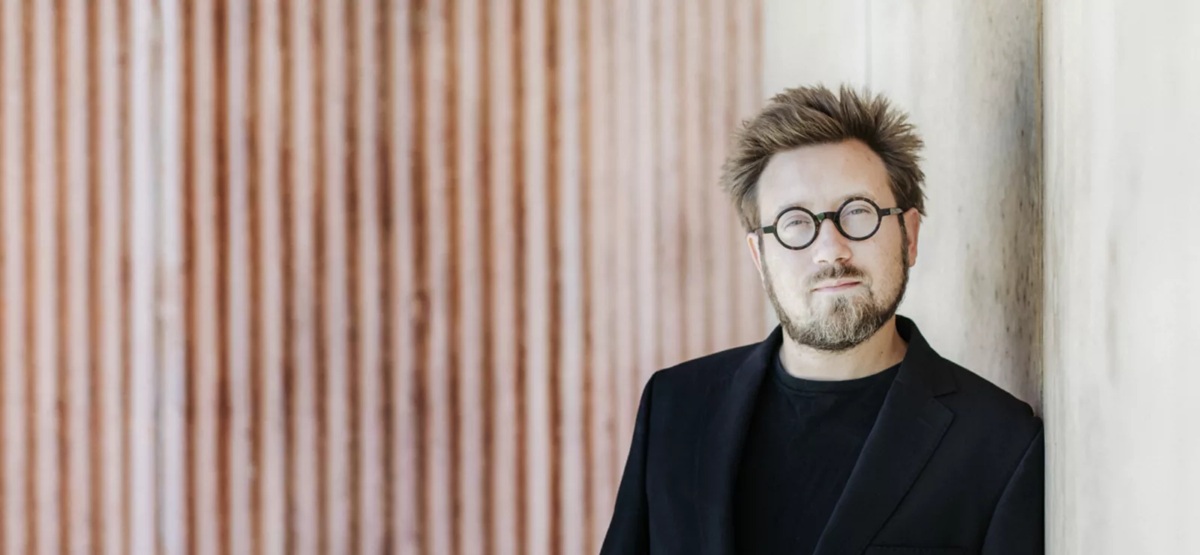
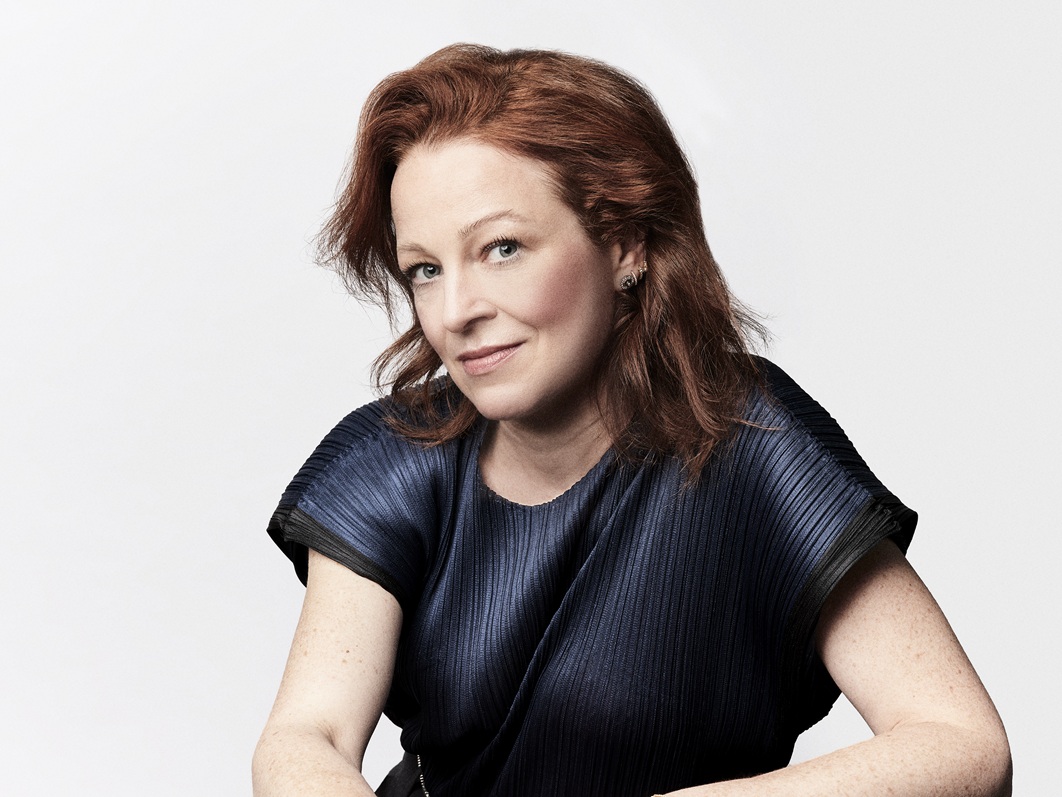
from the press release. Photo credits Peter Hill (above), Leon Chew (Cabaret Voltaire, below), Teri Varhol (Gazelle Twin)

Following their return to Sheffield at the weekend for a sold-out Sensoria Festival performance, Stephen ‘Mal’ Mallinder and Chris Watson have announced details of their Final UK Tour, starting on 10 October 2026 at Birmingham Town Hall and finishing at the Sheffield Octagon on 25 October, with Gazelle Twin confirmed as special guest across all the dates. 

Pre-sale opens at 10am GMT on 30 October, followed by general sale at 10am GMT on Friday 31 October. Buy HERE, except Sheffield, available HERE

The announcement follows news of this year’s highly anticipated sold-out tour, which marks 50 years since the live launch of one of Britain’s most influential electronic bands, Cabaret Voltaire, at the Sheffield Students Union Refectory on 13 May 1975.

Talking about the newly announced dates, Stephen Mallinder says: “What a wonderful opportunity to go round the block one more time and share that with one of the most unique and spectacular artists we know. The connective tissue between ourselves, our history, and the world Gazelle Twin now conjures up, will be out there and shared with people. It seems like a special, magical moment.

Composer, producer, and performance artist Elizabeth Bernholz, aka Gazelle Twin, will be special guest across the tour: “Pinch me. Go on. I’m feeling excessively lucky at the prospect of touring with Cabaret Voltaire in 2026. They are electronic music pioneers, but also the loveliest, kindest folk in music that I could ever hope to share the stage with.”

The current tour continues next month, with supports confirmed: dark experimental pop musician, producer and performer Greta Caroll aka CURRENTMOODGIRL will perform at Glasgow’s SWG3 Warehouse; bass-pushing experimentalist and member of Afro-Futurist performance collective Brownton Abbey, I Am Fya, will support at Manchester Gorilla; engineer turned artistic world builder, Gareth Smith, brings Vanishing’s evocative music and resonant lyrics to Birmingham’s Xoyo; Soborgnost, lo-fi dubwave dancepunk mutation from Jim Osman, will join the bill at London’s ICA, and Alexander Tucker’s electronic guise, MICROCORPS, brings heavy mutant techno modular systems to Brighton’s ACCA.

CABARET VOLTAIRE LIVE – 2025

17 Nov – Glasgow, SWG3 Warehouse w/ CURRENTMOODGIRL – SOLD OUT

18 Nov – Manchester, Gorilla w/ I Am Fya – SOLD OUT

19 Nov – Birmingham, Xoyo w/ Vanishing – SOLD OUT

21 Nov – London, ICA w/ Soborgnost – SOLD OUT

22 November – Brighton, ACCA w/ MICROCORPS – SOLD OUT

CABARET VOLTAIRE LIVE – 2026

21 Feb – Norwich, Synth East Festival

10 October – Birmingham Town Hall w/ Gazelle Twin

11 October – Liverpool Arts Club w/ Gazelle Twin

13 October – Nottingham Rock City w/ Gazelle Twin

14 October – Cardiff Tramshed w/ Gazelle Twin

15 October – Bath Forum w/ Gazelle Twin

17 October – Newcastle Boiler Shop w/ Gazelle Twin

18 October – Glasgow Barrowland w/ Gazelle Twin

19 October – Manchester Albert Hall w/ Gazelle Twin

21 October – Bexhill De La Warr Pavilion w/ Gazelle Twin

22 October – London Roundhouse w/ Gazelle Twin

25 October – Sheffield Octagon w/ Gazelle Twin

Published post no.2,701 – Tuesday 28 October 2025

In concert – Laurence Kilsby, Christopher Parkes, Sinfonia of London / John Wilson: Serenade @ Barbican Hall, London

Laurence Kilsby (tenor), Christopher Parkes (horn), Sinfonia of London / John Wilson

Vaughan Williams Fantasia on a Theme by Thomas Tallis (1910)
Britten Serenade for Tenor, Horn and Strings Op.31 (1943)
Bliss Music for Strings B66 (1935)
Delius arr. Fenby Late Swallows (1916, arr. 1962)
Elgar Introduction and Allegro Op.47 (1904-05)

Barbican Hall, London
Wednesday 22 October 2025

Reviewed by Richard Whitehouse

One can only commend John Wilson and Sinfonia of London for, in addition to an ambitious recording schedule for Chandos, frequently taking its programmes on tour – as has been the case with this judicious selection of works for string orchestra tonight being heard in London.

There could hardly be an acoustic less suited to Vaughan Williams’s Tallis Fantasia than that of Barbican Hall, yet Wilson went a good deal of the way toward making it succeed by having the main string body – and solo quartet – to the front of the platform with the subsidiary group arrayed along its rear. The outer section were taken slowly and almost impassively, but there was no lack of impetus or fervency as the central phase built cumulatively towards its climax.

The relatively modest number of strings seemed ideally suited to Britten’s Serenade. Laurence Kilsby (who made a fine contribution to Bliss’s The Beatitudes at this year’s Proms) brought real tenderness to Pastorale and ardour to Nocturne, while Christopher Parkes was suitably plangent in Elegy and dextrousness itself in Dirge. Tenor and hornist joined delightfully in Hymn, then Wilson drew playing of fastidious poise in Sonnet. Just a little unsteady in the Prologue, Parkes excelled in the offstage Epilogue with its ethereal reprise of that opening music – so rounding off a performance that proved affecting and unaffected in equal measure.

Live and in the studio, Wilson has affirmed a commitment to the music of Bliss which could hardly have been more evident than in Music for Strings which formed the centrepiece of this concert. It had been written for the Vienna Philharmonic to premiere at the Salzburg Festival and, if its formidable technical demands no longer sound forbidding, there can have been few performances of this virtuosity or insight. Trenchant and impulsive, the opening Allegro was followed by an Andante whose sustained eloquence never excluded lightness of touch – with the speculative transition into the final Allegro as deftly handled as the Presto with which this work surges to its headlong close. Not merely a timely revival, this was no less a vindication.

Introducing this second half, Wilson had remarked how Delius’ music needs to be coaxed into yielding up its secrets as surely as it needs selling to the musicians. Late Swallows succeeded on both fronts. As arranged by Eric Fenby from the composer’s only mature string quartet, it takes its place among the latter’s most haunting evocations, and not least in a central section whose rapt intensity brought an emotional frisson that tangibly held its listeners spellbound.

Elgar’s Introduction and Allegro may, by contrast, be a piece that plays itself but it still calls for interpretive input of a high order. Wilson responded with an unusually swift reading such as emphasized its nervous intensity and often volatile changes of mood, though there was no lack of cohesion or underlying momentum in a performance that took such testing passages as the central fugato assuredly in its stride prior to a glowing apotheosis then decisive close.

A performance, moreover, as set the seal on a memorable evening’s music-making. All these pieces, save the Britten, have been recorded by Wilson and Sinfonia of London for Chandos, their advocacy of Bliss hopefully continuing well beyond this 50th anniversary of his death.

Click here to read Arcana’s review of English Music for Strings, the Chandos album containing the Bliss and Vaughan Williams works performed in this concert.

Click also on the links for more information on the Sinfonia of London and their conductor John Wilson, along with soloists Laurence Kilsby and Christopher Parkes. For more information on Bliss, you can visit the Arthur Bliss Society

Published post no.2,697 – Friday 24 October 2025

In concert – Kleio Quartet @ Wigmore Hall: Elgar, Webern & Haydn

Kleio Quartet [Juliette Roos, Katherine Yoon (violins), Yume Fujise (viola), Eliza Millett (cello)]

Elgar String Quartet in E minor Op.83 (1918)
Webern 5 Movements for String Quartet Op.5 (1909)
Haydn String Quartet in D major Op.50/6 ‘Frog’ (1787)

Wigmore Hall, London
Monday 6 October 2025 (1pm)

On the evidence of this BBC Radio 3 Lunchtime Concert, the Kleio Quartet – members of the station’s New Generation Artists scheme – are ones to watch. Not least for their programming, for it was refreshing to see a Haydn string quartet given top billing at a concert rather than making up the numbers.

The concert began with an account of Sir Edward Elgar’s sole String Quartet notable for its poise, elegance and understated emotion. Elgar’s ‘late’ works are best experienced in concert at this autumnal time of year, though the dappled sunlight evoked here was compromised by a subtle yet lasting foreboding. For the youthful Kleio Quartet to capture the thoughts of a man in his early 60s with such clarity was impressive indeed. They did so through a first movement taking the ‘moderato’ of Elgar’s tempo marking to hand – deliberate but never plodding. The dense, Brahmsian counterpoint was deftly unpicked, while the nostalgic elements of the second movement gave the feeling of an ensemble performing in an adjacent room, the listener asked to imagine an elegant salon setting. The purposeful finale snapped us out of this reverie with vigorous exchanges, though there was time for affection in its second theme. Ultimately the music revelled in the Sussex outdoors enjoyed by Elgar and wife Alice, though the Autumnal chill remained present.

Memories of a very different kind coursed through Webern’s 5 Movements for String Quartet, written in the wake of his mother’s death. These remarkable compositions illustrate an unparalleled gift for intense, compressed expression. None of the movements last longer than two minutes, yet so much concentrated feeling is loaded into their short phrases, pushing against tonality with oblique melodies and rich yet desolate harmonies.

The Kleio Quartet found those qualities and more in a deeply impressive account, with the alternate moods of the first movement, argumentative and then delicate, and the forthright third. Countering these moods were the soul searching second and the sparse, eerie fourth, where the ticking motif of Yume Fujise’s viola suggested a period of insomnia. The bare bones of Webern’s anguish were made clear in the final movement, in the high, inconsolable violin of Juliette Roos and the empty closing chords.

Following this with one of Haydn’s most amiable quartets was an inspired move, the Wigmore Hall audience smiling feely as the composer’s humour was repeatedly revealed. The so-called ‘Frog’ quartet, named for the croaking repeated notes of the finale’s main theme, shows Haydn completing his Op.50 set of six quartets with a panache that would surely have delighted their beneficiary, Frederick William II of Prussia.

The Kleio had fun with the unpredictable first movement, spirited yet restless, and the harmonic twists and turns of the Poco adagio, led by expressive flourishes from Roos. The quirky Menuetto revelled in melodic inflections and cheeky asides, with the pregnant pauses of the trio section adding to the irregular rhythms within the triple time meter. All of which set up the fun and frolics of the finale, where the occasional slip of ensemble tuning could be easily forgiven in the spirit of the Kleio’s performance, Haydn charming his audience to the very end.

Listen

You can listen to this concert as the first hour of BBC Radio 3’s Classical Live, which can be found on BBC Sounds until Tuesday 4 November.

Published post no.2,680 – Tuesday 7 October 2025

In concert – Jennifer France, London Philharmonic Orchestra / Edward Gardner @ Royal Festival Hall – Abrahamsen & Mahler

Jennifer France (soprano), London Philharmonic Orchestra / Edward Gardner

Abrahamsen let me tell you (2012-3)
Mahler Symphony no.4 in G major (1892, 1899-1900)

Royal Festival Hall, London
Friday 3 October 2025

Reviewed by Richard Whitehouse

Tonight’s London Philharmonic Orchestra concert featured the welcome revival of a 21st-century classic. Hans Abrahamsen’s recent output may be relatively sparing, but the works that have emerged represent a triumph of quality over quantity and not least let me tell you.

Set to fragmentary lines drawn by Paul Griffiths from his eponymous novel, this centres on the character of Ophelia – its seven songs falling into three larger parts whose outlining of a ‘before, now and after’ trajectory gives focus to the arching intensity of its 30-minute span. The first, fourth and sixth of these anticipate what comes to fruition during the second, fifth and seventh – the exception being the third whose speculative vocal line is underpinned by a stealthy progress in the lower registers evoking the motion, if not the form, of a passacaglia. Elsewhere the voice evinces an intricacy and translucency that effortlessly carries the word-setting as it pivots between thought of oblivion and transcendence, before eventually being subsumed into the orchestra for a conclusion among the most affecting in recent memory.

The LPO acquitted itself ably in music which is texturally complex for all its harmonic clarity, though it was Jennifer France (above) who (not unreasonably) most impressed with a rendering of the solo part as did ample justice to its high-lying melisma and airborne flights of fancy. Edward Gardner directed with an innate sense of where this music was headed, not least in those final bars with their tapering off into silence. Relatively few pieces are recognized as seminal from the outset, but let me tell you is one such and seems destined to remain so well into the future.

France then returned (or rather stole in) for the finale of Mahler’s Fourth Symphony after the interval. His setting of ‘Das himmlische Leben’ from the folk-inspired anthology Das Knaben Wunderhorn had actually been written almost a decade earlier and was once envisaged as the finale to the Third Symphony, but it makes a natural conclusion to a successor whose relative understatement is sustained right through to this movement’s intangible end: a ‘child’s vision of heaven’ whose intended innocence becomes informed with no little experience by the close.

Gardner had steered a convincing trajectory through the preceding movements – not least the opening one whose mingled whimsy and wistfulness took on a more ominous demeanour in its eventful development, before conveying unalloyed resolve in a warm-hearted reprise and beatific coda. What is among the most striking of Mahler’s scherzo’s proceeded with audible appreciation of its pivoting between the sardonic and sublime, Pieter Schoeman’s ‘mistuned’ violin being first among equals in music whose soloistic textures were thrown into relief by the homogenous stability of the Adagio. Its double variations unfolded with a fluid intensity capped by a coda whose ‘portal to heaven’ yielded thrilling resplendence as subsided into a transcendent raptness that, in other circumstances, could have made a satisfying conclusion.

That this lead so seamlessly into the vocal finale says a great deal for Mahler’s foresight, but also Gardner’s ability to fashion so cohesive a symphonic entity. As the music subsided into subterranean chords on harp, the audience was (necessarily) held spellbound a while longer.

Click on the links for more information on the London Philharmonic Orchestra, conductor Edward Gardner, soprano Jennifer France and composer Hans Abrahamsen

Published post no.2,679 – Monday 6 October 2025

In concert – The Gesualdo Six & Matilda Lloyd @ Wigmore Hall

The Gesualdo Six [Guy James (countertenor), Alasdair Austin (countertenor), Joseph Wicks (tenor), Josh Cooter (tenor), Simon Grant (baritone) and director Owain Park (bass)]

Roth Night Prayer (2017)
Tallis O nata lux de lumine (pub. 1575)
Pritchard The Light Thereof (2020)
MacMillan O Radiant Dawn from The Strathclyde Motets (2005)
Tallis Dum transisset Sabbatum (1575)
Hildegard of Bingen O gloriosissimi (с.1163-1175)
Bingham Enter Ghost (2002)
Owain Park Sommernacht (2022)
Rheinberger Abendlied from 3 Geistliche Gesänge Op. 69 (pub.1873)
Barnard Aura (2020)
Roxanna Panufnik O Hearken (2015)
Burgon Nunc dimittis (1979)

Wigmore Hall, London, 2 October 2025

by John Earls. Photo credits unknown (above), John Earls (below)

The Gesualdo Six have recently released their tenth album (for Hyperion) Radiant Dawn. It finds them combining consistently high standards of choral music with imaginative programming featuring classic and contemporary compositions spanning over 800 years of music. It also sees them introducing a new element to the mix, namely the inclusion of the trumpet for a number of pieces superbly played by Matilda Lloyd.

The new album was the focus for this hour-long lunchtime concert at a packed Wigmore Hall with all pieces performed coming from it (and a few omitted). The theme of the album, as explained by The Gesualdo Six’s director and bass (and recently named new chief conductor of the BBC Singers) Owain Park, is “musical responses to light” in a whole variety of contexts.

First up in the set (and on the album) was Alec Roth’s Night Prayer, an almost dreamy reflection of the Compline hymn Te lucis ante terminum that introduces Lloyd’s trumpet and the remarkable effect it has when married with these magnificent voices.

Next was Thomas Tallis’s O nata lux de lumine, one of two shorter pieces (both just over 2 minutes) along with Roxanna Panufnik’s O Hearken, but their duration made them no less impactful. Both featured just voices, and I loved finding out from the programme that O Hearken started life as a raffle ticket prize. Another Tallis piece Dum transisset Sabbatum saw Matilda Lloyd’s trumpet taking the soprano voice to powerful effect.

There are two of James MacMillan’s Strathclyde Motets on the album. Only one of them, O Radiant Dawn, from which the album gets its title, gets performed here. It’s harmonically inspired by Tallis’s O nata lux de lumine and has a yearning to it befitting of the Advent season it relates to.

Richard Barnard’s Aura (commissioned for the album) sets music to the text of Emily Barry’s poem about the loss of her mother. Credit to the programme editors for faithfully reproducing the poem’s arresting layout – two parallel columns reflecting the emotional fracture involved (Owain Park’s programme notes were also excellent). This fracturing dissipates musically as the piece progresses with the trumpet acting as a bridge between two groups of singers. It was one of the most affecting pieces of the concert with the composer in the audience to hear it.

Another composer in the audience was Deborah Pritchard whose The Light Thereof (also commissioned for the album) sets words from the Book of Revelation and demonstrated deftly the ability of the trumpet (muted at times) to evoke different shades of light.

Matilda Lloyd’s virtuosity on the trumpet was to the fore in Judith Bingham’s Enter Ghost, an interpretation of a passage from Shakespeare’s Hamlet mixing music with spoken word, the drama enhanced by her walking off stage (and returning) whilst playing.

Other pieces sung a cappella included Hildegard of Bingen’s O gloriosissimi (from the back of the hall) and beautiful performances of Owain Park’s own Sommernacht and Joseph Rheinberger’s Abendlied.

The programme ended (as does the album) with Geoffrey Burgon’s Nunc dimittis which some may remember as the closing music from the BBC’s television adaptation of John le Carré’s Tinker Tailor Soldier Spy. It was yet another example of how effective this glorious combination of voices and trumpet is and proved a fitting conclusion to a most illuminating concert.  

John Earls is Director of Research at Unite the Union and posts at @johnearls.bsky.social on Bluesky and @john_earls on X. You can subscribe (free) to his Hanging Out a Window Substack column here: https://johnearls.substack.com/

Published post no.2,677 – Saturday 4 October 2025