Saint Etienne’s twelfth album, their first in three years, is written as an antidote to the chaos of daily life, an ambient complement to the sheer speed and noise of 21st century life.
Pete Wiggs captures its essence: “We wanted to continue the mellow and spacey mood of the last album, perhaps even double down on it, but it’s a very different album, not based on samples; Songs, moods and spoken pieces drift in and out whilst rain pours down outside. It’s the kind of record I like to listen to in the dark or with my eyes closed. Half Light is about the edge of night, the last rays of the sun flickering through the branches of trees, communing with nature and seeing things that might not be there.”
Bob Stanley also expressed an interest the band had in finding the state between wakefulness and sleep, a kind of dream space with broken-up thoughts and random memories.
What’s the music like?
Soothing, sonorous and often beautiful. Sarah Cracknell’s voice proves ideal for such an ambient sojourn, whether in spoken word or in the soft vocal tracks that are dotted through the album.
The field recordings create an easy ambience, dressing the music with thoughts that drift in and out of focus. The music, too, finds sharp points of reference among its foggier reminiscences. The clarinet is put to fetching use on the wistful When You Were Young, which has a beautiful chorus – as does Nightingale.
No Rush brings a mottled beauty to its slowly shifting chords, not a million miles from the Romanza of Vaughan Williams’ Symphony no.5 in its ability to stop the senses. Gold is more obviously song-based, while Preflyte opens out into wider textures, bells tolling before Cracknell’s heartfelt vocal. Hear My Heart is a beauty, the voice against a windswept canvas.
Does it all work?
It does. Saint Etienne are masters of pop music dressed with a forlorn beauty, but this clever use of field recordings and textures shows them to be equally adept at making music that supports relaxation of the mind.
Is it recommended?
Enthusiastically. The Night achieves just what it set out to do, which is to provide an antidote to the over stimulation we receive in our daily lives. It is an understated beauty.
For fans of… Broadcast, Stereolab, Yo La Tengo, Bibio, Cocteau Twins
Ives Four Ragtime Dances (1902-04, rev. 1916) Fugue in Four Keys on ‘The Shining Shore’ (c1903) The Pond (c1906, rev, c1912-13) The Rainbow (first version, 1914) An Old Song Deranged (c1903) Skit for Danbury Fair (c1909, real. Sinclair) The Gong on the Hook and Ladder or Fireman’s Parade on Main Street (c1911, rev. 1934) Chromâtimelôdtune (c1923, real. Singleton) Tone Roads – no.1 (c1913-14); no.3 (c1911/13-14) Set of Incomplete Works and Fragments (ed. Singleton/Sinclair, 1974) March no.2, with ‘Son of a Gambolier’ (c1892) March no.3, with ‘My Old Kentucky Home’ (c1893) March ‘The Circus Band’ (c1898-99, rev. 1932-33) Arrangements (1896-97) – Schubert: Marche militaire in D, D733 No. 1 (1818). Schumann: Valse noble, Op. 9 No. 4 (1834-35). Schubert: Impromptu in C minor, D899 No. 1 (1827)
Orchestra New England, Orquesta Sinfónica de Navarra (arrangements) / James Sinclair
Naxos American Classics 8.559954 [75’43”] Editions John Kirkpatrick, Jacques-Louis Monod, James Sinclair, Kenneth Singleton and Richard Swift Producers Neely Bruce, Jan Swafford Engineers Benjamin Schwarz with Jonathan Galle and Gonzalo Noqué
Recorded 24/25 October 2023 at Auditorio Barañaín, Pamplona-Navarra, Spain (arrangements), 12-14 March 2024 at Colony Hall/Choate Rosemary Hall, Wallingford CT, USA
Reviewed by Richard Whitehouse
What’s the story?
Naxos continues its long-term series devoted to the orchestral music of Charles Ives with this volume of shorter pieces and arrangements, several of them recorded for the first time and conducted by James Sinclair, whose involvement with the composer now stretches back across 50 years.
What’s the music like?
Miniatures for a variety of forces are found right across the four decades of Ives’s composing and range from unformed experiments to perfectly realized exemplars of his idiom. Many of these were collated in the dozen or so Sets that Ives assembled at various stages in his career (recorded on Naxos 8.559917) while there are various others which resist any such compiling, and these can mostly be found here – often in critical editions prepared by a formidable team of Ives scholars, hence rounding out the picture of his creativity in the most immediate terms.
Written at the outset of the genre’s golden age, the Four Ragtime Dances neatly complement each other as regards form and content; elements from each finding their way into the second movement (The Rockstrewn Hills) from the Second Orchestral Set, which builds upon their anarchic humour accordingly. Following the shimmering polytonal ambivalence of the Fugue on ‘The Shining Shore’, the unworldly evocations The Pond and The Rainbow find Ives at his most intimate and confessional – as does the admittedly more genial An Old Song Deranged. Not so Skit for Danbury Fair, its inherent iconoclasm finding greater focus in the graphically descriptive The Gong on the Hook and Ladder or contrasting Tone Roads Nos. 1 and 3 which embody Ives’s thinking on indivisibility of life and music in the most uncompromising terms.
It was once thought Chromâtimelôdtune might be the missing Tone Road No. 2, yet this late and possibly incomplete piece is likely an acerbic response to the Modernism emerging from post-war Europe which seemingly preoccupied Ives in those twilight years of his composing. The three song-based Marches date from an earlier and ostensibly more carefree phase, their debunking couched in humorous terms, while the Set of Incomplete Works and Fragments is a judiciously conceived entity that should not have had to wait 50 years for its first recording. The orchestrations are from Ives’s study with Horatio Parker at Yale: that of Schubert’s First Marche Militaire and Schumann’s Valse noble (from Carnaval) are expert but anonymous, that of Schubert’s First Impromptu results in a ‘theme and variations’ of striking prescience.
Does it all work?
Yes, inasmuch that the effectiveness of these pieces largely depends on the conviction of their performers and, with Sinclair at the helm, this can be taken for granted. As can the excellence of Orchestra New England in repertoire it has often been playing for decades, and if Orquesta Sinfónica de Navarra might appear an unlikely choice for Ives’s undergraduate arrangements, it acquits itself admirably. The sound throughout is unexceptionally fine, and Sinclair’s own annotations are succinctly informative as to the genesis and context of some intriguing music.
Is it recommended?
Indeed, this is a necessary addition to a valuable series – hopefully to be continued before too long with recordings of the Fourth Symphony and Universe Symphony as partially realized by David Porter, of which Sinclair gave a memorable account at the Aldeburgh Festival in 2012.
Listen & Buy
For buying options, you can visit the Naxos website – or listen to the recording on Tidal below:
It’s hard to believe that this is Kim Deal’s first full solo album. She has hinted at music on her own since 2011, when she recorded Are You Mine? and Wish I Was, composed after her contribution to The Pixies’ ‘Lost Cities’ tour. Deal is an original Pixies member, playing bass guitar from 1986 to 1993 then reprising her role in 2004. Simultaneously she has fronted The Breeders, from their founding in 1989.
The album has a plethora of collaborators, from Breeders past and present (Mando Lopez, twin sister Kelley Deal, Jim Macpherson, Britt Walford), to Raymond McGinley (Teenage Fanclub), Jack Lawrence (Raconteurs), Savages’ Fay Milton and Ayse Hassan, and Steve Albini, who recorded a good deal of the record.
What’s the music like?
Full of depth, and with the odd surprise.
Deal has a slight husk to her delivery, her voice an instrument that can move between intimate, heartfelt asides and more brash statements. The big band blast of the title track is a case in point, where the bold brass complement her softer thoughts.
There is a most enjoyable wit and mischief to this album, too, delivered in the catchy Coast – not just in Deal’s voice but in the rasp of the accompanying trombone and slide guitar. The polar opposite of this are the slow songs Come Running and the heart-melting Are You Mine?, where serene strings tug at the emotions and Deal asks to “Let me go where there’s no memory of you, where everything is safe and nothing is true”.
On a more psychedelic tip are Crystal Breath, layered with distorted thoughts, the garage rock call to arms of Disobedience, and the boomy Big Ben Beat. The album ends with the winsome Summerland, with “music blowing in the breeze”
Does it all work?
It does. Deal’s versatility between styles makes for a tightly structured album, compressed but full of expression, emotion and musical twists and turns.
Is it recommended?
Definitely. Kim Deal’s solo debut is well worth the wait, containing a wealth of good music and letting us into all aspects of her world. One of the albums of the year for sure!
For fans of… Cate Le Bon, The Breeders, The Pixies, Joan Armatrading, Sonic Youth
Mark Barrott’s eleventh album under various guises is his most personal yet. It tells the story of the sad passing of his wife Sara in 2023, but at the same time recognises the incredibly positive effect she ultimately left on his life.
About the record, he has said, “This is a story. A story of life and ultimately death. A story of two lives coming together through a chance meeting on an aeroplane and spending the next 20+ years together via the craziness of Berlin in the late 90’s to Northern Italy, South America and finally the tranquility of rural Ibiza. The story of how life can change and be snatched away in the blink of an eye. But this is not a sad story, it’s a story of joy, love, grief and gratitude for what was.”
For the first time Barrott has harnessed choral and orchestral forces to tell the story. This was not the original intention, but once started the music continued to expand, its natural point of expression found.
What’s the music like?
Unlike anything Barrott has done before. If your way into his music has been through the pair of heat-soaked Sketches From An Island albums, this will come as a surprise – in a good way.
This is not an album where the orchestra and choir are used almost for the sake of it, to beef up the sound. Instead Barrott uses them sparingly, shading their contributions with a delicacy that suggests he’s been doing it for a long time in his head.
The music proceeds with a really satisfying blend of presence and poise, Barrott successfully embracing the orchestral medium with confidence. The muted trumpet on the second part of Butterfly In A Jar offers a beautiful hint of melancholy, while ushering in a track where the blend of jazz and electronic inflections is beautifully judged. Meanwhile Looking Through The Mirror Of The Soul catches telling reflective glimpses, its lovely flashes of light from the strings adding a mysterious edge to the music.
January 25th – presumably the day of his wife’s passing – is the most powerful track on the album, the shackles off as Barrott harnesses the choral power at his disposal. It has a slow but deliberate tread, and a full-bodied, widescreen sound laced with drama.
Ultimately, as Barrott says, the outlook is positive, and the beautiful weightlessness of The Light Is Still There looks upward to much better times ahead, its electronics floating on a warm breeze.
Does it all work?
It does. This is a moving testament from Barrott, one that traverses all kinds of emotion as the album naturally runs its course.
Is it recommended?
Very much so. This was clearly a cathartic album for Mark Barrott to make, and his heavy personal investment bears fruit in music of great beauty and emotional power.
For fans of… Hybrid, Sasha, A Winged Victory for the Sullen, Thomas Newman
Listen and Buy
Published post no.2,384 – Thursday 5 December 2024
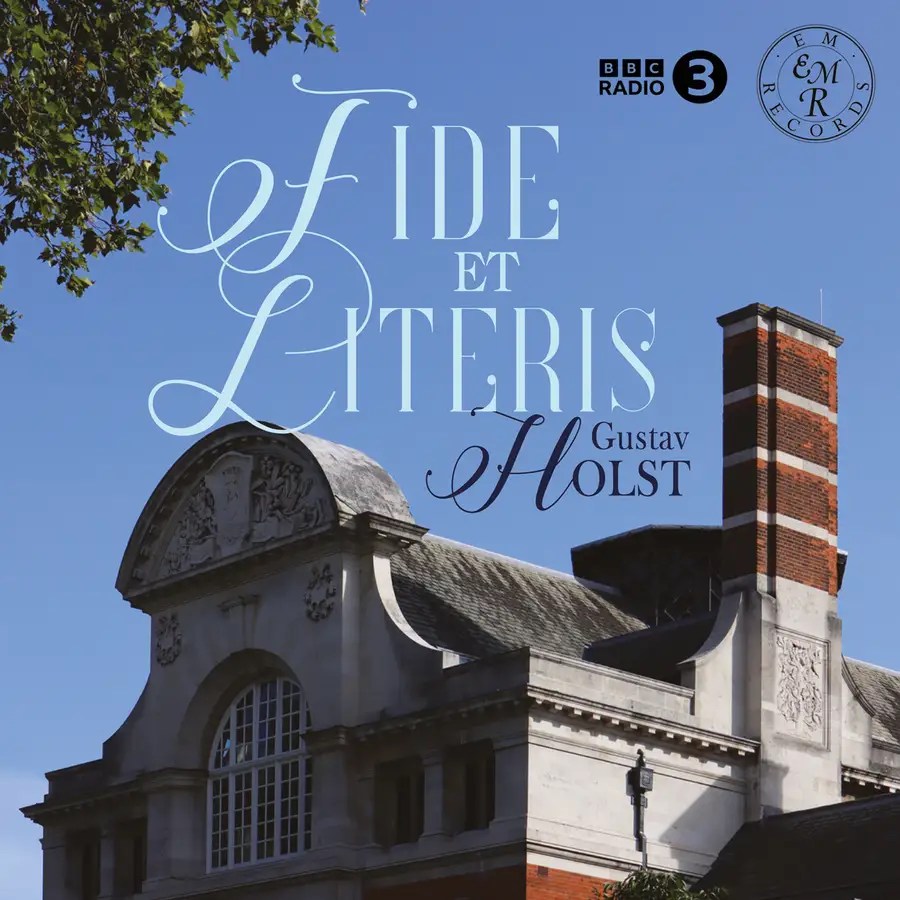
Holst St Paul’s Suite H118 (1912-13) Brook Green Suite H190 (1933) Gavotte H190a (1933) Seven Choruses from the Alcestis of Euripides, H146 (1920) Playground Song H118a (1911) The Vision of Dame Christian, H101 (1909)
Em Marshall-Luck (reciter), Paulina Voices / Heidi Pegler, BBC Concert Orchestra / Leigh O’Hara
EM Records EMRCD090 [69’48”] Producer Neil Varley Engineer Christopher Rouse
Recorded 4-5 November 2023 in the Great Hall, St. Paul’s Girls’ School, Brook Green, London
Reviewed by Richard Whitehouse
What’s the story?
EM Records further extends the Holst discography in the 150th anniversary year of his birth (and 90th anniversary year of his death) with this collection of works written at and intended for pupils of St Paul’s Girls’ School, where the composer taught for 29 years until his death.
What’s the music like?
For all his interest in matters spiritual and arcane, Gustav Holst was an eminently practical musician whose educational pieces were tailored to the situation at hand. Not least his Seven Choruses from the Alcestis of Euripides, written for a production of this drama at St Paul’s. Its scoring for unison female voices, three flutes and harp recalls those diaphanous settings in the Third Group of Choral Hymns from the Rig Veda – not least its sixth chorus ‘I have sojourned in the Muse’s Land’ that, in its fusion of yearning with sensuousness, is ideal for such a text as this.
Most substantial here is The Vision of Dame Christian – aka The Masque – written for the play by Frances Gray, who was the first headmistress (then High Mistress) at St Paul’s. The ‘Dame Christian’ in question is Christian Colet, mother of John Colet who had founded the original St Paul’s School 400 years before. Set in 1523, the sequence comprises three choruses with a prelude, interlude and finale – the scoring, for female voices with small orchestra, conveying a pathos devoid of sentimentality which is typical of Holst’s music for this school. Revived at decade-long intervals until 1958, it was heard again in 1973 (and issued privately on LP) then given a full production in 2013, but this first professional recording captures its deftness and eloquence in ample measure. Perhaps future performances would be feasible in other venues?
The two suites for strings long ago took their place within a lineage of compositions for this medium to which British artists have contributed so extensively throughout some 150 years. Certainly, the St Paul’s Suite is a classic of its genre – what with its rumbustious initial Jig, its animated Ostinato, its alternately soulful then playful Intermezzo, or a Finale which revisits Holst’s Second Suite for Military Band by combining traditional tunes The Dargason and Greensleeves in a fantasia ingenious and affecting. The Brook Green Suite is simpler in design – which is not to deny the appeal of its homely Prelude, its wistful Air or its lively Dance. Recorded for the first time is the Gavotte which Holst omitted at the premiere, its brusque charm enhancing the whole when heard in its original context as second movement.
Does it all work?
It does. This project was evidently a labour of love for St Paul’s Girls’ School, whose Paulina Voices duly rise to the challenge of continuing their venerable tradition under the admirable direction of Heidi Pegler, not least in the Playground Song with its ‘Henry Newbolt meets St Trinian’s’ text. The passages of recitation are rendered with clarity and elegance by Em Marshall-Luck (herself a Paulinian), while Leigh O’Hara secures a spirited response from the BBC Concert Orchestra in music whose sheer directness and accessibility are never for a moment naïve or simplistic.
Is it recommended?
It is. The presentation is well up to EMR’s customary standards, with detailed annotations by Em Marshall-Luck and school archivist Howard Bailes. Clearly the Great Hall of St Pauls’ Girls’ School is as ideal for recording as ‘Mr Holst’s Room’ in the Music Wing proved to be for his composing.



 Arcana.fm