In concert – Soloists, Danish National Concert Choir & Symphony Orchestra / Fabio Luisi @ BBC Proms: Beethoven 9th Symphony, Bent Sørensen & Anna Clyne

Clara Cecile Thomsen (soprano), Jasmin White (contralto), Issachah Savage (tenor), Adam Palka (bass), Danish National Concert Choir, Danish National Symphony Orchestra / Fabio Luisi

Bent Sørensen Evening Land (2017)
Anna Clyne The Years (2021)
Beethoven Symphony no.9 in D minor Op.125 ‘Choral’ (1811-24)

Royal Albert Hall, London
Thursday 21 August 2025

Reviewed by Ben Hogwood Photos (c) BBC / Chris Christodoulou, Ben Hogwood (soloists)

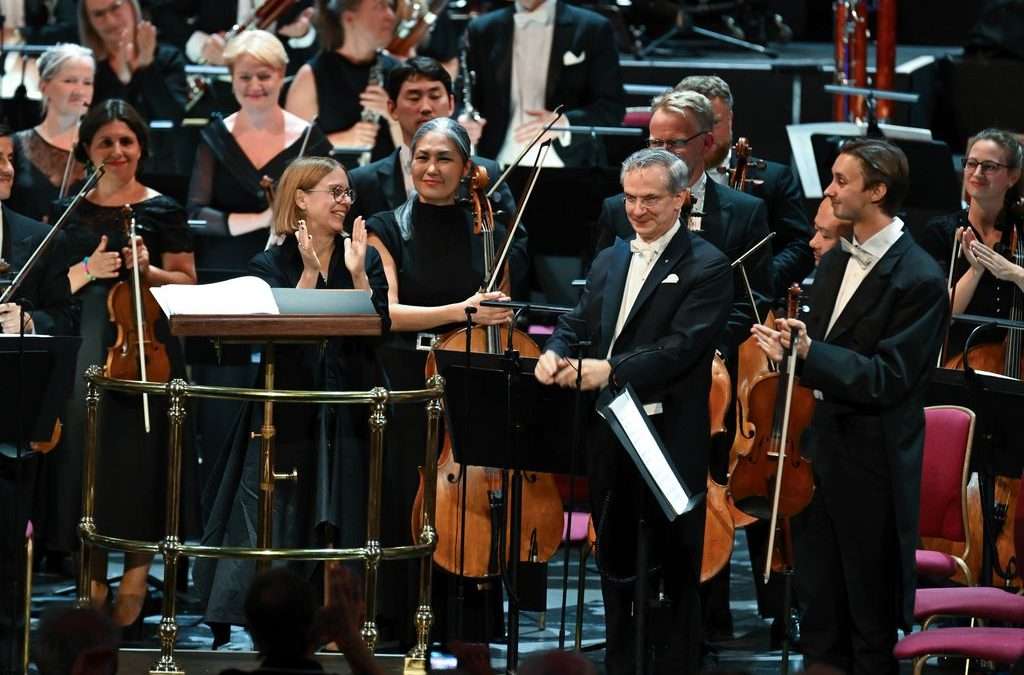
Celebrating their centenary this year, the Danish National Symphony Orchestra and chief conductor Fabio Luisi led us from the quiet of evening to the blazing light of a sunny morning in the course of this concert.

The challenge facing any concert programmer containing Beethoven’s Choral Symphony is how to lead up to it. This Prom approached from a contemporary angle, beginning in near silence with Bent Sørensen’s contemplative Evening Land. The Danish composer’s imaginative orchestration was key to the success of his picture painting, beautifully rendered by Luisi, as was the threadbare violin solo with which leader Christina Åstrand began. Childhood reminiscences of the Danish island Zealand took place in the half-light, contrasting with visions of nocturnal Manhattan that came through in bursts of technicolour, honouring Leonard Bernstein. Making a lasting impression, however, was the beautiful oboe solo from Kristine Vestergaard that marked the illness and subsequent passing of Sørensen’s father.

Having eavesdropped on this intimate opening piece, the Danish National Concert Choir rose for Anna Clyne’s musical account of the Covid pandemic – already consigned to history, it seems. Few people would like to revisit those days in a concert experience, but Clyne’s message – channelling the text of Stephanie Fleischmann – was one of underlying resilience. The choir began in stasis, occupying an added note chord which somehow drew parallels with the Björk song Possibly Maybe for this correspondent, before the piece flourished. A dreamlike mood was enhanced by a pure, almost complete lack of vibrato from both choir and orchestra, while the harmonic language drew strong parallels with the latter stages of Holst’s suite The PlanetsSaturn and Neptune in particular. An autumnal chill was evident in spite of increasingly frenetic activity in the orchestra, and the piece ended in an uneasy acceptance of events passed, rather like our own emergence from lockdown.
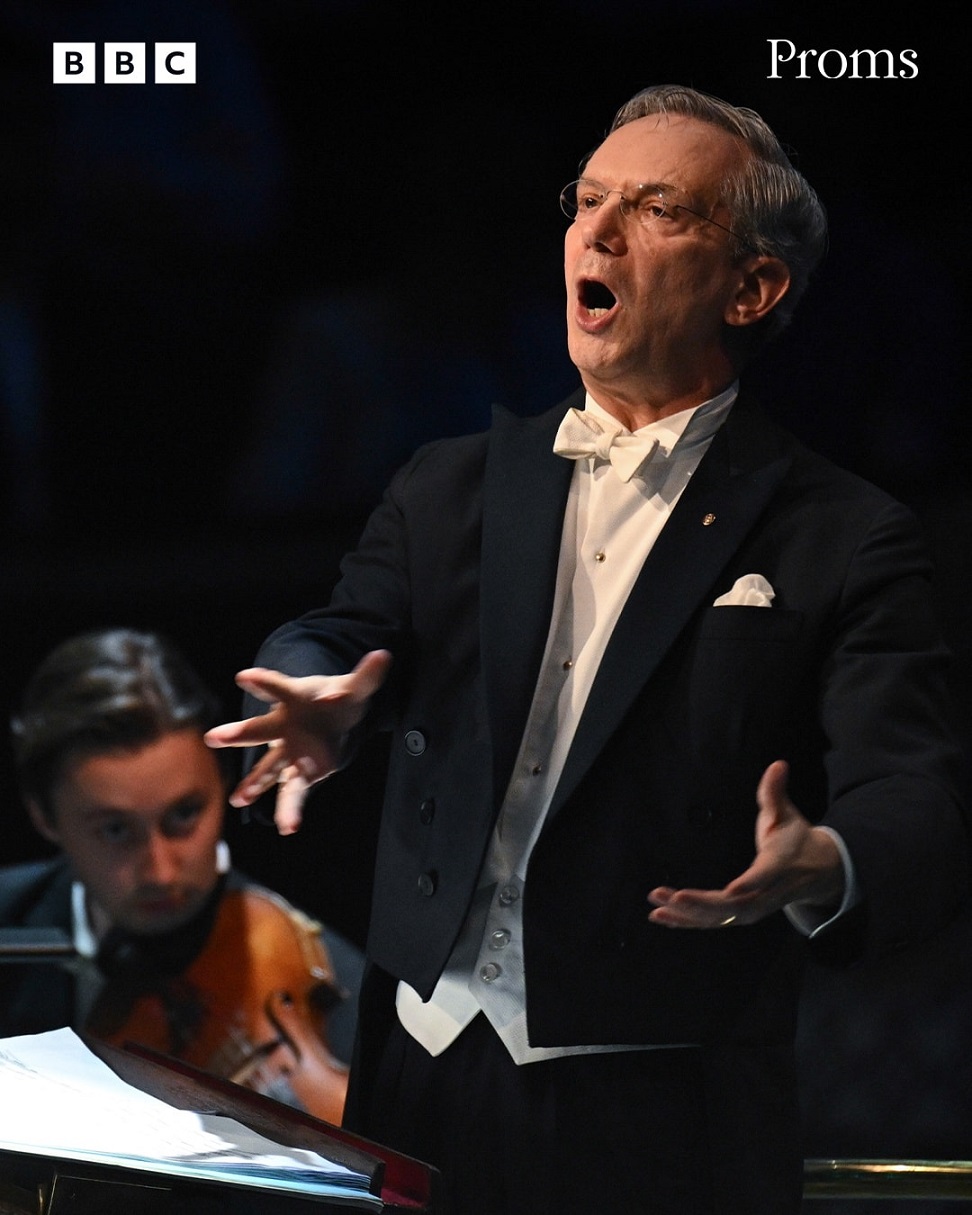
Beethoven’s Ninth Symphony is the ultimate hymn to freedom, though it does of course go through a titanic struggle before that release, in the form of Schiller’s Ode To Joy, can be attained. Luisi led us through the dark, pre-twilight moments in an account notable for its poise and guile. Using relatively fast speeds, the first movement took a little while to light the touch paper, but once ignited the music powered forward with increasing determination. The scherzo was quick, quite matter of fact with its timpani interventions, and balanced by a bucolic trio where the wind kept pace heroically with Luisi’s quick baton. Their attractive textures and warm melodic phrasing were a key feature of both this and the Adagio, again on the quick side, but managing its fanfare interventions impeccably.
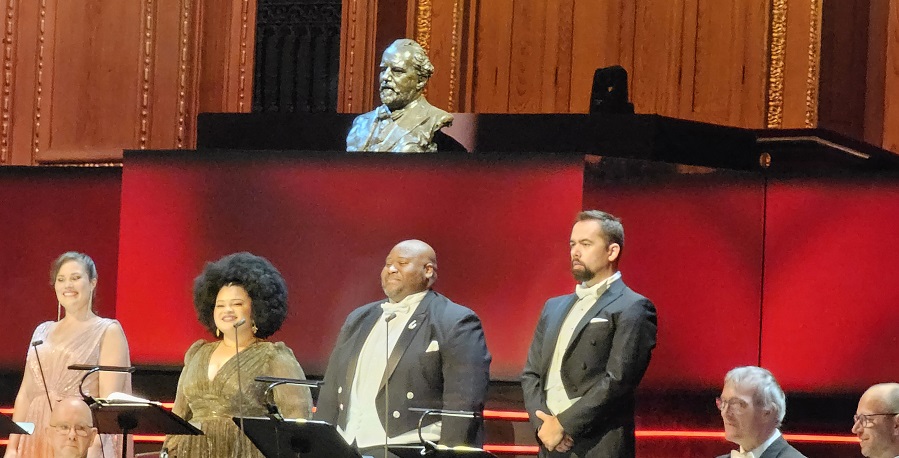
Left to right: Clara Cecile Thomsen (soprano), Jasmin White (contralto), Issachah Savage (tenor), Adam Palka (bass), beneath the bust of Sir Henry Wood @ BBC Proms

And so to the finale, with a memorable exposition for the Ode to Joy theme from sotto voce cellos and basses, the Royal Albert Hall hushed in anticipation. The choral passages were suitably exultant, the 75-strong choir drilled to perfection if cooler in temperature than the orchestra. The four soloists (above) were led by impressive bass Adam Palka, whose authoritative recitative “O Freunde, nicht diese Töne!” was a highlight, and while the quartet’s ensemble pieces wavered a little in tuning the sense of release and elation was keenly felt and clearly relished. The smile on the face of the music spread to the audience in the exhilarating closing bars as the orchestra took flight, completing an impeccably controlled interpretation on the part of Luisi that came to the boil at just the right time.

You can listen back to this Prom concert on BBC Sounds until Sunday 12 October.

Click to read more about the BBC Proms

Published post no.2,634 – Friday 22 August 2025

In concert – CBSO Winds / Nicholas Daniel: Anna Clyne ‘Overflow’ & Mozart ‘Gran Partita’

CBSO Winds / Nicholas Daniel (oboe, above)

Clyne Overflow (2020)
Mozart Serenade no.10 in B flat major K361 ‘Gran Partita’ (1781)

Town Hall, Birmingham
Sunday 26 January 2025 (3pm)

Reviewed by Richard Whitehouse

An interesting and worthwhile strand in the City of Birmingham Symphony Orchestra’s current season is the series of Sunday afternoon programmes focussing on each of the orchestra’s sections. Last November brought the strings for a perceptive account of Bach’s Goldberg Variations, as arranged by Dmitry Sitkovetsky and the present recital duly centred upon the woodwind in what was dominated – not unreasonably so – by a performance of Mozart’s epic Gran Partita.

Still the finest and probably longest work ever composed for wind ensemble, it also remains the canniest example of ‘functional’ music raised to a level such as transcends its immediate purpose. Not the least of its virtues is the way in which its orchestration – comprising pairs of oboes, clarinets, basset horns and bassoons along with four horns and double-bass – suggests timbral and textural possibilities as profound as they are far-reaching. Put another way, this is ‘Harmoniemusik’ which makes of a localized and even provincial genre something universal.

Such a quality was rarely less than present in this performance. Right from its trenchant yet never portentous introduction, the opening Allegro found an enticing balance between poise and impulsiveness matched by that between tutti and ensemble passages. The first Menuetto was notable for the winsome elegance of its second trio, then the ensuing Adagio yielded no mean pathos without risk of sentimentality at a flowing tempo abetted by that effortlessness of dialogue which proved a hallmark of this movement as of the performance taken overall.

Although less overtly characterful than its predecessor, the second Menuetto did not lack for personality and while the Romanze feels the least essential part of the overall conception, it still made for a pertinent entrée into the Tema con variazioni. This longest and most varied movement also encapsulates the work overall in its expressive contrasts which were to the fore here – the last variation preparing unerringly for a final Allegro whose relative brevity was belied by a drive, even forcefulness that propelled the whole work to its decisive close.

It was a testament to the excellence of these musicians that one never suspected the absence of any guiding hand, for all that guest first oboist Nicholas Daniel could be seen encouraging the players whenever his part permitted. Neither was there any sense of the latter being other than integral to the overall ensemble, such was the underlying felicity and finesse with which it conveyed the depths of what must surely rank among its composer’s greatest achievements. Not a bad way, moreover, for the CBSO’s woodwind to savour its occasion ‘in the spotlight’.

The programme had commenced just over an hour earlier with Overflow, a short but eventful piece where Anna Clyne draws inspiration from Emily Dickinson’s poetry (and, in turn, that by Jelaluddin Rumi) in music which treads an audibly viable balance between the ruminative and capricious. It made an understated showcase for the CBSO woodwind, whose brass and percussion colleagues are heard in the next of these recitals when Alpesh Chauhan directs a varied programme climaxing in Pictures at an Exhibition arranged by the late Elgar Howarth.

List of players: Marie-Christine Zupancic and Veronika Klirova (flutes), Nicholas Daniel and Emmet Byrne (oboes), Oliver Janes and Joanna Paton (clarinets), Anthony Pike and Steve Morris (basset horns), Nikolaj Henriques and Tony Liu (bassoons), Elspeth Dutch and Neil Shewan (horns), Julian Atkinson (double bass)

For details on the upcoming CBSO Brass & Percussion concert, heard to the City of Birmingham Symphony Orchestra website. Click on the names for more on Nicholas Daniel and composer Anna Clyne

Published post no.2,426 – Wednesday 29 January 2025

In concert – Jeremy Denk, CBSO / Kazuki Yamada: Gershwin, Clyne, Ravel & Mussorgsky / Wood

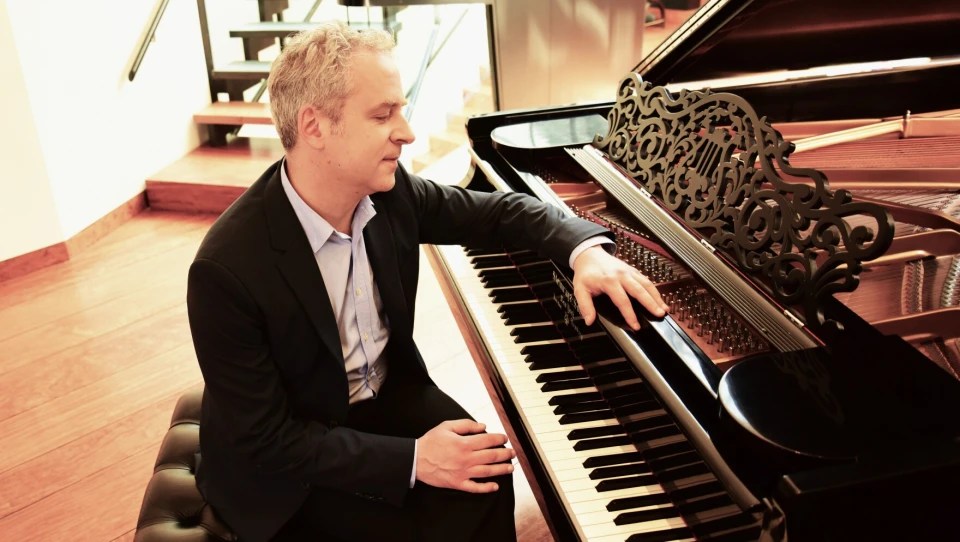
Jeremy Denk (piano, above), City of Birmingham Symphony Orchestra / Kazuki Yamada

Gershwin An American in Paris (1928)
Clyne ATLAS (2023) [CBSO Co-Commission: UK Premiere]
Ravel Pavane pour une infante défunte (1899, orch. 1910)
Mussorgsky orch. Wood Pictures at an Exhibition (1874, orch. 1915)

Symphony Hall, Birmingham
Wednesday 1 May 2024

Reviewed by Richard Whitehouse

This evening’s concert by the City of Birmingham Symphony Orchestra may have taken its overall title from the final work, but ‘pictures’ were everywhere in evidence and not merely those ‘at an exhibition’ – not least with Kazuki Yamada as enthusiastic as ever at the helm.

While it loses out to his Rhapsody in Blue in the popularity stakes, Gershwin’s An American in Paris is surely the most successful of his orchestral pieces for matching its immediacy of imagery to a resourceful structure. Encouraging the CBSO to a bracing response in the outer sections, and with Jason Lewis’s nostalgic trumpet initiating that pathos-laden central phase, Yamada secured a response whose full-on expression was offset by too sectional an approach – the music proceeding in a stop-start fashion rather than unfolding organically as it should.

Over recent years, the New York-based Anna Clyne has emerged among the leading British composers of her generation, with this first UK hearing for her piano concerto ATLAS keenly anticipated. Inspired by the eponymous and epic collection of the artist Gerhard Richter, this likewise falls into four ‘volumes’ rather than movements, which also underlines their relative formal freedom. Certainly, the ingenious interplay between soloist and orchestra is a tough challenge which Jeremy Denk met head-on – whether in the coursing energy then yielding eloquence of the opening Fierce, alluring textural overlaps of Freely, intimate, the lilting nonchalance of Driving or cumulative activity of the final Transparent with its surge to an emphatic close that (as with this work overall) was capricious and allusive in equal measure.

Doubtless motivated by Denk’s coruscating virtuosity, the CBSO gave its collective all in a work which (rightly) appealed to those present – the pianist responding with his deft take on the Heliotrope Rag co-written by Scott Joplin and the tragically short-lived Louis Chauvin.

After the interval, a rare moment of calm – Ravel’s Pavane for a Dead Princess given with a studied if never stolid grace, Elspeth Dutch’s horn and Katherine Thomas’ harp enhancing its appeal. As with Fauré’s Pavane, this is ideal music for opening the second half of a concert.

And so, to Mussorgsky’s Pictures at an Exhibition – heard here in the orchestration by Henry Wood which preceded and was duly superseded by Ravel’s. Wood is more interventionist, not least by reducing the recurrent ‘Promenade’ to a stealthy introduction, but not necessarily less faithful to the piano work’s spirit – hence the scabrous immediacy of Gnomus, sombre aura of The Old Castle (Andrew McDade’s tuba balefully intoning on high above stage-right), or fatalistic tread of Bydlo with its evocative percussion. Respighi was probably taken by this glowering depiction of Catacombs with a ghostly recollection of the promenade hardly less effective, and if Baba Yaga gets summarily curtailed here, the crescendo of bells launching The Great Gate[s] of Kiev set the tone for a treatment whose opulence borders on overkill.

Not that this inhibited the CBSO from projecting Wood’s organ-clad texture to the maximum, to the enthusiasm of an audience that erupted in the lingering resonances at its close. Quite a way to end an impressive performance, and a memorable concert, on a day that saw Yamada become this orchestra’s Music Director and the CBSO launch ‘A Season of Joy’ for 2024/25.

Click on the link to read more on the current CBSO concert season, and also to read about the recently announced 2024/25 programme. Click on the names for more on pianist Jeremy Denk, conductor Kazuki Yamada, and composer Anna Clyne

Published post no.2,168 – Saturday 4 May 2024

Wigmore Mondays – Jess Gillam & Zeynep Özsuca

Jess Gillam (soprano and alto saxophones, above), Zeynep Özsuca (piano, below)

Wigmore Hall, Monday 7 October 2019 (lunchtime)

You can listen to this concert on the BBC Sounds app here

Review and guide by Ben Hogwood

Saxophonist Jess Gillam is proving to be a breath of fresh air for BBC Radio 3 and for classical music in general. Her combination of passionate artistry, technical flair and down to earth presentation is ideal, and brought colour to a dull Monday in October. Her spoken introductions between the pieces in this concert had a nicely judged patter, showing someone at ease with an audience and enthusiastic about the music she plays. The refreshing lack of pretence fed into the inspiring performances too. Gillam was helped by a very well chosen programme of music showing off the versatility of her instrument, in doing so covering a rich variety from the last 300 years.

The Pequeña Czarda of Pedro Iturralde was an ebullient first piece and a sign of things to come, placing the first earworm as well as showing off Gillam’s technique and Zeynep Özsuca’s colourful accompaniment. It draws the odd parallel to Midnight In Moscow in its slow passages, and both performers caught the contrast between these and the helter-skelter faster music.

The Marcello Oboe Concerto in D minor, transposed down a tone into C, illustrated how well works for oboe can transcribe for the saxophone, especially when played with as much control as there was from Gillam and Özusca here. The saxophone is a much louder instrument but Gillam really enjoyed the subtle colours available, and this worked especially well in the famous Adagio (11:08 on the broadcast link). In the outer movements Özusca found great clarity to bring the part writing to life.

Anna Clyne’s new piece Snake and Ladder introduced electronics to the equation, reminding us how the saxophone is one of the most versatile instruments between classical and rock music. Written for saxophone and distortion pedal, it was an effective and enjoyable piece, though sat at the back of the hall we had what sounded like wow and flutter from the breathing.

This led through a bit of a stylistic jolt to Poulenc’s Oboe Sonata, which appeared to be presented in original form without an arrangement – certainly none was credited. Gillam clearly loves this piece and played it beautifully, though the more plaintive oboe tone from which the third movement especially benefits was understandably more difficult to find (from 30:06). This movement, an elegy to Poulenc’s great friend Prokofiev, is effectively the last music he wrote and as such is very profound. Gillam did however do a brilliant job with the fast central movement (25:56 on the broadcast), with spiky counter thrust from Özsuca, while the first movement had established the mood.

We then heard from composer Rudy Wiedoeft, an American composer who raised the profile of the saxophone worldwide. His Valse Vanite, an original piece, drew on his love of transcribing other composers, and it was as though Chopin had taken a vacation in Harlem. Both musicians clearly have a lot of affection for this piece, and Gillam’s ornamentation was exquisitely done.

A reduced version for saxophone and piano of John Harle’s RANT! followed, this enjoyable and tuneful piece drawing on folk tunes from Gillam’s native Ullswater. That the composer, also Gillam’s teacher, was in the audience said much for the bond and mutual respect the two enjoy.

A soulful Pièce en forme de habanera followed, Ravel leading nicely into Gillam’s party piece. Milhaud‘s Scaramouche is the work she played in orchestral form at the Last Night of the BBC Proms in 2018, though it is arguably more effective in partnership with piano. Özsuca was a little far back in the mix to begin with but the fast movement was still hugely enjoyable, followed by a thoughtful slow movement and perky Brazileira (58:48), Gillam breaking into a grin once more as she played the catchy tune.

The audience would have been happy with this as the final earworm with which to leave, but a bonus was in store in the form of Duke Ellington’s In a Sentimental Mood (not on the broadcast), the encore showing off Gillam’s remarkable breath control in slower music.

This was a really enjoyable concert, and it was so refreshing to see another younger artist throwing off any shackles that classical music might present, and offering it out as music, pure and simple. Proof if it were ever needed that music should be there for everyone to enjoy!

Repertoire

Jess Gillam and Zeynep Özsuca played the following music (with timings on the BBC Sounds broadcast in brackets)::

Iturralde Pequeña Czarda (2:03)
Marcello Oboe Concerto in D minor (7:34)
Clyne (Snake and Ladder) for saxophone and electronics (19:27)
Poulenc Sonata for oboe and piano (21:05)
Wiedoeft Valse Vanité (35:00)
Harle RANT! (40:27)
Ravel Pièce en forme de habanera (47:53)
Milhaud Scaramouche Op. 165b (51:13)

Further listening

Some of the music played in this concert can be heard on Gillam’s debut album Rise. This includes the orchestral version of John Harle’s RANT!, and the works by Iturralde, Marcello and Wiedoeft – and of course the finale of the Milhaud:

Gillam’s teacher John Harle has a very impressive recorded legacy, raising the profile of the classical saxophone in contemporary classical music. The Sax Drive album (one in a series of PR own goals when it comes to saxophone album titles!) is well worth exploring for the three concertos it holds from Stanley Myers, Richard Rodney Bennett (his Concerto for Stan Getz) and Michael Torke:

Meanwhile if you liked the music of Milhaud you will find this hugely attractive collection from EMI to be very much your thing:

Live review – Anna Vinnitskaya & CBSO / Mirga Gražinytė-Tyla perform Shostakovich

Anna Vinnitskaya (piano, above), Jonathan Holland (trumpet), City of Birmingham Symphony Orchestra / Mirga Gražinytė-Tyla (below)

Symphony Hall, Birmingham
Saturday 16 March 2019

Shostakovich
The Limpid Stream: Suite Op.39a (1935)
Piano Concerto no.1 in C minor Op.35 (1933)
Symphony no.5 in D minor Op.47 (1937)

Written by Richard Whitehouse

Photo of Anna Vinnitskaya (c) Gela Megrelidze

With Birmingham Opera Company’s staging of Lady Macbeth of Mtsensk having finished its run, an all-Shostakovich concert by the City of Birmingham Symphony was not just apposite but underlined the rapport between the orchestra and its music director Mirga Gražinytė-Tyla.

The programme centred on Shostakovich’s music before and after an infamous Pravda article irrevocably altered the composer’s evolution. Attacks on The Limpid Stream were admittedly gratuitous; this last of his ballets finds Shostakovich at his most accessible – as witnessed by the suite devised several years later. Starting with a suave Waltz (which found fame as title-music for Stanley Kubrick’s Eyes Wide Shut), this continues with a vigorous Russian Dance then breezy Galop. The highlight is an Adagio whose soulful cello melody was eloquently rendered by Eduardo Vassallo. A deft pizzicato Polka was a rather inconclusive ending: the uproarious final dance (which follows-on almost continuously) would have made for a more decisive conclusion. No matter, this was still an engaging sequence and captivatingly played.

Shostakovich conceived his First Piano Concerto for his own pianism. Influences derive more from stage and screen than any earlier concertos, but its formal ingenuity is undeniable. Anna Vinnitskaya gauged ideally the first movement’s volatile tempo changes, while the Lento had poignancy and no mean vehemence at its climax; the ensuing intermezzo an upbeat to a finale whose high-jinx were teasingly held in check. Jonathan Holland was engaging in the obligato trumpet part, and the CBSO strings retained their articulation even in the hectic closing pages.

Whether or not an explicit response to that condemnatory Pravda article of January 1936, the Fifth Symphony is crucially important for moving the emphasis within Shostakovich’s output away from the theatrical. Nothing reinforces this more than the opening Moderato, with its individual take on sonata design that Gražinytė-Tyla handled with real assurance – keeping the exposition in motion with a fleeter than usual second subject, before eliding seamlessly into a purposeful development then an anguished reprise and desolate coda. The Scherzo had ironic wit without heaviness, whereas the slow movement impressed through its inevitability of progress towards a central episode of rapt inwardness; after which, the searing climax did not pre-empt the coda with its musing interplay of harp and celesta against suspended strings.

The finale offers the greatest challenges but Gražinytė-Tyla had its measure too, her fast yet never inflexible tempo for the surging initial stages segueing into the central episode with its heartfelt recall of earlier ideas then ethereal searching towards a crowning peroration. Neither wantonly triumphal nor turgidly defeatist, this was a thoughtful yet decisive conclusion to the overall emotional trajectory; maybe those searching trumpet dissonances could have sounded even more baleful, though a sense of coming through against the odds was never in doubt.

This was an impressive account of a symphony which has been much harder to interpret once its ultimate ‘message’ became a matter for debate. Gražinytė-Tyla provided no easy answers; instead, her presenting the work as a cohesive and integral whole was its own justification.

For further information on the City of Birmingham Symphony Orchestra’s 2018-19 season click here

Further listening

Unfortunately the concert was not recorded for broadcast, but you can hear a playlist of the pieces heard on Spotify below, including Anna Vinnitskaya‘s recording of the Shostakovich with Kremerata Baltica: