Arcana at the BBC Proms – John Wilson conducts Respighi’s Roman Trilogy

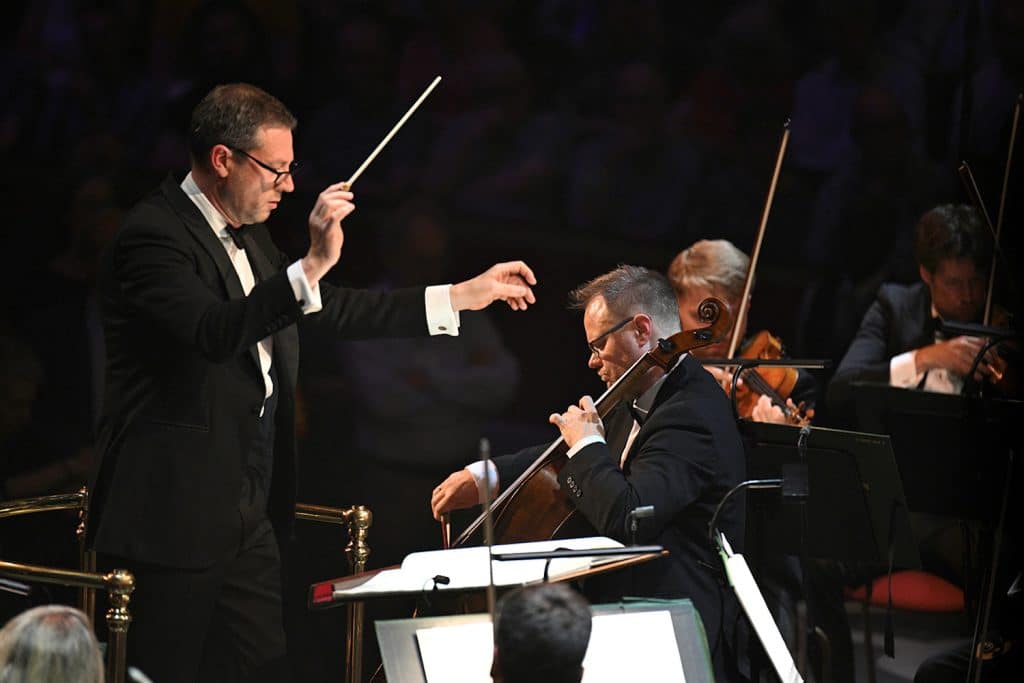
Jonathan Aasgaard (cello), Sinfonia of London / John Wilson

Verdi Overture: La forza del destino (1861-2, revised 1869)
Walton Cello Concerto (1955-56)
Respighi Feste romane (Roman Festivals) (1928); Fontane di Roma (Fountains of Rome) (1915-16); Pini di Roma (Pines of Rome) (1923-4)

Royal Albert Hall, London
Friday 24 July 2026

Reviewed by Ben Hogwood Photos (c) BBC / Chris Christodoulou

On a sultry Friday evening at the BBC Proms it was entirely appropriate for John Wilson and the Sinfonia of London to relocate their audience to the heat of Italy.

Verdi’s overture to La forza del destino was the curtain raiser, beautifully phrased and with its ‘fate’ theme brilliantly delivered by the strings. The lyrical counterpart – recognizable from certain beer adverts – simply floated on air.

Walton’s Cello Concerto was similarly airborne, though this is a very different work, written while the composer was living on Ischia, in the Bay of Naples. The opening bars, though precise, were shrouded in mystery, the ticking chords from the orchestra striking an unease from which it took soloist Jonathan Aasgaard a while to emerge. The cello’s opening melody, one of Walton’s finest, was initially tentative but subsequent reappearances gave it more conviction, the orchestra providing exquisitely shaded support.

Aasgard has recorded the work with the Sinfonia of London, whose cello section he leads, and the established togetherness with the orchestra was a clear asset. As the faster music evolved, there was a singularity of voice, though not the extravert approach of some performances, the anxieties in Walton’s music remaining. These were ultimately banished by a lyrical third movement, then a terrific cadenza and some lively exchanges between soloist and orchestra, though even here the closing bars were left with an open-ended question. A compelling performance, nonetheless – and one to revisit.
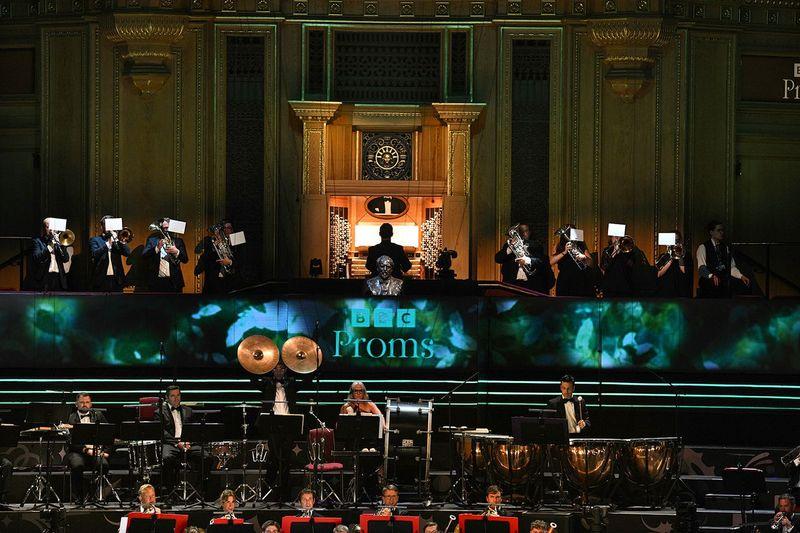
To say Respighi throws open the doors and windows when writing for orchestra would be an understatement. It is rare to encounter works of such colour and characterisation, secured through an experienced hand whose training with Rimsky-Korsakov and Martucci yielded a bold and often extravagant style. Coarse, too, on occasion, as Wilson and his charges illustrated with the beginning of Roman Festivals.

The first of a triptych written by Respighi in homage to his home city, the festivals are not for the shrinking violet, with Christian martyrs thrown to the lions even before the end of the first movement. The loud music was suitably dramatic but there was reverence and restraint in the quiet passages, where we could have been in the depths of the Colosseum itself. Here there was extraordinary control, a quality not always associated with Respighi but one which served him well here. Jubilee was terrific, as was the cut and thrust of The October Festival, and it is a credit to Wilson that the most uneven piece of the triptych was brought off with conviction, its finale reminding us of Stravinsky’s influence on the composer.

This is also evident in Fountains of Rome, but the riot of colour that found the orchestral virtuosos in their element is purely of Respighi’s hand. The wind and brass excelled through the undulations of The Fountain of Valle Giulia at dawn, with beautiful solos from oboe (Fergus McCready) and horn (Christopher Parkes), while Respighi’s lavish illustrations of the Triton and Trevi fountains were rendered with equal parts care and extravagance. The latter rose to full-bodied splendour as an ideal balance was struck between organ (Richard Hills) and orchestra. Delicacy was however once again evident in The Fountain of the Villa Medici, Wilson’s eye for detail highlighting the twinkling edges of Respighi’s wonderful part writing.

And so to the biggest crowd pleaser, the Pines of Rome, whose opening flourish in the Pines of the Villa Borghese set the tone in glorious technicolour. The murky, dusty humidity of the Pines near a catacomb was vividly portrayed, the solemn utterance of its Gregorian chant growing to an awesome climax of poise and power. Pianist Ben Dawson was superb in the rippling textures of The Pines of the Janiculum Hill, as was the baleful clarinet of Chris Richards. The movement ended memorably with the recording of the nightingale, with which Respighi transfixed his audience from a gramophone back in 1924. Over a century on, it once again held the Albert Hall in its grasp. From the depths emerged the final march, The Pines of the Via Appia. This was the night’s crowning glory, a long and brilliantly managed crescendo that somehow kept getting louder, 130 players giving their all in a thunderous and exultant finish to raise the roof.

This moment alone was worth the admission, but there was a final treat in the form of Rossini, the final galop from his overture to William Tell, entirely appropriate and given with evident pleasure. For this is what John Wilson and the Sinfonia of London are all about, their pure enjoyment of music translated into performances of rare distinction and character. No wonder the house was full, the cheers long and loud – we all knew we had seen one of the standout moments of this year’s Proms festival.

You can watch this Prom on the BBC iPlayer, or listen to it on BBC Sounds until the end of September 2026. Meanwhile you can click on the links to access the Roman Trilogy in recorded form from the Sinfonia of London and John Wilson, and Jonathan Aasgaard’s recording of Walton’s Cello Concerto with the same orchestra

Published post no.2,959 – Sunday 26 July 2026
In concert – CBSO, CBSO Orchestral Residency / Edward Gardner: Varèse & Adams

City of Birmingham Symphony Orchestra, CBSO Orchestral Residency Musicians / Edward Gardner

Varèse Ionisation (1929-31); Amériques (1918-21, rev. 1927)
Adams Harmonielehre (1985)

Symphony Hall, Birmingham
Friday 17 July 2026

Reviewed by Richard Whitehouse

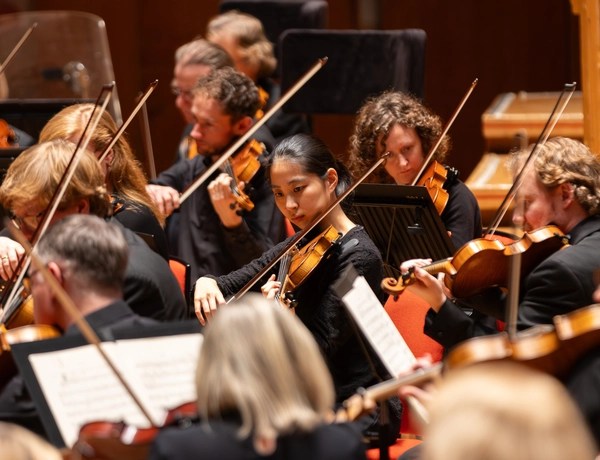
It was likely coming after the ‘official’ end of the City of Birmingham Symphony Orchestra’s season that brought a disappointingly low turnout for this concert, itself the culmination of the initial CBSO Orchestral Residency. This saw some five-dozen musicians, aged from 21 to 25, working alongside the orchestra’s musicians for an intensive week of rehearsals with Edward Gardner – principal guest conductor of the CBSO during 2010-16 and whose expertise across a broad range of repertoire was duly demonstrated by the ambitious programme heard tonight.

A first half devoted to Edgard Varèse ensured a testing workout for percussion in particular – 13 of them placed across the rear of the platform for the scintillating interplay of timbre and texture that is Ionisation; not the first such piece for the concert hall, but certainly the first of consequence. A pity that remarks by the conductor and Residency musicians did not precede rather than follow it, allowing the climactic entry of tuned instruments (chimes, glockenspiel and piano) to fade into the solo flute as commences Amériques with spellbinding immediacy.

Long notorious in terms of scale and impact, the latter work has now become something of a showpiece as this builds from post-impressionist musing, via passages alternately speculative and strident, to an apotheosis where jousting brass underpinned by a ‘walking bass’ uncannily anticipates symphonic jazz a generation hence. Under Gardner’s guidance, there was no risk of its losing focus – the players responding with discipline and no little relish to music as has lost none of that capacity to provoke and enthral just a century after its Philadelphia premiere.

The CBSO has an association with Harmonielehre stretching back more than 30 years to the recording (only the second) made with Simon Rattle. That this orchestra, with its Residency contingent, now brings greater freedom and flexibility says much about the development in orchestral playing over that time – along with the integration of John Adams’s work into the repertoire such that, far from being a polemic for reasserting the supremacy of ‘tonality’, it now yields all the attributes of a showpiece and may even be thought of as a crowd-pleaser.

Symphonic in aim if not necessarily intent, let alone attainment, this is music that can easily sprawl and it was to Gardner’s credit the un-titled first movement – with its alleged imagery of a super-tanker taking flight – maintained the impetus of those seismic opening chords, via music of expressive luxuriance, to a conclusion that fairly hit the ground running. Even finer was The Anfortas Wound, its brooding sombreness suffused with wrenching starkness on the way to a climax whose anguish references a comparable passage in Mahler 75 years on.

As with many symphonies actual or otherwise, the finale seems more a rounding-off than a resolution of the issues at stake, though there was no lack of purpose in Meister Eckhardt and Quackie as this imaginary encounter between a Medieval theologian and the composer’s infant daughter yielded unstoppable momentum prior to a headily affirmative close. Nor was there any doubting the conviction by which an expanded CBSO brought this work, and with it the whole concert, to its impressive conclusion. Roll on the Orchestral Residency for 2027.

To read more about the CBSO’s 2026/27 season, visit the CBSO website, and to read more about the CBSO Orchestral Residency. Click on the names to read more on conductor Edward Gardner, and composers John Adams and Edgard Varèse

Published post no.2,953 – Monday 6 July 2026

BBC Proms 2026 – The First Night

by Ben Hogwood Photo (c) Chris Christodoulou

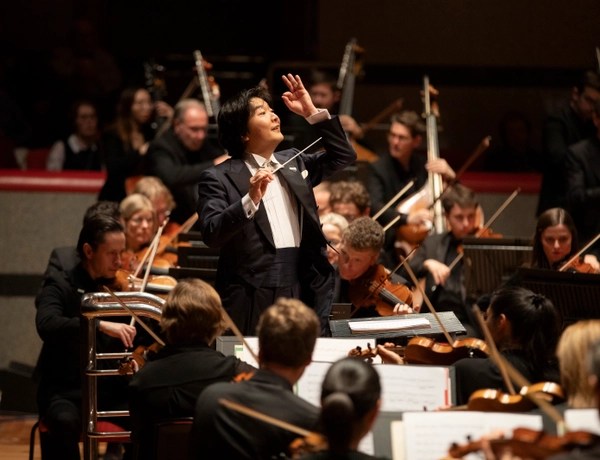
The 2026 edition of the BBC Proms is underway! With a Transatlantic first night, the BBC Symphony Chorus and BBC Symphony Orchestra under Dalia Stasevska were joined by pianist Yunchan Lim for a special performance of Ravel‘s Piano Concerto.

Flanking this were two pieces celebrating America’s 250th ‘birthday’, Copland‘s Fanfare for the Common Man and Gershwin‘s An American in Paris, while French-British composer Josephine Stephenson was the ideal choice to write a first night premiere, That the sunrise not leave us unmoved.

Wrapping up the night was a rare performance of Finzi‘s For St Cecilia, a choral work of typical mystery and elegance but one that deserved its rare moment in the sun. Choral and orchestral forces then gave an encore of the Oasis song Wonderwall, acknowledging the England team’s prowess in the World Cup. A red card for its choice, I’m afraid – and a shame to have Finzi’s contribution immediately overshadowed in this way. Wonderwall is a great song, but felt miscast here.

Enough of my griping, though – as we should acknowledge many people enjoyed the inclusion, and the night as a whole was a celebratory indication of what we can expect to indulge in over the next eight weeks. Truly something for everyone.

You can watch the First Night of the Proms on the BBC iPlayer

In concert – Janai Brugger, CBSO / Kazuki Yamada: Copland, Tower, Price & Adams

Janai Brugger (narrator/soprano), CBSO Chorus (Julian Wilkins, chorus-master), City of Birmingham Symphony Orchestra / Kazuki Yamada

Copland Fanfare for the Common Man (1942); Lincoln Portrait (1942)
Tower Fanfare for the Uncommon Woman (1989)
Price orch. Rosner The Heart of a Woman (c1930-50)
Adams Harmonium (1980-81)

Symphony Hall, Birmingham
Saturday 4 July 2026

Reviewed by Richard Whitehouse

Marking the 250th anniversary of American independence, the City of Birmingham Symphony Orchestra and music director Kazuki Yamada duly pulled out the stops with a programme that placed musical achievements from the past century within an unlikely yet stimulating context.

The first half unfolded as two diptychs focussing, respectively, on male and female concerns. Thus a brazen but never brash take on Copland’s Fanfare for the Common Man preceded his Lincoln Portrait – its sentiments as apposite to World War Two as to the American Civil War, after whose Battle of Gettysburg Lincoln made his famous ‘Address’. Yamada drew nobility and fervour from its lengthy preamble, then Janai Brugger delivered its subsequent narration with enough poise and understatement to offset any risk of hubris during the climactic stages.

Initiated by a visceral reading of Joan Tower’s Fanfare for the Uncommon Woman, its brass and percussion deployed in notably combative manner, the female response continued with Florence Price’s The Heart of a Woman. Not so much a song-cycle as a ‘themed’ collection which has only recently been assembled from its composer’s extensive contribution to this genre, its 10 settings of black American authors have been orchestrated by Israeli-American composer Lior Rosner with no mean subtlety and eloquence, though on occasion softening the harmonic piquancy with which Price seeks to highlights aspects of her own experience.

Wistful and rapturous by turns, these merge into a rather generalized sequence lacking any more cumulative intensity to justify it as a whole; the exception being Don’t you say no to me which, with its vivid (if slightly self-conscious) elements of blues and ragtime, sounds like a number such as Ella Fitzgerald might have recorded in her youth. Brugger (with kit-percussionist Alex Henshaw-Van den Bos) made the most of its insouciance, with Yamada encouraging the orchestra to a warmly empathetic response elsewhere. Hardly a revelatory discovery, but attractive and affecting music such as reinforced the impression that Price is at her best freed from those formal constraints encountered in her symphonies or concertos.

After the interval came Harmonium, by which John Adams established his wider reputation almost 45 years ago. Now as then, its overall impact belies its relative concision and, while its streamlined ebb and flow arguably overrides the manifest ambivalence in John Donne’s Negative Love then emphasizes predictability over pathos in Emily Dickinson’s Because I could not stop for Death, the integration of chorus and orchestra is unfailing. To this end, coordination was not all that it might have been though the seminal passages were tellingly realized – not least that seismic build-up into a setting of Dickinson’s Wild Nights whose heady crescendos then raptly inward ending, both among its composer’s finest inspirations, were conveyed with conviction boding well for the CBSO performance at this year’s Proms.

Before that London concert, however, audiences in Birmingham can enjoy more Adams when Edward Gardner conducts his epic Harmonielehre and Edgard Varèse’s ambitious Amèriques, with the CBSO and CBSO Orchestral Residency Musicians at Symphony Hall on July 17th.

To read more about the CBSO’s 2026/27 season, visit the CBSO website. Click on the names to read more on chief conductor Kazuki Yamada, soloist Janai Brugger, the CBSO Chorus and composers Joan Tower and Florence Price

Published post no.2,939 – Monday 6 July 2026

In concert – Soloists, London Symphony Orchestra / Sir Antonio Pappano – Wagner: Tristan and Isolde @ Barbican Hall

Barbican Hall, London, 1 July 2026

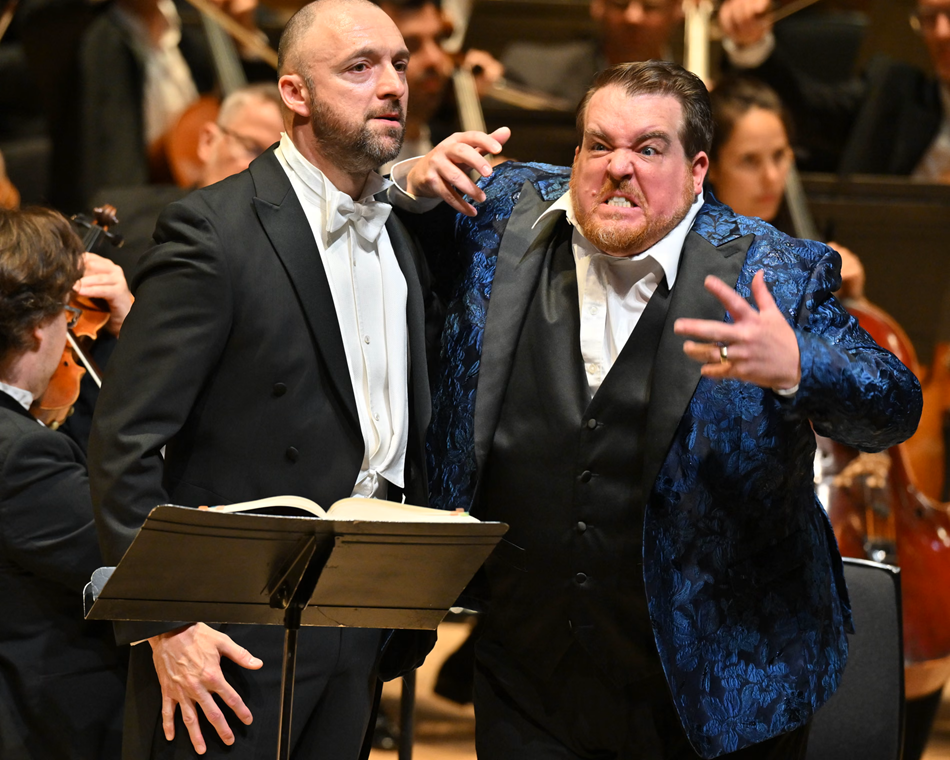
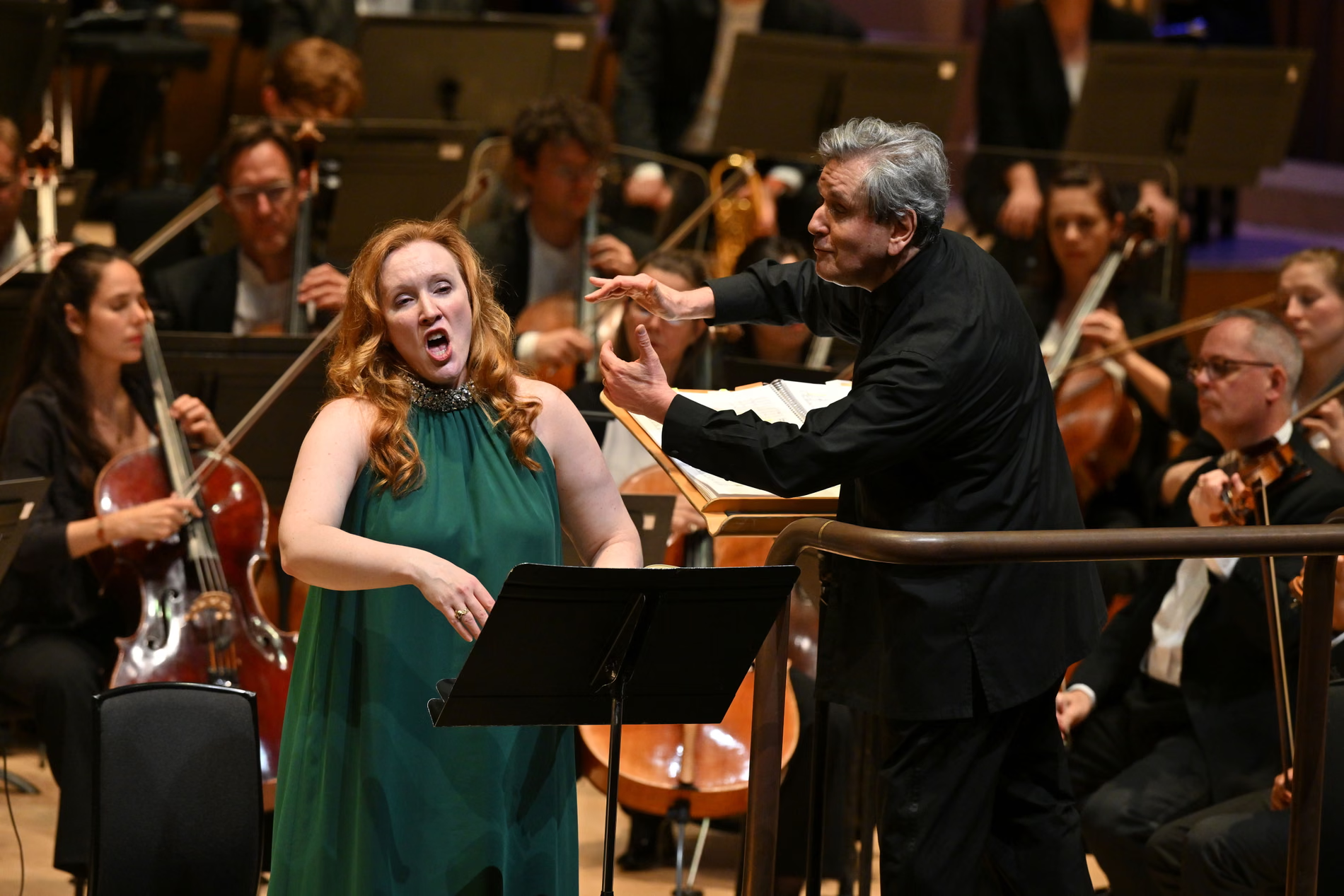
by John Earls. Photo credits of Clay Hilley (Tristan) with Gyula Oendt (Kurwenal) above and Sara Jakubiak below (c) Mark Allan

Wagner’s opera Tristan and Isolde is a piece of music like no other and this stunning concert performance by the London Symphony Orchestra under Sir Antonio Pappano (the first of two this month) showed why.

Such concert performances of opera must have been part of the thinking behind the appointment of Pappano as the LSO’s Chief Conductor in September 2024 (he had been Music Director of the Royal Opera House, Covent Garden, since 2002). The lack of onstage action in Tristan and Isolde makes it ideal for such performances, but that shouldn’t detract from this wonderful rendition which gripped for the whole of its near four hours.

American soprano Sara Jakubiak (above), making her Isolde debut, admirably negotiated the piece’s duration and range in delivery, including a powerful closing Liebestod, as well as looking the part of the Irish Queen in her green dress. American tenor Clay Hilley showed his experience of previously playing Tristan in a performance without score that was convincingly dramatic both in terms of his singing and theatrics which included leaning heavily on the conductor’s podium for support in the final act. Both singers were impressive together in the lovers’ tryst of Act Two.

Russian mezzo Marina Prudenskaya was glorious as Brangäne, including when singing off-stage (or behind-stage to be exact) where the sonic mix worked well where I was sat in the gallery. Franz-Josef Selig as King Marke was both clear and passionate.

The remaining soloists – Gyula Orendt (Kurwenal), Neal Cooper (Melot), Michael Gibson (Sailor/Shepherd) and James Emerson (Steersman) – all gave good performances and the male voices of the London Symphony Chorus were suitably robust in the first act.

But, for me, the real stars of the evening were the orchestra and their Chief Conductor (directing proceedings sans baton). The strings were expressive, even visually at one point as the synchronicity and swooping of the bowing put me in mind of a murmuration of starlings. Repeated alternating notes on clarinet early in Act Two hung in the air in a way that almost stopped time. And Drake Gritton’s cor anglais solos, both in the balcony and onstage, were captivating.

The whole performance was compelling throughout and thoroughly deserving of the rapturous standing ovation given by the audience at the end.

John Earls is Director of Research at Unite the Union and posts at @johnearls.bsky.social on Bluesky and @john_earls on X. You can subscribe (free) to his Hanging Out a Window Substack column here: https://johnearls.substack.com/

Published post no.2,936 – Friday 3 July 2026