On Record – Soloists of the English Symphony Orchestra / Kenneth Woods: Mahler arr. Simon: Symphony no.9 (ESO Records)

Soloists of the English Symphony Orchestra / Kenneth Woods

Mahler arr. Simon Symphony no.9 in D major (1908-09, arr. 2007)

ESO Records ESO2602 [76’52”]
Producer Phil Rowlands Engineer Tim Burton

Recorded 23-25 March 2021 at Wyastone Concert Hall, Wyastone Leys, Monmouth

Reviewed by Richard Whitehouse

What’s the story?

The English Symphony Orchestra continues releases for its ESO Records label with Mahler’s Ninth Symphony, arranged by Klaus Simon and thereby continuing a lineage pioneered by the Society for Private Musical Performances established by Schoenberg after the First World War.

What’s the music like?

Schoenberg tackled Mahler’s Das Lied von der Erde and Erwin Stein his Fourth Symphony, but neither is as ambitious as that of the Ninth arranged here for single strings and woodwind (these latter with doublings), two horns, trumpet, one percussionist, piano and harmonium.

Whatever the logistical disparity between original and arrangement, the music’s textural and motivic content remain intact. This is evident from the opening Andante comodo, its formal trajectory of interlocking arcs made explicit so its long-term expressive intensification feels no less tangible. To this end, piano or harmonium contribute much more than merely filling-out the texture; articulating and reinforcing its harmonic profile through to a coda clinching the overall tonal journey with a serenity more poignant for its remaining, as yet, unfulfilled.

The ensuing Ländler emerges no less lucidly overall, with Kenneth Woods (rightly) resisting any temptation to point up emotional contrast across a movement whose deceptive blitheness of spirit is only gradually undermined. Equally notable is the way that Simon has emphasized contrasts in timbre and texture, with the music ultimately fragmenting into a bemused parody of how it began. More questionable is the Rondo-Burleske where Woods’s underlying tempo in its outer sections, while enabling the music’s contrapuntal intricacy to emerge unimpeded, is a little too dogged to convey the assaultive quality Mahler surely intended. This is less of an issue in the central trio whose aching regret is potently captured; the stealthy regaining of tension no less evident before the final section propels this movement to its anguished close.

No such issues affect the final Adagio – its equivocation only relative now that the complete Tenth Symphony has been accepted into the Mahler canon, yet remaining a test of all-round cohesion such as this account renders with unwavering conviction. Having finely gauged the balance between its starkly contrasted episodes, Woods assuredly controls the winding down of tension towards a coda of inward rapture despite its sparseness of gesture, while affording that speculative closing interplay of solo strings the necessary temporal and emotional space.

Does it all work?

Yes it does, not least through persuading the listener that such a reduction is worthwhile not merely out of contingency alone. It should hardly need to be added the playing from this 19-strong ensemble, drawn from the ranks of the English Symphony Orchestra, is consistently attuned to the essence of this music, while also making the strongest case possible for what is a methodical while empathetic arrangement. No-one having heard it is likely to feel short-changed as to the relevance of Mahler Nine on its own terms or to the symphonic literature.

Is it recommended?

Yes it is, an impressively conceived and executed reading which demonstrates the efficacy of this arrangement to moving effect. Note too that Woods’ performance of the Ninth Symphony at this year’s Colorado MahlerFest will be available from its own in-house label in due course.

Listen / Buy

You can listen to excerpts and explore purchase options at the Presto Music website. Click on the names to read more about the English Symphony Orchestra, conductor Kenneth Woods and arranger / composer Klaus Simon

Published post no.2,891 – Monday 18 May 2026

On Record – Iain Quinn, English Symphony & String Orchestras / Kenneth Woods: Works for Organ and Orchestra (ESO Records)

Iain Quinn (organ), English Symphony Orchestra (Hindemith), English String Orchestra / Kenneth Woods

Hindemith Kammermusik no.7 Op.46/2 (1927)
Pinkham Sonatas for Organ and Strings: no.1 (1966); no.2 (1966); no.3 (1987)
Poulenc Concerto in G minor for Organ, Strings and Timpani FP93 (1934-8)

ESO Records ESO2601 [62’44”]
Producer Phil Rowlands Engineer James Walsh

Recorded 1-3 April 2025 at Merton College Chapel, Oxford

Reviewed by Richard Whitehouse

What’s the story?

The English Symphony Orchestra (and its ‘String Orchestra’ incarnation) continues releases on its ESO Records label with a collection of works for organ and orchestra featuring the industrious Iain Quinn, and which includes the first recordings of two organ sonatas by Daniel Pinkham.

What’s the music like?

Much the most often heard organ concerto (as opposed to organ symphony), that by Poulenc never fails to entertain and provoke: a judicious synthesis of musical past and present, high- and low-art, the serious and skittish – all given focus by its composer’s tendentious sense of style. It certainly sounds cohesive on this persuasive recording, Quinn alive to those reckless expressive contrasts and Kenneth Woods shaping its seven continuous sections into a logical yet purposeful whole. The relatively lengthy third section emerges as a ‘slow movement’ of encroaching pathos, and only the sixth disappoints with its ‘music-hall’ aspect rather muted. What is never in doubt is the seriousness of Poulenc’s response to tragic circumstances and his aspiring towards a transcendence that is cursorily denied by those fateful final gestures.

Interestingly, the seventh and final of Hindemith’s Kammermusik itself finds its composer at something of an aesthetic crossroads as regards that trenchant objectivity of the music from his early maturity then the greater emotional range of what followed. Certainly, its opening movement has a vigour but also self-containment duly leavened in the slow movement with its eloquent enfolding of the soloist into the orchestral texture; the finale fusing elements of the preceding on route to a peroration whose expressive force is a sure marker for the future.

Interest naturally alights on music by Daniel Pinkham (1923-2006), the American composer and organist who, based largely in Boston, wrote extensively in most genres while being best known for his choral and organ music. The three works heard here are ‘Church Sonatas’ akin to those from the Baroque and Classical eras, notably the 17 such pieces Mozart wrote in the 1770s. While the First Sonata is an appealing Andante, the Second Sonata contrasts its more inward Andante with a capering Allegro; the Third Sonata duly extended to four movements with its ingratiating Allegro and animated final Vivace framing a quizzical Allegretto and an Andante whose wistful poignancy makes it the highlight from among these pieces. Music for which Quinn evidently feels real affinity, rendered here with the necessary poise and finesse.

Does it all work?

Almost always. Among the most inclusive of present-day organists in terms of his repertoire, Quinn is an assured exponent throughout while receiving steadfast support from Woods and the ESO. Sound does full justice to the Dobson Organ of Merton College Chapel, even if the reverberant acoustic is not ideally suited to the Hindemith as this affects the music’s textural pungency or its overall assertiveness. Even so, both this and the Poulenc can hold their own with earlier recordings, while that of the Pinkham should prove difficult to surpass in future.

Is it recommended?

Indeed so. The booklet features detailed notes about each work by Guy Rickards, along with pertinent observations about this organ in the context of those ‘Neoclassic Instruments’ built in quantity, most notably North America, following the Second World War. Fascinating stuff!

Listen / Buy

You can listen to excerpts and explore purchase options at the Presto Music website. Click on the names to read more about organist Iain Quinn, conductor Kenneth Woods, the English String / Symphony Orchestra and composer Daniel Pinkham

Published post no.2,890 – Sunday 17 May 2026

On Record – The Peter Jacobs Anthology: Twentieth Century British Piano Music (Heritage Records)

Peter Jacobs (piano)

Bax Winter Waters (1915)
Baines Preludes nos.1,3 & 6 (1919)
Benjamin Scherzino (1936)
Bliss Suite: Polonaise (1926)
Britten Sonatina Romantica: Moderato (1940)
Hold Tango (1975)
Howells Procession (1920)
Leigh Eclogue (1940)
Mayer Three Pieces from Calcutta-Nagar (1993)
Parry Scherzo in F major (pub 1922)
Quilter Summer Evening (1916)
Scott Egyptian Boat Song (1913)
Searle Vigil: France 1940-1944 (1944)
Seiber Scherzando Capriccioso (1953)
Shaw Roundabouts (1925)
Sterndale Bennett Presto agitato in F# minor Op.24/5
Stevenson A Wheen Tunes for Bairns Tae Spiel (1967)
Warren Second Sonata: Monody (1977)
Woodferne-Finden Kashmiri Song (1903)

Heritage Records HTGCD159 [76’40”]
Producer / Engineer Paul Arden-Taylor

Recorded 25 May 2021 at Wyastone Concert Hall, Wyastone Leys, Monmouth

Reviewed by Richard Whitehouse

What’s the story?

Besides reissuing his already extensive catalogue for other labels, Heritage has also made a number of new recordings by Peter Jacobs, with this album the first in what so far amounts to three volumes of miniatures and standalone pieces as drawn from his extensive repertoire.

Regular readers of Arcana will have come across reviews of the second and third volumes in this series, to which is now added this first instalment that ranges across the extent of Jacobs’ interest in and inclination towards unfamiliar though rewarding music by British composers.

What’s the music like?

Launched by Martin Shaw’s ebullient encore alighting on all two-dozen keys, this anthology continues with the harmonically acerbic second movement (of four) from Arthur Bliss’ early Suite, followed by music of elegant poignancy by Walter Leigh. John Mayer is heard in three from his 18 vignettes evoking sights and sounds of Calcutta (sic), with that by Roger Quilter a minor masterpiece of serenity infused with regret.

Màtyás Seiber contributes music whose liveliness and recalcitrance are entirely characteristic, with something ‘completely different’ in Amy Woodforde-Finden’s appealingly descriptive and once-ubiquitous number. Few are likely to recognize Herbert Howells as composer of a rhythmically combative piece that is (relatively) better known in its orchestral guise, while that from Arthur Benjamin could be no-one else given its playful insouciance. Dedicated ‘‘To my friends of the Fighting French Forces’’, Humphrey Searle’s evocation of war is the more powerful for its overall restraint and could well be considered the single-most impressive piece featured on this collection.

Hubert Parry is heard at his most vivacious and uninhibited; an ideal foil to Cyril Scott who, though he associated Egypt with (his own) past existences, focusses on melody of the most poetic. Much the earliest piece here, that by William Sterndale Bennett is the fifth in a six-movement suite – its deftness and agility in telling contrast to the incremental display of the opening movement from Raymond Warren’s Second Sonata. Three out of a larger sequence of preludes by William Baines constitute an object-lesson in making more out of less, while the first movement of Benjamin Britten’s never-quite-completed Sonata Romantica evinces ingenuity and didacticism in equal measure. Ronald Stevenson often aspired to the lofty or profound in his music, but the four pieces in the suite recorded here are epigrams as laconic as they are engaging. The longest single item here, Arnold Bax’s piece is at once a visceral seascape, revealing psychological study or resourceful passacaglia – the climax of an album that ends in a disarming item by Trevor Hold such as ought to win its composer new friends.

Does it all work?

As an overall sequence, undoubtedly. Jacobs is as inclusive in his interpretative acumen as   in the breadth of his musical sympathies – thereby making for a collection that plays to his strengths as convincingly as it does to those of the 19 composers who are featured herein.

Is it recommended?

Very much so, not least in the knowledge this release was merely the first in an ongoing and most valuable series bringing unfamiliar music to the attention of inquiring listeners. Sound of clarity and definition, along with Jacobs’ detailed booklet notes, are further enhancements.

Listen / Buy

You can explore purchase options at the Heritage Records website. Click on the name to read more about pianist Peter Jacobs

Published post no.2,889 – Saturday 16 May 2026

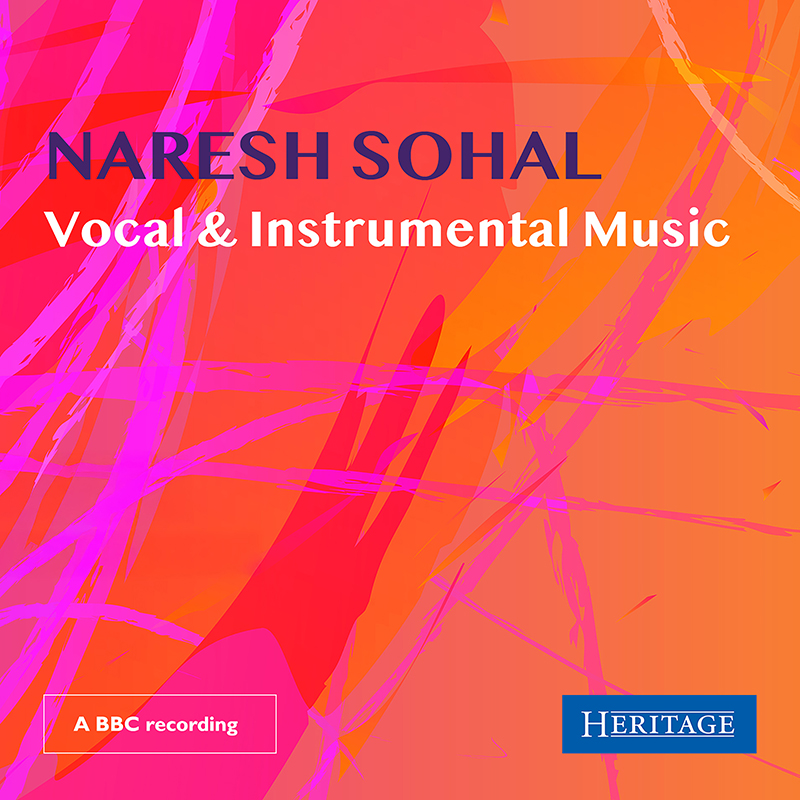
On Record – The Piatti Quartet – Naresh Sohal: String Quartets (Toccata Classics)

Piatti Quartet [Michael Trainor, Emily Holland (violins), Miguel Sobrinho (viola),
Jessie Ann Richardson (cello)]

Naresh Sohal
String Quartet no.1 ‘Chiaroscuro II’ (1976)
String Quartet no. 3 (2008)
String Quartet no.4 (2009)
String Quartet no. 5 (2010)

Toccata Classics TOCC0754 [74’33”]
Producer / Engineer Raphaël Mouterde

Recorded 17-19 April 2024 at St Silas’ Church, Kentish Town, London

Reviewed by Richard Whitehouse

What’s the story?

Toccata Classics continues its exploration of Naresh Sohal (1939-2018) with this release of four of his string quartets, admirably rendered by the Piatti Quartet to make an illuminating overview of Sohal’s musical language from across the greater part of his composing career.

What’s the music like?

Although he attracted most attention in his lifetime for his often expansive orchestral works, Sohal wrote widely for chamber media and not least string quartet. This medium brought his intended amalgam of Indian and European facets into acute focus though, typical of one who from the start approached the Western Tradition head on, there is nothing anecdotal let alone tokenistic about Sohal’s idiom which, as these quartets amply confirm, is unified stylistically and remains consistent as it heads toward the formal and expressive clarity of his final pieces.

At the time of his first quartet, Chiaroscuro II (its predecessor for brass quintet is on Heritage HTGCD122-3 – review to follow), Sohal was exploring an overtly avant-garde idiom evident through diverse and starkly contrasted techniques given focus by climactic cadenzas on cello then first violin – prior to its final evanescing into silence. Likewise in a single movement of 15 minutes, the Third Quartet could not be more different in aesthetic. Initially heard against an insistent drone from second violin and viola, its ideas emerge as demonstrable variants on what went before such that its animated central section then its inward continuation are made part of an indivisible process. This only makes those over-emphatic closing chords the more jarring, as though the work’s ultimate resolution had to be stated rather than just insinuated.

The remaining works, both with three movements and each lasting around 20 minutes, might be thought even closer to tradition yet, as so often with Sohal, matters are never this concrete. Thus the Fourth Quartet’s initial movement alternates its impetuous and ruminative themes to purposeful effect, then its central Moderato balances eloquence and introspection with a poise as makes this the likely highlight of the album; the final Allegro channelling motifs previously heard towards its satisfying denouement. The Fifth Quartet manipulates form and expression even more deftly, the Allegretto’s incisive yet never unyielding rhythmic verve duly matched by the Adagio’s melodic richness or the final Allegro’s contrapuntal dexterity on the way to a decisive close. Both of these pieces abound in quartet writing as unaffected as it is masterful.

Does it all work?

Indeed it does. Whether conceived as a single span or separate movements, the musical range of these pieces is a constant source of fascination. Even more surprising is that the Fourth and Fifth Quartets are only now receiving their first hearing, but it would be hard to imagine more committed advocacy than from the Piatti Quartet, which has taken this music to its collective heart. Hopefully these pieces will now find greater exposure in recital, as the importance of Sohal’s legacy becomes evident and its relevance to the present more widely acknowledged.

Is it recommended?

Indeed it is. Sound is almost ideal, while Utsyo Charraborty’s overview is complemented by a biographical note from Suddhaseel Sen and Janet Swinney. Hopefully the Second Quartet and the brief Awakening (soprano and string quartet) feature on a further release from this source.

Listen / Buy

You can hear excerpts from the album and explore purchase options at the Toccata Classics website. Click on the names to read more about the Piatti Quartet, and Naresh Sohal

Published post no.2,835 – Monday 23 March 2026

On Record – Daniela Braun, Anna Carewe & Irmela Roelcke – Anatol Vieru: Piano and Chamber Music (Toccata Classics)

Daniela Braun (violin), Anna Carewe (cello), Irmela Roelcke (piano)

Anatol Vieru
Versete Op.116 (1989)
Piano Sonata no.2 Op.140 (1994)
Piano Trio (1997)

Toccata Classics TOCC0762 [65’09”]
Producer Justus Beyer Engineers Philipp Wisser, Oliver Dannert

Recorded 14-17 June 2024 at Deutschlandfunk Kammermusiksaal, Cologne

Reviewed by Richard Whitehouse

What’s the story?

Toccata Classics issues a volume of late chamber works by Romanian composer Anatol Vieru (1926-98), authoritatively realized by three Berlin-based musicians and so confirming him as a major figure during what was a period of intensive creativity for Romanian musical culture.

What’s the music like?

Along with contemporaries Pascal Bentoiu and Stefan Nicolescu, Vieru was a leading light in the post-war era. A successful academic and administrative career went hand in hand with an increasingly forward-looking approach to composition, making for a substantial and diverse output of almost 150 opuses. Only a fraction has been recorded, but performances of various works (including nearly all his seven symphonies) have been released while other pieces can be accessed via YouTube. This album duly collates three chamber works from his last years.

Most substantial is a Piano Trio from the year before his death. As in all three of these works, Vieru eschews tempo indications for metronome markings (something his older contemporary Mieczysław Weinberg favoured in numerous late chamber pieces), while the hybrid nature of its four movements blurs formal divisions so that a motivic continuity audibly extends across the whole entity. Its expressive ambit likewise projects qualities drawn from Classical or even Baroque models decisively into the present, thus offsetting any possibility of this being music with ‘neo-’ connotations. Trenchant and incisive over much of its course, a more yielding and inward aspect increasingly comes to the fore such that the finale concludes in a mood of keen understatement – not so much avoiding a decisive close as rendering one entirely superfluous.

If the other pieces seem less unequivocal in outlook, they are hardly less refractory in content. Indeed, Versete evidently consists of two-dozen ‘‘microstructures’’ as might equally be called vignettes in their brevity and starkness of gesture; any merging toward a cumulative structure effectively determined by the interpreters. Its three movements may suggest the Second Piano Sonata as favouring a more Classical conception, but this is belied by its opening movement’s formal fluidity, its interlude-like successor’s tensile expression, then a finale which pointedly deconstructs its main motifs as to result in the most distilled of resolutions. Many composers adopt a ‘less is more’ strategy in their later music, but Vieru remains unusual in carrying this through to a logical outcome from where any further development cannot easily be imagined.

Does it all work?

Indeed it does. Vieru’s later music derives from an intricate yet never abstruse compositional strategy – succinctly outlined here by Dan Dediu – which ensures formal unity as surely as it promotes expressive variety. If the Piano Trio is the most absorbing work, the remaining two pieces are never less than distinctive and likewise benefit from the unstinting commitment of these players – Irmela Roelchea writing about her involvement with this music in the booklet. Musicians everywhere should hopefully be encouraged to explore such pieces for themselves.

Is it recommended?

Yes it is. The sound has no lack of clarity and definition, if seeming a shade brittle in louder passages, while the booklet also features an overview of the composer by Martin Anderson. Hitherto unrecorded, Vieru’s eight string quartets would seem to be a worthwhile next step.

Listen / Buy

You can hear excerpts from the album and explore purchase options at the Toccata Classics website. Click on the names to read more about the performers – violinist Daniela Braun, cellist Anna Carewe and pianist Irmela Roalcke – and composer Anatol Vieru

Published post no.2,833 – Saturday 21 March 2026